Search Results
Search this site
3674 results found
- What Does Jesus Pray for Us?
“I in them and you in me—so that they may be brought to complete unity. Then the world will know that you sent me and have loved them even as you have loved me.” John 17:23 (NIV) In John 17, we find the last words Jesus shared at His final meal with His disciples. Even though I treasure reading about the last moments of Jesus’ life with His friends, at the same time, my heart aches. He knew all that was about to happen to Him. Within hours of this last time together, He knew: One of His disciples would betray Him … The others would not stand with Him … He would soon endure extreme brutality all alone … And yet, somehow, He was focused enough to stay very present in this moment instead of living in dread of the horrific moments to come. It astounds me how present and giving Jesus was during the Last Supper. Jesus and the disciples ate together. They drank together. They talked. He washed their feet. He watched Judas walk out the door. Then He prayed. For Himself. For the disciples. And then for you and for me. The fact that Jesus thought of and prayed for us in these final hours also astounds me. I need to read what He prayed. But even more importantly, I need to live what He prayed. “… that they may be brought to complete unity. Then the world will know that you sent me and have loved them even as you have loved me.” (John 17:23) Unity. Love. Of all the many things He could have prayed for us, it was unity and love. This feels a bit complicated in our world that seems so very divided on issues where so many have loud opinions, express strong objections and feel very justified getting offended by almost anything. I get it. There’s a lot of wrong in this world that should be addressed. There are a lot of injustices that should be defended. And there’s a lot of evil that should be stopped. But when I take time to reflect on Jesus’ words at the Last Supper, I wonder if there’s a more unified way we are supposed to be doing this. We have an enemy, but it’s not each other. In light of Jesus’ last prayer for His disciples (and, I believe, for us as well) before the cross, I wonder if we all need to remember that, while we can be divided in our opinions, we can be a little more united in our compassion for one another. After all, so much of what shapes the opinions and objections we express comes from some deep pain we’ve been through or walked through with someone we love. Hurt shapes us for better or worse. Jesus knew this. And He knew humans have such a propensity to turn hurting into hating. Maybe that’s why He prayed for unity. Maybe it’s not the kind of unity where we all agree about everything, but rather, in the middle of disagreements, we can remember we are all carriers of pain and sorrow. Even if we don’t see eye to eye, surely we can remember we are so very alike in what makes us cry. Even if we are completely divided on some opinions and ideas, we can remember we’re so very united in our tears and in our love for Jesus. And in that shared commonality, we show the world that with Jesus, unity and peace are possible. You see, where there is that kind of unity between us, the world looks a lot more beautiful around us. And the world will know by our unity and by our love that Jesus was sent by God to redeem the world. The main thing is Jesus. And I guess everything else will be sorted out with crystal clarity in heaven. Today, may we each choose to embrace a God-honoring unity and love in our lives. We honor Him most when we live His prayer. Father God, You long for me to receive the love of Jesus and to live it out. For me to walk in unity and in love. Help me tear down the barriers of judgment and hatred. Help me hold to Your Truth and walk in Your grace while sincerely loving others. Help me use my healing as a way to connect with others, human to human, no matter where I may be on my journey. May my heart be softened and my life be changed by Your call to unity and love. In Jesus’ Name, Amen. www.proverbs31ministries.org
- Tithing: How to Start When You Don't Feel Ready
Ask Roger and Friends Dear Roger and Friends I’m having a very difficult time financially. But I know that God has called us to tithe. I just don’t know where to start. Can you help me make a wise decision? Sincerely, JoAnna Hi JoAnna, This is Jeff. I recently received the same heartfelt question. I believe it speaks to a tension many of us feel. Someone shared, “I want to start tithing, but I just don’t feel ready.” That single sentence is packed with so much honesty: a desire to honor God mixed with a very real fear of not having enough. If you’ve ever felt this way, please know you are not alone. It’s a struggle that pits our faith against our finances, and it’s a conversation worth having. I’ve spent a lot of time thinking about this exact tension. In fact, it’s the core of a principle I live by: Open hands lead to an open heart. Whatever we are willing to open our hands to—sharing our time, our influence, our resources—we are also opening our hearts to. The reverse is also true. When we clench our fists around something, we inadvertently close our hearts. This journey of generosity, starting with the tithe, isn’t just about money. It’s about opening our hearts completely to God as our loving Father and provider. So, let’s walk through this feeling of “not being ready” together. What does it take to move from a place of fear to a place of faith-filled action? The Great Question: Security or Trust? Not long ago, I was driving and passed a lottery billboard flashing a staggering number: $300 million. In that moment, I felt the Lord pose a question to me, “Would you rather have $300 million in cash or trust Me to provide for your needs?” I confess, I paused. My mind immediately started doing the math. Three hundred million dollars could solve a lot of problems. It whispered promises of lifelong security, peace of mind, and the ability to do so much good. For a few brief moments, I found myself weighing the trade-off. It was a test. Would I trade God as my provider for a massive bank account? The thought horrified me, but the fact that I hesitated revealed something deep within me—a part of my heart that still wrestled with trusting God completely. This is the core of our hesitation around tithing. Money promises security, peace, and provision. The problem is, as the Apostle Paul reminds us, money is “unreliable” (1 Timothy 6:17). It comes and goes. It can’t deliver on its biggest promises. Only God can provide the true security our hearts long for. We cannot serve two masters. As Jesus said, “You will be devoted to one and despise the other. You cannot serve both God and money” (Matthew 6:24). The decision to tithe is a powerful declaration of whether you will pursue the promise of financial security through money or the reality of God’s provision by trusting Him. Overcoming Common Fears about Tithing Feeling “not ready” usually comes down to a few common fears. Let’s name them and bring them into the light. Fear #1: “I won’t have enough left over.” This is the most common fear. We look at our bills, our budget, and our bank account, and the math just doesn’t seem to work. We think, “If I give 10% away, I’ll be short for rent, groceries, or gas.” Fear #2: “I have too much debt.” Many feel they need to pay off all their credit cards, student loans, or car payments before they can even think about tithing. The weight of debt makes generosity feel irresponsible. Fear #3: “My income is too irregular.” For freelancers, commission-based workers, or those in between jobs, an unpredictable income makes consistent giving feel impossible. How can you commit to a percentage when you don’t know what you’ll make next month? These fears are valid and real. But they are rooted in the assumption that everything depends on our own efforts. The practice of tithing invites us into a different reality—one where God is our partner and provider. Close the “Holes” in Your Spending A Note from Roger’s Teaching: The prophet Haggai explained that one of the reasons money flows away from us is because we have a money bag with a hole in it: Now this is what the Lord Almighty says: ‘Give careful thought to your ways. You have planted much,but harvested little. You eat,but never have enough. You drink, but never have your fill. You put on clothes, but are not warm. You earn wages, only to put them in a purse with holes in it’’” (Haggai 1:5-6). Our wallets and pocketbooks today are the same as money bags in Haggai’s time. When we ask God for financial blessing, our focus is typically on God pouring more in the top. “If I just had $150 more a month, everything would be so much better.” What if God looked in our money bag and saw a hole. Would it make sense for Him to keep shoveling more in the top? I have had occasion to counsel with individuals who earn relatively high incomes. In spite of their substantial cash flow, they were having financial difficulty. The remarks they made were familiar: “I don’t know where it all went”; “I don’t have much to show for it”; etc. They often had a debt problem as well. Such stories illustrate that money can flow from us, even if the income is large. Closing the holes in your finances is a very difficult task, but until you know exactly what you have to spend—where every single dollar goes—you can’t make wise financial decisions. It’s that simple. Take the time to find and track your money. A Note from Brie: I find that several apps are helpful for “closing the holes.” Try Rocket Money, YNAB, or Quicken Simplifi. You’ll be able to track every transaction, create a budget, and watch what you’re spending on a day-to-day basis. How to Grow in Trust and Start Tithing Trust isn’t a switch you flip; it’s a muscle you build. If you want to start tithing but feel stuck, here are three practical ways to begin growing in trust and take that first step. 1. Recognize the Difference Between Wants and Needs The first step is a mindset shift. God promises to provide for all our needs. As Philippians 4:19 says, “And this same God who takes care of me will supply all your needs from his glorious riches, which have been given to us in Christ Jesus.” Notice it says “needs,” not “wants.” As a father of four, I understand this distinction. I love giving my children good gifts, but I love them too much to give them something that could harm them. Our Heavenly Father operates with infinitely more wisdom and love. He knows what we truly need for our well-being and character, and sometimes His answer to our wants is “No” or “Wait.” Prayerfully sit down with your budget. As you look at your expenses, ask God to give you clarity. What are your genuine needs? What are the wants that might be masquerading as needs? This isn’t about feeling guilty for wanting nice things. It’s about reorienting your heart to trust that God’s provision for your needs is absolute and certain. 2. Remember that Tithing Is an Act of Worship When you open your hands to give, you are doing more than moving money. You are performing an act of worship. You are acknowledging that God is the source of everything you have. You’re saying, “God, it all belongs to You. I trust You with every part of my life.” Jesus taught, “Wherever your treasure is, there the desires of your heart will also be” (Matthew 6:21). This is a crucial spiritual principle. Your heart follows your treasure. When you intentionally direct the first portion of your treasure toward God, you are training your heart to follow Him. Conversely, whatever you cling to with a closed fist becomes an area where you withhold worship. It creates a barrier in your relationship with your Father. Tithing dismantles that barrier. It’s a weekly or monthly rhythm that keeps your heart soft and open toward Him. 3. Return a Portion to God (Starting Where You Are) So, how do you practically start? You don’t have to wait until you “feel” ready or until your financial situation is perfect. You can start today, right where you are. Jesus praised faithfulness in small things, saying, “If you are faithful in little things, you will be faithful in large ones” (Luke 16:10). God is looking at your heart, not just the amount. Here’s a simple, step-by-step plan to begin: Commit to a Percentage. If 10% feels too overwhelming right now, don’t let that stop you. Start with a percentage that feels like a step of faith—maybe it’s 3%, 5%, or 7%. The important thing is to start. You can commit to increasing that percentage over time as your trust grows. Give First, Not Last. This is key. Don’t wait to see what’s left at the end of the month. Make your gift to God the very first “bill” you pay when you receive income. This tangible act demonstrates that He is your first priority. Automate Your Giving. Most churches offer online giving. Set up a recurring gift. This removes the “should I or shouldn’t I” debate from your mind each time you get paid. It makes giving a consistent, disciplined act of worship rather than an emotional decision. Trust God with the Rest. After you’ve given your committed portion, trust God to make the remaining 90-something percent stretch further than 100% would have on your own. This is the faith part of the equation, and it’s where you’ll see Him show up in amazing ways. An Invitation to Open Your Hands I often picture myself reaching for a few of my kids’ french fries. It brings me so much joy when they willingly offer them, trusting that I, their dad, will make sure they have all they need. In the same way, our Heavenly Father delights when we open our hands and offer Him the first portion, trusting that He is the Lord of everything and He has our best interests at heart. JoAnna, if you’re standing on the edge, wanting to tithe but feeling afraid, I want to invite you to take one small step of faith this week. Don’t wait for the fear to disappear. Act in spite of it. Decide on a starting percentage, schedule that first gift, and watch what God does. Open your hands, and you will find your heart opening, too. You’ve got this. Sincerely, Jeff
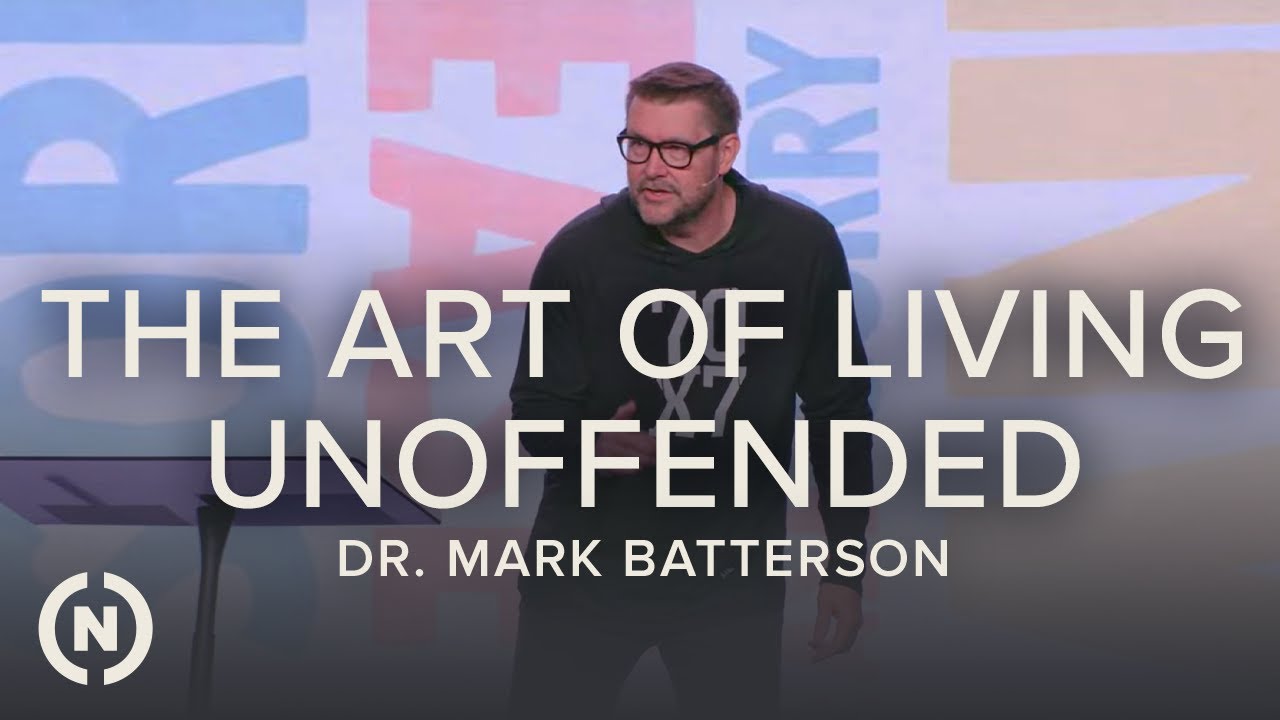
- The Art of Living Unoffended
On August 22nd, 1851, the New York Yacht Club won the inaugural America’s Cup. It was a 53-mile regatta around the Isle of Wright. That New York Yacht club successfully defended their title 26 times. They held the title for 132 years. It was the longest winning streak in international sports history until 1983, when the Australia two finally broke that streak. How did they do it? Well, a wing keel designed by Dutch engineers did not hurt. But when you haven’t won a race in 132 years, the first thing you need to do is overwrite the negative narrative. And that’s exactly what the Australian coach did. Three years before that record-breaking race, he made a recording of the Australian team winning that race. I know next to nothing about sailing, but he narrated every jib, every tact. He included the sound of the sailboat, cutting through the wind and the waves, and a copy of that soundtrack was given to every member of the crew. And every member of the crew was required to listen to it every day, twice a day for three years. They won that race 2,190 times before they even set sale. That is mind over matter, that is the power of words. For better or for worse, our words function as self-fulfilling prophecies. Linguists call it the constructive conception of language. Our words do not represent the world objectively. Our words create the world subjectively. If you wanna change the world, you need to change your words. Words create worlds. Isn’t it interesting that 2,000 years ago, James likened our words to the rudder of a ship? Just as ships are steered by rudders, our destiny is dictated by our diction. Our words are the difference between winning and losing. Our words can create worlds of hurt, worlds of healing. Our words have the power to bless and the power to curse. James said it this way, with the tongue, we bless our Lord and Father. Now, here’s what I find fascinating about this verse, James 3:9 is the mere image of Genesis 1:28. What do you mean? Well, in Genesis 1:28, first recorded words of God to us and they’re words of blessing. Before original sin, there was original blessing in that sequence is significant. Blessing is God’s most ancient instinct. And blessing is our deepest longing. And I would argue because language is part of what sets us apart from the rest of creation, that God gave us the capacity to communicate for the express purpose of using our words to bless. That’s what’s happening here with our tongue. We bless our Lord and Father, that is our original intent. Baruch Atah Adonai. When we worship, we are blessing God. When we worship, we are mirroring what is happening in heaven. Or if you prefer, we are harmonizing with heaven. We are joining this choir of angels and elders and living creatures who never stopped singing, “Holy, holy, holy is the Lord God Almighty, who was and is and is to come”. With our tongue, we bless our Lord and Father… If only the verse ended there. But it doesn’t. We speak with forked tongue. With the tongue, we bless our Lord and Father, and with it we curse human beings who have been made in the image of God. In politics, two ways to rally the troops. Common enemy, common humanity. And I’ll delineate the difference. If the goal is getting people to the polls, common enemy is incredibly effective. It simply demonizes anyone who dares disagree with us. And it will win some votes, but it will be divisive because it is fueled by negative partisanship. Common enemy is a zero cut sum game. It’s win lose, and it turns into me versus you. Rabbi Jonathan Sacks calls it pathological dualism that prejudges people. It’s unimpeachably good or irredeemably bad. It demonizes anyone who doesn’t look like us, think like us, vote like us, and what you end up with is mud slinging. You end up with baiting and shaming and trolling. What you end up with is cancel culture. Now, there is another option, and it’s called common humanity. It appeals to ideals, it appeals to our better angels. Instead of demonizing those we disagree with, it humanizes them. How? By treating people with dignity. By finding common ground, by finding common grace. Common humanity turns me into we. In, in Zulu, there is a greeting, swabono. Translated, I see you. Turn to the person next to you and say it. I see you. The image of God in me greets the image of God in you. Now, I like sharing some of my rules of life here and there and everywhere. When in doubt, when all else fails, my rules of life are rules of thumb, and they are default settings in my life. Here are two of them. Everyone is my superior in some way and that I learn of them. And number two, everyone’s fighting a battle I know nothing about, in that, I empathize with them. Now, I better give a disclaimer. As soon as I’m completely sanctified, I’ll let you know, but I would not hold your breath. I am a work in progress. These rules of life are aspirational. I don’t always get ’em right. In fact, this week I got one really wrong. Newsflash, it’s much easier to act like a Christian than it is to react like one. Can I make a confession? And I’m embarrassed to admit this, but I lost my temper this week. Y’all, I’m pretty low key. I’m pretty easy going, but I gotta, I got just a little trigger happy this week and I’m not the only one, some other… Okay, all right. I’m in the right room. I love it. I love it. So, you know, coming off of Easter, I’m a little tired, and when I’m a little tired, I tend to… be a little bit more on edge. And so there, there’s this old acronym, HALT. If you are hungry, angry, lonely, or tired, you better guard yourself. You better chickety check yourself before you rickety wreck yourself. Now, I did not do that. So Laura and I were on a flight and there was a flight attendant who was not nice, and gave me a little lecture. I’m telling you it was two, it wasn’t even two inches. She gave me a little lecture about my backpack sticking out from under the seat. Okay, I see how this is going to be. Now, I usually try to jujitsu, and I tried to out nice angry owls. That’s really what I try to do. I tried to tap my Minnesota nice, I couldn’t find the switch. And so Laura got up to go to the restroom and it was occupied, but you have no way of knowing if it’s occupied. And so my beautiful, wonderful, precious, sweet, amazing wife just waiting for the restroom, and this same flight attendant in a not nice voice, “Ma’am, sit down”. Oh no, you didn’t. You can mess with me, we’re okay. I can take it, I can deal it. You mess with my wife and kids, and it is on like Donkey Kong. It brings out the Michael Buffer in me. Let’s get ready to rumble. And so I’m… It’s not a great flight, I’m distracted. And finally they announce, you know, we’re getting ready to land, let’s prepare the cabin, and so the same flight attendant is collecting garbage and… I handed her the box that I brought on board, not a large box, I just handed her the box, and she said, “It won’t fit in the garbage”. I’ve never really had that happen. Like in the words of Jerry McGuire, “Help me help you, help me help you”. This is so embarrassing. You are not gonna believe what I did. I dropped the box. And she one upped me. “Sir, it can’t go there”. And I kick it. Like a two year old throwing a tantrum. That’s when my wife, Laura, leans over and says something about the image of God in everyone. Seriously, if it weren’t for the Holy Spirit in my wife, I would be in so much trouble. This is your first week at NCC, welcome. Follow me as I follow Christ. If you are a flight attendant, I am so sorry. I felt so convicted that actually, the next few days, I upped the ante. By the way, do you wanna know where we were going? This is even more embarrassing. Flying to the cove to speak at the Billy Graham Retreat Center. Oh Lord, help me. Help me, Lord. James 5:16 says, “Confess your false one to another”. We confess our sins to God for forgiveness. That’s vertical. We confess our sins to each other for healing, it is horizontal. I think part of what I’m trying to say is that the ground is level at the foot of the cross. It was almost 30 years ago that I read Seven Habits of Highly Effective People. Stephen Covey tells a story about riding the New York subway one morning, and it’s so peaceful, unlike a weekday. And that’s when a man gets on with his two children and they start wreaking havoc. And the dad is just sitting there absolutely oblivious to everything that’s happening. And you can just feel the irritation in the train car. And finally, Stephen Covey, you know, says to the man, “Sir, your children are creating quite the commotion”. It was almost like the man kinda woke up, recognized what was happened, and apologized profusely. He said, “We just came from the hospital, where my wife and their mother died an hour ago. I don’t know what to think, and I guess they don’t either”. In a moment, in an instant, all irritation evaporated. And it was replaced by pure empathy. When I say everyone is fighting battle we know nothing about, this is what I’m talking about. If we could read the secret history of our enemies, said Henry Wadsworth Longfellow, “We should find in each man’s life sorrow and suffering enough to disarm all hostility”. Hurt people hurt people. We’ve heard it a hundred times. Let me kind of push that envelope. Forgiven people forgive people. Unforgiven people do not. Why not? Because you cannot do for others what you have not allowed God to do for you. The great commandment is three-dimensional. We totally get love God, love people. But there’s also this dimension of as you love yourself, in my experience, the less I like myself, the harder it is for me to love the people around me. And so what do we do? How do we love ourselves? We let God love us, we let God forgive us. We let God save and heal and deliver us. We let God do for us what we cannot do for ourselves. In psychology, there are presenting problems and there are root causes. I’m more and more convinced that unforgiveness is the root cause of 101 problems. So much of what’s wrong with us is bitterness, is unforgiveness, is offense that we’ve taken, and when you take offense, you stop playing offense with your life and you start protecting your ego at all cost. And your world gets smaller and smaller and smaller. And what happens is you let people live in your head, in your heart, rent free, and you let them begin to narrate your story. And what I’m saying today is don’t do it. Give the author and perfector of your faith complete editorial control, and he will begin writing his story history with a hyphen in and through your life. But it happens when we surrender our lies to His lordship. Can I share a verse that’ll change your life? Romans 12:19, “Leave room for God’s wrath”. That is easier said than done ’cause I wanna even the score. Our natural instinct is to do unto others what they have done to us. Yes? But Jesus had a rule of life called the golden rule. Do unto others, wait, wait, what you would have them do unto you. And that’s where these six antitheses, I call ’em counter habits and the sermon on the mount come from. Love your enemies, pray for those who persecute you, bless those who curse you, turn the other cheek, go the extra mile, give the shirt off of your back. There a moment in the gospels where Peter asked Jesus a question, “How often should I forgive my brother and sister who sins against me”? Now Judaism answer 3. 3 strikes and and you’re out. So I know for a fact Peter’s feeling really good. How do I know that? ‘Cause he even answers his own question like up to seven times, like… Peter got some swagger going on ’cause I’m gonna… He thinks he’s going the extra mile. He thinks he’s gonna get extra credit. And Jesus says, “I tell you, not 70 times, but 70 times seven,” that would look good on a hoodie. Now I wanna be careful right here. I’m not suggesting that by forgiving others, you expose yourself to abuse, you need healthy and holy boundaries. Turning the other cheek does not mean codependence, letting people use you or abuse you does not glorify God. And so Jesus said, forgive 70 times 7. He also said, don’t throw your pearls to pigs. I want you to jot this down. The most important decisions are pre decisions. And when Laura and I got married, we made a pre-decision that we would never not tithe, that the first 10% of our income would go right back to God. And then we want to grow in generosity, and the dream is someday to reverse tithe, live off of 10%, give 90%. And so we don’t make that decision every time we get a paycheck or a royalty or an honorarium. We made that decision 30 years ago, and that’s a gift that keeps on giving. And so I’m really convinced that if you want to get in shape, for example, or anything else, you’re going after a goal, you gotta make a pre-decision to kinda lock it and load it. And so it was about 10 years ago that I made a pre-decision. My verse of the year going into 2011 was Proverbs 19:11. “It is to the glory of a man to overlook an offense”. Word of the wise, be careful when you’re choosing a verse of the year because God will give you an opportunity to put it into practice. My goal is to be unoffendedable. Now as evidenced by a recent flight, I’m not batting a thousand, okay? There’s some swings and misses in there. But I am gonna do my level best to live my life unoffended. I cannot derive my opinion of me from your opinion of me. I just can’t, I can’t. Can’t do it. By the way, even if it’s a good opinion, ah, if you live off a compliments, you’ll die by criticism. My advice, just live for the applause of nail scarred hands. Why don’t we do that? I derive my identity from Jesus Christ. I am in Christ. Christ is in me. And that is the hope of glory. I love this pre-decision. A few years ago, I was speaking at a conference with Bob Goff. We were on a panel together on parenting, and I don’t know what question prompted the story, but he shared a story that predates the birth of his daughter, before his daughter was born. This is unbelievable to me. Bob Goff wrote a note saying that he forgave her. Past tense, for getting into an accident and crashing their car. He put that note in a jar, sealed the jar, buried it, noted the latitude and longitude. And the day came 17 years later that his daughter crashed their car, and so Bob just handed her a shovel, gave her the coordinates, she dug up the jar, read the note, and discovered that her father had forgiven her before she was even born. By the way, if that panel was a competition, Bob won. Can I share some good news? God forgave you before you were even born. 2,000 years ago he wrote a note, it’s called the Bible. The latitude in longitude is just outside Jerusalem. Your sin was paid in full at Calvary’s cross and it was signed, sealed, and delivered at an empty tomb. But this verse is important. First John 1:9 and 10. “If we confess our sins, God is faithful and just to forgive us our sins and to cleanse us from all unrighteousness. If we claim we have not sinned, we make him out to be a liar and his word is not in us”. In other words, all have sinned. And that word it has so much baggage, okay? In Greek it’s, it’s an archery term. It just means to miss the bullseye. I think what it’s saying is, and I’ve really never met anybody who would disagree with this. I don’t hit the moral bullseye every time. Am I in the right room? So it’s this idea that, you know what we do? We try to meet legitimate needs in illegitimate ways and we get out of bounds and we get outside God’s good pleasing and perfect will. Why? ‘Cause we know better than God. And then we discover at the end of it, mm, might need to confess that and repent and get it right and get it taken care of. The word confession is a compound in the Greek. And it means to speak the same, it means to agree with God. It means to come to the same conclusion. And it’s doing so fully and freely and publicly. It’s saying guilty as charged. And that’s key. Many, many years ago, went to court with a family member who got a moving violation. I will not mention his initials, but his name is Joel Schmidgall. And he was in college. He was in college. But I just want to tell you he drives a lot worse now. There is not a defensive bone in his body. And so he asked me to go to court with him as a character witness. I don’t even know if this is a thing any lawyers, you know, just let me know afterwards. But let’s just say I don’t think the judge was impressed when he called me a character. And so I knew it was not gonna go well when we’re sitting there with dozens of people who are also innocent, and they call Joel Schmidgall and he gets up and there’s this loud ripping splitting sound and sure enough, like mm, the seam of his pants rips in two. He has to untuck his shirt, if I remember right, untuck his shirt before approaching the judge. And we both learned a valuable lesson that day. Or I learned a lesson at his expense, let’s be honest. The judge said, “Now if you’d pleaded guilty, it wouldn’t have to go on your record. But you pleaded not guilty, fool”. You pleaded not guilty, so I’m so sorry my hands are tied. It’s gotta go on your record. That is First John 1:9 and 10. If you claim to be without sin, listen, the only person you’re fooling is yourself and you’re not really fooling yourself at a subconscious level. There is so much, can I just say it? There’s just so much freedom in forgiveness. But there’s a precursor to it. I’m sorry. I’m sorry. And that word is only as effective as it is authentic. And we don’t have to have time to talk about the specificity test ’cause you can pray, “Lord, forgive me for everything I’ve ever done wrong,” and God can do it, but we didn’t let our kids get by with that, because you’re gonna keep doing the same thing all over again. So it’s gotta pass that specificity test. When Jesus was on the cross, he said it is finished. What a moment. We’re talking about the power of words, right? It’s three words in English, but it’s one word in Greek. And I would suggest that that one word of forgiveness could create a world of freedom in your life that you would be a totally different person. So much joy, so much peace in experiencing that kind of forgiveness. It’s an accounting term that referred to the final installment on a debt. Archeologists have actually found this word written across ancient receipts. I owed a debt I could not pay. He paid a debt he did not owe. Colossians 2 says, “God forgave us all our sins having canceled the charge of our legal indebtedness, which stood against us and condemned us, he has taken away”. How? Nailing it to the cross. We need to quit living like Jesus is still nailed to the cross. The only thing nailed to the cross is our sin. Can I paint a little picture? When Jesus was arrested, I’m just gonna do this just for kind of a visual. I love that sound. It’s the sound of forgiveness. It’s the sound of my sin being nailed to a cross. On the night Jesus was arrested, you remember this, Peter didn’t just make one mistake, he made two. He denied Jesus three times, but he also committed a crime. He grabs a sword and he cuts off the ear of the high priest, right ear of the high priest, Malchus. Okay, this is the end of the road for Peter. You do not cut off the ear of the servant of the high priest and get by with it. You get charged with assault and battery with a deadly weapon and you end up on a cross next to Jesus, but he doesn’t. How is that possible? Because Jesus healed the man who came to arrest him. Wow. Heals the amputated ear. And so I can see the case going to court. The judge is a little confused ’cause the charge brought is an amputated ear. Judge says, “Hey, would you approach the bench for a minute? Which ear”? Malchus says, “My right ear, my right ear”. Judge says, “It looks fine to me,” and the case gets thrown outta court for lack of evidence. Dick Fo summarizes that story this way. Jesus destroys the evidence that was against us. Hallelujah. It is finished. It is forgiven. We are right with God grace, God’s righteousness at Christ expense. God made him who had no sin to become sin for us so that we might become the righteousness of Christ. It’s almost like God says, “Here’s what we’re gonna do. You take all of your sin, everything you’ve done wrong, transfer it to my account, I’ll pay it in full. But wait, there’s more. Why don’t we take everything Jesus did right, His righteousness? We’ll transfer that over to your account and then we’ll just call it even”. What? Religion is spelled do. It’s all about what you can do for God. Christianity is spelled done. It’s all about what Christ has done for us. Grace is undeserved, Grace is the unmerited favor of God. Their hearts, where as callous as their hands. How could they not be? You can’t drive nine inch spikes through people’s hands and feet every single day and not lose your soul. This isn’t what they dreamed of doing, but it was a job assigned to them by the Roman Empire. It was their job to torture people to death and it was up close and personal. They could smell their breath as they drove those nails. The blood of their victims always ended up on their clothes and those victims would curse and spit. But not this one. Not this one. They mocked him, they flogged him with a cat of nine tails. They nailed him to an old rugged cross. And he said, “Father, forgive them for they know about what they do”. Who does that? How is that even possible? Of all the miracles in the gospel, this is the moment. How do you forgive someone who nails you to a cross? As I see it, I don’t have a leg to stand on. I don’t have a leg to stand on. A few years ago, my counselor gave me an assignment. Is there anyone or anything that you have not forgiven? I thought it would take a few minutes. What I discovered several hours later is that I’m a lot better at complaining than confessing. I’m a lot better at projecting than professing. Oh God, help us. This is the hope of the world. What I’m talking about is the only thing that’s gonna heal the divides, is the only thing that’s gonna bring us back together. It’s the common humanity that all of us sinners in need of a savior, but a savior whose forgiveness is big enough for all of us. His grace is sufficient. Close with two questions. One, what do you need to stop saying? Two, what do you need to start saying? We’ll start with stop. “With the tongue, we bless our Lord and Father and with it, we curse human beings who have been made in the image of God. My brothers, This should not be”. In Hebrew, there’s a concept called… A literal translation is evil tongue. Refers to derogatory or defamatory speech. In rabbinic tradition, words were arrows, and if you draw the bow and shoot the arrow, you can never get it back. You can delete the tweet, but someone will screenshot it. There’s a story in the Talmid about a woman who visits a rabbi confesses to spreading falsehoods, and the rabbi gives her two tasks. He says, “I want you to take the feathers of a pillow, and I want you to place one at every door in the village”. She completed the task, which took quite some time. Came back to the rabbi and said, what is the second task? Go back and gather up all the feathers from all of the houses. The woman said, “That’s impossible. The wind has spread them far and wide,” and the rabbi said, “So it is with your words”. To gather those feathers is as impossible as taking back harsh words you have spoken, you would do well to remember that before you speak in the future. Francis Schaeffer, the great apologist, said that if we were all forced to wear a voice recorder, like Flavor Flav, and it captured every conversation we’ve ever had, and the and the transcription was made available to everyone, which, and I did have a thought, Siri, Alexa, Google. It might already be captured, but Francis Schaeffer said, “All of us would go into hiding for the rest of our life”. You know my heart, the goal at NCC is never to send anybody on a guilt trip. We just go right back to the foot of the cross. We get our sin dealt with. We confess it. God forgives it, and we get on with the Father’s business. There is no condemnation to those who are in Christ Jesus. Our words are nailed to that cross. Our deeds are nailed to that cross. In Jesus name. Amen. www.theaterchurch.org
- Yesterday's Promise Could Be Today's Curse
Where would the bread come from? Jacob heard his grandchildren’s whimpers as they rustled in the neighboring tents. He knew tears were running down their faces as their tiny empty bellies cried out. Where would the next meal come from? The drought had devastated the crop. Travelers from the North had spent the night. They carried bags of grain and shared news that the Pharaoh had storehouses of grain. They had met with his right-hand man, Zaphenath-paneah. Seven years earlier, the Pharaoh was troubled. He couldn’t shake the nightmares. Skinny cows devouring fat cows, thin stalks of grain consuming fat stalks. His wise men couldn’t interpret his dreams, and his magicians couldn’t interpret his dreams. He heard rumors of a Hebrew prisoner who could interpret dreams. This young man, called Joseph, told him his god could interpret his dream. And so he did. Joseph told him that there would be seven years of plenty followed by seven years of famine. Somehow, Pharaoh knew this was the truth, that he was hearing the voice of the Divine. He trusted and responded. Pharaoh renamed Joseph with an Egyptian name: Zaphenath-paneah, “the god speaks and he lives,” and appointed him over all his wise men. And it came to pass just as Joseph had predicted. And God blessed Egypt. And God saved Jacob and his family. Generations pass, fearing the growing power of a multiplying group of people, and seeing an opportunity to harness the power of this indebted people-group, the Pharaoh enslaved the people. How did it happen? We don’t know. Perhaps it came in one fell swoop, a decree that transformed a free people into an enslaved people. Maybe it came over time: rights stripped one by one, with onerous taxation leading to the enslavement of Israel. Yesterday’s promised land became today’s curse for Israel. A place of rescue became a place of slavery. The land of bread became the land of bricks. Israel cried out. And the Lord heard their cry. Hundreds of years pass. Another Hebrew strides into the presence of the Pharaoh. “The LORD, the God of the Hebrews, sent me to you, saying, ‘Let my people go, that they may serve me in the wilderness’” (Ex. 7:16). And the Pharaoh hardened his heart. Where his predecessor in generations past heard Joseph’s warning and received it as the voice of God, Pharaoh rejected it as the voice of God. Pharaoh witnesses the Lord’s power come in wave upon wave, plague upon plague. Seven plagues ravaged the land. The Nile turned to blood. Frogs, lice, and flies infested the homes. Livestock was struck dead, boils covered the people, and then hail destroyed the flax and barley crops, which were primarily used to make clothes and for alcoholic beverages. Life was terrible. The people couldn’t remember the last time they had a decent night’s sleep. And yet, as awful as things were, God hadn’t touched the Egyptians’ food source (wheat). Moses and Aaron re-enter the Pharaoh’s throne room and speak again, “Thus says the Lord, the God of the Hebrews, ‘How long will you refuse to humble yourself before me? Let my people go, that they may serve me. For if you refuse to let my people go, behold, tomorrow I will bring locusts into your country, and they shall cover the face of the land, so that no one can see the land. And they shall eat what is left to you after the hail, and they shall eat every tree of yours that grows in the field, and they shall fill your houses and the houses of all your servants and of all the Egyptians, as neither your fathers nor your grandfathers have seen, from the day they came on earth to this day.’” Then he turned and went out from Pharaoh. Then Pharaoh’s servants said to him, “How long shall this man be a snare to us? Let the men go, that they may serve the Lord their God. Do you not yet understand that Egypt is ruined?” (Ex. 10:3-7). But the Pharaoh wouldn’t relent. And so the locusts came, and the wheat crop was destroyed. Days and then weeks passed. Where would the bread come from? The Pharaoh heard the whimpers from his grandchildren as they rustled in the neighboring rooms. He knew tears were running down their faces as their tiny empty bellies cried out. God removed Egypt’s blessing. Yesterday’s promise was today’s curse. The Pharaoh refused to believe that the bounty Egypt had been blessed with could be taken away. It was his. He deserved it. He was owed the blessing. When we presume upon God’s grace, we are in danger. When we think that the blessings God has extended to us are our birthright, then we ought to tremble. Yesterday’s promise might be today’s curse. Repent. Offer gratitude to your Creator. And release your demands.
- Wanderlust and the Christian Life
Oh, the places you'll go. Dr. Seuss believed that the true achiever is an adventure. You'll head straight out of town. It/s opener there in the wide open air. Out there, things can happen and frequently do to people as brainy and footsy as you. Seuss said it, and many agree. We're taking a vision trip to Florida, our friend shared. Tired of the heat of the Sonoran Desert, they set out to find the perfect place for their family to settle. I've been part of several similar conversations. It's healthy for couples to dream together. I've see God weave those dreams into something that honors him and blesses others. But don't underestimate the negative impact such dreaming can have., Hi, my name is John Beeson. Welcome to the Beehive. There are many dangers in wanderlust. First, consider how sharing your desire might move, to move might affect your friendships. I admit I find myself wrestling to invest in relationship or it seems like the other person won't be around for long. A few who have shared their desire to move have also shared how difficult it's been to build relationships. These two issues might be connected. Second, consider how carping on the place your local friends have chosen to live might impact them. Many chose the place they live because they love it. I love Tucson. I appreciate the Sonoran Desert, the five gorgeous mountain ranges that encircle the city. I enjoy the flora and fauna of the desert. I appreciate the climate and our radian sunsets. When someone whines about the heat of lack of green, I can feel a distance grow between us due to the divided appreciation for our shared natural habitat. You've probably heard of the colloquial phrase, don't yuck someone's yum. Appreciating and embracing where God has placed you might actually help you to draw near to others. Third, ingratitude is dangerous. Despite being rescued from slavery, the Israelites grumbled their way through the wilderness. Grumbling is an act of faithlessness, arising from a heart which refuses to see God as one worthy of trust and places one's hope in one's circumstances. The faithlessness culminated in their unbelief of God's power to give them the promised land. In Numbers, it says, "Why is the Lord bringing us into this land to fall by the sword?" The Israelites complained after receiving aggrandized reports from spies of the promised land. The Lord's displeasure and judgment of the Israelites for their unfaithfulness resulted in 40-year punishment, further banning them from the promised land. God said, "And your children shall be shepherds in the wilderness 40 years and shall suffer for your faithlessness until the last of your dead bodies lies in the wilderness according to the number of the days in which you spied out the land. 40 days, a year for each day. You shall bear your iniquity 40 years, and you shall know my displeasure. I the Lord have spoken. Surely this will I do to all this wicked congregation who are gathered together against me. In this wilderness they shall come to a full end and there they shall die." God might be preparing you for your own promised land. But beware of grumbling in the wilderness. Let trust with gratitude be the antidote. Give thanks in all circumstances for this is the will of God in Christ Jesus for you. Paul said, "Finally, it's rare to meet someone dreaming about their next destination who is also giving themselves wholeheartedly to where God has them today." When God sent Israel into exile, he also promised that one day he would restore them. But in the meantime, God didn't tell Israel to just tolerate it. No, God told Israel to invest in the land of their captivity. He said, "But seek the welfare of the city where I have sent you into exile, and pray to the Lord on its behalf. For in its welfare, you will find your welfare." We aren't called merely to tolerate the place God has called us, but to seek its welfare, invest in it, and make it thrive. In Oh The Places You'll Go, Dr. Seuss speaks of a confusion and a gloom. This useless place is what he calls the waiting place. Now he tries to assure you that somehow you'll escape all that waiting and staying. Beware of escaping that waiting place. Consider the promises of God. It might be exactly where God is calling you and wants to meet you. The Lord is good to those who wait for him, to the soul who seeks him. God always desire your good. That might be somewhere new in the future, but I promise you, it's also right now where you are. Don't let wanderlust steal the life God has placed before you because godliness with contentment is great gain.
- Lessons from David: Love, Power and Loyalty
What is your favorite story from the life of David? What stands out to you as the most significant thing in David’s life? I think one of the most significant things in David’s early life was his relationship with Saul. It started out well, progressed badly, and ended tragically. Yet, David’s relationship with Saul was formative in David’s life and affected how he dealt with Saul’s family in his later years. Most importantly, we will look at how power can impact relationships. EXAMINATION Saul accepts David in his service to play music. ( I Samuel 16:14-23 ) Saul brings David into his army. ( I Samuel 18:2-5 ) Saul is suspicious of David after the women sing, “David his ten thousands.” ( I Samuel 18:6-9 ) Saul requires 100 foreskins for Michal and seeks David’s life. ( I Samuel 18:17-29 ) Saul tries to kill David and hunts him. ( I Samuel 19 , 24 , 26) David plays for Saul to soothe him. David was humbled by Saul’s goodness to him (Nervous to be his son-in-law). David flees for his life. David has regard for Saul’s life. David grieves deeply when Saul dies ( II Samuel 1:17 ). How would you describe David’s relationship to Saul? How would you describe David’s relationship to Saul’s family? Notice the progression of Saul and his family and their feelings for David. “Saul loved him greatly” ( I Samuel 16:21 ) “Johnathan “loved him as his own soul” ( I Samuel 18:3 ) “Saul’s daughter Michal loved David” ( I Samuel 18:20 ) Honor was paid to David by Saul’s family. Johnathan gives David his robe, armor, sword, bow, and belt ( I Samuel 18:4 ). This was an expression of honor. Johnathan was essentially making David his brother, but he was also acknowledging that David would become king. He was transferring his own right of kingship to David. Michal chose David over her own father, the king ( I Samuel 19:11-12 ). Why do you think Saul’s family loved David so much? Notice how Saul and David address one another when Saul seeks to kill David. David says, “See, my father…” ( I Samuel 24:11 ) Saul says, “Is this your voice, my son David?” ( I Samuel 24:16 ) Saul repeats the same words the second time he hunts him, “Is this your voice, my son David?” Then Saul says, “Return, my son David.” ( I Samuel 26:21 ) Then Saul blesses David, saying, “Blessed be you, my son David!” ( I Samuel 26:25 ) This is the language of family, which make’s David bewilderment more understandable. His father-in-law is trying to kill him. Now, notice the reversal. At the second hunt, David no longer calls Saul “father” but “O king.” “It is my voice, my lord, O king.” ( I Samuel 26:17 ) “Here is the spear, O king.” ( I Samuel 26:22 ) Saul recognized that David would eventually take the throne away from his family. He told Johnathan, “For as long as the son of Jesse lives on the earth, neither you nor your kingdom shall be established” ( I Samuel 20:31 ). Eventually, Saul formerly recognized that David would be king. Though he hated him, he asked David for his solemn oath not to kill his family when he would become king ( I Samuel 24:20-22 ). It was a common practice in ancient days that when someone assumed a throne, they would kill the family of the previous king to prevent them from claiming the throne (Abimelech killed all his brothers to usurp a kingdom in Judges 9 , Solomon killed Adonijah in I Kings 2 , Athaliah killed the royal dynasty in Judah in 2 Kings 9 ). Saul wisely sought to protect his family, and he knew David to be a man of his word. In fact, David sought to do good to Saul’s family after he became king, making Johnathan’s son, Mephibosheth, part of his family. INTERPRETATION Saul’s Stages: David’s Response: Acceptance Mutual acceptance Favor Enjoyment Suspicion & Antagonism Bewilderment Enemy Love We can define David’s relationships with Saul and his family in terms of power. Everyone in Saul’s family started well in their relationship with David, including Saul. But Saul’s feelings changed when he felt his power was threatened. Johnathan had no desire for power. He was willing to relinquish his power in loyalty to his friendship with David ( I Samuel 20:14-15 ). Michal chose the love of her husband over the power of her father, the king ( I Samuel 19:11-12 ). Power is powerful. History is filled with testimonies of people who sought, used, and abused power. Some cultures in the world are organized around a “power-fear” perspective. The closer you are to power, the more powerful and important you become. The farther you are from power, the less important you are, and you are often disregarded as unimportant by others. Status can be a form of power. How we deal with power helps others see what kind of people we are. There’s a famous saying, “If you want to know a person’s true character, give him power.” Saul chose power over love. Johnathan chose love and loyalty over power. Michal chose love for David over her father, the king, the most powerful man in Israel. APPLICATION If we don’t guard our hearts , then we are susceptible to bad thoughts and feelings as Saul had for David when the women sang of David’s “Ten thousand.” A small thing can ruin a relationship. We must value love and loyalty over power, influence, status , and anything that would stand in the way of our love relationships with family, friends, and associates. Paul said that if we are without love, we are nothing. Loyalty is just as important. Johnathan and Michal chose loyalty to David over their father because they both loved David and saw that what Saul was doing was wrong. Saul wrongly sought David’s life, but Johnathan and Michal both defended David out of love and loyalty. Remarkably, David did not act as we might normally expect when someone seeks to kill you. When someone is antagonistic to us, we tend to respond in kind. While David kept his distance to protect his life, he also kept love in his heart as he grieved deeply over Saul when he died in battle ( II Samuel 1:17 ). He “lamented” over Saul. We should also remember to love our enemies . www.guywithabible.com.
- David: How to Make Godly Choices
Read I Samuel 16:1-13 . EXAMINATION (V.1) “How long will you grieve over Saul?” The Hebrew word for “grieve” in this passage is usually denotes mourning over a death. Samuel’s grief over Saul is deep and painful. He is not simply upset over Saul’s rejection of the Lord; he is deeply pained. (V.1) “For I have provided for myself a king among his sons.” This is in comparison with the choosing of Saul. God chose Saul to represent what the people wanted in a king. In I Samuel 8 , God tells Israel what kind of king Saul will be. This is in contrast to David, who is God’s choice for what he wants in the king. Notice the language used by the writer. God says he “provided for himself” a king. (V.3) “You shall anoint for me .” The same thing happens again. The king is not for the people; he is for the Lord. (V.6-7a) “When they came, he looked on Eliab and thought, ‘Surely the LORD’s anointed is before him.’ But the LORD said to Samuel, ‘Do not look on his appearance or on the height of his stature, because I have rejected him .’” This is the same thing that God said about Saul. He had rejected him. What a terrible thing to hear. Jesse’s sons had a godly heritage in their father and their ancestors. Boaz, who they are all descended from, was a godly man. Yet, the Lord rejected Eliab, and in fact, all of Jesse’s sons except David. (V.7b) “For the LORD sees not as man sees: man looks on the outward appearance, but the LORD looks on the heart .” Q: Why is the heart so important in scripture? The heart is the seat of our emotions. While it is part of the mind, it is from where we make our deepest decisions. The scripture often speaks of doing things from the heart, including forgiving others. Eliab did not have a heart dedicated to the Lord. This was also Saul’s problem. But we see from the Psalms that David loved the Lord and his word. (V.11) “Then Samuel said to Jesse, ‘Are all your sons here?’ And he said, ‘There remains yet the youngest, but behold, he is keeping the sheep .’” Q: Why do you think that David was told to keep the sheep when the prophet wanted to meet Jesse’s sons? There are a couple of things to note here. First, David was regarded with low esteem by his family. He had to keep the sheep instead of meeting the prophet. Jesse could have honored all of his sons by being sure David was there. But he didn’t. He could have had a servant watch the sheep, but he didn’t. This was an insult to David. But notice David’s attitude. David was busy being faithful in his duties when God called him. (V.13) “Then Samuel took the horn of oil and anointed him in the midst of his brothers .” Q: What do you imagine David’s brother’s attitudes were when they saw David so highly honored by the prophet when each of them were rejected? This was not done secretly. Now, we’re not sure if his brothers knew David was being anointed as king, but they knew the anointing was significant and honored David above all of them. This may have incurred some jealousy. Later on, one of David’s brothers, Eliab, rebuked David for coming to the battle with the Philistines. I tend to think that they knew David was being anointed as king. They just couldn’t wrap their heads around it. There are two parallels to this in scripture. First, Joseph was given dreams about his future and his brother’s bowing before him. They rebuked him for his dreams. The second is Christ. His brothers also rejected him, but later, at least two of them came to faith in Christ: James and Jude. (V.13) “And the Spirit of the Lord rushed upon David from that day forward.” This use of “rushed” indicates that David was given the power to fulfill his calling. He still had a lot to learn from this point on, and his character still needed to develop, but the point is that from that point on, David was a new man. INTERPRETATION Q: What do you think is the main point that God is driving home in this passage? Choice and heart. (V.1) Regarding God’s choices, sometimes they cause us pain or grief. Samuel grieved over Saul and God’s rejection of him. But God’s choice had to stand, regardless of the pain. (VS. 1 & 3) “Provided for myself,” and “anoint for me.” God is the one who chooses those who will serve him and how we will serve him. Ultimately, in this passage is a prophecy of the coming Christ. Paul notes that the Old Testament promises are “yes” in Christ ( II Corinthians 1:20 , Galatians 3:15-16 ). This means that the promises are to Christ. Thus, Christ is the real king. (V.7) “The Lord looks on the heart.” God is concerned about the affairs of the heart. Everything in life springs from the orientation and purposes of the heart. David guarded his heart, and that qualified him for God’s choice. David didn’t know everything he needed to know, but he had a heart that would enable him to learn and serve. (V.11) David keeping the sheep. This was the beginning of God calling David into service. God spoke and said, “Arise and anoint him, for this is he.” Some people think you have to be sitting quietly and listening for God to speak to us, to call us. However, that’s not the model in the Bible. In scripture, people go about their normal routine, and God interrupts their lives and speaks to them. APPLICATION The big idea of this story is about choice. We are given a glimpse into how God makes his choices for those whom he calls. Note: this is not about God choosing us for salvation. That is a different issue. Here, we are dealing with God’s call into useful service and how we must spend our lives. We see a two-fold process in God’s choice. First, he rejects those who reject him, and Second, he chooses those who have a heart for God God rejected Saul. He rejected Eliab. He rejected all of the brothers. But he chose David. The crux of it all is to ensure that we have a heart for God. Jesus Christ must become the supreme affection of our lives. Note also that God chose David when he was still immature, and he would grow into his position. God also chooses us when we are not fully mature. Consider others in the scripture who were called when not mature: Joseph, Samuel, and Jeremiah. All our lives we are growing spiritually, no matter our age or status. He is teaching and training us to serve him in whatever calling he has on our lives. There is an old saying: “God doesn’t call the equipped; he equips the called.” So, like David, we must do three things: Keep faithfulness. David continued to watch the sheep. Stay focused on Christ when insulted or offended. David did not protest when he wasn’t invited to meet the prophet. Come when you are called. When God makes his will known, pursue it as he empowers you. Finally, when God chooses you, he will empower you. Note what the scripture says happened after David’s anointing. “The Spirit of the Lord rushed upon David from that day forward.” If God chooses you for something, he will empower you for it, even if it’s just to learn and grow.
- David and the Slaughter of the Gibeonites
Read: II Samuel 21:1-14 EXAMINATION Background Understanding this episode in David’s life requires us to know something about the Gibeonites. Verse 1 says, “There is bloodguilt on Saul and his house, because he put the Gibeonites to death.” The Gibeonites were an Amorite tribe of people who lived in the promised land when Joshua and Israel were taking possession of it in Joshua 9 . The Gibeonites tricked Joshua into making a covenant with them, not to destroy them. Because the covenant was made in good faith on Israel’s part, Israel was obligated to keep the covenant and preserve the Gibeonite people. We must also understand something about covenants. Biblical covenants are not like modern contracts. Contracts are negotiated between two or more parties, compromise is made, and terms are drawn up. A modern contract can be canceled. Biblical covenants are not negotiated but are imposed and cannot be canceled. Biblical covenants are binding forever. Thus, David’s kingdom was bound to protect the Gibeonites because he was bound by the covenant, even though it was imposed over 200 years prior. We are not sure of when this episode takes place in David’s life. Some commentators think it was before David met Mephibosheth. Some say it was later in his life. Some point to David’s statement in II Samuel 9:1 , “Is there anyone left in the house of Saul…” indicating that he had already turned over Saul’s family to be killed by the Gibeonites. Additionally, the famine mentioned here may have taken place in David’s earlier years, for why would God wait until 30 or more years later to call for a famine because of Saul’s breach of covenant? However, I think this happened later because the text says David spared Mephibosheth because of his promise to Jonathan. When Johnathan died, Mephibosheth was a small child. But when David met him, he was an adult with a son of his own. Thus, it’s likely that this episode of the famine happened at a later date. (V.1) “There is bloodguilt on Saul and on his house, because he put the Gibeonites to death.” After David seeks the Lord about the famine, we see the Revealing of sin . Some translations say, “bloody house.” The Lord held this against Saul’s family because they may have all been involved in the slaughter of the Gibeonites, though we are not told so specifically. Remember that kings usually gave members of the royal family powers and privileges. Saul’s family may have been empowered to destroy the Gibeonites, though this is partly speculation. (V.3) “David said to the Gibeonites, ‘What shall I do for you? And how shall I make atonement, that you may bless the heritage of the Lord?’” Now we see the beginning of repentance of David on behalf of his people. His question, “What shall I do for you” indicates that he wanted to do whatever was necessary to make the situation right. There needed to be some kind of atonement. This is why David asks, “What can I do for you?” I.E., what can I do to make this right? (V.4) “It is not a matter of silver or gold between us and Saul or his house; neither is it for us to put any man to death in Israel.” These are two interesting statements. First the Gibeonites state, “It is not a matter of silver or gold.” It was common in those days that when a sin was committed, sometimes people would pay something to make it right ( Exodus 22:7-9 , II Samuel 12:6 , Luke 19:8 ). We have similar practices, don’t we? We use insurance companies and the law to negotiate a settlement or sue to get payment. It doesn’t necessarily make something right, but it exacts a toll on the offending party. This is similar to scripture. The Gibeonites are saying that financial payment is not enough to make it right. Then there is the second statement. “Neither is it for us to put any man to death in Israel.” This means that as a second-class people group in Israel, they had no legal right to put anyone to death for their sin. They were essentially saying to David, “Someone needs to die for this, but we don’t have the authority to put anyone to death.” Can you think of anyone who said something similar? How about the Jewish leaders who told Pilate they didn’t have the authority to put anyone to death? In the case of the Gibeonites, atonement needed to be made in blood by the offending party. (V.6) “‘Let seven of his sons be given to us, so that we may hang them before the Lord at Gibeah of Saul, the chosen of the Lord.’ And the king said, ‘I will give them.’” Now we see the request for justice. The number seven indicates that the Gibeonites knew who the surviving descendants of Saul were. Interestingly, they did not call for the death of Mephibosheth because everyone knew that David had a special relationship with Mephibosheth, so he was off limits . Additionally, Mephibosheth was not alive yet when Saul committed the breach of the covenant. So, Mephibosheth was not a guilty party. The surprising part was how quickly David said, “I will give them.” Remember that David made a promise to Saul not to destroy his family in I Samuel 24:20-22 . David seeks justice by turning over Saul’s family and keeps his promise not to utterly destroy his family by sparing Mephibosheth. (V.7) “But the king spared Mephibosheth…” Thus, Saul’s family is preserved through Mephibosheth. (V.9) “ gave them into the hands of the Gibeonites, and they hanged them on the mountain before the Lord, and the seven of them perished together.” Now we come to reconciliation . It may be hard to see, but it’s there. David is attempting to make things right between Israel and the Gibeonites, with whom they had a covenant. By doing this, he is trying to reconcile the two parties together. But why did David give over people who did not, as far as we know, actually commit the sin of slaughtering the Gibeonites? There are multiple examples in the Bible of people falling under punishment who were not guilty of the specific sin that people were charged with. David and Bathsheba’s son is one example. The infant died just days after birth, as God said would happen in II Samuel 12:14 . During the exile, thousands of Israeli children were taken into Babylon, even though they had not committed the sins of their fathers. We also see this with Daniel, Shadrach, Meshach, and Abednego. They were godly young men but were taken away in exile. Of course, their trial led them to become rulers in Babylon. God says in Exodus 20:5 , “…visiting the iniquity of the fathers on the children to the third and fourth generation of those who hate me.” Jesus said in Matthew 23:35-36 , “On you may come all the righteous blood shed on earth, from the blood of righteous Abel to the blood of Zechariah the son of Barachiah, whom you murdered between the sanctuary and the altar. Truly, I say to you, all these things will come upon this generation.” What we learn from these passages is that if a person keeps his sin or repeats the sins of his parents or ancestors, his guilt is manifold. He approves of and takes the sins of those before him and lives in him. Thus, his judgment is more severe. It may be that Saul’s family were involved in the slaughter and thus were held accountable. We will touch on this further. (V.10) “Then Rizpah the daughter of Aiah took sackcloth and spread it for herself on the rock, from the beginning of harvest until rain fell upon them from the heavens.” This gives us a hint of how long this process took place. From the beginning of harvest until the rains came was six months. I.E., Rizpah guarded the remains of her dead relatives for six months. Can you image guarding the decomposing bodies of your family for six months so vultures or other animals would not get them? Rizpah was in deep mourning. We can’t blame her. But this is what sin sometimes does. It has terrible consequences. If we don’t mourn over our sin as she mourned over her family, then we’re really not repenting of it. (V.12-14) “David went and took the bones of Saul and the bones of his son Jonathan from the men of Jabesh-Gilead, who had stolen them from the public square of Beth-shan, where the Philistines had hanged them, on the day the Philistines killed Saul on Gilboa. And he brought up from there the bones of Saul and the bones of his son Jonathan; and they gathered the bones of those who were hanged. And they buried the bones of Saul and his son Jonathan in the land of Benjamin in Zela, in the tomb of Kish his father.” At the end of this time, David takes action to collect the remains of Saul and his family and give them a proper burial. He turned over the family of Saul for destruction, but he still had a tender heart toward Saul and his family and wanted to honor them because Saul was still the chosen of the Lord in David’s eyes. (V.14) “…after that God responded to the plea for the land.” This is a hard statement. Essentially, God responded to the death of Saul’s family like he would respond in forgiveness to an animal sacrifice. Why would God do this? For one reason: restoration . God wanted to restore the relationship between Israel and the Gibeonites. There is every indication that between the covenant in Joshua 9 and the kingship of David, the Gibeonites became followers of the Lord. Notice their language in II Samuel 21:6 , “Let seven of sons be given to us, so that we may hang them before the Lord at Gibeah of Saul, the chosen of the Lord .” So, after justice was meted out, God responded because David had handled the matter by having the guilty destroyed and making things right with the Gibeonites. INTERPRETATION For many people, this is a difficult passage to understand. Let’s ask some questions of the text. Why would God send a three-year famine against Israel when Israel was not guilty of slaughtering the Gibeonites? Why was Saul’s punishment meted out to his family? Here are some possible answers: The military likely carried out the slaughter. That would involve Israel’s people and make them guilty of the breach of covenant. Thus, the famine was sent because Israel was guilty. Like royal families in that day, the king’s family likely held important positions in the royal house, including military roles. That would make Saul’s family guilty of the breach of covenant. Whole Gibeonite families were likely killed; thus, the punishment may be Saul’s family in exchange for the Gibeonite families that were slaughtered. Why would God respond to the death of Saul’s family like a sin sacrifice of an animal? The answer to this last question may be found in the progression of events that took place, which we’ve already highlighted. But I don’t want you to miss this as it has important implications for us. Notice the progression in this passage. Revealing sin (V.1) “There is bloodguilt.” Repentance (V.3) “How shall I make atonement?”There is precedent for nonguilty parties to repent on behalf of a nation. Daniel did this. Reconciliation (V.9) “He gave them into the hands of the Gibeonites.” Restoration (V.14) “And God responded to the plea for the land.” This is the process that we all go through when we come to faith in Christ, or when we commit sin that needs to be confessed and forgiven. First, our sin is revealed . Then we repent of what we have done. Then we are reconciled to God. Then he restores our relationship and makes us whole. We don’t know why God waited so long to have David address this wrong. It may be that he waited for David and Mephibosheth’s relationship to be established so that Mephibosheth and his son, Mica, would not be killed. God’s patience often waits until the last moment for a sin to be addressed. As to why God responded to the killing of the Gibeonites, I think the answer is found in the progression we’ve just noted. David went through the process of revealing , repentance , reconciliation , and restoration as God desired to make things right. Interestingly, if David had not responded the way he did, then he would have been excusing the sin of Saul and his family, and then he, too, would have been guilty of sin. Thankfully, he addressed it as needed. APPLICATION Do you have something in your life that needs this process of confession and restoration? When we first come to faith in Christ, we all go through this: Revealing sin Repentance Reconciliation Restoration But as we live by faith in Christ, we must sometimes engage in this process again when we sin so that we can make things right with God. Interestingly, when we are in the process of repentance, we may need to cut something out of our lives in order to complete this process. David, through the Gibeonites, had to rid Israel of Saul’s family to expunge the guilt. Think of the times when you have had to confess your sin to the Lord. Did you keep that thing that was a cause for sin, or did you expunge it from your life? www.guywithabible.com.
- Who Is Jesus, Really?
Have You Answered The Ultimate Question? No matter who we are we must find an answer to the ultimate question of life: "Who is Jesus?" Why is this the ultimate question? Because Jesus made some extravagant claims about himself which, if true, can have a life-changing impact. And not just for individuals, but for nations, as history has shown. When asked who Jesus is I come up with three answers that seem to me to be most important. If these things are true about Jesus then we must wrestle with what that means in our lives. Discovering who Jesus is is not simply an academic exercise. It is much more. So, allow me to give you my three answers and then three ways we must examine the claims of Christ if we want to see a radical change in our lives. Who is Jesus? He is the Son of God He is the Savior He is the Lord Jesus claimed to be the Son of God (Matthew 27:43; Mark 5:7; John 10:36, 14:28). The Jewish leaders who heard him understood Jesus’ claim to mean that he was equal with God (John 5:18). This is an extraordinary claim, unequalled in the world’s religions. But for an extraordinary claim to be proven true, extraordinary evidence is required. Jesus produced that evidence through miraculous hearings never before seen, like the blind and the lame being instantly cured (Matthew 11:5; Luke 7:22; John 9:32, 10:38). His final proof of his identity came when he was raised from the dead (Acts 17:3,31; Romans 4:25). If Jesus is the Son of God then certainly that means something significant. He means he is endowed with authority that no one else has. It means that if he requires something from us we would be foolish to ignore him or put him off. Indeed, he does require something from us, he requires something extraordinary from us. He requires that we believe in him (John 3:36; I John 3:23). Jesus is our Savior (II Peter 2:20; John 1:29; I John 4:14). The term, savior, is a particularly Jewish concept. We’ve heard it so much in our modern day that we simply think of a savior as one who saves someone from something bad. But under the ancient Jewish context from which the term comes it means something much more. Savior refers to a blood sacrifice for sin. The terms has its root in the Old Testament passages that prescribe a system of animal sacrifices to atone for sin. By calling Jesus our savior we are effectively saying that he is the sacrifice for our sins. That is, in fact, precisely what the New Testament writers claimed (Romans 3:25, Hebrews 2:17; I John 2:2). Jesus is the Lord (Romans 10:9; II Corinthians 4:5; Colossians 2:6; Hebrews 13:20; II Peter 1:2) . What does it mean to be Lord? It essentially means that he is a ruler, a king. But he is not just any king. Jesus is the king of kings, the king over all creation (I Timothy 6:15; Revelation 19:16). Jesus claimed lordship for himself after his resurrection when he told his disciples, “ALL authority on heaven and earth has been given to me” (Matthew 28:18). If logically follows that if Jesus is lord, then he has authority to demand anything from us. To use a word from days of old we can say that Jesus is lord and we are his subjects. Before I move on, stop for a moment and reflect about these three claims of Christ and what they mean. Jesus is the Son of God who has all authority. How did he exercise that authority? He died for our sin, becoming our savior and commands that we believe in him. These claims are extravagant, but his command is also very simple. Believe in him. If we refuse to believe in him then we deny his saving role, his lordship, and his deity. Finding Personal Meaning In Jesus’ Claims There are many people the world over and through history who have believed in these three claims of Christ, but his claims did not change their lives. That is because knowing who Jesus is is more than an intellectual exercise. Remember the words of James who said the “The demons believe and tremble” (James 2:19). There are three areas of our lives in which we must come to a right understanding of who Jesus is. When we do this our lives begin to radically change. When we do this we will know and experience God’s love and forgiveness. These there areas are: Intellectually—This means that we must get to know the claims of Jesus and information about his life, death, and resurrection. We must know what are sometimes called the “true facts” about Jesus. But caution is in order. A knowledge of Jesus is not enough. We need more than intellectual knowledge. Emotionally—When we really discover what Jesus has done for us, suffering on the cross for the payment of our sin, we should be hit in the emotions. We should feel shame and guilt for our sin and what it drove God to do in order to save us. Discovering the truth about his resurrection should give us joy knowing that his death was not in vain and that through his resurrection we have an eternal hope. But even if we experience both an intellectual and emotional change, having strong feelings about Jesus is not enough. Responsibly—Knowing and experiencing is not enough. It is what we do practically in the world around us that demonstrates that our intellectual and emotional change is a real spiritual experience. The person who calls himself a Christian and even uses flowery words to describe their faith, but do not openly live for him are not Christians in the right sense of the word. James said, “Show me your faith apart from your works, and I will show you my faith by my works” (James 2:18). The Apostle John said, “Whoever says, ‘I know him’ but does not keep his commandments is a liar, and the truth is not in him, but whoever keeps his word, in him truly the love of God is perfected. By this we may know that we are in him: whoever says he abides in him ought to walk in the same way in which he walked” (I John 2:4-6). Conclusion Have you answered the ultimate question? Have you grappled with the abundance of evidence for who Jesus is? A true understanding of who Jesus is will transform a person. It will transform you.
- Does God Ever Condone Revenge?
Q: Does God permit or condone revenge? “Then Samson called to the LORD and said, “O Lord GOD, please remember me and please strengthen me only this once, O God, that I may be avenged on the Philistines for my two eyes.” Judges 16:28 . I. Definitions. There are several words we use to describe revenge: Vengeance, Avenger, Repay, Retaliation. The basic concept is to pay back someone for a wrong or evil that was done to another party. Some people believe that vengeance is always wrong. However, the Bible actually teaches that there is a proper time for vengeance. Not all vengeance in the Bible is wrong. II. Man’s View of Revenge. In what ways do people sometimes take revenge on others? To get back at the person who hurts us. Examples of biblical figures taking revenge. Samson constantly took revenge when he was wronged. Solomon took revenge on Joab and Shimei ( I Kings 2:5-6 , 8-9 ) In Judges 19 & 20 , 11 tribes took vengeance on Benjamin for shielding rapists in their tribe who committed a vile act. Unforgiveness is the root of personal revenge. III. God’s View of Revenge. Does God take revenge on people? Forbidden to Christians. Leviticus 19:18 . Revenge and love tied together. “You shall not take vengeance or bear a grudge against the sons of your own people, but you shall love your neighbor as yourself: I am the Lord.” “You have heard that it was said, ‘An eye for an eye and a tooth for a tooth.’ But I say to you, do not resist the one who is evil” ( Matthew 5:38 ). God sometimes take revenge. Examples of God taking revenge. Taking vengeance on Israel for violating the covenant. Leviticus 26:25 . “I will bring a sword upon you, that shall execute vengeance for the covenant.” Taking vengeance for Israel against Babylon. Jeremiah 51:36-37 . “I will plead your cause and take vengeance for you. I will dry up her sea make her fountain dry, and Babylon shall become a heap of ruins.” Why God takes vengeance. Nahum 1:2 . “The Lord is a jealous and avenging God; the Lord is avenging and wrathful; the Lord takes vengeance on his adversaries and keeps wrath for his enemies.” Notice that right after this he says, “The Lord is slow to anger” ( Nahum 1:3 ). God does not quickly rush to judgment. What is the difference between revenge and justice? For the protection of society, justice seeks to remove evil and the harm it causes. Revenge seeks to retaliate in a harmful way against others, including up to killing. Someday God will have a final day of reconning when he will punish all evildoers for eternity. Those people will experience God’s eternal wrath and he will have his vengeance and will take vengeance for his people ( Revelation 6:10 ). IV. Government’s View of Revenge. Payback for evil against its citizens. “For he is the servant of God, an avenger who carries out God’s wrath on the wrongdoer” ( Romans 13:4 ).God’s requirements for vengeance by a government. Amalekites as an example of God’s vengeance against Israel’s enemies. “I have noted what Amalek did to Israel in opposing them on the way when they came up out of Egypt. Now go and strike Amalek and devote to destruction all that they have” ( I Samuel 15:2-3 ). God established in Israel something called the “Avenger of Blood.” Context and description ( Numbers 35:18-29 ). Numbers 35:18-19 . “The murderer shall be put to death. The avenger of blood shall himself put the murderer to death; when he meets him, he shall put him to death.” The Avenger of Blood was part of Israel’s criminal justice system. It was not meant as a way of exacting personal revenge. V. When Is Revenge is Acceptable or Unacceptable? By governments when wrongly attacked. By God, when judging evil (personal or political) There is no situation in scripture where God condones personal revenge by another person. Some believe that the biblical phrase, “Eye for an eye” permitted revenge. However, the passage it is taken from, Exodus 21:23-25 is part of a larger passage describing the administration of criminal justice. Eye for an eye was a principle of criminal justice, not personal behavior. Jesus condemned personal revenge in Matthew 5:38-39 .God prefers forgiveness over revenge. People who did not take revenge: David did not take revenge against Saul or his offspring. Joseph did not take revenge against his brothers. VI. Application. Wrestling with forgiveness The root of revenge is unforgiveness. Jesus wants us to do away with revenge by granting forgiveness. “Forgive your brother from your heart” ( Matthew 18:25 ). Taking the attitude of Jesus on ourselves Let God handle vengeance Three application points from Roger Barrier of PreachItTeachIt.org on revenge: Since man is depraved, expect to be mistreated. Since mistreatment is inevitable, anticipate feelings of revenge. Since we all deal with feelings of revenge, handle mistreatment God’s way. a. We are responsible for sharing Christ with our enemy, whoever that might be. b. If possible, be at peace with everyone (but sometimes it’s not possible). c. Don’t spend life trying to get even. Repay evil with good.
- Last Words of David
I Chronicles 28:9-10 “Solomon my son, know the God of your father and serve him with a whole heart and with a willing mind , for the Lord searches all hearts and understands every plan and thought . If you seek him, he will be found by you, but if you forsake him, he will cast you off forever. Be careful now, for the Lord has chosen you to build a house for the sanctuary; be strong and do it.” Background This moment comes near the end of David’s life, after Solomon has taken the throne. This was a brief period when David and Solomon ruled in a co-regency. Both men were king, but David was still supreme while he lived. This is the time when Solomon comes into power . David is communicating the most important principles of his life that he has learned and doesn’t want to fail in communicating them to his son. David had many failures as a father. When his children sinned, he often let it pass (Amnon raped his sister, David did nothing. Absalom murdered Amnon, David did nothing. Adonijah tried to seize the throne, David did nothing. None were punished under David’s regime according to the Law). Sometimes, it’s said that a person’s last words are his most important. These are David’s last words to his son and to us. These words encapsulate the most important things David has learned in his whole life. EXAMINATION “Know the God of your father.” In the biblical sense to know something is to experience it. Notice what David didn’t say. He didn’t say, “Be a good king.” He didn’t say, “Treat the people gently.” He didn’t say, “Lower taxes.” He didn’t say things we expect a ruler to say in our age. He said, “ Know the God of your father.” Solomon is being charged to remember the person of God. Notice the wording here: serve , whole heart , and willing mind . Did you notice the connection? Heart, mind, and strength from Deuteronomy 6 . What does it mean to serve God? How do we serve him? We do the things that give him glory. This passage actually gives us a hint at what serving God means. Whole heart means we serve God emotionally. A willing mind means we think about the things that please God. Let’s dive into this. “Whole heart.” This is the seat of our emotions. This is to serve God with all of our feelings and all of our love. We cannot say we love God if our emotions don’t match our words or our thoughts. II Chronicles 16:9 says, “The eyes of the Lord run to and fro throughout the whole earth, to give strong support to those whose heart is blameless toward him.” If our hearts are not fully devoted to Christ, then our mind and our strength will not be devoted either. “Willing mind.” “Think about these things” ( Philippians 4:8 ). Paul describes thinking on something as to dwell on it, to turn it over and over in our minds. Solomon actually excelled in this. His wisdom was a trait of his intellect. To constantly think about spiritual things, or things that benefit others, is to love the Lord with your mind. When we occupy our minds with godly things we are loving the Lord with our minds. “Plan.” “Many are the plans in a man’s heart, but it is the Lord’s purpose that will prevail” ( Proverbs 19:21 ). Here it is that Solomon is charged to pursue his relationship with God. God should be part of all his plans. Plans are associated with the heart, our innermost desires. When we make plans to do something it’s because we have an emotional attachment to that thing. We plan a career. We plan our education. We plan for a spouse. We plan for our kids and grandkids. Plans indicate passion. How have you planned for a spiritual life? Is a spiritual life your primary passion? “Thought.” Our thoughts are either oriented around the things of the world or on spiritual things. There are no thoughts that the Lord is not aware of. Actually, though the heart is important, everything in the spiritual life begins with the mind. What we think about determines what we feel. When we dwell on things, it causes us to feel a certain way. In fact, in spiritual warfare, the central battlefield is the mind. Consider what Eve did in the garden when she considered eating the forbidden fruit. She reasoned in her mind what she wanted to do. Genesis 3:6 , “So when the woman saw that the tree was good for food and that it was a delight to the eyes, and that the tree was to be desired to make one wise, she took of its fruit and ate.” She reasoned everything in her mind and that affected her heart, then she sinned. The same process works in doing what is right. We reason it with our minds, guided by the Holy Spirit, to do what is right. Feelings follow our thoughts; they do not lead our thoughts. What kinds of things do you think about the most? Is it hard to think about spiritual thing? Notice how easy it is, even in a “spiritual environment,” to turn our thinking to nonspiritual things. Thinking rightly takes serious effort. One of the best things we can do to set our thoughts aright is to have a time of Bible reading and prayer in the morning. It can help set your attitude for the whole day. It doesn’t mean you won’t sin or feel negative. But it will act as a gatekeeper to your mind, helping you to reorient. The scripture says to “Take every thought captive to obey Christ” ( II Corinthians 10:5 ). I pray regularly, asking the Lord to help me address him throughout the day. “Seek.” “Seeking refers to a search for something that is either lost or that is desired . It carries a sense of applied effort toward reaching a specific goal” (Lexham Theological Workbook). Seeking God doesn’t mean praying and leaving things alone. It means to apply effort. Seek in prayer. Seek in the scripture. See with other godly people. “You will seek the Lord your God and you will find him, if you search after him with all your heart and with all your soul” ( Deuteronomy 4:29 ). Whenever we seek something, we put lots of effort into it. If your dog ran away, would you call out his name from the front door and go back inside, or would you go on a hunt to find him? What if you lost your child or grandchild? You’d go on a hunt, wouldn’t you? It is the same with seeking God. We don’t do it once and say one and done. We seek him daily, even throughout the day when we need him. We should be seeking him constantly and drawing near to him at every opportunity. If we seek the Lord as best as we can, the Lord promises to respond. This is all about the pursuit of God. “Found.” This indicates that there is something missing in our lives that we must find. The Hebrew word here literally means to find or reach something. We are reaching for God when we seek him out. And he can be found. Look what Paul and Moses said about God’s proximity to us. “God is not far from any one of us” ( Acts 17:27 ). “The word is very near you, in your mouth and in your heart” ( Deuteronomy 30:14 ). The word of God testifies to the person of God. When we have the word of God, as Israel did, then we have God’s presence near to us. “Forsake.” “To forsake God is to leave, to forget Him, to neglect Him, to prefer other things before Him” (The Sermon Outline Bible). Interestingly, later in his life, Solomon became an idol worshiper, but he did this in addition to worshipping the Lord. So, while he worshipped idols, he did not forsake the Lord completely. And thus, God punished him, but did not cast him off. “Cast you off.” The phrase “Casting off” is sometimes used regarding olives dropping off the tree or, to say a cow miscarries her calf. It means a total separation from God. Just like something cast off, once it happens, there is no going back. Olives don’t reattach to the tree. A calf can’t un-miscarry. To be cast off is to be cast off forever. The word literally means to reject, expel, or exclude. This is terrifying. “Build a house.” Now Solomon is charged with a place , building a temple for the Lord. Before a person takes up their ministry or calling, he should be completely dedicated to the Lord, as David admonishes. This is what David is telling Solomon. His relationship with the Lord comes first and prepares him for the task of building the temple. If you are not oriented toward the Lord, then he won’t occupy your house. A person is never really prepared for their calling without having an intimate relationship with the one who calls. INTERPRETATION & APPLICATION There is a progression of concepts in this passage. First, just prior to our passage, Solomon was called to power . Then he is admonished about the person of God and the pursuit of God. Then he is charged to build a place ; for God, the temple. Power Person Pursuit Place The most important thing in David’s mind is not the kingship; rather, it is the building of the temple. Solomon’s religious duties are greater than his political duties. “Build a house.” You and I are being built into a house for the Lord. We are the sanctuary of the Holy Spirit. I Peter 2:5 , “You yourselves like living stones are being built up as a spiritual house.” What kind of house are you? Is your life one that the Lord takes pleasure dwelling in? Why or why not? “Without sincerity and seriousness, our religion can be of no value in the sight of the omniscient God, of Him who is described by Himself as searching all hearts and understanding all the imaginations of the thoughts” (The Sermon Outline Bible). Notice that David did not direct Solomon’s heart toward the law but to the Lord himself. This reminds me of Jesus’ words to the Jewish leaders, “You search the scriptures because you think that in them you have eternal life; but it is these that speak of me” ( John 5:39 ). How are you fulfilling these four gifts of God? Power : How are you using your influence? Person : Is Jesus Christ the chief affection of your life? Pursuit : How do you pursue spiritual things? Place : You are a temple of the Holy Spirit. Are you a good place to live? www.guywithabible