Search Results
Search this site
3674 results found
- I Will Lift My Eyes to Him
When I am on a jog I often find myself looking right in front of me. Whether it’s because I’m focusing on the path, getting lost in my thoughts, or just fixed on the next turn coming ahead, my sights are generally set on my near surroundings. However, there are times when I will look up. It could be the flash of a bird, the pattern of a deer offsetting the foliage and brush, or it could be that my mind takes my eyes from what is directly in front of me to my surroundings. When I look up there’s a different feeling that washes over me. When my eyes are lifted up…the surroundings fill out and take shape…the colors take on a different hue…the landscape envelopes me and my vision changes. I can’t stay looking up however, because there’s the real possibility of tripping on a stick, stepping on a snake (I’ve seen many on my greenbelt runs), or soaking my feet in a puddle. Nevertheless, the differences of looking down and looking up are stark, and are yet complimentary. If I never look up, then I can’t see the spectrum and scope of the beauty around me. If I never look down, then I can’t see the dangers lurking beneath my feet. There is a harmony in the contrast and there is a shape in the exercise. It’s a lot like life. Long ago, God’s people would make three trips to Jerusalem from all over Israel. As they went on their journey they had many obstacles to overcome, the least of which was protection of their land as they traveled. However, God’s promise to them as they made these trips was in fact that He would look after their land and belongings as they were faithful to embark upon their journey to the central place of sacrifice and worship–the temple in Jerusalem. In the midst of their pilgrimage, they would sing songs to accompany them as they went. These songs were recorded in the Psalms and are designated as the Psalms of Ascent . The second Psalm of Ascent is our focus here. It begins… ______________ “I will raise my eyes to the mountains; From where will my help come? My help comes from the Lord, Who made heaven and earth.” Psalm 121:1-2 ______________ These travelers would raise their eyes…they would look to the mountains. Their ascent would be to the temple mount wherein sacrifice for their sins would occur. They would fix their eyes on the act of substitutionary atonement. This would comfort them on their journey and in their lives throughout the year. Their help…? From God. Their eyes…? Fixed on His work for them in restoration and reconciliation for their sins. In the midst of cultural chaos and contemporary confusion, what’s the one thing mankind should be concerned with in their lives? His relationship with his Creator. Moreover, what’s the one thing that separates man from being in a relationship with his Creator? Sin. Thus, how does the Creator deal with sin? Substitutionary sacrifice. How Does This Apply To Us Today? Enter the gospel…the good news. Here is where the human is to fix his gaze. He looks to the hills. The hill in Jerusalem. The hill of Calvary where Christ offered His life for ours. The substitutionary work of Christ for all mankind dealt with mankind’s sin eternally. The response? Transfer of trust from oneself–to be in a right relationship to God–to the person and work of Christ. Everyday remembering Christ’s work and how it informs my love for my wife, my children, my co-workers, my boss, my neighbors, my enemies, and my ___________. If God died on a hill for me, then I can look to the hill and remember His sacrifice, and then love others as He loved me. The hill of Calvary is a reminder of my God’s love for me, and it informs and teaches me how to love others. What hill are you not willing to climb for those in your sphere of influence? Look to the hill of Calvary, remember Christ’s love for you, and then climb your hill and sing the song of ascent… “ I will raise my eyes to the mountains; from where will my help come? My help comes from the Lord, who made heaven and earth.”
- Learn from the Ant
Go to the ant, O sluggard, Observe her ways and be wise, Which, having no chief, Officer or ruler, Prepares her food in the summer And gathers her provision in the harvest. Proverbs 6:6-8 My wife and I have three lovely daughters. Over the years we have found success and failure in our parenting journey. In many ways, parenting is like gardening. We cultivate, but we don’t change. We plant, but we don’t grow. We harvest, but we don’t ripen. Moreover, each day…each week…each year…each season, we have the opportunity to learn, to adjust, and to recalibrate our parenting ethos and strategy. It’s not necessarily a systematic planning, but is more of an overflow of our own faith-journey and walk of sanctification as parents and Christians ourselves. One of the ways we’ve adapted our parenting strategy is through word pictures. Word pictures have been useful throughout the ages to inspire, to connect, and to cause to feel a principle or an idea in ways that prose simply cannot. What’s incredible is that God’s Word is full of timeless word pictures that convey meaning, as well as echo into our minds and hearts deep truths of everyday life. These truths are often shrouded or hidden unless drawn to the surface with word pictures. We get this idea when we hear things like, “I’m as hungry as a hippo.” We all know that hippos are huge, which usually leads us to then assume that when they’re hungry, they’re really hungry! Compare this idea with trying to convey the same urgency of hunger by simply saying, “I’m hungry.” In this second case, we may know the person is hungry, but it doesn’t carry the same weight or urgency of the hunger as the hippo word picture does. How has this applied to our lives? I’ve used word pictures in own parenting journey that has proven powerful in the lives of my children, and one in particular. The story goes something like this… A parenting principle we are trying to instill in our three daughters is self-discipline . This is most vividly seen in whether or not they make their bed. One day, as we were discussing the Proverb of the day after breakfast I shared the story of the ant from Proverbs 6 with my girls…I repeated it several times and watched as it began to sink in. They received it well…they were inspired by this little critter of creation…and they adapted their morning habits to reflect the inspiration of the ant. We know they’re doing well with self-discipline by simply observing whether or not their bed has been made in the morning. Well, while they still struggle with making their bed everyday, we are finding they (and one in particular) do it more often and without as many reminders after sharing the story of the ant. How Does This Apply To Us Today? Consider the inspiration of the ant… Work is part of living. Self-disciplined and deliberate work is part of being an effective (doing the right things) worker. Self-discipline is wired into each of God’s creatures, and we have the privilege of imaging God as we live and walk in its tenor. Look for word pictures used in Scripture to apply to your everyday life. God has given us myriad examples of everyday living in His Scriptures to teach and inspire us to live according to His will. Take the time to meditate upon those and how you might apply them to your own lives. Look for truths in creation to inspire you to live according to God’s Word. While I write this post, I’m sitting in NW Arkansas on a family vacation with friends. After having a delightful time of devotion in God’s Word and observing my surroundings, I was inspired by God’s creation and decided to write this story. Everyday we are surrounded by God’s creation living out its design…do we have eyes to see and ears to hear? When we align ourselves with God’s design in our lives, we live according to His will and walk in His good pleasure. May we all learn from the ant…self-discipline…and be inspired to walk according to the will of God!
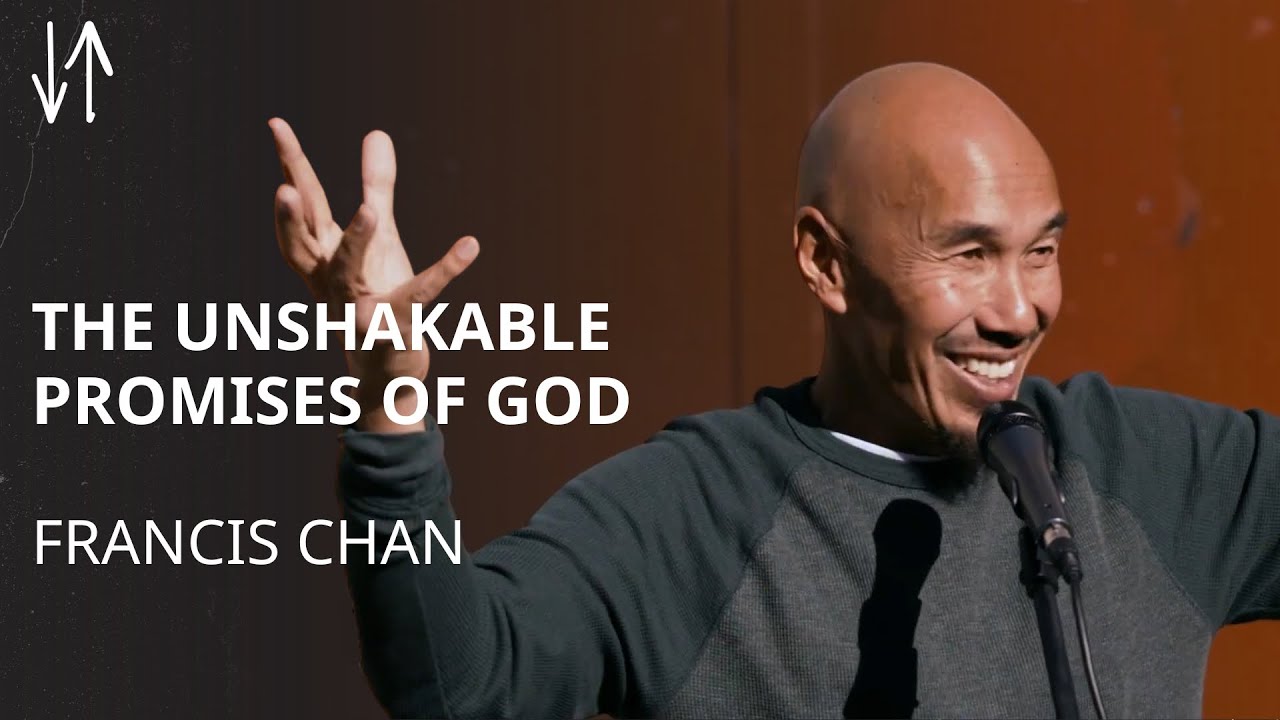
- The Unshakable Promises of God
Do you ever struggle to believe that God truly loves you? In this powerful teaching, Francis Chan unpacks Ephesians 1 and Paul’s prayer that “the eyes of your heart may be enlightened.” He shares deeply personal stories from his own life and invites listeners to encounter the love of God in a way that transforms insecurity into confidence, striving into rest, and fear into power. Francis reminds us that we are not trying to earn God’s love. He already sees us as His glorious inheritance. This message reflects the heartbeat of Francis’ new book, “Beloved” — a call to live from God’s love rather than for it. www.crazylove.org .
- Twelve Ways to Welcome Others with Different Opinions
Options for church unity are wider than we admit. After all, unity does not require uniformity. But if it’s true that unity does not require uniformity, what do we do when we find we are not uniform in belief and practice? And if the areas of difference are important rather than superficial, how do we keep that lack of uniformity from threatening or resulting in disunity? It seems to me these are the questions the church now faces and has been facing for a while. In congregations across the United States, leaders and members have been trying to figure this out. Some have confused uniformity for unity and made requirements of members that cannot be substantiated by Scripture (i.e., the sometimes subtle and sometimes explicit notion that one must vote Republican or not vote in order to “be a sound Christian”). Others have opted to not address or address only sparingly those matters where members are not uniform, hoping the matters will die down or thinking that to address them at all would be to create or further disunity (i.e., the strategy of not praying for, lamenting, or saying anything about instances of racial injustice). These options do not work. Tensions involving conscience and freedom, diversity and difference continue to rise. What should Christian leaders and members do when they are not uniform in some matters, particularly important matters involving things like “race” and racial injustice or politics and voting? For those interested to maintain unity where there may be significant disagreement on important ethical matters, here are 12 things to apply from Romans 14:1–15:7. (I apologize in advance for the length. But, hey, I’m only blogging here once per week!) 1. Know Whether You Are Weak or Strong in the Faith (Rom. 14:1) “As for the one who is weak in faith, welcome him, but not to quarrel over opinions. One person believes he may eat anything, while the weak person eats only vegetables” (Rom. 14:1–2). “Weak” and “strong” have nothing to do with how long someone has been a Christian or their theological system itself. It has to do with their conscience and whether their conscience allows them freedom where Christ’s word actually grants freedom or whether their conscience creates rules and restrictions in place of the freedom Christ’s word allows. The person “weak in faith” develops rules and considers breaking those rules a sin, even though it’s not. The person “strong” in faith enjoys the freedom Christ gives with a sense of Christ’s approval. The difference between the two groups show up in their practices—not in their formal theology. One makes rules to restrict legitimate freedom, while the other enjoys the freedom Christ gives. If we would have unity where we lack uniformity, then the weak and strong in faith must not quarrel with each other. Rather, they must understand each other and themselves. We must stop to ask: “According to the Scripture, am I weak or strong in faith? Am I enjoying the liberty of Christ, or am I making rules and restrictions where there are none biblically?” Knowing we are “weak in faith” provides opportunity for us to be free in Christ. But the difficulty is that the weak in faith often believe themselves to be strong precisely because they have rules that appear correct to them. The failure of others to obey the rules of the weak only reinforces the sense of rightness in the weak. Until we examine whether we’re weak or strong, and until teachers in the church teach members these categories, we will “quarrel over opinions” and miss opportunities for unity amid difference. Moreover, we’ll miss important opportunities to bear unified witness against the evils of our age. Determining whether we are weak or strong is the first discussion to have on the way to unity. Everything that follows depends on this first issue. 2. Recognize the Difference Between Disputable Opinions and Moral Commands (Rom. 14:1) Romans 14–15 does not address cardinal issues of Christian theology (i.e., the Trinity, the crucifixion, the deity of Christ, and so on). Nor does it address clear moral teaching of sin and righteousness (i.e., Rom. 1:18–32). In cardinal doctrine and moral imperative there can be no difference of opinion without distorting Christianity itself. Romans 14–15 addresses “opinions” (Rom. 14:1), or as the NIV renders it “disputable matters.” The particular opinions in Rome involved dietary preferences and observance of special religious days. Church members in Rome were judging and condemning one another over these opinions. But the gospel and Christian morality did not ride on such things, which is what made their judgments so egregious. These were areas of Christian liberty wherein Christians of like precious faith could and did disagree. These areas of disagreement necessarily involved the individual conscience, and no two consciences are exactly alike in these “disputable matters.” So if the church wants unity where it does not have uniformity, it must distinguish between the indisputable and the disputable. A significant amount of consternation in the church today is a failure at precisely this point. What really is a non-negotiable of the Christian faith—either in terms of doctrinal teaching or moral imperative—and what is a “disputable matter” or “opinion” (which is not to say such matters are unimportant, just that they are matters that admit difference and sometimes ambiguity)? Once we figure out whether we are strong or weak on any given topic, then distinguishing clear biblical command from personal opinion is the second discussion to have on the way to unity. 3. Refuse to Despise Those Who Differ from You (Rom. 14:3) “Let not the one who eats despise the one who abstains, and let not the one who abstains pass judgment on the one who eats, for God has welcomed him.” Those who enjoy their liberty to eat are the ones strong in faith. Their conscience allows them more freedom in eating without feeling like they’re sinning. Those who abstain are the “weak in faith.” Their conscience will not allow them to eat meat without feeling guilty of sin. The Bible does not say, “Let the strong convince the weak to change their mind.” It does not say, “Let the weak convince the strong to give up meat.” I think this text implicitly disallows resolution by an act of power. Instead, the Bible says, “Stop judging each other critically.” The Bible says, “Do not despise a person whose conscience is different from your own.” But how often do we hear Christians call into question the salvation of other Christians over differences of opinion about topics involving liberty? The Bible confronts our tendency to usurp God’s role in judgment in these matters. The Bible says, “Stop despising each other.” The reason we should stop judging people over opinions and disputable matters is because God has already welcomed them. How can we condemn those God has already accepted in the gospel of Jesus Christ? If we need a rule in these matters, let it be the rule to never despise those who differ from us on opinions. Let us know whether we are weak or strong, discern the difference between clear biblical command and personal opinion, and then refuse to despise those who differ. 4. Leave Judgment to God (Rom. 14:4–5) “Who are you to pass judgment on the servant of another? It is before his own master that he stands or falls. And he will be upheld, for the Lord is able to make him stand.” Our disputes over opinions do not stop with the topics of dispute themselves (i.e., eating or celebration days). Another opinion often follows closely—opinions about whether those we disagree with are truly Christians. It’s a common temptation. We soon hear ourselves wonder or see others say or write, “I’m not sure they’re really Christians.” But our fellow Christians are not our servants to judge. They do not belong to us. We did not save them. They belong to Another, to God the Father and the Lord Jesus Christ. Our brothers and sisters will each appear to their true Master who alone will decide whether they stand or fall. Notice the assurance. Our brothers and sisters will be upheld because it is the Lord who makes them stand! We should stop being so quick to wonder whether somebody is saved simply because they differ from us on a disputable matter. We should be far quicker to look at one another as people saved by the blood of Christ who belong to their One Master—Jesus the Lord. If we are tempted to make a judgment of others in opinions, let it be the judgment that God is able to save them on that great and terrible Day. Let the certainty of God’s salvation be the emphasis, rather than a passing and tepid admission inserted while argument and innuendo suggest the opposite. 5. Be Fully Convinced in Your Own Mind (Rom. 14:5) “One person esteems one day as better than another, while another esteems all days alike. Each one should be fully convinced in his own mind.” Again, the Bible does not require one side to change their opinion and join the other side in “disputable matters.” What the Bible requires is that we know what we’re talking about. “Each one should be fully convinced in his own mind.” If we’re going to have an opinion, make sure it’s an informed and sound opinion. Opinions can be and often are wrong; so we need to get things right and settled through sound reason as best we can. Everyone should be fully convinced in their own mind, but that doesn’t make every opinion equal in validity, accuracy, or helpfulness. In a lot of conversations between Christians about race and racism, the conversations are set up so that there are winners and losers and so that every opinion is seen as equally valid. But, friend, that’s a trap. There are a lot of ignorant opinions out there about race and racism. Some of the loudest people have never read a book on the disputed subject. They haven’t listened to others. The debated topic is not an area of study or expertise for them. They’re simply repeating what they heard their favorite pundit say or, worse, making up a perspective in the midst of a Twitter rant. There’s a better way, a way that leads to acceptance and welcoming. That’s when we: (a) allow others to have their views, (b) learn from the views of others, (c) do our homework by reading multiple sources from different angles on the issue, (d) test every view by the word of God, and (e) then arrive at fully formed opinions that convince us. People who are fully convinced in their own minds find they have even more freedom, because they’ve informed their conscience. They don’t feel a need to force uniformity, because they know what they know. And because they’ve done the work to become “strong in faith,” they can usually recognize and help other people on the path to fuller freedom by extending them grace to keep making their way. Worry about your own thinking. Do the homework and be fully convinced for yourself. 6. Honor the Lord in Your Practice (Rom. 14:6–9) “The one who observes the day, observes it in honor of the Lord. The one who eats, eats in honor of the Lord, since he gives thanks to God. For no one lives to himself, and none of us dies to himself. For if we live, we live to the Lord, and if we die, we die to the Lord. So then, whether we live or whether we die, we are the Lord’s. For to this end, Christ died and lived again, that He might be Lord both of the dead and of the living.” Another temptation we face on the way to unity when there is not uniformity is the temptation to judge the motives of others. Their difference in opinion can arouse our flesh. We not only judge whether they are Christians, we add to that an assumption about what motivates them. At least, we can be tempted to tell ourselves “the other side” does not want Christ’s glory. “If they did, they would not hold that opinion, right?” the flesh asks. As verse 7 says, “None of us live to ourselves.” We all live and die to God and for God. All of life should be lived in respect and reverence for Jesus. So whichever path you take, according to your conscience, do it giving thanks to God, knowing your life and your death belong to him. Every Christian fully convinced in his or her conscience will do or not do a thing for the same motive—to honor the Lord. We should charitably assume that of our brothers and sisters who differ with us in gray areas. We should be convinced that we ourselves are trying to honor the Lord. And we should be convinced that in these disputable matters our brothers and sisters are trying to honor the Lord. When we look at our brother or sister who has a different view than our own on racial issues or politics or homeschooling or the country’s history, do you remind yourself that they are taking their view to honor the Lord because they live and die for him? 7. Think of Your Own Judgment (Rom. 14:10–12) “Why do you pass judgment on your brother? Or you, why do you despise your brother? For we will all stand before the judgment seat of God; for it is written, ‘As I live, says the Lord, every knee shall bow to me, and every tongue shall confess to God.’ So then each of us will give an account of himself to God.” “So then each of us will give an account of himself to God.” In context, that means we will have to answer to God for the opinions we hold and the actions we take based on them. Sometimes people act as if there’s no accountability for opinions. They act as if they can think anything they wish without consequence. But the God who knows our every thought will lay those thoughts bare before the universe. We will give an account for every idle word (Matt. 12:36–37). There is no free speech before the Lord. If we really took our own judgment seriously, we wouldn’t be worried about judging others. We would be too concerned about our own appearance before God to get too worked up about disputable matters other people believe. The question becomes: What account will I give for the thoughts and actions I hold? 8. Resolve Not to Be a Stumbling Block (vv. 13–16 and 20–21) Romans 14:13–16 and 20–21 hold two ideas in tension. On the one hand, they teach that “nothing is unclean in itself.” In other words, all these things that are not sin are permissible to participate in. We have freedom to eat or not eat and to celebrate or not celebrate certain days. On the other hand, we must recognize that we should use our freedom to express love to others. Or to use the language of verses 15 and 20, we should not use our freedom in a way that “destroys the one for whom Christ died” or “destroys the work of God.” It’s that serious. The unloving use of freedom by the one with a strong conscience actually grieves (v. 15), destroys (vv. 15, 20), and trips up (v. 21) the weaker brother or sister who does not yet understand freedom in Christ. The rules of the “weak in faith” keep them safe from freedoms they’re not strong enough to enjoy. The strong should not harm them by flaunting freedom. There are times when the loving thing to do is to limit our freedoms so we do not undo the work of Christ in others. Is that an active principle in our conversations with church members with whom we disagree? Are we each resolved not to be a stumbling block? But we need a qualification here: If you’re the person who would try to use this “weaker brother principle” to control others, a bigger need for you is to go back to strategies 1–7 recognizing yourself as both the weaker in faith and perhaps sinfully manipulative. Why would you want to bind your brother or sister’s conscience to the rules you have made for yourself when they are not your servants but God’s? (See 1 Cor. 10:29b–30.) 9. Embrace the True Nature of the Kingdom (Rom. 14:17–19) “For the kingdom of God is not a matter of eating and drinking but of righteousness and peace and joy in the Holy Spirit. Whoever thus serves Christ is acceptable to God and approved by men. So then let us pursue what makes for peace and for mutual upbuilding.” The kingdom of God is about God the Holy Spirit working genuine righteousness, peace, and joy in a person. This is the secret to peace and edification in the church. Peace doesn’t come by legalistic rules (Col. 2:20ff). Edification doesn’t come by binding other people to our restrictions of conscience. Peace and edification come by living in the freedom-giving Spirit of God and receiving those who do. We will find peace with each other, and we will build each other up when each of us resolves to seek the filling of the Holy Spirit and live lives that bear the fruit of the Spirit. God accepts that kind of life and so do men and women (v. 18). So when you think of your political and racial positions that lie in gray areas, and when you think of your conversations with others: Are you calling them to obey manmade rules, or are you calling them deeper into life with the Holy Spirit? A life of righteousness, peace, and joy. 10. Keep a Quiet and Clean Conscience (Rom. 14:22–23) “The faith that you have, keep between yourself and God. Blessed is the one who has no reason to pass judgment on himself for what he approves. But whoever has doubts is condemned if he eats, because the eating is not from faith. For whatever does not proceed from faith is sin.” Some things should be kept between the individual Christian and God. One of those things is “faith.” Paul does not mean saving faith. Here “faith” refers to matters of personal conscience—what we believe to be right or wrong where the Bible does not give us clear command or teaching. The Bible teaches we should keep those things between us and God. When we obey the faith we have, we have no reason to blame or judge ourselves for wrongdoing. By contrast, if we do things against our conscience, against our personal “faith,” then we sin. So, if your conscience won’t allow you to vote a certain way in a disputable matter, don’t vote that way. If your conscience won’t allow you to take a particular policy position in a disputable matter, then don’t take that position. Obey your conscience until your conscience is shaped more by the Word of God and the freedom Christ gives. This is important, because no person’s conscience perfectly overlays God’s Word. We always have need of informing and reforming our conscience according to God’s Word. So we must be committed to keeping a clean conscience, and that is work that only the individual Christian can do for him or herself. 11. Build Up Your Neighbor (Rom. 15:1–3) “We who are strong have an obligation to bear with the failings of the weak, and not to please ourselves. Let each of us please his neighbor for his good, to build him up. For Christ did not please himself, but as it is written, ‘The reproaches of those who reproached you fell on me.’” Paul comes back to the “strong” in faith, those who don’t have a lot of rules but enjoy their freedom in matters of opinion. The strong have a unique obligation. They must be patient and accepting of the “failings of the weak.” It would be easy to say, “I’m the one that’s free; you need to get free too!” But freedom is not to be used for selfishness. Freedom is to be used to please or bless our neighbor for their good. We want to build up our neighbor in the faith—that means bearing with the weak who often don’t even know they’re weak. Our pattern for that is Jesus. On the cross, they insulted Jesus, spat on him and mocked him—not because of his own sin but because of ours. What was Jesus doing as they reviled him? He took our reproach and judgment so we could be free through his sacrifice. That same pattern should be at work when it comes to the “strong” accepting the “weak” in the body of Christ. If we judge ourselves to be “strong,” then we should lovingly and sacrificially—like Jesus—endure and bear with the weak. What would it look like for you to do this with someone you understand to have a weaker conscience than you do? 12. Make the Church’s Harmony and God’s Glory Your Explicit Goals (Rom. 15:4–6) Unity does not last by chance. Harmonious relationships do not come with a snap of the finger. Unity and harmony require that we actively and prayerfully work for them. In my opinion, there’s only one reason worthy enough of all the hard work it takes for weak and strong to live in unity where there is not uniformity: When we work together for unity and harmony it results in our glorifying God the Father. The greatness of God is seen, in part, through the harmony of the church. God’s glory is the ultimate goal of the Christian life. God has attached his glory to weak and strong welcoming or accepting one another despite their differences in matters of opinion. If Honor Is My Motive In my flesh, I care too much about my opinions and too often believe them to be correct to sacrifice them for the “lesser” views of others. And there are times when the disagreements are so sharp and the issues too important to keep me unified with those who differ. Only when my view is dominated by the praise of the One who saved me at great cost to himself am I willing to enter into his suffering for the sake of accepting or welcoming “the other.” I need Jesus before me if I’m going to live this way. If his honor is my motive, and he is honored in the church’s harmony, then I need to apply these 12 things (and more!) to my part in maintaining unity when there is not uniformity. How about you? Originally published in www.gospelcoalition.org.
- Christ or Anti-Christ?
THE ANOINTED AND THE ANTI-ANOINTED 1John 2:18-27 S2-1489 Open your Bibles to 1 John 2. John is dealing with antichrists in the church—probably somewhere in Asia Minor, probably in Ephesus. Nothing has changed much in this arena since the first century. ·SLIDE #1: Let me introduce you to Kim and Bethany identical Twins play flutes in our orchestra. Can you tell them apart? Not hardly. Could you imagine that one evening Beth scheduled a date with two different guys for the same time? Beth convinced Kim to go out with one of the guys. Finally her guilty conscience forced her to tell him that she was not Beth, she was twin sister, Kim. He did not believe her. Finally he agreed to come next day to the pool where they were both lifeguards. There really were two of them. ·SLIDE #2: Who is who? That is hard to tell from the outside—unless they dress differently. Get to know them and it is easy to tell the difference. They are both Physical Therapists; Kim works at St. Joes. Beth works at Health South. Kim will talk a lot about her recent knee surgery. Beth does not do that. Ask them about boyfriends—usually have different ones. Won’t help now, both are available. If you are a single guy get out your pencil, I will now put their phone number on the screen. Just kidding. You will have to work that out for yourself. In our passage this morning John is dealing with people who look a lot a like on the outside—but the inside heart reveals astounding differences. ·SLIDE #3: READ 1 John 2:18: Dear children, this is the last hour; and as you have heard that the antichrist is coming, even now many antichrists have come. This is how we know it is the last hour. The term ‘last hour’ refers to the time period between the 1st and 2nd coming of Jesus. Like the expression ‘last days’ and ‘last times’ ·SLIDE #5: Note there is one called the antiChrist. This is a specific individual. Man of Sin, etc,. Satan does not know exactly when the end will come. He always has one ready. Hitler. Julie is always guessing. She is convinced he is alive somewhere on earth at the present time. ·BUILD SLIDE #6A: There are many antichrists: at least two kinds of antichrists: ·BUILD SLIDE #6B: The first kind is a rival to Christ, who claims to possess all the power and ability of Christ. He claims to be Christ—Reverend Sun Moon for example. He is an imposter. ·BUILD SLIDE #6C: The second kind is one who opposes Christ, someone who deliberately or even unintentionally stands against Jesus and his truth. John is referring here to a specific religious group called the “Gnostics.” Gnostics believed that God would never put on a body; therefore, Jesus could not be God. They also claimed to possess secret knowledge into God’s nature. ·SLIDE #7: READ I John 2:19: They went out from us, but they did not really belong to us. For if they had belonged to us, they would have remained with us; but their going showed that none of them belonged to us. They severed relationship. ·SLIDE #8: READ I John 2:20-21: But you have an anointing from the Holy One, and all of you know the truth. I do not write to you because you do not know the truth, but because you do know it and because no lie comes from the truth. ·SLIDE #9: It is the Anointed versus the Anti-anointed. There is play on words here that does not come out in English. Anti-Christ is “antichristos” in Greek. Anointed is “chrisma” in Greek. Anointed are the Christians. Antichristos and chrisma originate from the same Greek verb, chrio, “to anoint”. ·SLIDE #10: READ I John 2:22-23: Who is the liar? It is the man who denies that Jesus is the Christ. Such a man is the antichrist– he denies the Father and the Son. No one who denies the Son has the Father; whoever acknowledges the Son has the Father also. ·SLIDE #11: READ I John 2:24-25: See that what you have heard from the beginning remains in you. If it does, you also will remain in the Son and in the Father. And this is what he promised us– even eternal life. ·SLIDE #12: READ I John 2:26-27:I am writing these things to you about those who are trying to lead you astray. As for you, the anointing you received from him remains in you, and you do not need anyone to teach you. But as his anointing teaches you about all things and as that anointing is real, not counterfeit– just as it has taught you, remain in him. ·SLIDE #13: READ I John 2:28-29: And now, dear children, continue in him, so that when he appears we may be confident and unashamed before him at his coming. If you know that he is righteous, you know that everyone who does what is right has been born of him. ·SLIDE #14: WHAT THE ANTIANOINTED (ANTICHRISTS) LOOKED LIKE THEN AND NOW John tells us that their beliefs were flawed. ·SLIDE #15: 1. Defective Christology—This is verse 22. READ I John 2:22: Who is the liar? It is the man who denies that Jesus is the Christ. Such a man is the antichrist– he denies the Father and the Son. Gnostics believed that flesh was evil. God could put on a body. . They disputed that Jesus – the man of Nazareth – could ever be God. They couldn’t conceive that “Jesus is the Christ” ·SLIDE #16: The Gnostics—like many today—struggled with the notion of incarnational Christology, namely, the notion that Jesus Christ was God. ·SLIDE #17: To deny incarnational Christology is to deny the truths of revelation and salvation. Incarnation makes revelation possible because God used incarnation to reveal Himself and His nature to mankind. Jesus is the fully-God, fully-human display of the Father “He that see me has seen the father”—John 1:18; 14:1-14. Our understanding of God is anchored in what has happened objectively in history, not in our perceptions or imaginations of who God may be or what we think He is like. In Jesus Christ God has revealed Himself as well as His intentions and plans for mankind. Incarnational theology is essential to our understanding of salvation. The true union of God and human flesh, the complete fusion of divinity and humanity makes Christ’s sacrificial death potent. ·SLIDE #18: Humanity – Divinity = No power to save. Divinity – Humanity = Destroyed Relationship Divinity + Humanity = Successful Salvation ·SLIDE #19: Their second defective belief concerned Tolerance and Relativism—This is verse 23 READ I John 2:23: No one who denies the Son has the Father; whoever acknowledges the Son has the Father also. This is a very exclusive and intolerant and absolute statement. ·SLIDE #19: —Today’s world of Tolerance and relativism is like a Grocery Shelf of Ideas out there to choose from. Pick and choose my own customized religion. Tolerance says we can all have our own religion and so can everyone else—each religion is as good as the next. ·SLIDE #22: Tolerance says, “You need to be open minded. Don’t close your mind to anything. I keep an open door in my mind to everything that comes by.” God would say to you, “Well, close the door!” Why do you have a door in your house? Keep some things in and some things out. I have a door to keep the hot air out and the cold air in the summer. I have a door to keep my kids in and the neighbor’s kids out. Go outside to get the mail and I close the door—I don’t want a snake to slither in. Relativism says there are no absolute truths—all truth is relative depending on how you look at it. This is ridiculous—we live in an absolute world all the time. Absolutes are everywhere. For example, the law of gravity will always apply: Illustrate: Jump up and down to demonstrate gravity; bucket of water to demonstrate centripetal force. Revelation is all about absolute truth. God in history has come to reveal the absolute truth about Himself. Jesus is revealed as exclusively the only way to the Father as surely as the water will absolutely stay in the bucket when I swing it around in a circle. Verse 23 could hardly be more categorical. You cannot have God without believing in Jesus. ·SLIDE #20: Christ himself said, “I and the way and the truth and the life. No one comes to the Father except through me” (John 14:6) If this route is rejected, there is no other. If an individual does not believe that Jesus of Nazareth was and is the Christ, God’s own Son, sent from the Father, then he is literally against Christ. And since the God of the Bible is a Trinity, if we miss Jesus then we miss all of God. ·SLIDE #21: Story of Charlie Allan and the Wagon Wheel: Life is like a wagon wheel. All of us live around the edge of the rim. God lives in the middle. All spokes lead to the center. It doesn’t matter which one (religion) we follow, they all lead to God. “There is only one problem with that concept. It is wrong.” Is that intolerant? It all has to do with incarnation, revelation, and absolute truth. We are not to be intolerant of people—that leads to the Inquisition and the Crusades. But, we must hold on the to the Truth and never compromise it. ·SLIDE #23: Josh McDowell’s Evidence That Demands a Verdict. ·BUILD SLIDE #24A: We all have to make a choice about the claims of Christ ·BUILD SLIDE #24B: Is he the Lord? ·BUILD SLIDE #24C: Liar? ·BUILD SLIDE #24D: Or Lunatic? There are no other choices. Well, that is obvious in a modern age of rationalism and reason. But we don’t live in that age anymore. You will be witnessing and they will say, “Yes.” Find that what attracts them to Christ is our relationship to Christ and to other Christians. That is to be attractive. I will close with this thought. Don’t forget it. ·SLIDE #25: WHO ARE THE ANOINTED AND HOW DO THEY STAY ON COURSE? READ 1 JOHN 1:20: But you have an anointing from the Holy One, and all of you know the truth. But that is this anointing? The Greek word means “what is rubbed on”, whether it is ointment or paint or medicine. It took on a specialized use, referring to the gift of the Holy Spirit that would mark the reign of a king (2 Sam. 2:7), the authority of a prophet (Isa. 61:1), and the Messiah (11:1). Refers here to some one who receives “Christ” and is filled with God’s Spirit at conversion. ·SLIDE #26: Let me show you what an unanointed person looks like. This is a non Christian. Body, soul (mind), darkened spirit. Coma, it doesn’t work. 2 Corinthians 4:4 By nature everyone is blind to spiritual things. Doesn’t understand spiritual things. 1 Corinthians 2:14. Computer unplugged. Machinery is in place—but no power. The Spirit works in our hearts below the level of consciousness to work faith in our hearts and to give new birth (John 16:8). ·SLIDE #27: Let me show you what an anointed person looks like. “Anointing” refers to what happens as the Holy Spirit brings the individual to faith and new birth. (2 Corinthians 1:21-22) New birth (John 3:3-8) The Spirit gives illumination and enables a grasp of the truth. Light shines in the darkness (2 Corinthians 4:6). Computer is plugged in ·SLIDE #28: How the Anointed Stay on Course ·SLIDE #29: The 3 purposes of truth—this is all over the Bible. Believe right—behave right—relate right. ·SLIDE #30: 1.The Anointed Believe Right: “See that what you heard from the beginning remains in you” (1 John 2:24-25, 27). In John 2:24-25 John seeks to anchor belief in “what you have heard from the beginning”. We need to be learning more deeply and practicing more fully the great truths of Christianity. We must allow these majestic truths to settle deeply into our consciousness—like the character of God, the person of Christ, his sacrificial death, his resurrection, the person and activity of the Holy Spirit, and then our universal human sinfulness, the grace of God in salvation, the process of becoming like Jesus (sanctification) and the hope of glory. Please remember that if your only source of learning each week is what you get from a sermon, you will not get enough meat into your spiritual soul. Going to church once a week and expecting to be spiritually mature is like the guy or gal who goes to the gym once a week and expects to get physically fit. It is not going to happen. You must be in the Bible on your own and in a weekly small group to unravel the depths of scripture. Sometimes people say, “You don’t go deep enough in your sermons on Sunday morning. We need more meat.” I could go deep. I could go so deep many would have no idea what I was talking about. But that is not my purpose. I learned from Harry Ironside what to do in sermons: My goal every week is to make the truths of scripture so simple everyone in the room can understand them. ·SLIDE #31: “Put the cookies on the lower shelf where every one can get to them.” ·SLIDE #32: 2. The Anointed Behave Right: “Everyone who does what is right has been born of him. (1 John 2:28-29)” Keep fellowship with the other Xns. Verse 28-29: Behave right because Christ will soon return. More on this later in 1 John. ·SLIDE #33: 3. The Anointed Relate Right: “Remain with us and remain in Christ.” Six times in these verses John uses the verb “remain” which means “to take up a permanent address,” or “to make a settled home.” The Lord’s parable of the vine and the branches in chapter 15 of John’s Gospel. (John 15:5). I am going to use a back door illustration. I received an email this week. ·SLIDE #34: Funny how $100 looks so big when you take it to church, but so small when you take it to the mall. ·SLIDE #35: Funny how long a couple of hours spent at church are, but how short they are when watching a movie. ·SLIDE #36: Funny how we can’t think of anything to say when we pray, but don’t have difficulty thinking of things to talk about to a friend. ·SLIDE #38: Funny how hard it is to read a chapter in the Bible, but how easy it is to read 100 pages of a best selling novel. ·SLIDE #40: Funny how we need 2 or 3 weeks advance notice to fit a church event into our schedule, but can adjust our schedule to other events at the last moment. ·SLIDE #41: Funny how hard it seems for people to learn a simple gospel and tell others, but how simple it is hear and repeat gossip. Funny, isn’t it. Are you laughing? Are you thinking? What is wrong with this? Think of it from position of non Christian. He or she would say. “Well, if that is true, church must not mean much to you. God must not mean much to you. The Bible must not mean much to you. I read this and say, “If we identify with this, something is wrong with our relationship with God. When we really are intimate with God, Reading the Bible is more fulfilling than reading a novel or watching tv. Sharing the gospel is really more important than sharing gossip, etc. Now, let me illustrate, a new Toys-R-Us moves to town. 10 year old Johnny begged dad to take him. “Please dad, all the other kids are going.” “Not now, Johnny, not now. Maybe later.” Every day, “Please take me.” “I am busy, can’t you see I am busy.” “But all the other kids parents are taking them.” “OK, OK, I will take you on Saturday.” But, something always came up. Johnny lived through several broken promises because. When Johnny and daddy finally got to the New Toys-R-Us, Johnny had never seen so many toys. He wanted to look around; daddy wanted to go. “Please, one more aisle.” “OK, but hurry up. I have stuff to do.” Johnny finally picked out a toy and they paid for it. ·SLIDE #42A: In the car on the way home, 10 year-old Johnny said something that absolutely broke that dad’s heart. ·SLIDE #42B: “Gee, dad, thanks for taking me to the toy store. Maybe next time you’ll want to be there with me.” Listen to that statement: Dad was physically there, but his heart and emotions were somewhere else altogether. I wonder how often God must say to us: “I really am glad you came to church today, maybe next time you’ll be glad you came. I am really glad you read the Bible for ten minutes today, maybe next time you’ll enjoy meeting me there. Gee, I am really glad you gave $100 today to my church, maybe next time you won’t begrudge it.” God has a wonderful relationship of love waiting for anyone what wants to enjoy it in fullness and delight. “We are a living letter being known and read by all people.” I don’t think in this generation the unanointed are really drawn to what we believe or to how hard we try to behave. They are reading in every one of us our love for each other—and do we have a relationship with God that is real, vibrant, and fulfilling. Navy seal walked in here several weeks ago about 15 minutes before the last service ended. Didn’t even hear the end of the sermon. I gave an invitation to know Christ—and he saw in here something he did not have and something he wanted. He gave his life to Christ that day. Invitation: Time for you to give your life to Christ.
- How Can We Be Generous Givers without Worrying?
There are people who reason, If I give generously, I’ll have to worry about where the money will come from to replace what I’ve given. But Jesus teaches that generous giving isn’t a cause for insecurity and worry. It’s a cure for it. Do not be anxious about your life, what you will eat or what you will drink, nor about your body, what you will put on. Is not life more than food, and the body more than clothing? Look at the birds of the air: they neither sow nor reap nor gather into barns, and yet your heavenly Father feeds them. Are you not of more value than they? ( Matthew 6:25-26 ) Immediately after He commands us not to store up treasures on Earth but to store them in Heaven (Matthew 6:19-21), Jesus says we are to adopt the right perspective (verses 22-23) and serve the right master—God, not money (verse 24). Our Lord follows this statement by saying three times, “Do not worry” (Matthew 6:25, 31, 34, NIV). Those who invest in the right treasury, adopt the right perspective, and serve the right master have nothing to worry about. In contrast, those who invest in the wrong treasury (Earth, not Heaven), adopt the wrong perspective (the temporal, not the eternal), and serve the wrong master (money, not God) have every reason to worry. After Jesus tells us not to worry about life’s necessities—specifically food, drink, and clothes—He says, “But seek first the kingdom of God and his righteousness, and all these things will be added to you” (Matthew 6:33). According to our Lord, giving isn’t the problem that will leave us short of material provision. In fact, it’s part of the solution to our material needs, since God promises to provide for givers, just as he did in Old Testament times (Malachi 3:8-11). Jesus promises the same (Luke 6:38). When we give away our treasures, we are seeking God’s Kingdom first. This is the very thing Jesus says fulfills the condition for His promise to provide the material goods we need. Gerard and Geraldine Low of Singapore believe that God wants us to test His promises to provide, and trust Him to show his greatness and sufficiency. Every year the Lows pray and decide how much they are going to give. But almost without fail, crises arise, bringing financial instability to the point that they have wondered if they could—or should—give at the level they’ve determined. Still, they’ve stuck to their commitment, even when it has meant dipping into their savings. “We’re accountants by training,” Gerard says, “so we started a spreadsheet of what we’ve promised to give to God. Each time we almost run out of money to give to God, God restores our lost income and provides the means for us to continue giving.” They are taking God at His word when He invites us to test him in this area. “If you don’t let go, you’re not giving Him a test,” Geraldine says. Like the Lows and countless others, my wife, Nanci, and I have been amazed and thankful to see God come through again and again. The more you experience this, the greater your joy and delight and trust in God. For over thirty years, Nanci and I have had the privilege of giving away all our book royalties to God’s Kingdom work. On occasion, people ask if I realize what we could have done with all the money from the sale of more than eleven million books. The answer is easy: “Nothing that would bring us nearly as much joy!” I’m certainly not saying that God must always give back to us exactly what we give up, or ten or a hundred times more, in some kind of karma-like transaction or misapplication of Mark 10:30. Sometimes He gives us joy or patience or endurance as we make real sacrifices for Him—and such intangible gifts are absolutely priceless. But when more material provision does come back, whatever you do, don’t hold it tightly. God has told us precisely why He provides for us so abundantly: “You will be made rich in every way so that you can be generous in every way” (2 Corinthians 9:11, CEB). The verse continues, “Such generosity produces thanksgiving to God.” Keep joyfully giving back to God by meeting the physical and spiritual needs of others. Don’t wait for your treasures to follow your heart; instead, give your treasures freely, then watch your heart follow them to what will matter when this life is done. This is the good life, the adventure of trusting God and seeing Him work in us and through us and around us. This is the abundant life of excitement and happiness, to be followed by the unending pleasures of eternal life with God and His people in a renewed and vastly improved universe. epm.org
- Where is History Heading?
And today, I want to begin with a question. How different would the world be or how different would your world be if you knew the future? We saw in Back to the Future, it really did impact to know if you go back, then you can go forward differently. And it didn’t always work out very well, right? Because then you ended up like why is my mom married to Biff? That didn’t work out so well. But the reality is that knowing the future of course, would the obvious answer is it would change what you do in the present. I love to collect stories of boneheaded decisions that people in business made that of course, they wouldn’t have if they could have known how things would have played out. Like, get this. In 1876, the company Western Union turned down the offer to buy the patent on the telephone for $100,000 saying and I quote “the telephone is just an electrical toy with no commercial value”. Hello! No, they said everyone’s going to hang on to the telegram. They’re going to love that telegram forever. And when was the last time anybody sent anything Western Union? I realize you have to support that deposed Nigerian Prince who’s going to be blessing you down the road. But then if we flash forward to 1975, Kodak created the first ever digital camera but kept it quiet and did nothing with it fearing it would hurt their control of the film market. They wanted to keep everybody on film. So they missed their chance to really get big into digital pictures. And of course, we know how that turned out for them. In 2012, Kodak declared bankruptcy. And we still to this day are taking more than our fair share of digital pictures. Why? Because we want our phones to operate slowly. That’s why. We just have billions of photos. We’re like you know my whole life my entire life I have literally 30 photos of me as a child. My kids have 30 photos from every angle of every day of their lives. Enough with the photos, right? If you go to 1962, the lads from Liverpool, George and John and Paul and Ringo had a tryout before Decca Records where the recording company Decca turned them down saying no, we are not going to have you on our label. Why? And I quote, “Four piece groups with guitars are finished”. And so they rejected, listen to me, the most financially successful band of all time, The Beatles. If we go to 1977, 20th Century Fox sold all rights in perpetuity to make merchandise for the Star Wars movies to George Lucas for $20,000. Oh, they thought this is a weird movie this guy wrote. No one’s going to want to wear a t-shirt with Star Wars on it or have a toy lightsaber or make their own little drone. No one’s going to want a yoda backpack, right? So for 20 grand they said, yeah, you can have rights in perpetuity to make merchandise for these movies. Well today of course, the Star Wars empire is worth $70 billion. And it’s estimated that 2/3 of that is merchandise alone. Then we go to the year 2000 when Blockbuster had the chance for $50 million to buy Netflix outright. They could have owned Netflix. Netflix was struggling at the time. They were based on the DVD model that would mail to you. Some of you are like, what’s a DVD? Ask your parents. But that’s Netflix and Blockbuster who was like the juggernaut when it came to at home entertainment had the chance to own all of Netflix for $50 million. They turned it down thumbing their nose at Netflix. We don’t need you. We know how to do all this ourselves. And of course flash forward to 2022, to all 9,000 of Blockbuster stores nationwide are no more. They do not exist. And Netflix today is worth an estimated $103 billion or so just that, just $103 billion. And then my personal favorite, in the year 1997, Yahoo had the chance to purchase Google for $1 million. And then, which they turned down. In the year 2002, they had a second chance to buy them for $5 billion. They turned it down again and today, I checked this morning. Google is worth $1.26 trillion. Who is the Yahoo now? The point is the future would be very different if you could just know what it contained. And of course, all of the smart men and women who made up those decisions were operating based on what they could make sense of in the moment. They of course, used their best wisdom. None of them wanted to make the wrong decision and neither do we. So today, we want to answer the question where is history heading? That’s the title of my message, where history is heading. I want to encourage you to make decisions based on where the future is most assuredly going to take place. Psalm 103, throughout the weeks of this series as we’ve been collecting the seven different Hebrew words for praise. Because if you’re just jumping in, now there are seven different words in the Hebrew for praise that are in our Bibles just translated as praise. You just read it, and you maybe don’t realize you’re reading one of these particular words, which carries a little bit of a unique nuance when it informs how that praise unfolds. And we’re trying to get better at the thing that we were created to do to bring God, glory. And we come to the sixth today, which is used coincidentally six times in Psalm 103 and as has been our habit throughout the series let’s stand to our feet as we read God’s word to show our reverence and honor. I’m going to read to you a selection of it because it’s a long Psalm, and I’ve cut it down a little bit. But it says in Psalm 103 “Bless the Lord oh my soul. And all that is within me, bless his holy name. Bless the Lord oh my soul and forget not all his benefits, who forgives all your iniquities, who heals all your diseases, who redeems your life from destruction, who crowns you with loving kindness and tender mercies, who satisfies your mouth with good things so that your youth is renewed like the eagles”. Jumping to verse 10, “He has not dealt with us”. Notice the change in how he speaking, it was personal for him, now it’s us. “According to our sins, nor punished us according to our iniquities. For as the heavens are high above the earth so great is his mercy toward those who fear him. As far as the east is from the west so far has he removed our transgressions from us”. Jumping to verse 20, “Bless the Lord, you His angels who excel in strength who do His word, heeding the voice of His word. Bless the Lord all you his hosts, you ministers of His who do his pleasure. Bless the Lord all His works in all places of his dominion”. He finishes this Psalm how he began. It’s called an envelope Psalm because his first line is the same as his last line. Notice how he ends it. “Bless the Lord oh my soul”. Come on, as anybody thankful for God’s word today? You may be seated. There’s many things that are beautiful about this Psalm. One commentator described it as David’s Hallelujah Chorus, sort of his magnum opus. But what I love about it is that it teaches us how to talk to ourselves. That’s one comment that Martin Lloyd Jones have to say about all of the Bible, really. The Bible, it teaches us how to talk to ourselves. Left to ourselves, I don’t know about you, we don’t talk to ourselves very kindly. We tend to be rude to ourselves, aggressive to ourselves, mean to ourselves. And it’s not helpful to speak to ourselves in such critical ways. At times, we talk to ourselves like we wouldn’t talk to anybody else who is struggling. But this Psalm gives us an instruction when it comes to worship. How should we speak to ourselves? David had this to say to his own soul. Hey soul, man, you should worship God. I just love it. Because it teaches us that even the dude who wrote Psalm 23 didn’t always feel like praising sometimes. Someone commenting on this said it seems like David felt a little sluggish. David felt like, oh man, I don’t know. I just kind of sit back and let everybody else worship. And then he had to give his soul a pep talk. And notice he didn’t berate his soul. He didn’t say man, you really suck, oh, you some big spiritual person you are. No he said, hey, hey soul, bless the Lord, and then he said bless him all that is within me. And I love that, all that is within me. Bless his Holy name. You know what that means, church? That means that you don’t have to just bring to God what you’re glad is in your heart. You don’t have to just bring to God what you think he’s happy to find inside your life. You can bring to God what’s exactly going on up in your situation. You can bring to God all those corrupt thoughts, those lustful thoughts, those proud thoughts, those broken thoughts, those critical thoughts, right? All that is within me, that’s what I really got. Because sometimes if I’m honest when I’m praying and even at times when I’m praising, I find myself trying to edit and pray what I should be praying, pray what I think a man of God really would be praying about instead of what I actually got going on inside me, which at times is just small and real and frail and busted. And I’m just so glad to know God wants all that is within me. He just wants me. He just wants you. So you don’t need to in your head be trying to praise like someone should praise. You can just bring all that is within me to bless his Holy name. So David starts out seemingly kind of lazy when it comes to praise, kind of sluggish when it comes to worship. But he’s encouraging himself. He’s coaching himself. He’s a corner man for himself on the way to praising God. And you just see his heart in flaming with praise and in flaming with passion. You see him taking on his full stature, taking on his full self. He starts to look more like himself. You see the light turning on in his eyes. And what really makes the corner is when he starts chronicling all that God has done for him. God’s my healer. God’s my rejuvenater. God’s my strength. He makes me soar like the eagles. He has promised whether he does it in this life or in the eternal life to heal all my diseases, to forgive all my sins. Oh come on, church, if you start listening to the sins you’ve committed that God’s forgiven, your praise will start to open up a little bit. So what happens is David begins to think right, to think right. And this is an important first step. The second phase is when he’s now able and positioned to interact with other people rightly, to interact with other people correctly. Because when you think wrong, you can’t live right at work. When you’re thinking wrong, you can’t live right in your family, in your marriage with your kids, in your relationships. So David has sorted out in how he thinks, got to think right between me and God. And now you notice in the second section, he shifts to us. Hey, he’s forgiven us our sins. He’s a good God to all of us. The point is he’s positioned to be the encouragement he’s meant to be to other people only when he’s dealt with his own heart before God. It’s kind of like this. I brushed my teeth this morning. And I did it for you as much as I did it for me. You see what I’m saying? And the things that I do privately to prepare myself outwardly, I do before I show myself to the world, right? It’s the story I’ve told before is one day Daisy, she saw that I was wearing pants and had a shirt with a collar on it. And she said I didn’t know you’re preaching today, Dad? I was like, ouch honey. You see I’m saying? The days that we know we’re not going to see anybody, we tend to stay in our comfys all day. And that’s sort of what COVID messed up. It blurred the lines. Now y’all are just wearing Lululemon all the time. And it’s just every single day of your lives it’s comfy attire. But David sorts himself out on the inside, deals with his soul and with his soul’s teeth brush with his soul’s hair comb, with his soul wearing the right clothing. Because the New Testament says you got to take certain stuff off. You got to put certain stuff on. He now is able to begin to call everybody else out and go, hey as God’s high above the Earth, so his ways are not our way, so he’s forgiven us. And now, you’re able to encourage other people. And then I use my favorite thing. Once David’s thinking right, he’s interacting with other people rightly, the third phase is he takes his rightful place in the universe. For you’ll notice by the end, he’s bossing around angels, right? And you’re like, dude, that’s bull move, David. Considering 15 minutes ago, you didn’t feel like praising God, and now you’re bossing angels around? He ends the Psalm bless the Lord all you angels. what do you think we’re doing? That’s what we do up here. This is like yeah, we get it. But it’s not arrogance. It’s actually birthright. Did you know the Bible says? This is shocking. And I guarantee you they don’t love it that Paul said in Corinthians, he said we will one day, judge angels that we are made to be kings and priests to our God. In his kingdom we’re to rule and reign with him. And what that looks like, how that all pans out, I don’t know, but it’s beautiful to watch the process of praise work out in David’s life. Because he didn’t even feel like worshipping God a minute ago. But now, he’s telling the stars what to do, which is what he was born to do and what you’re born to do as well. The point is you’ll never be over what God wants under you until you come under what God has put over you. So only when David’s got the praises of God in his mouth do we begin to see his birthright under his feet. Think rightly, interact with other people rightly, take your rightful place. And it all unfolds while we six different times use the sixth Hebrew word for praise, and that word is Barak. Only that is an incorrect way to say it because that’s our English butchering of Barak. If I say Barak, B-A-R-A-K, you’re not getting it. You have to say it like the Hebrews do. You have to say it like you got a little piece of popcorn stuck in the back of your throat, all right? That’s how we Barak, that’s how we get down Barak is used 327 times in the Bible. 289 of those occur in the Book of Psalms. And as I mentioned, a full six of them, it’s the greatest concentration that exists in the Psalms occurs in Psalm 103. So what does it mean? Well, here’s what it means, definition on the screen. It means to kneel down to bless as an act of adoration specifically. It means to praise. It means to salute or to pronounce good things upon the recipient. In fact, unless you’re reading in the NIV Bible, you will most often see it translated as the word bless. But in the NIV, you could make the case it could or should be. Psalm 103 actually reads “Praise the Lord oh, my soul. All that is within me, praise his Holy name. Praise the Lord all ye angels. Praise the Lord ye heavenly host”. There is a power when it comes to understanding what it means to Barak and specifically what it means to kneel down. For the Hebrew word for the kneecap or the knee, the part of your leg that connects the shin bone to your femur is the root word for the word Barak. You literally can’t say Barak or praise in this way without referring to the knee. Now why would that be? Why is there a form of praise that properly given, involves a humbling of oneself whether in the heart and for sure that’s the most important part of that but that specifically seems to be connected to an outward act of getting down on the knees. Why would that be? Well, let’s just think about what it means to kneel. What does it mean to get down on a knee? And of course, for any of us who have proposed like I did 19 years ago yesterday to this beautiful woman right here. I remember that day like it was yesterday. And I was shaking like crazy. I actually forgot the ring. We went to California on a trip, and I was going to propose on that trip, forgot the ring in New Mexico, had to call a friend have them overnight it to me. And after a day at Disneyland, we went down to the beach. And I got down on a knee. Why? Because I wanted to show I was serious. I wanted to show this girl here that I meant what I was saying. And I was humbling myself before her. There was a sense in which I had never gotten on a knee before her unless she had dropped something. You know what I’m saying? I was getting down. I was like that’s different, right? She sees me on my knee. And we do so to cut through, so there’s a sense of regality, I suppose to it. Although it has backfired. You probably saw this on TikTak, TikTok, TikTak. So all the kids are going to be calling it soon this guy you just finished an Iron Man and then he got a hamstring cramp while trying to propose. Look at his buddies trying to massage the Charlie horse out. But he fights his way to the ring box. He gets it open anyway. He’s going to propose. He did it. He did it. He got off the bike, he swam, he ran. And he got the hand of his girl. Come on, let’s give it up for this guy. That’s about the funniest video I’ve seen in a long time. And those Charlie horses man, they get you when you least expect it. It’s terrible, too. You need a little more magnesium I suppose or something. But getting down on a knee like that, it sends a message very clearly. There’s other times in life when we kneel, and it’s something we do intuitively. I need a little help for this one. Come on out here, faithful assistant. Let’s hear it for Linux, everybody. Yeah! Now, to talk to Lenox I’m not going to talk to him like that. What am I going to do. I’m going to intuitively get down on his level. Hey, buddy, love the Crocs in the bathing suit. Bold move, bro. Can I have a hug? See the thing about it is when I get down on Linux’s level, I take my knees. So talking to a child and getting on the knees can’t be separated. In fact, one commentary I came across said that maybe the reason it’s impossible to use the Hebrew word blessed without talking about your knees is because if you wanted to bless a child, you would put the child on your knee. And when you would speak blessing over a child as I have just about every day of this little boy’s life, I would naturally put him on my knee to bless him. Thank you for being in my sermon. You can go back to class, now. I love you, buddy. Nux, hey where’s my nux? All right, buddy. Linux, everybody. And Jesus said the greatest in the kingdom of God humbles himself like a little child. And so maybe one of the reasons God wants us to get on our knees regularly is to lower our level. It changes what you see when you’re down low. It also sort of deals with the self importance that creeps into all of our egos as we grow up and get all important and all these other things. We have to rush here, rush there, all these things. And little kids, they just, they’re more in the moment. They’re more actively aware of imagination. And kids don’t care if someone’s got a lot of money or has a lot of power. They just everybody that stands in front of them is equally important. So I think something about that getting down on our knees, getting back into the roots of that childlike faith that Jesus wants to be in all of us. It’s also how you beg. You always see that in a movie. Someone maybe lost a job or did something stupid boneheaded mistake. You dropped out of college, and I’m just going to go and live in my sprinter van and do all this, come back in hat in hand. The prospect of would you like fries with that for the next 40 years just kind of kicked in. And so I literally have a friend who dropped out of school and came back in to the dean and got on his knees. Please accept me back into school. I regret the decision I made, right? It’s sort of intuitive if you’re begging to show a sense of urgency to say I really mean this. You see me here. I’m on my knees before you. And that’s why you find it in scripture used to describe how a leper came to Jesus, Mark 140. He came to Jesus kneeling down to him saying to him if you are willing, you can make me clean. But you also find it linked up to begging before God in prayer. As Jesus said, we are to beg literally. He said you’re to keep asking, keep knocking even if he doesn’t seem like he wants to open the door to keep doing so. You’re not going to annoy him. And Paul said in Ephesians three for this reason, I bow my knees to the Father of our Lord Jesus Christ, that he would grant you according to the riches of his glory to be strengthened with his might through his spirit in the inner man. And we know Paul loved the Church of Ephesus. At all the places he did ministry, and if you ever look at the back and the maps in the back of your Bible, you can literally find some of the different places Paul preached. He did more ministry in Ephesus than anywhere else. So y’all Fresh Life are my Ephesus. Because Jennie and I did ministry at a church in New Mexico. And we did ministry at a church in California. But by God’s grace, he’s allowed us to remain here 15 years serving here. So I think back warmly to the other churches I’ve served in, and by God’s grace we’ve traveled the world. And we’ve preached in lots of different places. But there’s nothing so visceral to me is thinking about Fresh Life Church, thinking about you guys, this congregation that we’ve planted our family’s roots in. And that unless the Lord rips us out kicking and screaming, and of course, we do whatever God wants us to do. I’ve never be so foolish as to say I’ll never go anywhere else, like God tomorrow be like ha, ha, ha, got a whale going to swallow you up if you don’t whatever. So we all want to say thy will be done, not mine. But should God not, Terri, we plan to live and serve here all of our lives. But that’s Ephesus to Paul, you have to understand. When he left there, literally there was weeping and hearts broken. So when he wrote back to them, he goes, he says guys, I’m on my knees for. You see it? You see I’m on my knees for you. You just you to do it. We were preaching in New Mexico a couple of weeks ago, church that we got saved in, we got married in. They asked us to come preach at the 40th anniversary celebration of this church. And I was like, of course I will. So we went out there. And the night before the celebration service was going to happen, the security guard who watches over the church building was doing his closing rounds and was fatally murdered in the church parking lot run over by a vehicle and murdered protecting the church. And so the pastors call me and say, what are we to do? I said we have to pivot. This can’t be a celebration except a celebration of the hope that is ours in Christ. And so to honor this man’s legacy and to of course point to in troubled times, in grief stricken times, the hope that we have in Jesus. And the services were heavy of course, as you can imagine. It’s a whole family of this man was sitting there in the second row and worshipping. But of course, for all of us, I remember doing my devotions that morning preparing to go and preach knowing emotionally what we were walking into at church with its flag at half mast. It was natural for me to just fall to my knees, fall to my knees for this family, to fall to my knees for this widow, to fall to my knees for this congregation. And God met us, and the services were draining like you can’t even imagine but special as the gospel sparkles in times of grief and tragedy and pain. No one had to teach me and Jennie to fall to our knees in that intensive care unit in whitefish when our daughter Linnea went home to be with Jesus in 2012. You can still see the bed in my mind. We walked past it just a couple of months ago when I broke my rib on the closing Sunday of movement conference because life’s weird, ended up in the emergency room just a couple of days later, couldn’t breathe, woke Jennie up at 2:00 in the morning. Hey every wife wants that. I can’t breathe. Will you drive me to the emergency room, please? And they walked us past that room. And I was just please Lord, don’t let them take me to that room. But seeing that bed there it just brought back like it was just a moment ago us falling on our knees at the sight of Linnea’s bed, her little body there. Of course, we knew she’s not there. She’s with Jesus in heaven. But the devastation, the emotion, the pain, it forced us both to our knees. What do you do when you don’t know what to do? You fall to your knees. It’s Barak. It’s this adoration. It’s this recognition of I have a King, and I’m your servant, and I’m looking to you for the strength. I’m looking to you for the power. I’m looking to you for my next breath. It’s a powerful word for worship. And it’s biblical shorthand for who your allegiance goes to. Who does your allegiance, who’s your King? Everybody has a King. There’s technically no such thing as an atheist. For everybody has something that’s most important to them. That thing functionally is their God. Now, either your God can save you when you need him to or he can’t. And Isaiah says why would you worship something made by man’s hands? That’d be so lame. It’s actually very funny. He says imagine a guy chopping a tree down. It takes half of the tree, turns it into firewood and sets it aside for later. I’ll use you to cook my dinner. And the other half of the tree he fashions into a God. And he falls down and worships the false God. And then with his God, he makes himself dinner, right? He says idols have mouths, but they don’t speak. They have hands, but they can’t reach out and help you. To live your life with anything but God as your functional most important thing as your deity essentially over you is to trust in what cannot help but disappoint you when you need it the most. To live for the approval of men, to live for money, to live for any of the things that the world chases after, but when you need them to save you, they just stare back at you talking to a volleyball, people. Classic Tom Hanks reference, all right, so got to love that. 1st Kings 1918, Elijah thinks he’s the only prophet left in all of Israel. And God says, bro, I have reserved 7,000 whose knees have not bowed to bail. So it’s shorthand for where your allegiance goes. This is why in the Book of Daniel, it comes up again and again and again. Because egomaniac King wants everyone to worship the gold image he’s made and Shadrach, Meshach, and Abednego refused to bow down to the gold statue even though it meant them being thrown into a fiery furnace. Daniel did the same thing when praying was outlawed. If you pray, you get thrown into a pit of lions. What did Daniel do? He went into his room, and three times a day he dropped to his knees and said his prayers. It made it into the Ten Commandments, the kneeling. In fact, God said you shall not make for yourself a carved image. You shall not bow down or kneel to them or serve them. And it’s also something that people did in scripture when they encountered God’s glory in a significant way. When you read the book of Ezekiel, his seeing God, he wasn’t like hey, God, hi, God. He fell down before him because of God’s glory. Isaiah did the same thing. Woe is me. I’m undone, I’m blown away. I cannot believe Holy, Holy, Holy different than anything I could have imagined. He and to… no one how to tell him, hey, you know you ought to do when you see the King of all glory who breathes out stars? You should prostrate yourself before him. It would be needed, first you got to your knees, and then your head hit the ground as well. No, he was just he saw God, and it was like a volcano bursting in front of him. And he intuitively fell to his… he baraked before him, prostrated himself before him. There’s actually a very funny story in the Book of Revelation where John met an angel, not God but an angel sent from God. But the angel was so bright from being sent by God, that he bowed down to worship the angel. Notice Revelation 19, “I fell at his feet to worship him, but the angel told me see that you do not do that”. The Bible is so funny. Can you imagine the angel all embarrassed like oh, no, no, no, no, no, no, no, don’t do that. That turned one of us into the devil at one point don’t do that. The Angels have a vested interest in keeping small heads, right? Worship Jesus, he said worship God, beautiful. And I love this as well. There’s a connection, as I mentioned, between a blessing. So a father giving a blessing to a child will pull that child up onto his lap. Or a mother blessing her child or her grandchildren will pull that baby up onto their laps. And just do that. Let me tell you, don’t let your kids walk by you without blessing them. Don’t let your grandkids walk by, don’t let them come into your mind without speaking of blessing, speaking salvation, speaking good things, speaking God’s favor over them. When you do that though, in receiving a blessing from God, by blessing God, you’re opening yourself up to what he wants to do to you in the future. You understand? I think sometimes we have a weird connotation with us like bowing low before the Lord as though he’s like got this big power trip and needs that or something. But you have to understand it’s not, you’re being called or invited to barak him. It’s not because he needs that from you. It’s because he knows you need that experience from him. He knows you need that from him. And so it’s not about you cowering before him. It’s about his ability to anoint you with the oil of service that you need for that next round, for that next battle, for that next day, for that next assignment. Think about it. Before David who wrote Psalm one or three could go and become King of Israel, first he had to be anointed. And do you know what you have to do to be anointed with oil? You have to kneel. You kneel down, you lower your head, and then and only then can that anointing oil be poured over you. Did you know that the Bible says in James four verse six, you should write that verse down and memorize it. It says God opposes the proud but gives grace to the humble. Now God, who as I just mentioned a moment ago is like encountering stationary lightning or having a conversation with a bursting volcano. It would be really bad for him to oppose you. You get that, right? YOU vs GOD, you don’t win. They’re like remember that scorched earth where that person used to be, right? So the Bible says when you’re proud, God opposes you. Not great, but he gives grace to the humble. Whereas I like to try and think about it, if you would just bow your head a little bit, God could get some of his anointing oil on top of you. Why is my life so hard? Because maybe you have such a stubbornness about you, because there’s an arrogance about you. So for me, I want to humble myself. I want to Barak. I want in my praise to not just lift my hands and not just dance and all these other things, confession and Thanksgiving. That should be a part of worship. And none of these things are rigid. They’re fluid, but I think as we sing, as we praise him, both devotionally on our own and corporately as we’re together, having the freedom like a golfer who doesn’t use the putter to drive with or the wedge to putt with but chooses from the bag the appropriate club for what is in front of him in that moment. That is we’re facing the week, as we’re facing the moment to know I’ve got these seven different clubs that one of them that is powerful to bring God’s grace on your life and the anointing that you need for what you have been called to do, to know that a part of that is to bow before him as King and to acknowledge his reign as supreme over your soul. And I want to give you as we wind this down, three different things that you can have in your mind as you praise him in this way. And I just want to also acknowledge how beautiful it’s been for me as the pastor of this church, alongside my wife and our team, as we lead together, to just watch God open up new freedom in our church, to watch that expression. Some of you, it’s been just that timid. Maybe it’s not like full blown hand raised. It’s I mean, you would do that at a Justin Bieber concert if that thing ever got rescheduled. But in church for some reason, for whatever reason we all hold ourselves real kind of rigid and to watch some of you start to t-rex it a little bit. It’s just a little bit, a little, just a little freedom, just stepping into the water. I’m not mocking you, I’m telling you it’s precious and it’s wonderful. And some of you have even kind of starting to throw Frisbees a little bit, hands are going a little higher. But I’m just telling you there’s just something about that freedom. And it’s just been amazing to watch God open up that culture of worship in our church. And I really believe the world will never be the same because as God’s praises in our mouth, we’re thinking rightly. We’re living rightly. And then we can take that rightful place. And just if you’re not convinced by any of this, and the thought of during a worship song to get on your knees for a little bit, if to you that would be like Levi, I would just be drawing so much attention to myself. Hold on, forget it. It’s not about other people looking at you. Remember, remember, remember, the church experience isn’t for everybody around you. And it sure as heck isn’t you walking out and grading me or the worship team like I’ll give that a 7.4. He didn’t stick the landing. It’s like or me harassing you that you weren’t praising right. What we’re all doing is for him. And when we keep that in our minds, when we keep that in our hearts, we’re walking out of here not going how did we do or me going how did you do? But we’re all saying God, how did we do? What did you think of our worship? How did you please find our sacrifice and offering acceptable to you. But if none of that convinces you, just know this. Bowing is something that was important to Jesus. Getting on his knees on the hardest day of his life was something Jesus resorted to. In fact Luke 22, we’re told in the garden of Gethsemane, he withdrew from them a stone’s throw. He knelt down, and he prayed. And all of us want to be like Jesus. And so it was something he incorporated into his devotional rhythms as he sought to be a guide for all of us. And hear me saying there is freedom in this church for you to worship God standing, for you to worship God kneeling, for you to worship God dancing, for you to worship God raising your hands, for you to worship God with a shout with that Shevek that we learned about. All of these things are appropriate in their place for us to have that robust worship. It’s the thing we’ve been called to do. And I’m thankful God gave us seven different ways to do it. Anybody else? All right, three things to have in your mind, and we’re going to close this time down. And we’re going to give you the chance to test the club out, right? This is that room in the back of the golf store where you get to go try that club out, and we’re going to see how it feels. All right, number one who He is. Keep in mind who He is. He is the Lord of glory. He is the King of kings. He’s the creator. When we have that properly in our mind, the response of bowing before him makes a whole lot of sense. Secondly what he has done, our blessing him because that’s literally how Barak is translated many times, it’s bless. Our blessing to him is not the beginning of the blessing journey. We bless him because he blessed us. In fact, Genesis one is the first use of the word Barak in the Bible, and it’s right after God made animals and birds and fish. And it says Genesis 121 having made all those things verse 22, God Baraked them. And with that blessing on them, they could take their rightful place being fruitful and multiplying. Then he makes man in His image, Genesis 127. And what does he do? The next verse, God Baraked man saying now that you are rightly built with my blessing on you, go to take your rightful place, be blessed. Do what you’ve been created to do. Then God creates rest. Anybody grateful for rest? You should be. And when he made rest, he blessed rest. How sick is that? God Baraked rest. So this idea of this rhythm of a day of recharging and rejuvenation and worship and then returning back to all that he’s called you to do, he blessed it after he made it. We could go on and talk about how in Genesis, he blessed the beginning of what we would experience in salvation through Jesus, which started through Abraham and that how Abraham at Covenant that we stand in today. We’re told in Genesis 12 two, God speaking to Abraham, I will make you a great nation. I will Barak you and make your name great. And you shall be a Barak. We will we will Barak you. That’s what God said. Dave, had to make that joke. I’ve been waiting all week for that one. God’s blessing everything, fish, animals, birds, people, Saturday. He blesses salvation through the cross. And then he calls us to bless him. But it’s a response to him. So we’re not starting anything in blessing him. We’re responding to him. That’s why it was natural for David to recount all of God’s blessings as he turned them back into praise. Because anything God blesses you with that you don’t praise him for runs the risk of turning into an idol in your life. And that’s a risk you don’t want to take. Then thirdly, last category, what should we have in our hearts not just who He is and what He’s done but what is coming. What are God’s promises? To end where we began making this an envelope sermon, what would we do if we could know the future? How different would we live if we could know what’s coming down the pike? How different would things have turned out for Western Union or Decca Records or Blockbuster if they could have known what was around the Riverbend. And more to the point, how different would you live this week and this next year and this next decade if you could know the future. Well, ladies and gentlemen, boys and girls, we can. His name is Jesus. And he is coming soon to the world he created. So we should live in light of his return. All of us got a powerful reminder of the whole naked we came, naked we shall go thing when Queen Elizabeth died. Did you watch any of that service? I mean, I realize it was 84 hours long. But I caught just enough of it to be shook. And one particular moment caught my attention. And if you didn’t get to see it this is worth watching and please listen to the words that are spoken. In silence, the symbols of sovereignty will now be removed in order that Elizabeth can descend into the grave as a simple Christian soul. First, the scepter of kingly power, the crown jeweler removes the orb and finally at the end of her reign, the imperial state crown. In turn, the Sergeant at Arms and the King’s Barge Master present the symbols of sovereignty to the dean who receives them and places them on the altar of God. The symbols of sovereignty shall be removed from the coffin so Elizabeth can descend into the grave as a simple Christian, so no longer referred to as queen, just Elizabeth. Literally, this casket gets lowered down into her grave. And she’s doing so devoid of any of the pomp and glitter. Those things were tools for a time placed back on the altar of God. Naked where we born and naked shall we go. To think of this, this sobers us. To think of this, cuts us back into the eternal mentality we need to be living in and gets rid of the distraction of how do we fit in, and how do we stack up, all these things that aren’t going to matter one minute after you die when you are standing in a place where only one wears a crown Elizabeth, crown back on the altar of God, she was called to her in life. Now, in death, she stands before him. This is what will help us to make better decisions, this knowledge of the future because it is whether Jesus comes back or you breathe your last and go stand before him is what is coming for us all. You remember that? I know you do. You try and put it out of your mind. But you shouldn’t because the Bible says help us to know our days are numbered. Give us a heart of wisdom in remembering our end. We can make wise eternal decisions if we remember that our life here on this earth is just a vapor. I had a knife confiscated last week. It was the TSA in an airport. My family and I get on planes every once in a while. And so we have this joke we play if anyone’s bag gets flagged for additional security. And the joke is we make fun of them to the entire knowledge of the room by saying it’s their first time traveling, right? First time on an airplane, sorry they don’t know what they’re doing because the bag gets pulled off, we go oh yeah, first time traveling. Well, my bag never gets tagged, all right? Because I’m really good at traveling. My bag is pulled off the side. Oh man, they had a field day. Linux was laughing. All the kids were like first time traveler here, right here, this guy, never been on an airplane. Jennie was like just falling over with pleasure. And it was actually disturbing. And I’m here to rebuke you publicly. So he pulls the bag over, and I’m like racking my brain like, what in the world could be in this bag? And then it hits me. Stupidly, there’s a Leatherman in that bag. And it pained me to have this Leatherman taken away from me. And I go oh, there’s a Leatherman in the bag, not that zipper, not that zipper, not, yeah that’s the one. He goes, what are you going to do with it? You’re going to leave security and do the walk of shame and mail it to yourself. I’m like, no, I’m not going to mail it to myself. Please send it to me via Western Union. I said you can throw it away. Ah. But the x-ray made clear what was in the bag. The bag looked good until it went through the x-ray. If every day as we’re evaluating difficult decisions and plans for the future, if we pass them through the x-ray of the moment when we stand before God, it will help us to make wise choices instead of just leaning into the foolish wisdom of this world that’ll have us selling our birthright for 20 grand that could be spiritually speaking worth billions as we stand before him. What seems foolish to people is wise before God. And what seems wise before God in that day will seem foolish before people. So where, to answer a promise I made to you a moment ago, where is history heading? To the throne, this is where history is heading. In fact, Revelation says very clearly “After these things I looked, and behold a great multitude, which no one could number of all nations, tribes, peoples, tongues standing before the throne and before the lamb clothed with white robes with palm branches in their hands crying out with a loud voice saying salvation belongs to our God, who sits on the throne and to the lamb”. And you’ll notice all the angels stood around the throne and the elders and the four living creatures they fell on their faces there’s barak in heaven. Another part of Revelation says “Whatever rewards he had given to them in crowns when they arrived in heaven, they threw down before him there and they cried out, Amen, blessing and glory and wisdom, thanksgiving and honor and power and might be to our God forever and ever, Amen”. Let this be the moment in our hearts that is the x-ray machine we pass all of our decisions and living through. Because all of human history is a bullet train heading to the throne of God. Anything we do that will cause us to be full of confidence on that day so that we can throw down our reward before him will be a wise choice in the grand scheme of things. And anything else is to miss out on the thing that we were created to do. Let me close by saying that Philippians 210 says that there is a day coming at the final judgment that every knee will bow, every tongue will confess that Jesus Christ is Lord. And so to choose to Barak in life is going to be a seamless transition into eternity where that’s what everyone before the throne is doing. But make no mistake about it, whether you choose to live for Jesus in life or not, when you stand before him and see him in his glory at the great judgment that is coming for all of us for the Bible says to man it is to be born once and then to be judged upon death, appointed. You have an appointment. And if you don’t worship God in life, you will find yourself having no choice but to acknowledge who He is. And what I encourage you to do is to not wait until that day to do your bowing on the way to a priceless eternity, which is what the Bible describes as hell, to be separated from God forever. I take no pleasure in telling you that just as there is a heaven there is a hell. And the Bible presents it as a place that God doesn’t want any of us to go to created it in His image. And so he allowed his son Jesus to be crucified for you and for me to pay the bill. Because the wages of sin assessed, so he died for your sins and died for mine. And if you trust in him and give your life to him, you won’t have to worry about hell, but you also won’t have to worry about living a life for your own glory. You’ll be opened up to a life focused on the throne of God, focused on the glory of God. And then you can take your rightful place to do all you’ve been called to do. So I want to close this time out before we spend some more time singing by giving you the opportunity, if you never have to give your heart to Jesus. It would be an honor for me for us to pray with you as you make that choice. So let’s bow our heads, quiet our hearts. www.freshlife.church.
- God's Three Keys to Personal Freedom
The three-foot rule starts deep on the inside of us. It is the head (thinking), the heart (emotions) and the hand (behavior) of who we are. It begins with our thinking. It moves out from there to our emotions demonstrated in our attitudes. And affects our behaviors. The three-foot rule is simply the fact that we don’t control much beyond the reach of our arms, or about three feet. Let’s look at five things to think about when it comes to the reality that we are only responsible for what happens within about three feet. The three-foot rule is the secret to personal freedom. You are not responsible for the whole world. It’s easy to feel overwhelmed by everything going on in the world. The world is struggling and in trouble, but only God can change the heart of people. You should not go to bed at night feeling responsible for what another person thinks or feels. Now, if you did something, then you certainly need to apologize for what you did, but not for how they received it.You can find freedom when you live within the three-foot rule. It reminds you to that you are a hundred percent responsible for your thinking, for your emotions and for your actions. The three-foot rule starts on the inside. It begins with that decision mentioned above – that first step in the intentional life, which begs us to ask the question: Who is in charge? It’s an ownership issue. The three-foot rule puts God in charge. Lord, I submit to you. This is what who I am. This is what I believe you’re leading me to do, but I give the outcome to you. Maybe as a child, you grew up in a critical home and find a lot of negativities in your life because of it. Perhaps you beat yourself up emotionally and you find that being critical keeps you from really experiencing God’s best. This reminds us to take captive every thought on obedience to Christ (2 Corinthians 10:4-5). Paul tells us to be renewed in the spirit of our minds (Romans 12:2). The three-foot rule will improve your relationships. When you allow yourself to no longer feel responsible for everyone, it allows you to be real with others. It allows you to be who God made you to be in your relationships. It’s not our job to play God’s role in our spouse or our children’s lives (and grandchildren’s lives, too). Sometimes when God is in the process of doing work in their lives, we try to play the Holy Spirit and we mess everything up. As you live your life intentionally, you can enjoy your relationships without feeling like you need to resolve everyone’s problems. The three-foot rule helps you to focus on the things you have control over and to let go of those things you don’t. For those of us who wrestle with high control, this one hits home. We don’t control much. Sometimes we think we do, but we don’t. The three-foot rule keeps you on the hook (responsible) for: 1. What comes out of your mouth. Ephesians 4:29 says, let no corrupt communication come out of your mouth. How you use your time. When you look back on your life, how will you have used your time. I admit, some days I’ve wasted time, and other days I’ve been very intentional. That reflects on your priorities, your beliefs and your values, which was are so important. How you use the resources God gives you. People talk about getting out of debt and they celebrate getting out of debt. They made a decision at some point to become very intentional about that. They made a decision, put a plan together. They started doing the next, right, one thing. They eliminated financial clutter, and over a period of a few months or few years, you hear them celebrating because they’re debt free. At some point of the decision, they became a hundred percent responsible. We are responsible for what we do with the resources that flow through our hands. The three-foot rule is the secret to personal freedom. It reminds you to put more focus on those things you have control over in your life that God wants you to have control over.
- How to Be Strong in the Lord
"Be strong in the Lord, and in the strength of His might. Put on the full armor of God" ( Eph. 6:10-11 ). Spiritual victory is not passive; it involves the discipline of daily obedience to Christ and His Word. When I was a child, my father and I watched a boxing match on television. After going through the ritual of punching the air, kicking his feet, and putting rosin on his shoes, one of the fighters knelt in the corner and crossed himself. I asked my dad if that helped. He said, "It does if he can punch. If he can't punch, it doesn't help at all." That illustrates a point we touched on yesterday and will explore further today: God's part and our part in spiritual warfare. Many Christians believe that spiritual victory comes simply by surrendering more completely to God. They quote verses like 2 Chronicles 20:15 to support their view: "The battle is not yours but God's." "Stop struggling and striving," they say. "Instead, yield and completely surrender yourself to God. He alone does the fighting and gives the victory." Such people are often called "Quietists" because they view the Christian's role in spiritual warfare as passive or quiet. Their anthem is "Let go and let God." But Scripture gives a very different view of the believer's role. It pictures the Christian life as a war, a race, and a fight. We depend on God's energy, power, and strength, but are by no means passive. We're commanded to apply ourselves to good deeds, resist the devil, bring our bodies under subjection, walk in wisdom, press toward the prize, cleanse ourselves from all filthiness of flesh and spirit, work out our salvation with fear and trembling, and perfect holiness in the fear of God. Those are calls to fervent action. In Ephesians 6:10-11 Paul says, "Be strong in the . . . strength of His might. Put on the full armor of God." That's the balance. God supplies the resources; we supply the effort. Suggestions for Prayer Thank God for the strength He gives for spiritual victory. Ask for His wisdom in living a balanced Christian life. For Further Study Read 2 Peter 1:3-7 . What does God supply for Christian living? What must you as a believer supply? gty.org. rom Drawing Near by John MacArthur Copyright © 1993.
- Getting Along with Other Christians
Epaphroditus kind of sounds like a disease, doesn't it? It's an unusual name. But in the Bible, Epaphroditus was a dear friend and servant of Paul the apostle. His name shows up only twice in the whole New Testament, but there's a principle in that: some of God's choicest servants often go unnoticed; they're content to work behind the scenes. In truth, there are many different temperaments and roles within the body of Christ (see 1 Corinthians 12). Let's look at what Paul had to say about Epaphroditus and, from it, consider three things we can implement in our lives to get along better with other believers. 1. First of all, acknowledge their strengths. In Philippians 2:25, Paul listed no less than five titles for Epaphroditus: "Yet I considered it necessary to send to you Epaphroditus, my brother, fellow worker, and fellow soldier, but your messenger and the one who ministered to my need." First in that list is "my brother." If you're not getting along with another Christian, you can at least acknowledge that person is your brother or sister, no matter your differences. Paul also called Epaphroditus his "fellow worker"; Epaphroditus voluntarily traveled all the way from Philippi to Rome to help Paul while he was in prison (see Philippians 4:18). Then there's "fellow soldier." It's great to have believers who will stand and say, "I'm in this battle with you." Epaphroditus was also the Philippians' messenger; they were the ones who sent him to Rome, where he "ministered to [Paul's] need." All that said, learn to look at people through the lens of their strengths, their positive traits. That might not come naturally to you, but you need to be trained by God's grace to start doing it, because it can—and must—be done. 2. Accept their shortcomings. "Yet I considered it necessary to send to you Epaphroditus…since he was longing for you all, and was distressed because you had heard that he was sick. For indeed he was sick almost unto death…. Therefore I sent him the more eagerly" (Philippians 2:25-28). I think, along with the illness that almost killed him, Epaphroditus had a bad case of homesickness. Paul graciously didn't make a big deal of it, but instead made it easier for Epaphroditus to return home. Friendship flourishes at the fountain of forgiveness, and when you can overlook someone's foibles and weaknesses, it goes a long way. 3. Affirm their sacrifice. "Receive him therefore in the Lord with all gladness, and hold such men in esteem; because for the work of Christ he came close to death, not regarding his life, to supply what was lacking in your service toward me" (Philippians 2:29-30). Epaphroditus put his life in danger for the sake of the Lord, risking it all for Him. Paul said we should respect, honor, and thank such servants who sacrifice for the gospel. This is how we can grease the gears of our relationships with other Christians: acknowledge their strengths, accept their shortcomings, and affirm their sacrifice. We're all imperfect people, but by God's grace, we can humbly follow Paul's example with Epaphroditus and treat one another in a way that ultimately glorifies the Lord.
- Becoming (and Finding) a Good Friend
It's easy to forget that even people like Paul the apostle needed—and indeed had—friends. In the book of Philippians, he named several of them, including Timothy. This man added enormous joy to Paul's life, as friends do; they ease our burdens and take the grind out of life. To Paul, Timothy was an example of humility, of serving, loving, and caring for others. Timothy was the son of a Jewish woman and an unbelieving father, and after he gave his life to Christ, he joined Paul's mission team and became his protégé. Over time, the two of them cultivated a strong friendship. Today I want to look at four qualities of a good, mature friend. As we go through this, I hope instead of thinking, Man, I need to find someone who will be that kind of a friend to me , you'll say, "I need to learn how to be that kind of a friend to someone else." 1. A mature friend is reliable. In Philippians 2, Paul wrote, "I trust in the Lord Jesus to send Timothy to you shortly, that I also may be encouraged when I know your state" (v. 19). Paul planned to send Timothy to Philippi from Rome because Timothy was reliable. He had taken a number of journeys like this before, and because he had been so reliable, he had therefore become more valuable. There's a principle in that: faithfulness leads to more fruitfulness (see Matthew 24:45-47; 25:14-30). 2. A mature friend is compatible. In verse 20, Paul said, "For I have no one like-minded ." The Greek word for like-minded literally means equal-souled (see 1 Samuel 18:1). Paul was saying, "We are soulmates in that he has the same interests and the same goal that I do: to serve God and to serve God's people" (see 1 Corinthians 16:10). So find someone who pursues Jesus Christ as much as you do, and walk into the future with them. 3. A mature friend is thoughtful. "I have no one like-minded, who will sincerely care for your state" (v. 20). Timothy was the real deal. He genuinely cared for the Philippians' welfare. There was nothing fake or hypocritical about him. That contrasts with verse 21: "For all seek their own, not the things which are of Christ Jesus." Paul knew that Timothy was a breath of fresh air. 4. A mature friend is loyal. "But you know his proven character, that as a son with his father he served with me in the gospel" (v. 22). Paul didn't add Timothy to his evangelistic team day one after his conversion. He waited a couple of years, until he heard that Timothy "was well spoken of by the brethren" (Acts 16:2). The point is that there must be a testing period before there is a teaming up with another person, especially in ministry, because rapid advancement in ministry can cause someone to become proud (see 1 Timothy 3:6). Paul made sure Timothy was loyal, and that loyalty turned into a long-term reliability. In summary, when it comes to friendships and relationships—and life in general—we all live in one of two camps: Philippians 1:21 or Philippians 2:21. Philippians 1:21 says, "For to me, to live is Christ, and to die is gain," while Philippians 2:21, as quoted above, says, "All seek their own, not the things which are of Christ Jesus." Which of those verses do you live your life by? Which one is guiding your relationships? Don't just seek out good, mature friends; seek to be that kind of friend to others. www.connectwithskip.com. Used by permission.
- The Pitfalls of Pride
Proverbs 16 says, "Pride goes before destruction, and a haughty spirit before a fall" (v. 18). Put another way, be humble or you'll stumble. Pride is the oldest sin in the universe, and if this cancer of the soul is left undiagnosed and untreated, it will destroy spiritual life. And the cure for this deadly disease is humility. In Philippians 2, the apostle Paul gave us the ultimate example of humility: Jesus Christ (see vv. 5-11). We learn from this passage that humility is sometimes painful. In fact, it usually is. "Being found in appearance as a man, humbled Himself and became obedient to the point of death, even the death of the cross" (v. 8). Jesus left heaven's magnificence to come to earth's mess, entering time and space in a human body and ultimately being crucified, which was the most degrading, excruciating form of death known to man at the time. And it was all for love (see John 3:16). Now, humility is probably not going to be as painful for you and me as it was for Jesus (see Hebrews 12:4). But it's going to cost us nonetheless, whether it's our comfort, time, money, or maybe even our reputation. But just keep reading: "Therefore God also has highly exalted and given Him the name which is above every name, that at the name of Jesus every knee should bow, of those in heaven, and of those on earth, and of those under the earth, and that every tongue should confess that Jesus Christ is Lord, to the glory of God the Father" (vv. 9-11). Paul wanted us to know that Jesus' self-sacrifice and humility was ultimately rewarded by God. Because Jesus humbled Himself before the Father, the Father has exalted Him and given Him "the name which is above every name" (v. 9)—the supreme, divine designation of Lord (see v. 11; see also Daniel 7:13-14; Acts 2:36; Revelation 5:11-13; 19:16). This is monumental. The larger principle Paul was getting at was that God exalts the humble. "Humble yourselves under the mighty hand of God, that He may exalt you in due time" (1 Peter 5:6). Think about it like this: If Jesus Christ, who is designated by God the Father as the Lord of all, and at whose name every knee will bow and every tongue will confess, can humble Himself, then guess what? You can give up a little pride. As Paul wrote, "Let this mind be in you which was also in Christ Jesus" (v. 5). And the second part of that holds true as well: if God the Father exalted Jesus, He can exalt you, too. The way up is down. The way down is up. So if you want to be raised up, go low. Jesus said, "Everyone who exalts himself will be humbled, and he who humbles himself will be exalted" (Luke 18:14). God is drawn to humility. Scripture tells us He saves the humble (see Job 22:29), listens to the humble (see Psalm 10:17), and dwells with the humble (see Isaiah 57:15). I think He responds to humility more quickly than just about any other attribute. So remember: be humble or you'll stumble. Be meek or you'll get mashed. Be selfless or you might just get squished. www.connectwithskip.com.