Search Results
Search this site
3674 results found
- Is the Prosperity Gospel the Socialism of Religion?
Dear Tom, Why do you think prosperity gospel is wrong? It's so popular and there are so many popular pastors who preach that if we believe God, He will bless us, especially in relation to finances. Sincerely, Confused Dear Confused, Here are my observations. Challenged by my pastor, Chuck Auschwitz of Conway Community Church in Orlando, I’d like to present a brief comparison of two world views that at first would seem to be dissimilar, but upon deeper reflection, have a set of core values or beliefs that are identical. These world views are political Socialism and Prosperity Gospel; both, which I hate. For some, Socialism is notoriously hard to define because there have been several varieties of it in existence over the decades. In some ways, Prosperity Gospel can also be hard to define in that there is no hierarchal authority that expresses the core values of its theology. However, learning through history we can deduce a set of principles common to both. I’d like to propose that there are certain behaviors and beliefs that are common to both. We might say that Prosperity Gospel is the Socialism of religion and Socialism is the Prosperity Gospel of politics (except that only politicians gain prosperity through Socialism, which, ironically, is just like Prosperity pastors). Let’s look at seven things that are common between Socialism and Prosperity Gospel. First, both world views have an ENTITLEMENT MENTALITY . This means both views believe that its adherents are entitled to certain benefits (which I will explain as we continue), that are also part of the six remaining commonalities. The entitlement mentality can be easily portrayed with the phrase, “Me, me, me.” When a socialist says everyone must have guaranteed income he is really saying that he must have guaranteed income (regardless of work). For the Prosperity adherent, when he remarks that everyone should have supernatural health he really means he must have it. Both world views couch their rhetoric in benefits for the whole society, but when it gets to the bottom line it’s really all about, “Me, me, me.” Second, Socialism believes that OTHERS , such as the wealthy, MUST PAY for the benefits of everyone else. Prosperity Gospel holds that GOD MUST PAY (or provide), for their benefits. We’ve heard this take a variety of forms over the years: income equality, the rich paying their fair share, and so on. This is similar to Prosperity adherents who note that God has provided certain principles that if applied, will always obligate God to bless the adherent. This is explained in my third point, below. Third, Socialism requires that payment for benefits MUST BE FORCED UPON THE WEALTHY class against their will. Similarly, Prosperity Gospel adherents believe THEY CAN OBLIGATE GOD to provide them with the benefits they seek. We should not fail to recognize that Socialism will either force the wealthy to surrender their wealth, or eliminate their wealth in favor of a so-called, classless society. And all done under “The law.” There is no place where Socialism has been tried that did not do this. So too, the Prosperity adherent seeks to force God to act based upon his Old Testament Law, to bless him with certain benefits. Fourth, under Socialism, FREE HEALTHCARE IS A RIGHT FOR ALL . Under Prosperity Gospel, SUPERNATURAL HEALTH IS A SPIRITUAL RIGHT that God is obligated to provide under certain conditions. This doesn’t need much explanation. Though the approaches are different, the principles are really the same. Fifth, under Socialism, INCOME IS GUARANTEED . Under Prosperity Gospel, RICHES ARE GUARANTEED . Whether it is through a high minimum wage or forms of welfare for those who do not work, Socialism seeks seeks to provide what they term as a basic livable wage for all that is guaranteed by exaction from those better off. Sadly, everywhere it’s tried it always results in more poverty, not less. The same is true with Prosperity adherents. These victims are told to significantly and sacrificially to increase their giving dramatically and they will see God bless them with a great increase in their income or property. Just like the socialist variety, poverty is often the result. Sixth, both socialism and Prosperity Gospel are “SELF” CENTERED . I actually mentioned this in my first point about the, “Me, me, me” attitude. Politically, Socialism is about the benefits one can receive from the government, paid for by others. Prosperity Gospel does the same thing. It’s all about the benefits one can receive from God, provided and “paid for” by God. Seven (this is more of an observation rather than a principle), SOCIALISM IS A POLITICAL HERESY AS PROSPERITY GOSPEL IS A RELIGIOUS HERESY . Socialism seeks a utopian society where class is erased, or certain classes are repressed for the benefit of the masses. Prosperity Gospel does the same for its adherents until someone doesn’t have, “Enough faith,” to activate God’s blessings. Under Socialism the rich are the cursed. Under Prosperity Gospel it is the poor who are cursed for their lack of faith to obtain wealth. Conclusion While these two world views are not the same in a political sense, they are in a spiritual sense. Both hold a low view of society and God being that both are reduced to a means to obtain a certain end. The principles they apply are too similar to deny. And while most Prosperity adherents may be conservatives, without realizing it they are using liberal, leftist principles to get what they want.
- Why Does Lust Lead to Adultery and Divorce?
Tom Terry shares Biblical truths on successful relationships and sexual purity on Ask Roger and Friends this week. Dear Tom, Why does lust destroy marriage? Sincerely, Devon Dear Devon, Here is an article I wrote on the subject. I hope that it will be helpful to you. Sincerely, Tom Matthew 5:27-32 Have you ever known someone who has committed adultery? Did you help the victim or the adulterer, or did the situation turn worse? Why is adultery, for many, so hard to forgive? Women tend to forgive adultery easier than men. Why do you think that is? “You have heard that it was said, ‘You shall not commit adultery.’ 28 But I say to you that everyone who looks at a woman with lustful intent has already committed adultery with her in his heart. 29 If your right eye causes you to sin, tear it out and throw it away. For it is better that you lose one of your members than that your whole body be thrown into hell. 30 And if your right hand causes you to sin, cut it off and throw it away. For it is better that you lose one of your members than that your whole body go into hell. 31 “It was also said, ‘Whoever divorces his wife, let him give her a certificate of divorce.’ 32 But I say to you that everyone who divorces his wife, except on the ground of sexual immorality, makes her commit adultery, and whoever marries a divorced woman commits adultery.” EXAMINATION (V.28)“Everyone who looks at a woman with lustful intent …” The word that’s used here for lust literally means to desire something. It is used in both a positive and negative way. In this case, based on the context, it’s negative. The Pharisees usually interpreted sin as an act committed. But, Jesus defines sin at a much deeper level. Sin is first a matter of the heart. Only the ESV translates this with the word “intent.” Though other translations say “with” lust or “for” lust. Either way, this is more than just simply looking at a woman and feeling desire. One commentator notes that the passage means to get her to also lust. That is intent. The intention to commit adultery. Not just a simple look. Lust is the first step toward intending to commit adultery, like David did with Bathsheba. (V.28) “Adultery with her in his heart.” Jesus is not giving permission to commit the act since it’s already happened in the heart. Rather, he is commenting on the sinfulness of the heart. The commandment is broken, don’t make it worse. (V.29) “If your right eye causes you to sin…” Jesus is specifically speaking here to men by referring to the eye. Men and women are wired differently. Men usually commit lust based on that they see. But a woman, while she can lust from what she sees, usually commits lust in relationship, specifically, with a desire for emotional intimacy. For men, lust is an event, or series of events. For women it is relational, a process. If a man sees an opportunity for sexual sin, regardless of the relationship, he may take it. But, if a woman perceives no advantage in the relationship or fulfilling the need for emotional intimacy, she will often cut off the relationship as her lust is relationally driven. Another way we commit this sin in the modern age is to look at pornography. According to an article published this week (10.22.24) on Christianpost.com, 75% of Christian men view pornography, and 40% of Christian women. What’s even worse is that 49% of Christian porn users are “comfortable” with their use of pornography. Some Christians think pornography is not as serious as actual adultery. But this is not Jesus’ view. Otherwise, he would not comment on the eyes. Pornography is one step above normal lust and can take us closer to actual adultery. When I was a magazine editor in Albuquerque, New Mexico we had a sexually oriented business open up near our neighborhood. We wanted to know what affect that had on the immediate area. So we did a research project, looking at police records of sexually oriented crimes for the year since the business opened. We found that in that first year, sexually oriented crimes in that police district had increased by 350%. Lust can be a powerful evil. Interestingly, in Mark 9:43-47 , the foot is mentioned to be cut off; probably because our feet carry is to the sin we intend to commit. (V.29) “Tear it out and throw it away.” There were early Christians who took this verse literally and gouged out their eyes or even castrated themselves. But, Jesus isn’t literally instructing his disciples to mutilate themselves, or gouge out their eyes. If so, we’d have a lot of blind disciples. It is hyperbole also used in Proverbs 23:2 , “Put a knife to your throat if you are a man given to appetite.” How many of us slit our own throats at the Thanksgiving table? Clearly, Jesus’ disciples suffered from lust like any other man. But none of them gouged out their eyes. Jesus is painting a picture of the seriousness of sexual sin. One moment of adultery can radically change a person’s life for the worse. So too, we must do whatever is necessary to eliminate and resist this temptation. CAN YOU GIVE AN EXAMPLE OF SOMETHING YOU HAVE CUT OUT OF YOUR LIFE IN ORDER TO PREVENT TEMPTATION OR SIN? What needs to be torn out to defeat this sin is not the eye or the hand, but the heart. Our old heart of sin must be done away with and replaced with a new heart with God’s law written upon it. Take Colossians 3:5 , 9-10 to heart, “Put to death therefore what is earthly in you:sexual immorality, impurity, passion, evil desire, and covetousness, which is idolatry…you have put off the old selfwith its practices and have put on the new self, which is being renewed in knowledge after the image of its creator.” (V.29) “For it is better that you lose one of your members than that your whole body be thrown into hell.” So far in the Sermon on the Mount, Jesus has mentioned hell three times. Twice in this passage. This denotes the seriousness of this sin. Hell is a place of torment that the lost will endure forever. Some people think hell is temporary, or that in the end God will use it to annihilate the sinner altogether. But this is not how Jesus speaks of hell. Jesus speaks of it as a real place, in eternity, with no hope of escape. How serious our sin must be for God to assign us there. And how serious lust and adultery must be to put us in danger of hell. WHY DO YOU THINK GOD TAKES SUCH A SERIOUS VIEW ABOUT THIS SIN? (V.30) “And if your right hand causes you to sin, cut it off and throw it away. For it is better that you lose one of your members than that your whole body go into hell.” Jesus repeats his phrasing for the hand just like he did the eye. This is not a reference to stealing. In the ancient world a hand might be cut off of a thief. But the context in this discourse is not theft, but sexual sin. This verse is graphic. The hand is used in sexual sin. So Jesus addresses that sin and does so directly. Sexual sin can be committed with another, or alone. Both are equally serious in God’s eyes. ——- Now we move quickly from lust and adultery to divorce. In this context, the two are related. Let’s dive deeper. (V.31) “It was also said, ‘Whoever divorces his wife, let him give her a certificate of divorce.” This is the only place in this discourse where Jesus does not begin with the phrase, “You have heard it was said.” Rather, he simply says, “It was also said.” This to denotes that this part of the passage is tied directly to the one before it. So, there is a relationship between lust and divorce, especially for men. Both parts of this passage about lust and divorce equate it with adultery, so they are connected. It should also be noted that two kinds of sin are being mentioned here. Adultery is a capital offense, but divorce is a civil offense. If caught, adulterers could be executed ( Leviticus 20:10 ) But, not so in divorce. Though it doesn’t seem that way way at first, the original commandment of the law on divorce actually protected a woman from abuse and abandonment. She had a legal status. However, over time the Jewish leadership turned this around. Divorce in the New Testament context, became easy to commit. Divorce was usually committed by men and could leave the woman destitute. Women usually depended upon men for their livelihood. To be put out of the house through divorce often resulted in poverty. There was no mercy in divorce. Elsewhere, Jesus said Moses permitted divorce because of hardness of the heart ( Matthew 19:8 ). But the impact on a woman was still the same. In the Old Testament, Ruth was not a victim of divorce, rather, she became a young widow. But the result was the same, destitution. (V.32) “But I say to you that everyone who divorces his wife, except on the ground of sexual immorality, makes her commit adultery, and whoever marries a divorced woman commits adultery.” For many Christians, this is one of the hardest passages to accept. WHY DO YOU THINK THIS PASSAGE IS SO HARD FOR MANY CHRISTIANS TO ACCEPT? In early America, in Alabama, a couple could not get a divorce until it was approved in a court and then voted on in the State Legislature. This made divorce a great embarrassment. Additionally, in biblical times, marriages were usually arranged when the prospective partners were still children. Yet, very few marriages ended up in divorce. Things have changed. We live in a culture where 50% or more of marriages wind up in divorce—including within the church. And many remarry all the time. Interestingly, the apostle Paul makes an exception for divorce in I Corinthians 7 . There, Paul says if the unbeliever in a marriage wants to leave, to let them leave, and the believer is free to remarry. This tells us something about Jesus’ teaching on divorce. It was not exhaustive, but restricted to the larger topic of adultery which he was addressing. For this reason, I think there is another condition for divorce that is permissible: physical abuse. I can’t prove it from scripture. But, I think a man who beats his wife violates his marital oath and should be left, for the protection of the woman’s life. Now, though Jesus remarks that marrying a divorced person is committing adultery, God also forgives. Should a remarried person get a divorce to remedy this? No. Malachi 2:16 says God hates divorce. It would only compound a bad situation. Rather, let God forgive if something wrong was done and live in dedication to one another and to God. INTERPRETATION There’s another New Testament passage that deals with lust, a very famous one in I John 2:16-17 , “For all that is in the world, the lust of the flesh, the lust of the eyes, and the boastful pride of lie, is not from the Father but is from the world. And the world is passing away, and also its lusts. But the one who does the will of God abides forever.” Since sinful lusts are passing away, we should do away with them in our own lives. What seems small to us may be a big deal to God. Lust isn’t a benign feeling. Lust is a destroyer of marriages and lives. We must guard our hearts when it comes to secret sin. Sometimes, no one around us knows that we are falling prey to certain sins, like lust. Unless we are obvious about it, we can keep it bottled up inside. So, we must guard our hearts. What we take into our lives will eventually come out in the open. If we fill ourselves up with secret sins like lust, or unrighteous anger, or some other secret sin, we can be assured it will come out of us in time. What we take into our hearts will fill our minds and eventually be expressed with our bodies. So, take in Godly things, like the behaviors of the fruit of the Spirit ( Galatians 5 ). What goes in will come out. APPLICATION WHAT CAN YOU DO TO CONQUER LUST IN YOUR LIFE? Avoiding Lust: These apply to all secret sins, not just lust. Commit to the Lord that you want purity in what you see (“I have made a covenant with my eyes; how then could I gaze at a virgin?” Job 31:1 ) Do not put yourself in a place of weakness that would invite temptation. Be careful what you surround yourself with regarding entertainment, social media, and social settings. Conquering Lust: If you succumb to temptation, confess it right away and turn away from the opportunity. Consider developing a relationship of such where you can trust confessing secret sins to someone who will pray and strengthen you through it.
- How Can I Fight Fear and Win?
Dear Roger and Brie, I wake up all the time with my heart pounding and my mind racing in a thousand directions. It even feels hard to breathe. I’m afraid, and no matter what I try to do, I can’t win. Can you help me fight my fears? Sincerely, Alesha Oh, Alesha, I know exactly where you’re coming from. This is Brie. I’m a domestic violence survivor. I was shot in a drive-by at age 13. I fight a chronic illness every day that’s led to 15 surgeries, hospital stays, and regular 12-hour IV infusions with brutal side effects. I have significant evidence of psychiatric illness in my family tree, including a great-grandfather who committed suicide. I’m sure you’ve suffered greatly, too. We all have. Anxiety, terror, and panic are always around the corner, ready to knock me down. Sometimes my body and brain are just convinced that the world is falling apart, that I’m going to die early, that I’ll lose all my work, that something will happen to a loved one, and on and on it goes... It’s way too easy to give in...to hide under the covers and cry. Or worse, to start really believing the lies my brain is yelling at me. The downward spiral is pulling me harder and harder. But there is a way to survive. Notice that I didn’t say that there’s a way to beat it, to win, to overcome. We still live in a fallen world, and it will stay broken until God creates a new heaven and a new earth (check out Revelation 22). However, you and I can survive the onslaught to fight another day. I’ve carefully cultivated a “toolbox” for surviving anxiety that I’d like to share with you. 1. I take daily meds and work with a therapist. Thank God we live in a day and age where it’s possible to put a leash on the neurotransmitters that cascade through my brain and cause my body to hit “fight or flight” mode. Please, never be ashamed to work with a psychiatrist and counselor. It’s impossible to think your way through a brain chemistry issue...get help so you can fight anxiety on a level playing field. 2. Speak your fears and worries out loud. Tell God exactly what you’re thinking and feeling. He already knows...but simply acknowledging your anxiety verbally can help you figure out the difference between truth and lies. “ Cast your cares on the Lord ” (1 Peter 5:7). 3. Ask God to take away the anxiety, to help you know what’s true, and to fill your heart with His peace. He’ll answer. And you’ll know you’re not carrying all of the stress alone. “ Put on your shoes of peace ” (Ephesians 6:15). 4. “Just keep swimming.” Don’t let your mind run with future implications. Just put one foot in front of the other and walk. Not even one day at a time—one moment at a time. Sometimes trusting in God means doing what’s right there in front of you. 5. Lean on friends and family. Ask for help. You are not “fine” and that’s ok. Don’t try to be fine. God gave us each other for a reason—and people who love you want to DO something. Let them. You need it—and they do too. Think about how Paul told the churches to support one another. That’s practical—not just in prayer or thought. " But even though my condition tempted you to reject me, you did not despise me or turn me away. No, you took me in and cared for me as though I were an angel from God or even Christ Jesus himself ." (Galatians 4:14) 6. Do something relaxing. I love yoga, swimming, reading a great book, or just playing fetch with the doggies. You’re NOT wasting time. Taking a break will help your brain and body reset, bringing you back to a place where you can actually function and be productive. “ Be still. The Lord will fight for you ” (Exodus 14:14). 7. Sing! It’s no accident that God calls us to sing hundreds of times in Scripture. It’s literally the only activity where we use both sides of our brain equally! I don’t care if you just make a joyful noise. Singing will slow your heart rate, force you to breathe deeply, and quiet your racing thoughts. “ I will sing of your love, for you are my refuge in times of trouble ” (Psalm 59:16). I use every tool, every time. I’m not claiming that my anxiety disappears. I fall back in constantly. But this is how I survive. Let me close with this. You NEVER, ever fight alone. In Deuteronomy 31:6, Moses tells the Israelites to “ Be strong and courageous. Do not be afraid or terrified because of them, for the Lord your God goes with you; he will never leave you nor forsake you .” Recently, I’ve been fighting hard against the autoimmune side effects that come with long-term, high-dose IV immunoglobulin treatment for my immune deficiency. They’re severe, ugly, progressive, painful, and scary. This month, I contracted aseptic meningitis (inflammation of the brain and spinal cord) because of some fairly routine infusions. I don’t think I’ve ever been so frightened—my vision blurred, I was so dizzy I couldn’t walk, the migraine pain was off the charts, and I cried constantly because it pushed on the emotional center of my brain. A week or so in, I just couldn’t cope. I crawled into my bed, covered my head, and wept those wrenching, soundless sobs. ”Help me, Father. Help me.” I could barely breathe a prayer. At that moment, my phone rang. It was Dr. D, my immunologist of 15 years. “Brie, I just felt like something was very wrong. What’s going on.” I blubbered out my frustration and pain. He let me get it all out. And then he reminded me that I was on the right treatment, that it was normal for me to experience these symptoms, and that it would last at least three weeks. Then he said he and his staff would call me every day if I needed them to. I know Dr. D doesn’t know Jesus, but God spoke through him at exactly the right moment with exactly the right words. Don’t ever tell me that God doesn’t know our needs…that He doesn’t hear our prayers…that He doesn’t love us deeply and intimately. He does. He loves YOU. He hears YOU. He knows YOU. “O Lord, you have examined my heart and know everything about me. You know when I sit down or stand up. You know my thoughts even when I’m far away. You see me when I travel and when I rest at home. You know everything I do. You know what I am going to say even before I say it, Lord. You go before me and follow me. You place your hand of blessing on my head.” (Psalms 139:1-6 NLT) Alesha, I will pray for you to discover God’s presence in your life. That you will trust Him with your fears and pain. That He will deliver you from anxiety today. Much love, Brie
- Overcome Your Financial Fears: Seven Biblical Principles
Dear Roger and Brie, I can hardly check the news, go to the grocery store, or get a tank of gas without huge anxiety. My family and I are barely making it financially after the last four years of inflation. And now? We’re facing the addition of tariffs that will increase the prices of foreign goods—many of those have been the cheapest available. I don’t know what to do. It’s not just the economic situation; it’s the deep fear I feel about it every day. I know God says He will provide for our needs, but I can’t see that right now. Please help me! Sincerely, Lynne (Brie) There’s not one of us who escaped the impact of inflation over the past four years. With two kids in college, one daughter getting married, and buying $6/dozen eggs, we are stretched beyond I could have imagined! I understand where you’re coming from—and I’ve been struggling with financial anxieties, too. My dad, Roger, was one of the best stewards I’ve ever met. He was extremely careful with finances, walking with biblical principles and trusting God to provide. When I was a child, I remember him counting out dollar bills from a white envelope to pay for supper. The other day, Mom found his financial logbooks, and I was totally inspired! So today, I’d like to share the financial principles he lived by, as well as the practical application he used daily. They’ve helped me greatly, especially during the economic uncertainty we’re experiencing. I know they’ll help you! (Roger) How can we survive economic setbacks? Do you fear the economic future of our country? There are only two approaches for meeting future financial needs including emergencies. One way is to save a part of every dollar of income that comes into our hands to meet those needs. Another approach is to spend all we make as we make it. Principle #1: Spend according to your existing resources, not your desires Solomon says, “Finish your outdoor work and get your fields ready; after that, build your house” (Proverbs 24:27). This economic principle is simple: “Begin your financialplanning on the basis of your financial resources, not on your desires.” Too often we’re seduced into asking questions like: “What do I want? “What does my peer group say I should have?” “What is fashionable?” We would do better to ask questions like: “What resources do I have?” “What can I do with the resources that I have?” “What buying power do I have?” “What earning power do I have?” When we take this approach, we will allocate our resources rather than attempt to pay for our desires. If we go through life attempting to pay for ourdesires, we will ultimately crash and burn. (Brie) I was intrigued by Vladimir Putin’s 2022 comments regarding our dysfunctional US government’s inability to properly resolve the problem of our increasing national debt. He called us a parasite on the world’s economic system. He said that by our inflated, national debt and outright luxurious selfishness we are holding the rest of the world economically hostage. He was not impressed … I read last week that Xi Jinping, China’s leader, wholeheartedly agrees. Since the early 1920s, our country has increasingly built our economy on what we desire rather than on what we can afford. Our standard of living has so far outstretched our ability to pay that we’re risking national revolt as we try to take back some of what we’ve given away. Think Social Security and Medicaid. Think entitlements. Think “pork” included in every bill that comes to Congress. Think about the fear and anger directed at any potential austerity or “efficiency” measures. (Roger) Going into debt, not because of need, but because of desire, is not only a national issue, it’s personal as well. Sheikh Fazaga proclaimed: “The fact that youcould not control your desire, there is the problem. Part of having good characteris to control your desires, not to let them control you.” We’ve created a society where it is possible to live on the basis of our desires instead of our resources. We do this though credit cards. We desire a new flat-screen smart TV. We don’t have the money; but, instead of saving up for one, we buy it on credit. But, why let that stop us? We end up with a giant television in our dens by somehow ignoring the pressure of a monthly payment at 19% interest. We have just lowered our standard of living—but most Americans don’t seem to catch on to what the long-term result of that home theater system in the den does to them financially. Principle #2: Avoid credit card debt; the bills always come due. (Roger) What a shame we can’t print money like the federal government! But because we can’t print money, our alternative is to secure every credit card in sight and use them to the limit. However, we’ve just put off the inevitable. Bills always come due. For centuries people were evaluated on the basis of how well they managed their resources to help others. That came way before the modern-day concept of spending it all on ourselves. A friend shared with me that in Judaism the Talmud says that a person was judged on how well he managed his “kiso, koso, and ka’aso.” That is, his “wallet, his cup (alcohol) and his anger.” Because the Torah requires Jews to make provision for those less fortunate, interest payments on credit cards could interfere with that moral duty. Credit cards are permissible for Muslims only if the user pays off the balance each month before finance charges begin. What about the Bible? Solomon says: “The rich rule over the poor and the borrower is servant to the lender” (Proverbs 22:7). It is not a problem for us to owe money as long as we pay it back in timelyfashion—and it does not interfere with things we should be doing: like building up our emergency fund, or having money for our children’s tuition, or making our next car payment, or having enough money to take a sick child to the doctor. (Brie) God never intended for His people to live in financial bondage. People who are over their heads in debt live in constant fear that their car is going to be taken away, or that they can’t make their house payment, or that they can’t pay the minimum monthly required on their credit cards. Talk about stress! (Roger) A large manufacturing firm opened a new assembly plant in an underdeveloped Latin American country because labor was cheap and plentiful. The plant successfully opened, and the operation was progressing smoothly, until the first paycheck. The next day, none of the villagers reported for work. Management waited one, two, three days. Still no villagers came to work. The plant manager went to see the village chief to find out the problem. “Why should we continue to work?” the chief responded, “We have already earned all the money we need to live on.” The plant stood idle for almost a month. Then, someone came up with the idea of distributing cellphones to all the villagers, complete with apps and ads. Their vocabulary was enriched with two new words: “Credit Card.” Since that time there has not been an unemployment problem. Principle #3: Take control of your finances with a budget. (Brie) This principle changed my life. My dad gave me a budget worksheet when he started my allowance at age 8. However, I didn’t use a budget until I got into some credit card debt in my early twenties—and I was stressed to the point of stomach ulcers. I used that simple budget worksheet for years, climbing out of that debt inch-by-inch. Today, I LOVE the budget app my husband and I use together. (Roger) Solomon says, “Be sure you know the condition of your flocks. Give careful attention to your herds” (Proverbs 27:23). Since we don’t have flocks and herds, let’s consider some things we do have, like money, savings accounts, stocks, bonds, a house, a car. We take control of our finances by knowing exactly where we stand. In other words, everybody needs a budget! Solomon goes on to say, “For riches do not endure forever, and a crown is not secure for all generations” (Proverbs 27:23). In other words, if we don’t know where we’re going, then we’re will not be secure; we will not succeed financially. This means that we must have some kind of budgeting system to keep accurate track of expenditures and income. The word “budget” seems to scare many Americans. They see it as putting a limit on their freedom—instead of seeing it as a way to ensure financial freedom. Charles Dickens, the 19 th century English novelist, knew about living with out-of-control finances. He wrote: “Annual income $20,000, annual expenditures $19,000, result happiness. Annual income $20,000, annual expenditures $21,000, result misery.” I used to think that only the poor and middle classes needed a budget. Now I am convinced otherwise. Those who have more than enough money are often very poor managers of what they have. When sports stars or celebrities live gold-plated-twenty- four-carat lives, they might do well to reflect on the blessing they could have had if they invested in drilling clean water wells for the parasite-sickened thirsty people in the Sudan. Principle #4: Take the fear out of finances by saving for the future. (Roger) Solomon says, “Go to the ant, you sluggard; consider its ways and be wise! It has no commander, no overseer or ruler, yet it stores its provisions in summer and gathers its food at harvest” (Proverbs 6:6-8). What does the ant do that we are to emulate? It stores food for future consumption. What the ant does instinctively, we must do voluntarily. We are not forced to do it. We must do it by choice and to do that, we must act against the instincts of our old sin nature. If we save, we are wise. If we don’t, we are foolish. We take the fear out of finances by saving for the future. Solomon says, “In the house of the wise are stores of choice food and oil, but a foolish man devours all he has” (Proverbs 21:20). A wise man does not spend all of his income as he earns it. He saves some of it for future consumption. The fool consumes all of it as it comes in. (Brie) So WHY do we save? And WHAT should we save for? The Bible teaches that in lean economic times, we must help provide for those less fortunate. Paul the apostle wrote: “If anyone does not provide for his relatives, and especially for his immediate family, he has denied the faith and is worse than an unbeliever” (1 Timothy 5:8). The Greek verb translated here as “provide,” is hard to translate into English; however, it includes the idea of “taking thought in advance … to anticipate … to think beforehand.” Paul is saying that the Christian who fails to anticipate the financial needs of hisfamily and to provide for them is violating the commands of the Christian faith. Then, he took this principle a step further when he wrote: “After all, children should not have to save up for their parents, but parents for their children” (2 Corinthians 12:14). When you make your budget, create clear-cut financial goals like for retirement, family inheritance, or funding your children’s education. A great goal is to provide greater financial security for your family by building up an emergency fund. We would be wise not to make any long-term, illiquid investments until we have an emergency fund in cash, in a safe place, available without loss of interest or penalty. Many people recommend at least three months’ salary. Some recommend six months’ salary. In today’s economic climate, I recommend at least that. We have to save now for our family’s future financial needs. (Roger) We do well to ask ourselves two questions: “Am I anticipating my family’s future financial needs and setting aside the money to meet those needs?” Or do I just hope that the money will be there when the need arises?” Principle #5: Follow the Seven Biblical Financial Pillars. (Roger) We know we are following good biblical economics when these seven financial pillars are firmly entrenched in our financial plans and practices. These principles, with slight adjustments, will work in anyone’s financial plan regardless of socioeconomic position, age, or current financial situation. Foundation Stones for A Biblical Financial Plan Return the top 10% (tithe) of your paycheck to God (Proverbs 3:9-10; Malachi 3:6; and Luke 11:42). He is your provider, and He promises to honor your obedience. Regularly and honestly pay taxes to the government (Matthew 22:21; and Romans 13:1-7). Spend less than you make (Proverbs 21:20). Anticipate and save for the future financial needs of your family (1 Timothy 5:8). Stay out of debt on depreciating items (Psalm 37:21; and Romans 13:8). Save part of every paycheck to build up an emergency fund to pay for future (usually unexpected) needs (Proverbs 6:6-8). Regularly give to those less fortunate than you (2 Corinthians 8:14 and 9:10-11). Principle #6: Pray for guidance and peace. (Brie) You don’t have to handle your finances alone! God promises to walk beside us in every step of the Christian life. Take the time to pray about your financial situationevery day. Ask God for wisdom. Trust Him for His leading. He will guide you through His provision and His peace. I love what a wise man named Agur prayed in Proverbs 30:7-9: “Two things I ask of you, Lord; do not refuse me before I die: Keep falsehood and lies far from me; give me neither poverty nor riches, but give me only my daily bread. Otherwise, I may have too much and disown you and say, ‘Who is the Lord?’ Or I may become poor and steal, and so dishonor the name of my God.” There’s so much truth here. Too much can be as great a struggle as not enough. Asking God to provide “just enough” leads to freedom! Principle # 7: Pursue contentment. (Brie) The apostle Paul wrote: “Godliness with contentment is great gain. If we have food and clothes, we shall be content with that” (1 Timothy 6:6-8). Handling finances is HARD. God never, ever promised that it would be easy. However, He does promise that He will supply for our needs. When I struggle with financial issues, I always go back to Jesus’s teaching in Matthew 6: “Therefore I tell you, do not worry about your life, what you will eat or drink; or about your body, what you will wear. Is not life more than food, and the body more than clothes? Look at the birds of the air; they do not sow or reap or store away in barns, and yet your heavenly Father feeds them. Are you not much more valuable than they? Can any one of you by worrying add a single hour to your life? “And why do you worry about clothes? See how the flowers of the field grow. They do not labor or spin. Yet I tell you that not even Solomon in all his splendor was dressed like one of these. If that is how God clothes the grass of the field, which is here today and tomorrow is thrown into the fire, will he not much more clothe you—you of little faith? So do not worry, saying, ‘What shall we eat?’ or ‘What shall we drink?’ or ‘What shall we wear?’ For the pagans run after all these things, and your heavenly Father knows that you need them. But seek first his kingdom and his righteousness, and all these things will be given to you as well. True wealth comes from trusting God to provide for you and pursuing His will foryour life above all things. Well Lynne, I hope these financial principles help you. I think that handling finances is one of the biggest, most difficult challenges of the Christian life; and yet, when you put in the effort to be a good steward, you will reveal the heart of God. Be encouraged! Love, Brie (and Roger)
- What Do You Know About Satan and the Demonic?
This post is written by Tom Terry, head of the Preach It, Teach It Board of Directors and head of Global Broadcast Strategy for JESUS Film Project . HAVE YOU EVER HAD AN ENCOUNTER WITH THE DEMONIC?NO? WOULD IT SURPRISE YOU TO LEARN THAT YOU MAY HAVE? Today we’re going to look at seven areas regarding Satan and the demonic. We will look at the origin of Satan, our relationship to Satan, Satan’s plan, the tools at Satan’s disposal, when Satan attacks, myths about Satan, and our victory over Satan. There are actually many things in scripture about Satan, demons, and spiritual warfare. We don’t have time to cover them all. Doing so would take several lessons. But I’ve chosen these seven areas as areas of importance. Who is Satan? What is the origin of Satan? Stan was created by God as an angel of great power and dignity. Ezekiel 28:11-15 states, “You were the signet of perfection, full of wisdom and perfect in beauty. You were in Eden, the garden of God; every precious stone was your covering, sardius, topaz, and diamond, beryl, onyx, and jasper, sapphire, emerald, and carbuncle; and crafted in gold were your settings and your engravings. On the day that you were created they were prepared. You were an anointed guardian cherub. I placed you; you were on the holy mountain of God; in the midst of the stones of fire you walked. You were blameless in your ways from the day you were created.” Notice the mention of precious stones as part of his covering. This is similar to the description of the high priest’s breastplate in Exodus 28 . This may indicate the Satan once held a high position of honor in the heavenly realm like the high priest did in Israel. But what this position was we do not know. Regardless, scripture refers to Satan as a “guardian cherub.” Cherub are powerful angels that are arrayed around the throne of God ( Ezekiel 10 ). In Old Testament imagery they functioned in the position of a guardian. We see this in the decorations of the tabernacle and temple and Ark of the Covenant. We also see it in Genesis 3:24 when a cherub was sent to guard the entrance to the Garden of Eden so Adam and Eve could not re-enter. Some believe that Satan lead the worship of God in heaven. But this is not directly stated in scripture. At some point Satan fell from his lofty position and sinned against God, though we do not know the details of what happened other than he was beset with pride. Ezekiel 28:17 records, “Your heart was proud because of your beauty; you corrupted your wisdom for the sake of your splendor.” Isaiah 14 also records his pride. What is our relationship to Satan? The name or title, “Satan,” means adversary. Satan stands opposed to God and his people. Most people will not have a direct experience with Satan, himself. We may have experiences with demons, but not Satan. Most of us don’t rank that high to warrant Satan paying us much attention. But, we may deal with temptations brought on by demons from time to time. But this does not mean there is a demon behind every temptation. The Bible calls Satan the god of this world in II Corinthians 4:4 . It also says, “We know that we are from God, and the whole world lies in the power of the evil one” ( 1 John 5:19 ). This means that the world system of sin is under the influence and direction of the Evil One. Satan does not need for his demons to possess every unbeliever because every unbeliever is already obeying Satan by rejecting Christ. HAVE YOU EVER TRIED TO COMMAND A DEMON TO LEAVE YOU ALONE OR CAST OUT A DEMON OF SOME KIND OF SIN, LIKE THE DEMON OF LUST? Some people think that in order to defeat Satan we must cast out different demonic influences, such as the demon of alcohol or the demon of tobacco. It sounds silly in one sense. But, some people take that seriously though the Bible does not speak in this way. Professor Wayne Grudem in his book, Systematic Theology, explains it this way: “If we consider the overall emphasis of the New Testament Epistles, we will realize that very little space is given to discussing demonic activity in the lives of believers or methods to resist and oppose such activity. The emphasis is on telling believers not to sin but to live lives of righteousness. For example, in 1 Corinthians, when there is a problem of “dissensions,” Paul does not tell the church to rebuke a spirit of dissension but simply urges them to “agree” and “be united in the same mind and the same judgment” ( 1 Cor. 1:10 ). When there is a problem of incest, he does not tell the Corinthians to rebuke a spirit of incest, but tells them that they ought to be outraged and that they should exercise church discipline until the offender repents ( 1 Cor. 5:1–5 ). When there is a problem of Christians going to court to sue other believers, Paul does not command them to cast out a spirit of litigation (or selfishness, or strife), but simply tells them to settle those cases within the church and to be willing to give up their own self-interest ( 1 Cor. 6:1–8 ). When there is disorder at the Lord’s Supper, he does not command them to cast out a spirit of disorder or gluttony or selfishness but simply tells them that they should “wait for one another” and that each person should “examine himself, then, and so eat of the bread and drink of the cup” ( 1 Cor. 11:33 , 28 ).” (1) It is true that when the believer sins he may be giving a demon a foothold in his life. Paul said, “Be angry and do not sin; do not let the sun go down on your anger, and give no opportunity to the devil ” ( Ephesians 4:26–27 ). In some translations the word opportunity is translated as foothold. It indicates that a demon may have a strong influence in an area of sin. Some people have besetting sins, sins which they repeat over and over, such as anger, pornography, lying, stealing, pride, and so on. Demons can exert influence in these areas and it usually takes confession and accountability to overcome these influences along with prayer. If you have a besetting sin in which the demonic has influence it may take partnership with other believers to help you overcome it. What is Satan’s plan? If you were asked what is Satan’s plan for mankind, how would you answer? Many Christians think that Satan’s plan is to steal, kill, and destroy. This comes from John 10:10 . But this is not Satan’s plan. These are tactics, but his tactics are part of accomplishing his plan. So, what is Satan’s plan? What is Satan trying to accomplish? What is his goal? I think we see Satan’s ultimate objective in Isaiah 14:13-14 . Consider this carefully. “ You said in your heart, ‘I will ascend to heaven; above the stars of God I will set my throne on high; I will sit on the mount of assembly in the far reaches of the north;I will ascend above the heights of the clouds; I will make myself like the Most High.” Satan’s objective is to become like God, to replace God in the hearts of men. We see him carrying out his objective through history. In the Old Testament when people worshipped the false gods of the nations around them, the Bible reveals they were actually worshipping demons. Note these passages from the Old Testament: “They stirred to jealousy with strange gods; with abominations they provoked him to anger. They sacrificed to demons that were no gods, to gods they had never known” ( Deuteronomy 32:16–17 ). “They mixed with the nations and learned to do as they did. They served their idols, which became a snare to them. They sacrificed their sons and their daughters to the demons .” ( Psalms 106:35–37 ). Consider also the original temptation in the Garden of Eden. Satan did not tempt Eve by claiming to be a god or tell her to worship him. All he did was to get Eve to disobey God. When she disobeyed God she was, effectively, obeying Satan. Obedience is an element of worship. And Adam did the same. WHAT KIND OF TOOLS DOES SATAN HAVE THAT HE CAN USE AGAINST YOU? Tools at Satan’s Disposal Most of Satan’s tools against us consist of deception, temptation, lust, and other human weaknesses. Even his temptations of Jesus in Matthew 4 centered around human weaknesses like hunger. He didn’t attack him bodily like he did Job. He didn’t take his health or family. But he did use what he was going through to attack him. We learn from Job that Satan can manipulate weather, natural processes, disease, and cause death through other agencies. But only with God’s permission. Therefore, there is nothing that a demon can do to you that does not pass through the knowledge of God. If God has permitted a demonic attack against you it is because he has a plan for you as you go through it. Remember what Jesus said to Peter. “Satan has demanded to have you to be sifted as wheat. But I have prayed for you.” Jesus didn’t forbid Satan’s attack. But he had a plan for Peter through it. Possession of nonbelievers. This one scares many people. The term possession is never used in the original languages in the Bible. The Bible talks about different levels of harassment or that a demon may be inside someone. It says Satan “entered into” Judas ( Luke 22:3 ). Jesus commanded demons to go “out” of a person ( Mark 9:25 ). The demoniac had a thousand demons in him that went “into” the pigs ( Matthew 8:32 ). So, possession is somewhat accurate. However, possession doesn’t mean a 100% loss of control. Consider Judas who was possessed by Satan, but he was still held responsible for what he did. Can a Christian be possessed by a demon? A Christian can be tempted. A Christian can be harassed. A Christian can be attacked and even give demons a foothold in their lives through besetting sin. But nowhere in scripture is a demon said to be in possession of a Christian. I think this is because of the Holy Spirit. Once the Holy Spirit takes up residence in the believer a demon cannot occupy that space. One place where this happened in scripture was in I Samuel 16:14 . “The Spirit of the Lord departed from Saul, and a harmful spirit from the Lord tormented him.” Notice that the demon did not torment him until the Holy Spirit had left. One word of caution. If you are a Christian you have the Holy Spirit forever. He will never leave you. Thus, a demon cannot take up residence in you. When does Satan attack? Satan attacks the big boys. You have likely never encountered him Out of all of the billions of people alive on earth, I seriously doubt I rate as high enough of a threat to be a direct concern of Satan. How about you? Consider that most of Jesus’ demonic encounters were not with Satan himself. Jesus usually encountered other demons of various strength and importance. But we are only told of a few times about Jesus’ encounters with Satan. And all of those encounters were strategically timed. If this was true about Jesus’ encounters with the Enemy, then how much more with you and I? Satan attacks at opportune times. So do his demons What constitutes an opportune time in your life for a demonic attack? Consider when Satan attacked Jesus in Matthew 4 , after fasting for 40 days. At a great moment of sacrificial devotion Satan attacked. Yes, Jesus was physically weakened by his fast. But it was also a time of spiritual intensity. Demons come upon us not only in moments of weakness, but also in moments of great devotion, spiritual fervor, and passion. But also keep the following in mind. Opposition isn’t always from Satan Sometimes opposition is just other people and isn’t spiritual. Don’t over spiritualize your troubles. Most of the attacks against Jesus were just from people. Yes, there may have been a spiritual component to many of them, but here’s the thing—those assumed spiritual components are not revealed. Considering how often Christians around the world pray everyday to bind Satan, if such a thing were possible, then Satan would be continually bound and unable to do anything. Yet we can see from the state of the world and even our own trials that this is not the case. Remember that the scripture also tells us this in I John 5:19 , “The whole world lies in the power of the evil one.” What Did Jesus Do? Have you ever heard someone say they bind Satan, “Satan I bind you?” Consider also how Jesus dealt with Satan. Did you know that Jesus NEVER bound Satan during his earthly ministry? During his temptation in Matthew 4:1-11 Jesus never bound Satan. Satan withdrew. When Satan possessed Judas so that Jesus would be betrayed, even though he knew what Satan was doing to him, Jesus never bound him. In fact, he actually told Judas (and thus, Satan) to get the job done quickly ( John 13:26-28 ). How about when Jesus prayed for Peter? Note in this passage that Jesus didn’t bind Satan from harming Peter. Rather, he let him. “Satan demanded to have you, that he might sift you like wheat, but I have prayed for you that your faith may not fail. And when you have turned again…” ( Luke 22:31-32 ). Did you catch that? Jesus didn’t bind Satan from Peter, he actually let him at him. Jesus was more concerned with Peter overcoming Satan during a period of testing than he was in protecting him. CAN YOU THINK OF ANY MYTHS THAT SOME PEOPLE BELIEVE ABOUT SATAN? Myths & Facts About Satan Myth : Satan is God’s equal. Fact : Satan is a created being and has limited abilities. Myth : Satan can be in multiple places at once. Fact : Satan can only be in one place at one time. Example : In Job Satan said he went roaming on the earth ( Job 1:7 ). He could only be in one place at a time. Myth : God is not in control of Satan. Fact : God is sovereign over everything, including Satan, and he uses Satan for his own purposes. Myth : Satan can make you do things you don’t want to do. “The devil made me do it.” Fact : Satan can tempt you but not force you. You are responsible for your own behavior. Example : Satan possessed Judas to betray Jesus. But Judas was still responsible for what he did. Myth : We can bind Satan. Fact : We don’t have this kind of authority over Satan. Example : Only God binds Satan at the millennial reign. No other scripture says we can bind Satan. If we did, Satan would always be bound. But, clearly, he is not. Myth : Satan can possess a Christian. Fact : Satan cannot possess a Christian, though he can tempt, harass and attack a Christian. Example : There are no accounts in scripture of demons possessing a Christian. Myth : Satan can take away your salvation. Fact : Once you belong to Christ, nothing can snatch you out of his hands. Example : Romans 8:38-39 . Nothing can separate us from God’s love, not even demons. Myth : Satan can read our minds. Fact : Satan can influence our minds, and plant thoughts ( I Chronicles 21:1 ), but he cannot read our thoughts. OUR VICTORY OVER SATAN My experience with demons. I once attended a New Age church with a friend. We heard rumors about the church and wanted to check it out for ourselves. The minister stepped into the audience, asking each person if he could come into them. They would say, “Yes, lord,” and bow their heads. Then he would tell people some secret about their lives and tell them how to live. He came to me and asked if he could come into me. I did not respond. Then he began to describe my kitchen table, and the Bible study books I had, and what I was studying. Then he told me not to be closed minded and consider that there were many ways to get to God. What he said contradicted scripture and I knew it was a doctrine of demons. On another occasion Diane and I were at my apartment praying and I was suddenly overcome with great fear. It paralyzed me and I didn’t know what to do. I was in terror. We called our pastor (Roger Barrier) asking for help. He told us what to pray. After we prayed the fear subsided and disappeared completely. At first, I thought that perhaps I was led astray by my own emotions. So I asked the Lord for confirmation that he had helped me. Immediately a scripture reference came to mind. It was Matthew 17:18 . It was not a passage that I knew or memorized. So I looked it up. It said, “Then Jesus rebuked the demon in the boy, and it left him.” Then I knew what had happened was from the Lord. Our daughter, Whitney, had multiple encounters with the demonic from the time when she was a little girl until she came to Christ in her adulthood. She would often have visions of a girl in white or a boy that would terrify her. She had a vision of a clown (she is terrified of clowns) that reached over and touched her. All of these experiences terrified her even into her adulthood. But, when she dedicated her life to Christ she had one more experience and then they went away. Ultimately, they were just visions, but they could not truly harm her once she was in Christ. Jesus has given the Christian the authority to overcome the demonic and even command them to leave. First, overcoming demonic influence is a matter of prayer, obedience, and fellowship. If you are without any of these three things you are in danger of attack. When attacked the scripture says, “Submit yourselves therefore to God. Resist the devil, and he will flee from you” ( James 4:7 ) . Notice the two-fold process: submission to God, then resisting. Likely, resisting temptation. Second, a Christian who is walking with God can set free a person possessed by a demon. The disciples were surprised to learn they had this power ( Luke 10:17 ). The apostles cast out demons. Paul cast out demons ( Acts 16:18 ). This would seem to indicate that Christians, through the Holy Spirit have the same power. This does not mean that you can command demons willy nilly to leave this situation and that remotely. Rather, when confronted directly by the demonic you have authority in Christ to drive it away. Ultimately, the Lord will have a final victory over Satan and all demons. Revelation 20:10 reveals, “The devil who had deceived them was thrown into the lake of fire and sulfur where the beast and the false prophet were, and they will be tormented day and night forever and ever.” After this, there will be no more sin and no more adversary to oppose God or his people forever. APPLICATION You have probably encountered demons in your temptations. Handle those temptations the same way you would any other. (1) Don’t be afraid. The demonic can be scary. But remember this scripture: “Greater is he who is in you than he who is in the world” ( I John 4:4 ). Ultimately, the victory is yours. Don’t confront the demonic alone. Jesus sent out his disciples two-by-two. Even Paul had Barnabas. If you struggle with a besetting sin, confess it to someone you trust, pray, and submit it to God. Ask the Lord to remove the demonic influence. Rejoice. You may be in a battle, but the war is already won. You can live in that victory through the word of God, prayer, confession, and repentance. Grudem, Wayne. 2020. Systematic Theology: An Introduction to Biblical Doctrine . Second Edition. Grand Rapids, MI: Zondervan Academic. www.guywithabible.com
- Why Does God Allow Tragedy in My Life?
Dear Roger and Brie, After devastating occurrences taking place in my life one after the other, I have given up on God. As somebody who from an early age has been taught to trust, confide, and love God, I have begun to feel that me loving and believing in Him has been a waste of time! I feel like He is the biggest disappointment of my entire life. And I feel incredibly guilty for saying that. I would like to forgive God and restore my faith, because without Him I can’t see a way forward. I would love it if you can explain why bad things happen to good people. -- J Dear “J”, This is Brie. My dad, Roger, helped me work through the “why” of suffering and tragedy many years ago . I want you to know we’ve both felt the pain and anger you’re experiencing —I think it’s impossible to go through life in this fallen, sinful world without times of doubt and despair. I’d like to walk you through some of Dad’s principles that really helped me, as well as some of the biblical truth I’ve learned over 30+ years of walking with Jesus: Roger: I understand tragedy. I had open heart surgery as a child to fix a nonexistent hole in my heart after the doctors made a horrible diagnostic mistake. My first daughter died in my arms. I had numerous operations to remove my colon, fix my knees, extract broken disc material from my spine and several more operations to try to fix a broken electrical system in my heart. When they failed, a pacemaker was implanted in my heart to make my heart beat. Without it, my heart will cease beating immediately. I have nicknamed my pacemaker, “repeat”! My wife has had a nervous breakdown. I have stood on the ledge of a three-story building in so much emotional pain that it took every mental ounce of strength to climb back down and not jump. One of my daughters struggles with bipolar chemistry issues. One of them has several serious, life-threatening chronic illnesses. One of them was sexually assaulted. I know what it is like to be angry and disappointed in God. I didn’t share this with you for sympathy—I have had plenty of that over the years. I share to let you know that it is ok to be angry and frustrated with God. It is okay to be totally disappointed in Jesus. It is normal to wonder if following Jesus was just a waste of time. I don’t blame you a bit. Your anger and disappointment are natural emotions that you can’t stop from arising deep within in response to pain and suffering. Brie: Wow, do I ever understand. I’ve also dealt with incredible, incomprehensible tragedy. But years ago, I heard comedian Mark Lowry speak a truth that flipped the script on how I understand my relationship with God in the midst of suffering. He said, “If you’re angry with God, you might as well tell Him. He knows anyway.” J, please don’t feel guilty for struggling with anger toward God. He knows. He’s not surprised. And He wants to help you walk through the pain to the other side with Him: “Let the one who walks in the dark, who has no light, trust in the name of the Lord and rely on their God” (Isaiah 50:11). Roger: So, how do we deal with the deep emotions that come with anger, doubt, and frustration? How do we understand “why” God allows bad things to happen? I shared my own pain to let you know that you don’t have to give up on God. You can give up if you want to. I can’t stop that. But, since you asked for some guidance, let me share with you some thoughts that may help. First things first. I am sorry for your loss. The God you believed in, the One Who stood beside you, Who you trusted, and in Who you confided is no longer part of your life. The magnitude of that loss is incalculable. The pain there I know is deep. I am sorry. You said that you would like to reconnect with Him. You would like to know if He even exists and if He does, if you could ever trust Him again. I don’t know how well I can answer your questions, but what I can do is share with you the theological framework that I used to reconnect with God the night one of my daughters was lying in a hospital bed with 90% of her lungs filled with fluid. The attending physician said to me quietly, “Tonight, your daughter may become a statistic.” I turned on God and snarled in anger, “If she dies, You and I are finished.” I wasn’t just speaking about that night. It was from a lifetime and suffering that I spoke those words. I was so angry that God would let her suffer like this—gasping for every breath—feeling that each would be her last. Brie: Oh, how I remember that night! The doctor didn’t say those words in front of me, but I could hear him in the hallway. At first, I was absolutely terrified … then angry with God … and then just simply sad. All within the course of a few minutes! The last thing I recall before falling asleep is saying Jesus’s name over and over. And in Him, I found peace. Roger: Here is how I sorted out my relationship with God. First, why do bad things happen to good people? Because we live in a fallen, sinful and suffering world (see Genesis 3). The Bible says that God created the earth without sin. He had great plans for it. Adam and Eve had a great time in the Garden of Eden. I imagine they laid around in hammocks, soaking in the sun, eating grapes and sipping pomegranate nectar. But, when they rebelled against God, the earth itself was cursed. Suffering had entered the scene. Satan took control of this fallen world. Adam had to weed weeds and burn under a hot sun. Camelot disappeared. Immediately after sin entered the world, God devised a plan which would one day culminate in restoration—and no more suffering. Jesus would come to redeem the world from sin by sacrificing Himself on the cross, and, according to the Book of Revelation, He will eventually recover the world to God’s control. Suffering will stop, and peace will prevail. But until that occurs, bad things will continue to happen to good people. Second, the purpose of suffering is to shape us to look like Jesus. Consider, J, that all you have endured was designed and/or allowed by God to fashion you to look more like Jesus! For non-Christians, suffering is for nothing. For Christians suffering is for Someone. In other words, God uses suffering to mold us to look like Jesus. How we respond to our trials makes all the difference in the world. When we suffer, we can get bitter, angry or depressed. Or we can say, “Thanks, God, I know that You will use even this to help me look more like Jesus.” Let me share several passages for you to ponder: Endure hardship as discipline; God is treating you as sons. For what son is not disciplined by his father? If you are not disciplined (and everyone undergoes discipline), then you are illegitimate children and not true sons. Moreover, we have all had human fathers who disciplined us and we respected them for it. How much more should we submit to the Father of our spirits and live! Our fathers disciplined us for a little while as they thought best; but God disciplines us for our good, that we may share in his holiness.No discipline seems pleasant at the time, but painful. Later on, however, it produces a harvest of righteousness and peace for those who have been trained by it (Hebrews 12:7-11). But he knows the way that I take; when he has tested me, I will come forth as gold (Job 23:10). And we know that in all things God works for the good of those who love him, who have been called according to his purpose. For those God foreknew he also predestined to be conformed to the likeness of his Son, that he might be the firstborn among many brothers. And those he predestined, he also called; those he called, he also justified; those he justified, he also glorified (Romans 8:28-30). Notice in the last passage that the “good for those who love God” is to be “conformed to the likeness of his Son.” Respond properly to pain; God is in the business of making us more like Jesus. Brie: Dad has challenged thousands of Christ-followers to pray a simple—but absolutely terrifying and transformative prayer: “God, make me a spiritual mother or father at any price.” If we want to be like Jesus, if we want to fulfill God’s ultimate purpose for our lives, if we want to honor Him fully, we will have to endure the suffering He endured. James 1:2-4 describes this process clearly: Consider it pure joy, my brothers and sisters, whenever you face trials of many kinds, because you know that the testing of your faith produces perseverance. Let perseverance finish its work so that you may be mature and complete, not lacking anything. Ponder this with me for a moment. It takes trials to make us look like Jesus. Are you willing to endure them? Are you open to praying that prayer? Be sure you count the cost. Roger: Third, we will only understand the workings of God when we see the big picture. In Psalm 73, Asaph struggled just like we do. He was serving God and was frustrated because his ungodly neighbors were doing better in life than he was. Asaph even wondered whether or not he was wasting his time in following God. He was sick and tired of the God he had followed since childhood. But then he went to the synagogue and saw what was really going on behind the scenes: This is what the wicked are like — always carefree, they increase in wealth. Surely in vain have I kept my heart pure; in vain have I washed my hands in innocence. All day long I have been plagued; I have been punished every morning. If I had said, “I will speak thus, “I would have betrayed your children. When I tried to understand all this, it was oppressive to me till I entered the sanctuary of God; then I understood their final destiny. Surely you place them on slippery ground; you cast them down to ruin. How suddenly are they destroyed, completely swept away by terrors! As a dream when one awakes, so when you arise, O Lord, you will despise them as fantasies. When my heart was grieved and my spirit embittered, I was senseless and ignorant; I was a brute beast before you. Yet I am always with you; you hold me by my right hand. You guide me with your counsel, and afterward you will take me into glory. Whom have I in heaven but you? And earth has nothing I desire besides you. My flesh and my heart may fail, but God is the strength of my heart and my portion forever (Psalm 73:12-26). I love Psalm 73. Do I dare tell you that during my doubting period, I preached for several years and wasn’t sure that there was a God. Thank God for this Psalm. I knew that the Bible teaches that when the Word of God is proclaimed it will be strong and powerful. I could still preach with integrity, because that’s what Asaph did during his angry-doubting period. God told him to keep his mouth shut about his doubts and keep on preaching while he was working out his issues with God. Brie: It's normal to doubt, rationally and emotionally. But walking in faith can be a rational decision, choosing to obey God outside or even in spite of our emotions and doubts. Roger: Fourth, I no longer imagine that God has promised to remove all suffering from the earth—including mine. What God has promised to do is to help me find victory in the midst of any and all suffering through the power of Jesus Christ. Lying in a hospital bed the night before major surgery I came across Philippians 4:10-14: I rejoice greatly in the Lord that at last you have renewed your concern for me. Indeed, you have been concerned, but you had no opportunity to show it. I am not saying this because I am in need, for I have learned to be content whatever the circumstances. I know what it is to be in need, and I know what it is to have plenty. I have learned the secret of being content in any and every situation, whether well fed or hungry, whether living in plenty or in want. I can do everything through him who gives me strength. Yet it was good of you to share in my troubles. For the first time, I began to engage with the fact that troubles were going to come whether I liked it or not. The secret to enduring them is to learn contentment and to find peace even in the most difficult of circumstances. How? Through the poured in power of Jesus Christ. Brie: Don’t miss that Paul found victory was in the company of others who shared their grace and sustenance with him. It is never good to handle pain and suffering alone. Roger: You shared some of your sufferings in your letter. I shared some of mine at the beginning of my letter to you. I want you to hear Paul as he described the troubles he had endured in life. We are in good company. I have worked much harder, been in prison more frequently, been flogged more severely, and been exposed to death again and again. Five times I received from the Jews the forty lashes minus one. Three times I was beaten with rods, once I was stoned, three times I was shipwrecked, I spent a night and a day in the open sea, I have been constantly on the move. I have been in danger from rivers, in danger from bandits, in danger from my own countrymen, in danger from Gentiles; in danger in the city, in danger in the country, in danger at sea; and in danger from false brothers. I have labored and toiled and have often gone without sleep; I have known hunger and thirst and have often gone without food; I have been cold and naked. Besides everything else, I face daily the pressure of my concern for all the churches. Who is weak, and I do not feel weak? Who is led into sin, and I do not inwardly burn? (2 Corinthians 11:23-29). Brie: How could Paul endure these things with contentment? Because of the power of Jesus Christ and the sufficient grace of God. Look at how God works in the following passage. To keep me from becoming conceited because of these surpassingly great revelations, there was given me a thorn in my flesh, a messenger of Satan, to torment me. Three times I pleaded with the Lord to take it away from me. But he said to me, “ My grace is sufficient for you, for my power is made perfect in weakness .” Therefore, I will boast all the more gladly about my weaknesses, so that Christ’s power may rest on me. That is why, for Christ’s sake, I delight in weaknesses, in insults, in hardships, in persecutions, in difficulties. For when I am weak, then I am strong (2 Corinthians 12:7-10). Roger: Fifth, the Bible is the best source for telling us what God is really like—not our own wishes, expectations, or preconceived notions. God said to Moses, “I AM WHO I AM. This is what you are to say to the Israelites: ‘I AM has sent me to you'” (Exodus 3:14). According to God, He is Who He is. He is operating in a fallen world where things don’t always work out as they should. One day He will retake this broken world from Satan and sin. Until then, He is helping us find power, grace and contentment in a variety of difficult circumstances. Let me close with this. I loved Albert Fox. He was my mentor in my growing up years. He taught me to have an appreciation for science and physics—and many other things—and Jesus. Then he got brain cancer. About three weeks before he died, he called me to his bedside and whispered in my ear: “ Watch carefully, I will show you how a Christian dies .” And he did. Three months later he passed on to glory—strengthened and content by the power of Jesus Christ. Brie: Well, J, I hope you find here a few principles which will help you along in your spiritual journey. May God bless you with forgiveness for how God seemingly has hurt and abandoned you. Perhaps you will begin to look at God more like a partner through life’s struggles instead of One Who disappoints and lets you down. I am sorry for your pain. Yet, I pray for you much better days ahead. Love, Brie and Roger
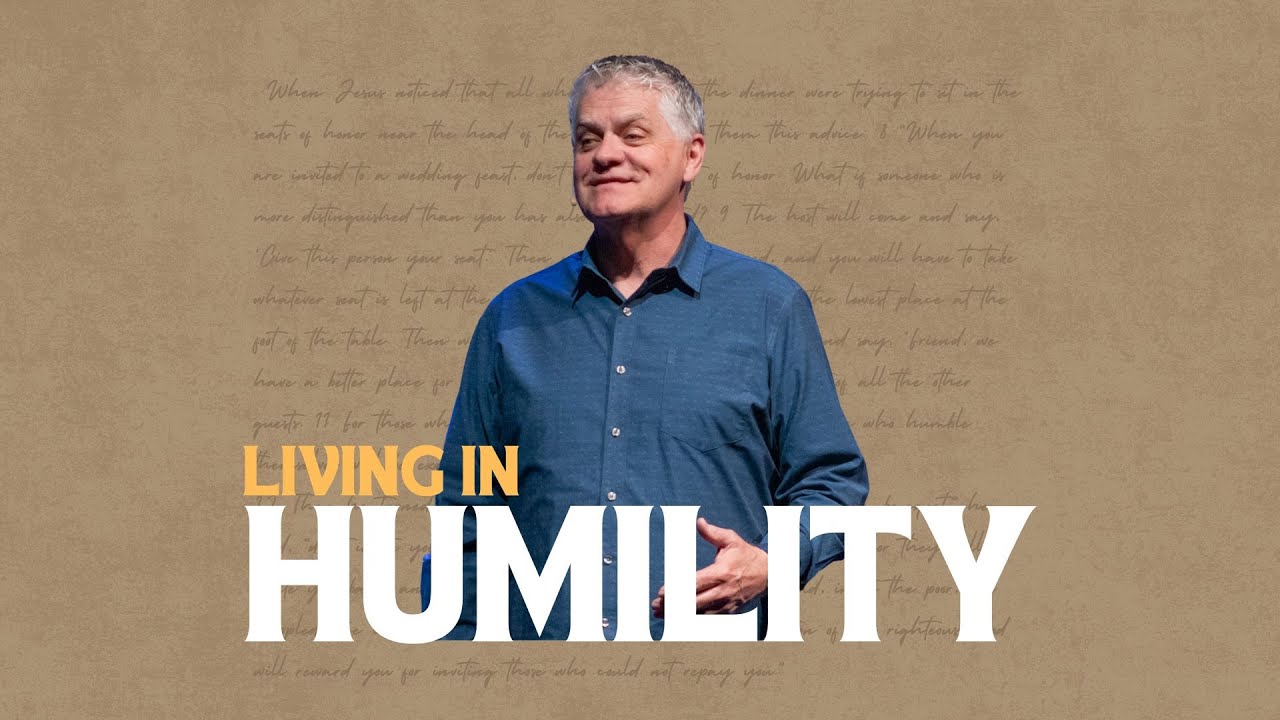
- Living in Humility: Parables of Jesus
he Parables of Jesus teach us that the most humble person is the most honored by God. The Lowest Seat At The Feast Parable of Jesus - Part 3 Luke 14:7-24 “For those who exalt themselves will be humbled, and those who humble themselves will be exalted.” Luke 14:11 (p.797) • Those Who Humble Themselves Will Be Exalted. 1. Honor others. “When you are invited to a wedding feast, don’t sit in the seat of honor. What if someone who is more distinguished than you has also been invited? The host will come and say, ‘Give this person your seat.’ Then you will be embarrassed, and you will have to take whatever seat is left at the foot of the table!” Luke 14:8-9 (p.797) “Love each other with genuine affection, and take delight in honoring each other.” Romans 12:10 (p.866) 2. Show others God’s goodness. “Instead, take the lowest place at the foot of the table. Then when your host sees you, he will come and say, ‘Friend, we have a better place for you!’ Then you will be honored in front of all the other guests.” Luke 14:10 (p.797) “You are a chosen people….As a result, you can show others the goodness of God...” 1 Peter 2:9 (p.935) My Next Step This Week: ____This week, I will prioritize humility by consciously stepping back from seeking recognition and instead honor others to reflect God’s goodness. Series Memory Verse: “Always be joyful. Never stop praying. Be thankful in all circumstances, for this is God’s will for you who belong to Christ Jesus.” 1 Thessalonians 5:16-18 (p.907) One Thing: Those Who Humble Themselves Will Be Exalted. Memory Verse: “Always be joyful. Never stop praying. Be thankful in all circumstances, for this is God’s will for you who belong to Christ Jesus.” 1 Thessalonians 5:16-18 (p.907) Small Group Leader ©2024. All rights reserved. Bible Background: The Lowest Seat At The Feast, Luke 14:7-24 (p.797) Highlighted Alive Church Value: Influence Daily CONVERSATION STARTER // Do you know someone who is humble? How do you know they are humble and how do they reflect this in their life? WEEKEND REVIEW Those Who Humble Themselves Will Be Exalted. 1. Honor others. 2. Show others God’s goodness. // Was there anything that stood out to you in Those Who Humble Themselves Will Be Exalted, that challenged you, or maybe even confused you? Explain. // Was there anything from Scripture this weekend that you had a question about or needed clarification on? EXPLORING SCRIPTURE // Read Luke 14:7-24 (p.797) ● Why should we not sit in the seat of honor at the wedding feast? ● What happens when we exalt ourselves? ● Have you ever known someone who exalted themself and then later they were humbled by an event or circumstance? ● Who shall we invite when we host a luncheon or banquet according to Jesus? Why? ● What point is Jesus trying to make when he is talking about the heavenly banquet? // Read Philippians 2:1-11 (p.900) ● How are we supposed to take on the character of Jesus? ● How did Jesus show us humility? ● What are some ways you can live humbly in your daily life? What obstacles do we face if we are trying to live this way? // Read James 4:1-10 (p.932) ● What happens when we are humble ourselves and are not arrogant according to James? ● Do you think our pride and arrogance interfere with us having a close relationship with God? Why or why not? NEXT STEP My Next Step This Week: ____This week, I will prioritize humility by consciously stepping back from seeking recognition and instead honor others to reflect God’s goodness. DIGGING DEEPER Small Group Leader ©2024. All rights reserved. The purpose of digging deeper is to challenge you to continue learning and asking God for guidance as you take your next step this week. Paul’s letter to the Colossians promotes the sufficiency and supremacy of Jesus in order to deal with the heresy that people were seeing and that was negatively impacting the early church. // Read Colossians Chapter 3 (p.903-904) which is focused on Living the New Life. ● We are called to clothe ourselves in the characteristics of Jesus (i.e. mercy, kindness, humility, gentleness, and patience) to name a few. What comes to mind when reading this chapter? ● What speaks to you? Why do you think that is? ● How are you doing with Living the New Life described in this chapter by Paul? Small Group Leader ©2024. All rights reserved.
- Unshakeable: When God Seems Slow to Answer
– At all of our churches, raise your hands if relationally right now, you’re experiencing any tension, any complicated conversations, or have any friends going crazy on social media. Raise your hand. Raise your hand. Online, you can type in, “I’m there. I’m there.” If your hand’s not up in the air right now, I wanna have lunch with you ’cause everybody else is driving me crazy. It’s like it’s really, really complicated in our culture today, and I don’t know about all of you, but it seems like it’s more difficult to faithfully follow Jesus and to stay close to Jesus in a culture that’s constantly pulling us away. When you think about it and just look at the messages we hear over and over again from our culture, how do you honor marriage in a world that devalues marriage? How do you live with sexual integrity in a world filled with sexual darkness? How do you raise your kids to love and follow Jesus when their friends don’t see any need for Jesus? How do you love your neighbor when they don’t mow their grass? Right? I’ve actually got a whole story behind that, and I just need to say. Years ago, we had a next door neighbor with cute kids, and one of the kids came over to my house and said, “My dad says you have the ugliest yard in the whole neighborhood,” and I said, “You need to tell your dad he needs to spend more time with his kids and less time in the yard.” True story. You look at culture today, and it seems like more and more people are becoming increasingly hostile toward the values that we look at in God’s Word, and it raises the question, how do we stand strong? What do we do? Do we just like dig our feet in and say, “This is truth,” and lose relationships? Or do we kind of compromise a little bit here and there, maybe just on a few of our convictions and just roll with the current of culture? I wanna remind you of very, very important truth. If we trade our convictions for convenience, we risk losing the very foundation of who we are in Christ. If we start to compromise and we start just to drift and conform to the image of this world, we become less like who Jesus calls us to be, and we become more like the world, and if we love the world, the love of the Father is not in us. So what do we do? How do we navigate it? How do we stand strong for our faith and love well? Over the next few weeks, we’re gonna look at Daniel in the Old Testament and his friends in the book of Daniel, and we’re gonna let their story teach us how to live with conviction and a culture of compromise. Today, would you pray with me? Father, we ask that your living word will speak life to us and build our faith, and God, as we experience your truth in our hearts, transform us, conform us to be more like Jesus and to love well while sharing truth but sharing truth in love. We pray this in Jesus’ name, and everybody said – Amen. – amen. Online, type it in the comments section amen so that we know you’re with us. All right, let’s dive in. We’re in the book of Daniel today. We’re gonna be in Daniel chapter one, and we’re gonna meet the main players in the book of Daniel. The first guy I wanna talk about is the evil King Nebuchadnezzar. Now my pastor Nick, whenever he talked about Nebuchadnezzar, he always told us to boo. I’m gonna say his name a bunch. So if you boo the whole time, you’re gonna slow me down, and I don’t have time for that, but I do wanna go ahead and just in honor of my pastor Nick, I’m gonna introduce one of the main players today in the book of Daniel, and we’re gonna talk to you about King Nebuchadnezzar. – Boo! – That’s really, really good, and now let’s move on with the text. King Nebuchadnezzar was a very, very evil king, and we see the story in verse 1 of 1. “In the third year of the reign of Jeholakim, the king of Judah, Nebuchadnezzar, the king of Babylon, came to Unshakable_1_Transcript 1Jerusalem and besieged it.” Now for context, Babylon was the most dominant superpower in the ancient world, and they were bullies. In 605 BC, King Nebi and the Babylonians, they invaded Jerusalem and demolished it. They destroyed the walls. If you read about Nehemiah where they’re rebuilding the walls, they destroyed the walls of protection. It was the most humiliating, brutal attack, and probably the hardest thing is they destroyed Solomon’s temple, and they took all of the things of the Jewish faith, their faith symbols and the things they used to worship God. They destroyed those to mock the Jews’ faith in God. So there’s evil King Nebuchadnezzar, but he’s not the main character of the book of Daniel. See who’s paying attention from Jonah. Who do you think the main character is in the book of Daniel? – God. – Very good. Many of you were paying attention. Daniel is not the main character in the book of Daniel. Daniel takes center stage, but God is orchestrating every moment in the book. Daniel is our example, but God is the main character. Hint, in every book of the Bible, God is the main character. So here we have this culture where there’s evil now, and there’s chaos, and the people are afraid and didn’t know what was gonna happen. Many scholars would say that the key verse in all of the book of Daniel is Daniel 2:28. I’ll introduce it to you where scripture says, “But there is a God in heaven.” For somebody here where you’re in the middle of a hopeless situation and you feel like you don’t know where to turn, I want you to remember there is a God in heaven. Would you elbow the person next to you? Look at him and tell him, “There is a God in heaven.” Type it in the comments section, “There is a God in heaven.” Look at your second choice, the other person, the person you didn’t choose. Tell him, “There is a God in heaven.” Whatever you’re going through, be assured our king is still on the throne. No matter what happens in the next few weeks, our king is still on the throne. We are a kingdom people in the kingdom of God. Our king sets up kings and tears down kings. No matter what you’re going through, there is a God in heaven. And so Daniel and the people were in a really bad place, and the evil king besieged Jerusalem. Verse 3 tells us this. “The king ordered Ashpenaz, chief of his court officials, to bring into the king’s service some of the Israelites from the royal family and the nobility.” Now, who did he bring, okay? They’re going in, they’re taking the Jewish people, and they want “young men without any physical defect, handsome, showing aptitude for every kind of learning, well informed, quick to understand, and qualified to serve in the king’s palace.” Lean over the person next to you and say, “It sounds like they’re describing me,” okay? I want you to choose the guy voted to be prom king. Go find the quarterback. Go find the valedictorian. Go find the most likely to succeed. Go get the best of the best of the Jewish nation and choose them and bring them in, and then, “The king was to teach them,” the brightest of the brightest, “the language and the literature of the Babylonians.” “So we’re gonna pick the brightest, steal ’em from you, and we’re gonna indoctrinate them in the Babylonian ways.” “The king assigned them a daily amount of food and wine from the king’s table.” This is gonna be important in a moment. “They were to be trained for three years, and after that, they were to enter the King’s service.” There is a lot there. After destroying the city, the king took the most talented, the most popular, the best educated young boys, and Daniel was one of them with his three friends. They were probably, according to most scholars, teenagers. So imagine a 14 year old, a 15 year old being taken out of their home, their parents very possibly killed, being taken into this government, and indoctrinated in the Babylonians’ ways. Now, what the king wanted to do is he wanted to strip these boys of their identity, take everything away from their heritage and their faith in God. So what was the king’s strategy? He decided to start by changing their names. Unshakable_1_Transcript 2He thought, “If I can change their names, I can change their identity.” Verse 6 tells us this. “Among those who were chosen were some from Judah, Daniel, Hananiah, Mishael, and Azariah. The chief official gave them new names. To Daniel, he gave the name Belteshazzar, Belteshazzar.” This is the most difficult name week in the history of my preaching, okay? “He gave him the name Belteshazzar, to Hananiah, he gave Shadrach, to Mishael, he gave Meshach, and to Azariah, he gave Tobedwego.” That’s an old preacher joke. He gave Abednego, okay? Their original names, their original Hebrew names all related to Yahweh, the true God. The new names that the king gave them related to Babylonian gods. He stripped their names that were worshiping their God and gave them new names, and I can just give you one example. Daniel, the el part, it means Elohim. Daniel, Elohim, means God is my judge. He changed his name to Belteshazzar. Bel is a false God. Bel protect the king. Their original names related to Yahweh. Their new names all related to Babylonian gods. Side note, do you wanna learn something fun? You wanna learn something interesting? Every time Daniel referred to himself in writing, he spelled his name correctly. For example, if he were writing in English, he would’ve spelled it D-A-N-I-E-L. He spelled it the right way. Every time he refers to his Babylonian name, Belteshazzar, he misspells it every time. Now, Bible scholars thought for years that what happened is, when the scribes were copying a manuscript, so they’d have a manuscript, and the scribe would copy word for word, line for line, they thought that the scribes probably made a mistake, you know, a typo until the Dead Sea Scrolls were discovered in 1947. The oldest known manuscript of Daniel, and in the oldest one, the name was spelled wrong there as well. It’s very likely most scholars think this was a jab. He was intentionally poking back saying, “Hey, you can change my name, but you can’t change who I am. You can change my name, but you can’t change the God I serve,” and every time he misspelled that other name, because they couldn’t label him what he was not, and that’s why it is indescribably important for you to know who you are in Christ. When we talk about knowing God’s Word, it’s not just so you can be academic and be like, you know, the first to turn to the book of Ezekiel in the Bible and win the Bible quick drill game. No, it’s so that you can know who God says you are in order to live out his purpose and calling in your life because the devil is almost always gonna attack you first at your identity. The devil’s probably not gonna say, “Hey, you’re such a Belteshazzar,” and you’re like, “Oh, I know, I’m a Belteshazzar.” No, you’re not gonna do that, but he is gonna say, “You’re worthless. You’re pathetic. You’ll never make a difference. They would never love you if they know what you really do, what you’re really like, what you’re really thinking. God will never forgive you. God doesn’t want you. God couldn’t use you,” and that’s why, whenever the devil tries to tell you what you’re not, you have to remind yourself of who God says that you are, and the good news is, if you are in Christ, God says, “You are a new creation in Christ. The old is gone and everything is new.” You are fearfully and wonderfully made in Christ. You are an overcomer by the blood of the lamb, and by the words of your testimony, you are more than a conqueror through Christ Jesus. Whenever the devil tries to change your name, “No, I belong to Jesus. I’m a child of the living God. I’m a spirit-filled, Bible-believing, truth-speaking, love-giving ambassador of the most high God.” You have to remember who you are. When the devil tries to change your identity, remind yourself, “This is who God says I am.” Now, this is a part of the story I don’t want you to miss. Verse 5 says this, “The king assigned them a daily amount of food and wine from the king’s table.” Now, why does this matter? Well, the food would’ve been like delicious, the best of the best, the richest and finest food possible, and the king said, “Hey, you guys eat this food.” He was basically wanting them to dishonor their God. The reason is because this delicious food was dedicated to pagan gods, and so for Daniel as friends to eat this would actually be a betrayal to the one true God. I want you to think about this. Teenage boys Unshakable_1_Transcript 3stripped from their homes, taken as slaves to a new land, new names in a new culture surrounded by Babylonians, and they’re hungry, and the king puts some delicious food in front of them. Do you know how easy it would be at that moment to compromise your values and just say, “Well, I mean, I’m doing everything else. I’m still serving God, you know, and the food is really delicious, and who’s gonna really even know? I mean, I just take a little bit,” and to compromise their values. And the truth of the matter is if you haven’t been there recently, you’ll probably be there tomorrow, and the devil’s gonna tempt you. “Hey, you can do it. Nobody’s gonna know. What’s the big deal? Everybody else is doing it.” And remember, if we trade our convictions for convenience, we risk losing the very foundation of who we are in Christ. – [Congregation Member] Come on! – So the king wants Daniel to give in and eat this pagan food, but he stays faithful to his God, and this next verse is really important. Scripture says, “But Daniel resolved,” he decided, he resolved, he was firm in his commitment, “he resolved not to defile him himself with the royal food and wine, and he asked the chief official for permission not to defile himself in this way.” So he was resolved. “No matter what, I’m not gonna compromise,” and then he said respectfully and politely, “Is there another way we can get this done?” And I wanna show you why this word is so important. This word in the Hebrew is translated four different ways. The NIV says, “He resolved not to defile himself.” The NLT says, “He was determined.” The NASB says, “He made up his mind.” The King James says, “He purposed in his heart.” I like this. He resolved. He determined. He made up his mind. He purposed in his heart not to do anything to dishonor God. At some point, you’re gonna wanna resolve and determine and make up your mind and purpose in your heart. “I will do what God calls me to do and that alone.” Why does this matter? It matters so much to us today because Daniel was forced to live in Babylon, but he wouldn’t let Babylon into him. – [Congregation Member] Preach! – He was forced to be in a foreign world, but he wouldn’t let the foreign world into him, and the reality is, we are always gonna live in this world until we don’t, but we’re gonna be in this world, but we don’t have to be of this world. We don’t have to be sucked into the hate and the division and all of the stuff that dishonors God if you predetermine and make up your mind, “I’m gonna do what honors God.” So if we’re going to love well and live with conviction in a culture of compromise, we’re gonna wanna make some predetermined resolutions. In other words, we wanna decide ahead of time. Before Daniel got in and goes, “Mm, that strawberry shortcake looks good, maybe just one bite,” before he ever saw that whipped cream on light, fluffy cake and fresh ripe strawberries made in the kings, before any of that, he determined what he would do and what he wouldn’t do. To faithfully follow Jesus, we should decide ahead of time, and I don’t know what it would look like for you, but maybe for you is, “I have predetermined, I’ve preresolved.” The first thing I do after I go to the bathroom and get my cup of coffee, the first thing I do is I spend time every day in God’s Word and in God’s presence. You may predetermine, “I’m going to seek God the first of the day,” or you may predecide, “As long as we’re in town, no matter what, we’re gonna worship God together in church, and if we’re out of town, we’re on church online. Why? Because we’re people of God. We’re people of church.” You may predetermine with your money, “Whenever something comes in, we always live beneath our means. The first 10% goes back to God.” I’m not gonna pray about later on what to do. I preresolve to honor God Unshakable_1_Transcript 4first. You may decide not to do some things. You might decide, “Hey, there’s a lot of gossip in my office. Before I go in there, when they start talking, I’m not joining in,” or you might predetermine, “Hey, I like the Gram, but I’m not gonna spend more time on the Gram than I do on God’s Word,” and you predetermine, or you might be crazy and scripture says that we should reserve the gift of lovemaking until the gift of marriage, and so you may pre-decide, “I’m not going to have sex until I’m married.” Don’t wait until you’re on the sofa watching Netflix and buttons start popping and zipper start. Don’t decide then. “Oh wait, let me pray about it. Let me think about it. Hang on, hang on, hang on, hang on. Let me think. What do I wanna do next?” No, you resolve. You’re determined. You make up your mind. Your purpose in your heart. “I will always honor God.” – Preach. – So how do we do this in a world full of cray cray? I mean cray cray, like cray cray cray cray cray, and I’m talking to a lot of you like, “You, yes, you, you. Cray cray.” How do we stand strong and love well? Well, what did Daniel not do? He didn’t make a public protest, did he? He didn’t take the food and say, “This food is dedicated to pagan gods. Pleh!” Right? He didn’t run outta the room and then send a text with all capital letters, “I hate all y’all. You’re going to hell where the worm never dies and there’s weeping and ashing of teeth!” No, he respectfully asked, and what you’re gonna find out is he made a difference. I’m gonna say this, and some of you’re gonna get mad, and you’re just gonna have to get mad is some of you are so right, you’re not making any difference at all. You are so right, you’re not listening to anybody, and you’re down there, blah, blah, blah, blah. You have to ask yourself if you genuinely want to stand for truth, you have to ask yourself, do you wanna make a point or do you wanna make a difference? Because they’re not the same thing. Do you wanna just make a point? ‘Cause you can say all that kind of stuff. If you wanna make a difference, you wanna get involved in the lives of people. He was respectful, he was honoring, and he asked a question. He didn’t throw a fit and storm out. “Blah, blah, blah, and you didn’t vote that, blah, blah.” No, he came in and said, “Hey, do you mind if we try something different?” And so what do we do? We speak the truth in love. We speak the truth in love. We speak the truth in love. We speak the truth in love. We speak the truth in love with compassion and with caring. We speak the truth in love, and this is what Daniel did. The dude was rock solid, man. He wasn’t bending at all, but he was loving, and he was strategic, and he was very prayerful in his resolutions. He made a kind request and asked the leader there, “Hey, can I permission not to do that against my values?” And so here’s what scripture says. “Please test your servants for 10 days. Give us nothing but vegetables to eat and water to drink. Then compare our appearance with that of the young men who eat the royal food and treat your servants in accordance to what you see.” Let’s just try it, let’s just try it. Give it a test. So scripture says, “The chief official agreed to this and tested them for 10 days. At the end of the 10 days, they looked healthier and better nourished than any of the young men who ate the royal food.” What happened? They honored God and God honored them. They honored God and God honored them. They were healthier, and they were stronger, and they were more vibrant, and they stood out. And what did God do? God gave Daniel knowledge. He gave him the ability to interpret dreams and visions, and then in verse 19, scripture says, “The king talked with them, and,” oh my goodness, he found none equal to Daniel, Hananiah, Mishael, and Azariah.” Uh oh, look at those names. Those are the names of the Hebrew God. Ooh, how’d we get that in there? He found none equal to the one who says, “God is my judge,” to Hananiah, to Mishaal, and to Azariah. What did they do? These guides stood strong, they stood out, and they were Unshakable_1_Transcript 5different, but not just different odd. You know what I’m saying? Some Christians are just odd, like weird, like dumb weird. No, they were different better! They were close to God, and they were loving, and they were strong and they were healthy! They took care of themselves, and they were a witness, and they were bold, and they were strong, and they stood strong, and they loved well, and they didn’t compromise, and they were loving! They weren’t just different! They were better, and all hell had broken loose! These boys were ripped from their homes! Imagine your kids taken from here to another nation and they’re on their own. They’re kidnapped! They’re slaves! They’re separated from their family! They have no support system whatsoever! They’re called by pagan names and they’re indoctrinated by a false worldview. What do you do then? Because there’s no hope! Your life’s over! There’s no way to ever have any meaning again! How are you gonna worship God? How are you gonna make a difference? You’ve been stripped of everything that matters, and I’ve got a message to somebody here today who’s hurting and afraid and doesn’t know what you’re gonna do and don’t know where to turn! You need to remember that scripture says, “But there is a God in heaven.” No matter what you’re going through and no matter where you are, there is a God in heaven, and what the devil meant for evil against these boys, God used for good, and God is gonna use a few teenage boys to turn the heart of an evil king and change the course of a nation and eventually be a story that’s told around the world. Think about it. If Daniel and his buddies had simply compromised, compromised their values, blended in, “Ah, yeah, it’s no big deal. We’re just gonna be like the rest of the world. We’re just gonna be . We’re just gonna believe what everybody believes and not stand by our God-honoring values.” If they had compromised their convictions, nothing historic would’ve happened. Nothing would’ve changed, or, on the other hand, if they had been Facebook warriors, blasting out the truth nonstop, “Don’t care what any of you think, my four friends all agree with me,” I’m gonna say it again. “It doesn’t matter what any of you think. All four of my friends agree with me.” If they had been blasting out that kind of truth but not truth in love, they’d have been executed. But what’d they do? I mean, they stood strong. They didn’t compromise at all. They stood by their values, and they loved well. I’m gonna tell you right now, it would’ve been so easy for them and even tempting to compromise somewhere along the way. It also would’ve been easy for them to throw a fit and stood up and stormed out and been angry, and in the same way, it’s true for us. Every single day, every single day, we’re gonna have the chance to compromise and do things that are opposed to the will and the heart of God, or we’re gonna be tempted to stand up and to yell back. But if we trade our convictions for convenience, we risk losing the very foundation of who we are in Christ. And so church, please remember this, we have a spiritual enemy. He is the father of lies. He is attacking and scheming to come against you. His mission is to steal, kill, and destroy. His greatest weapon is to lie to you, to attack your identity, to tell you who you’re not and what you can’t do, to lure you away, to be desensitized and go with the currents of culture and the current message of this world instead of standing true to God’s Word, and before you’re tempted to sin, the devil will whisper to you, “Hey, it’s no big deal. Everybody does it. Go ahead, it doesn’t matter.” And after you do, he shouts at you condemnation. “You should be ashamed of yourself. God doesn’t love you.” He’s gonna put you in an environment where you just become anxious and overwhelmed and isolated and depressed and afraid where most people are living today. That’s why I wanna remind you, but there is a God in heaven. There is a God in heaven. There is a God in heaven, and he is still on the throne, and no matter what happens in a couple of weeks, he’s still gonna be on the throne, just like he was a couple of years ago and in the future. There is a God in heaven, and you need to remember that greater is he. If you’re in Christ, greater is he that is within you than he that is in this world. No matter what you face, there is a God in heaven, and that’s why Unshakable_1_Transcript 6God is the main character of this story, and because our God is a good God, a loving God, a righteous God, a God of compassion and a God of mercy and a God of justice, because our God is always faithful, you can stand firm and you can love well because you may be forced to live in Babylon, but you don’t have to let Babylon live in you. And so Father, I pray that you would stir up our hearts to be faithful to you. God, help us to be a church that does stand firm but also a church that loves well. Today, as you’re praying at all of our different churches, nobody looking around, if you want that, for those of you that are followers of Christ, I’m talking to those of you that are committed to following Jesus. If you want to be able, no matter what is going on in this world, to stay true to the values that honor God and you want to love well, I’m gonna pray a prayer for you right now. If that’s you, you say, “Yes, I wanna be faithful, and I wanna love well.” Would you lift up your hands right now? All of our church, lift up your hands. Those of you online, just type it that way. “I wanna stand strong and love well. I wanna be faithful and love well.” God, would you empower us with your Holy Spirit to be wise in the moment like Daniel and his friends were, not reacting to whatever’s going but responding with a heart of prayer and with love, and God, I pray that you would give us the courage and the faith to speak up when we need to speak up but always to speak the truth in love. God, give us influence because we care and because we serve. God, help us never, ever to blend in but always to stand out but to stand out in a good way, God, with marriages that honor you and with finances that are generous to others and with integrity in the way that we live. God, help us to be different in a good way, standing strong and loving well. As you keep praying today, nobody looking around, let me just tell you right now, there is something that’s gonna be first in your life. There’s something. Something’s gonna be first. It might be your job, your career or your education or your image or your lifestyle, whatever it is. There’s something that’s gonna be first, but our God is actually a very jealous God, and he gave first, he loves us so much that he sent, the New Testament says, his one and only son Jesus. Who is Jesus? The one and only son, the Son of God. Jesus is God in the flesh, and he came on a rescue mission, and he didn’t come for the best of the brightest. He came for the broken, the sinners, those who are far from God had fallen, and he came and he loved them, and Jesus gave his life for us on a cross. He was the innocent sacrifice who died in our place, but there is a God in heaven, and he didn’t stay dead. He raised Jesus from the dead so that anyone, and this includes you, who calls on his name, who pushed Jesus first, the Bible says that our sins would be forgiven, that we become a new creation in Christ. We would be transformed and we would become new. What does God want? He actually wants to be first. He wants us to surrender our whole lives and say, “Jesus, would you not only save me, but would you be the Lord of my life, first in every way?” I want you just to hear this for a moment and think about it. Is Jesus first in your life? If not, you can predetermine, pre-decide, resolve in your mind, make up your mind that, from this day forward, you choose to follow him. From this day forward, you trust him. From this day forward, you seek him, and when you do, God will hear the cry of your heart, and he’ll make you brand new today. At all of our churches, those who say, “Yeah, that’s me. He’s not first. Today, I’m turning away from myself. I’m turning away from my sin, and today by faith, I’m calling on Jesus. I wanna make him my Lord. I wanna make him my savior. Today by faith, I wanna be saved, forgiven, and changed. Jesus, I give my life to you.” That’s your prayer. “I wanna make you first.” Would you lift your hands high right now? All over the place right here, God bless you. Up in this section, praise God for you. Right over here. Oh, come on, church. Others of you today say, “Yes, Jesus, I surrender to you.” Over here, praise God. Others, right back over here. Oh, come on, church! There is a God in heaven. Others of you say yes. Type in the comments section line, “I’m surrendering my life to Jesus.” Just type that, “I’m surrendering my life to Jesus,” and today at all of Unshakable_1_Transcript 7our churches, would you just join your faith with mind and pray aloud? Pray, Heavenly Father. – Heavenly Father. – I wanna put you first. – I wanna put you first. – Jesus, save me – Jesus, save me – and be the Lord of my life. – and be the Lord of my life. – Fill me with your spirit – Fill me with your spirit – so I could know you – so I could know you – and serve you – and serve you – and stand strong – and stand strong – and love well. – and love well. – My life is not my own. – My life is not my own. – I give it all to you. – I give it all to you. – Thank you for new life. You have mine. In Jesus’ name I pray. Could you give God some praise today? All of our churches.
- It's Okay Not to Be Okay: Mental Health Issues
: M&M update: 64% commitments. $1.67M. Campus is a go. Discernment around next steps. Infastructure/canvas. Commit. Give. Pray. A: Last year 60 million Americans suffered from mental health issues. One in five. Maybe it’s you. Maybe a friend. What do we do? Does the Bible have anything to say about mental health? Yes. For some, the church has stigmatized mental health. The church should be the most transparent place on earth. We should be the place it’s safest to answer, “How are you doing?” with “I’m not okay.” “It’s okay to not be okay.” J: Sermon series: What is mental health? The state of a person’s emotional, social, and behavioral well-being. Anxiety, depression, despair, intrusive thoughts, joy, peace, wholeness. Topics: The heart and the brain, depression, anxiety, self-harm, and relationships. Ps. 34:18: the Lord is near to the broken hearted. 1 Kings background: Elijah standing up to Ahab and Jezebel: Showdown against the prophets: 450 prophets of Baal. Fire. People respond and worship. Kill the prophets of Baal. Rain comes! Isn’t he on cloud 9? No. The threat of the post-sermon. Walk through the passages: four truths, two promises A: Mental health issues distort our view of God. 1 Kings 19:1-3: why is he afraid now? We often can’t make rational sense out of mental health challenges. We can’t rationalize our way out of it. Two trees: Three roots to mental health issues: fear, grief, and pride. Healthy: trust, grief, humility. J: Romans 8:22-23. The world groans for redemption. Sin distorts our feelings. The impact of the fall on mental health. Secular perspective: none of it is your fault. Fundamentalist perspective: it’s all your fault. Biblical perspective: complicated. Mental health and physical health are connected. 1 Kings 19:4: Elijah is exhausted, suicidal, and hiding. Fear and compounded grief. 1 Kings 19:5-6: God doesn’t rebuke him. He meets him with grace, rest, food, and his presence. There isn’t a divide between the spiritual life and the physical life. DA Carson: “Sometimes the most spiritual thing you can do is take a nap.” We are finite. Don’t negate the physical. Recognize your limits. You need rest. You need sabbath. Take stock of your diet, exercise, sunshine, and sleep. You need 8 hours of sleep. A: Mental health issues distort our view of self and others. 1 Kings 19:7-8: God doesn’t withdraw. Takes to Mt. Horeb- Mt. Sinai—where God met with Moses. 1 Kings 19:9: God meets Elijah. Lets him speak. Are you sharing your heart with God? God already knows your thoughts. 1 Kings 19:10: A rehearsed speech that exaggerates Elijah’s importance and misses God’s presence. Pride! His self-perception is twisted. 1 Kings 19:11-12: God doesn’t rebuke Elijah. Don’t miss my presence in the quietness. Your problems aren’t going to be solved in the fireworks. Sometimes we need to preach to our feelings. We need to take hold of our mental loops. Speak God’s truth over yourself. Anchor yourself in the truth of who he is and the truth of who you are in him. 1 Kings 19:13-14: God asks the same question. Elijah gives the same answer. He’s the hero of the story, not God. Take your thoughts captive. Feelings are okay, but they aren’t necessarily facts. Elijah’s thoughts have taken him captive. J: God doesn’t leave us alone Is. 53:3: Jesus was full of sorrows and acquainted with grief. 1 Kings 19:15-16: God still doesn’t rebuke Elijah. He gives him a final mission: anoint a new king and a new prophet. Take the weight of responsibility off your shoulders, Elijah. 1 Kings 19:18: God gently corrects Elijah’s distorted view: there are a lot more than you, Elijah. God has a community. Resources: pray with us. Counseling. Booklet. A: One call: Listen for God’s voice -Word: preach God’s truth to yourself. Invite God’s Word into your life every day and have it speak to you. –Prayer: Ps. 34:18. He is pursuing you. He already knows your thoughts and wants you to give it to him. -People: Don’t isolate. Be a community that is safe. You don’t have to have the answer. Ask for help.
- The Plan of God to Redeem the Earth
The entire physical universe was created for God’s glory. When we rebelled, the universe fell under the weight of our sin. Yet God did not give up on us. The serpent’s seduction of Adam and Eve did not catch God by surprise. He had in place a plan by which He would redeem mankind—and all creation—from sin, corruption, and death. Just as He promises to make men and women new, He promises to renew the earth itself. “‘As the new heavens and the new earth that I make will endure before me,’ declares the Lord, ‘so will your name and descendants endure’” ( Isaiah 66:22 ).“In keeping with his promise we are looking forward to a new heaven and a new earth, the home of righteousness” ( 2 Peter 3:13 ).“I saw a new heaven and a new earth, for the first heaven and the first earth had passed away” ( Revelation 21:1 ). Many other passages allude to the new heavens and New Earth without using those terms. God’s redemptive plan culminates not at the return of Christ, nor in the millennial kingdom, but on the New Earth. Only then will all wrongs be made right. Only then will there be no more death, crying, or pain ( Revelation 21:1-4 ). Consider this: If God’s plan were merely to take mankind to the intermediate Heaven, or to a Heaven that was the dwelling place of spirit beings, there would be no need for new heavens and a New Earth. Why refashion the stars of the heavens and the continents of the earth? God could simply destroy His original creation and put it all behind Him. But He doesn’t do that. Upon creating the heavens and the earth, He called it “very good” ( Genesis 1:31 ). Not once has He renounced His claim on what He made. God isn’t going to abandon His creation. He’s going to restore it. Earth’s destruction will not be permanent but temporary. Just as our destroyed bodies will be raised as new bodies, the destroyed Earth will be raised as a New Earth. We won’t go to Heaven and leave Earth behind. Rather, God will bring Heaven and Earth together into the same dimension, with no wall of separation, no armed angels to guard Heaven’s perfection from sinful mankind ( Genesis 3:24 ). God’s perfect plan is “to bring all things in heaven and on earth together under one head, even Christ” ( Ephesians 1:10 ). God has never given up on His original creation. Yet somehow we’ve managed to overlook an entire biblical vocabulary that makes this point clear. Reconcile. Redeem. Restore. Recover. Return. Renew. Regenerate. Resurrect. Each of these biblical words begins with the re- prefix, suggesting a return to an original condition that was ruined or lost. For example, redemption means to buy back what was formerly owned. Similarly, reconciliation means the restoration or re-establishment of a prior friendship or unity. Renewal means to make new again, restoring to an original state. Resurrection means becoming physically alive again, after death. These words emphasize that God always sees us in light of what He intended us to be, and He always seeks to restore us to that design. Likewise, He sees the earth in terms of what He intended it to be, and He seeks to restore it to its original design. In his excellent book Creation Regained , Albert Wolters writes, “[God] hangs on to his fallen original creation and salvages it. He refuses to abandon the work of his hands—in fact he sacrifices his own Son to save his original project. Humankind, which has botched its original mandate and the whole creation along with it, is given another chance in Christ; we are reinstated as God’s managers on earth. The original good creation is to be restored.” If God had wanted to consign Adam and Eve to Hell and start over, He could have. But He didn’t. Instead, He chose to redeem what He started with—the heavens, the earth, and mankind—to bring them back to His original purpose. God is the ultimate salvage artist. He loves to restore things—and make them even better. “Ruined sinners to reclaim.” This phrase from the hymn “Hallelujah, What a Savior!” reflects God’s purpose in our salvation. Reclaim is another re- word. It recognizes that God had a prior claim on humanity that was temporarily lost but is fully restored and taken to a new level in Christ. “The earth is the Lord’s, and everything in it, the world, and all who live in it” ( Psalm 24:1 ). God has never surrendered His title deed to the earth. He owns it—and He will not relinquish it to His enemies. In fact, Scripture tells us that “the reason the Son of God appeared was to destroy the devil’s work” ( 1 John 3:8 ). Note that it says Christ came not to destroy the world (which is his world) but to destroy the devil’s works , which are to twist and pervert and ruin the world God made. Redemption will forever destroy the work of the devil by removing his hold on creation and by reversing the consequences. Far from destroying the world, God’s plan is to keep it from being destroyed by Satan. God’s plan is to remove the destruction that has already been inflicted on it. His plan is to redeem the world. God placed mankind on Earth to fill it, rule it, and develop it to God’s glory. But that plan has never been fulfilled. Should we therefore conclude that God’s plan was ill-conceived, thwarted, or abandoned? No. These conclusions do not fit the character of an all-knowing, all-wise, sovereign God. Second Peter 3 does not teach that God will destroy the earth and then be done with it. Rather, it promises that God will renew Heaven and Earth. God is not some hapless inventor whose creation failed. He has a masterful plan, and He will not surrender us or the earth to the trash heap. That makes me want to thank Him right now. How about you? God, expand our view of your greatness so that we may gain an appreciation for the greatness of your redemptive work. Thank you that you did not abandon us to Hell, but that you loved us enough to shed your divine blood to rescue us and our planet. Thank you that we have a future, and that Earth—from which you formed us, and over which you made us to rule—also has a future. Help us to anticipate that future today. And may our anticipation affect the decisions we make. We ask these things in the great name of our Redeemer, Jesus, the Lord of the earth. www.epm.org .
- How Can I Live with Courage in the Face of Tragedy?
Dear Roger and Jeff, The tragedies in our world just keep coming. The past week has been filled with school shootings, the assassination of Charlie Kirk, and heartbreaking division in our nation. As I’ve been praying, I keep being drawn to Deuteronomy 6 , where the Lord tells Joshua to “Be strong and courageous, for the Lord your God is with you wherever you go.” I don’t feel very courageous right now. Can you help me figure out how to face all of this in a way that honors God and helps me lead my family? Thank you! Andy Hi Andy, This is Jeff. Roger was a dear friend and mentor for me, and I’m thrilled to have the opportunity to share some of what God has been teaching me about dealing with this exact subject–as well as a few of the practical application points I’ve learned from Roger. The news of Charlie Kirk’s death felt like a shockwave. A husband, father, brother in Christ, and a voice for many, was gone in an act of brutal violence. For those of us who follow Jesus, moments like these stop us in our tracks. A cloud of grief, anger, confusion, and weariness descends, and we are left grappling with a profound tension. We know we are called to be people of hope, yet we feel the weight of a world groaning under the strain of sin and brokenness. We are told to be salt and light, but the darkness feels overwhelming. HOW CAN A GOOD GOD ALLOW EVIL? This brings us to a fundamental question that echoes in the hearts of people everywhere when tragedy strikes: If God is good and in control, why does He allow such evil to happen, and how are we supposed to respond without being consumed by either fear or rage? The easy answers are hollow. The political talking points are insufficient. We need something more substantial; something rooted in the unshakable truth of God’s Word. This is a tension most people feel as we wrestle with the realities of living in a broken world. The Bible doesn’t shy away from the rawness of these questions. Throughout its pages, we see examples of people crying out to God in their pain, pleading for understanding, and seeking His presence in the midst of their suffering. Psalm 34:18 reminds us that “The Lord is close to the brokenhearted; he rescues those whose spirits are crushed.” (NLT) This verse offers a glimpse into God’s character—a God who does not abandon us in our despair but instead draws near to comfort and uphold us. We are also reminded that while we may not fully understand why God allows evil and suffering, we can trust in His ultimate plan. Romans 8:28 assures us that “God causes everything to work together for the good of those who love God and are called according to his purpose for them.” This does not mean that every hardship or evil act is inherently good, but rather that God has the power to weave even the darkest threads into the beautiful tapestry of His redemptive story. HOW SHOULD WE RESPOND TO TRAGEDY? The one thing we must anchor ourselves to in this storm is this: Our response to evil must be courageous love, not fearful retreat. This isn’t just a nice sentiment; it is a divine command, a spiritual discipline, and the only path forward that leads to life rather than deeper darkness. To understand why courageous love is our only viable response, we have to face the turmoil this event has stirred up honestly: First, within our own hearts, we are navigating a storm of conflicting emotions. There’s the raw grief for a family that has been shattered. There’s the righteous anger that a life was violently taken. But underneath it all, a more unsettling emotion often lurks – fear. We see someone who spoke boldly about his faith targeted, and we ask ourselves, “Could that happen to me? Is it safe to speak up? Is it wiser to stay quiet, to protect my family, to keep my head down?” This internal conflict can be paralyzing—the desire for self-preservation wars with the call to be unashamed of the Gospel. We feel the pull to retreat into the safety of silence, hoping the storm will pass us by. Second, we see the world around us responding in a whirlwind of chaos. The narrative is immediately seized by voices that do not know God. The tragedy is made into a political event, a soundbite in a 24-hour news cycle of outrage. Blame is cast, sides are drawn, and it’s all used as fuel for pre-existing fires of division. We hear commentary suggesting that strong biblical convictions are “hateful” or “awful” and that such beliefs inevitably invite violence. This external pressure is designed to shame believers into silence, to equate biblical truth with dangerous extremism. It creates a hostile environment where simply holding to foundational Christian beliefs is portrayed as an act of aggression. Courageous love isn’t merely a behavior change, but a profound spiritual transformation—a radical shift of our internal compass from a worldly reaction to a Spirit-led response. Our ingrained human tendency is to meet outrage with outrage, hatred with hatred, and fear with defensiveness. It’s our default setting. But as followers of Jesus, we are called to something far greater. We are called to defy the very ethos of this world, to break free from its gravitational pull. This demands a profound, internal metamorphosis, where we deliberately choose to allow God, through His Spirit, to change the way we respond. The true conflict, we must remember, is not against the commentators who inflame the news, the politicians who divide, or even the individual who committed that horrific act. Our struggle, as the scriptures remind us, is “not fighting against flesh-and-blood enemies, but against evil rulers and authorities of the unseen world, against mighty powers in this dark world, and against evil spirits in the heavenly places” ( Ephesians 6:12 NLT ). It’s a battle of philosophies, a clash of kingdoms, and our stance must be firmly rooted in the eternal. WHAT’S AT STAKE? The stakes could not be higher, both for us personally and for the world watching us. For us, the very nature of our faith is at stake. If we allow fear to dictate our actions, we muzzle our witness. We trade the powerful truth of the Gospel for the illusion of safety. Our faith becomes a private, sterile thing that has no impact on the world around us. We risk becoming like the servant who buried his talent in the ground, too afraid to take a risk for the master ( Matthew 25:14-30 ). Our personal peace and comfort become our idols, and we forget that we are called to follow a Savior who laid down His life. The promise of Scripture is clear: “For God has not given us a spirit of fear and timidity, but of power, love, and self-discipline” ( 2 Timothy 1:7 NLT ). To reject fear is to walk in our God-given identity. For those around us—our families, our neighbors, our communities—what’s at stake is their opportunity to see a different way. In a world drowning in rage and division, the church is meant to be a beacon of hope, a city on a hill. When people see us responding to tragedy with steady, courageous love, it stops them in their tracks. It’s counter-cultural. It’s supernatural. It demonstrates that our hope is not in political outcomes or personal safety, but in a risen King. If we respond with the same vitriol and fear as everyone else, we prove that our faith has no real power to change us. We forfeit our greatest opportunity to show the world the love of Jesus. We become just another group of people fighting for our own interests, and the unique, life-saving message of the Gospel is lost in the noise. LIVE IN COURAGEOUS LOVE Living out courageous love rather than fearful retreat is not complicated, but it does require intention. It’s a practical, daily choice. Here is a simple action plan to help you walk this out. Ground Yourself in Truth. Before you engage with the news or social media, engage with God. Spend time in Scripture and prayer. Remind yourself of who God is and who you are in Him. Let His voice be the loudest and most formative voice in your life. This isn’t about hiding from the world; it’s about preparing your heart to face the world with God’s perspective. Turn off the noise long enough to hear the still, small voice of the Shepherd. Practice Proximity. The greatest antidote to fear is love, and love grows through relationships. Instead of retreating, lean in. Hug your spouse and your children. Call a friend who is struggling. Invest your time and energy in your local church family. Be physically present with the people of God. In these moments, we remind each other of the hope we share, and we bear one another’s burdens. Digital outrage isolates; real community strengthens. Preparing for Conversations. You will talk about this with friends, coworkers, and family. Don’t be caught off guard. Prepare to answer with grace, not anger. Consider how you can express your hope in Jesus without criticizing or attacking the other person. You can stand firm on biblical truth while still showing genuine love for the person in front of you. A simple phrase like, “My heart breaks over this, and for me, it just shows how much we need the hope and peace that only Jesus can bring,” can shift a conversation from a political debate to a spiritual opportunity. A Call to Be the Church This tragedy is a painful reminder of the world we live in, but it is also a powerful summons for us to be the Church. It is a call to be who we were always meant to be: a family (God’s family) defined by courageous love. This is our moment to minister to our community not just with words, but with our presence, our service, and our unwavering hope. Let’s commit to being a people who pray for our enemies, who bless those who persecute us, and who refuse to be silenced by fear. Let’s lean into our church families, strengthening one another for the work ahead. Let this tragedy inspire us to stand firm with a faith that is active, bold, and full of the love of Christ. The world is watching. Let’s show them Jesus. Andy, I hope this helps you as you respond to what’s happening in our world today. You might also be encouraged by listening to Shane & Shane’s song, “You’ve Already Won.” That reminder speaks to my heart! Love, Jeff