Search Results
Search this site
3674 results found
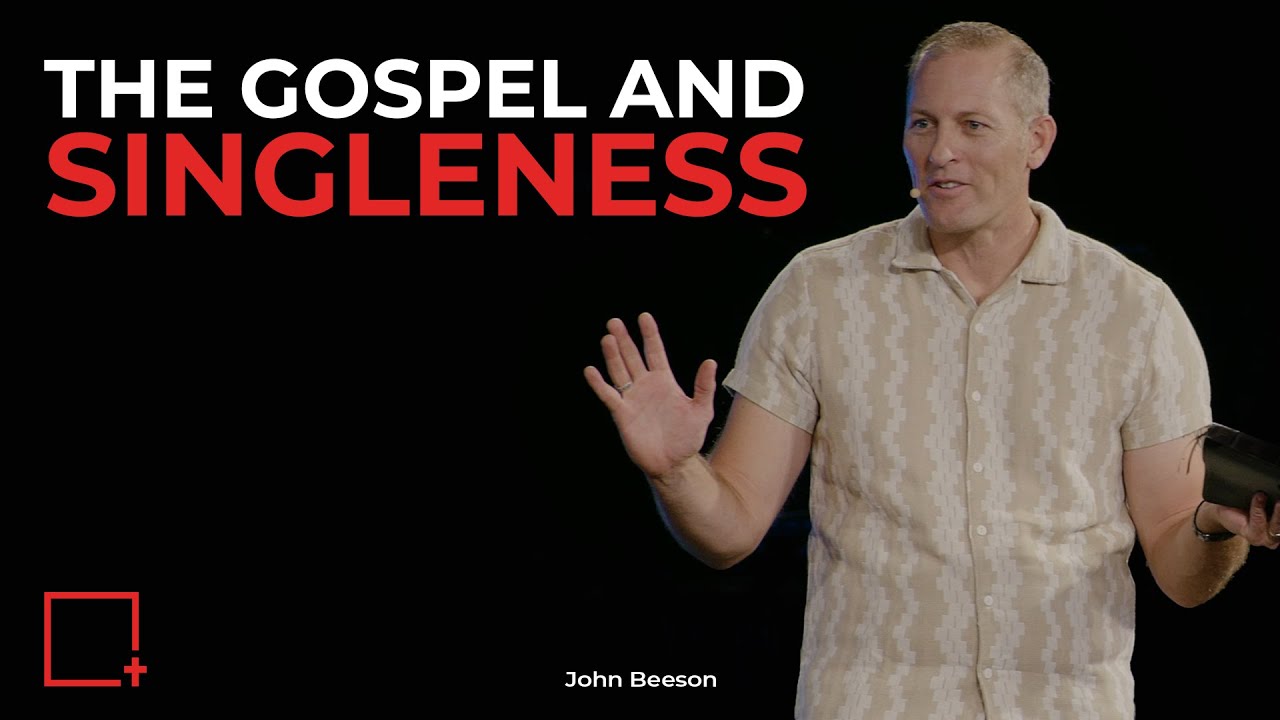
- The Gospel and Singleness
Kraft singles: unnatural. Evangelical culture: something is wrong with you if you’re not married. “What’s wrong with you?” Expectation: milestone. The Bible? Singles are natural. 46% of adults are single. Dangers: Culture: use your singleness for you. Good news for the real world. 1 Cor 7:7: Paul: single. Widower? Abandoned? Radical! Jewish men were required to get married and beget children. Rabbi Eleazar (2nd C): “Any man who has no wife is no proper man.” Singleness is natural. Jesus. Paul. The myth of the gift of singleness. Where has God placed you today? That is where he is calling you. Don’t judge God’s calling based on your feelings. “In my singleness God asks, “Am I enough for you?” and “Do you trust me, even when it doesn’t look like life is going how you wanted?” Can you wait on God? The Christian life is waiting. “Until I truly met Him in the throne room and released my fear of living a life alone did I realize that I have abundance in my singleness. I replaced my fear (still a work in progress) with a willingness to give up my idea of what my life should look like instead of what He has for me.” “In the Christian life there are no waiting rooms where we wait and “get through” until the next good season starts. God is behind our seasons.” Gift isn’t the box. It’s what’s in the box. Story of two friends: Seeking to find the one who would make him happy. Dating apps. Heartache. Battling addiction. Walking in the freedom of God’s gift in this season. House a place of hospitality. A mentor. 1 Cor 7:8-9: “Burn”– Jesus offers significant warnings about lust—it’s better to cut off your hand or remove your eye. Not a free pass on lust. Paul is not saying that your wife/husband is not a sexual escape hatch. Warning to those married young. Danger of selfishness. Broader friendships. “The hardest part for me is being obedient in the waiting. God is teaching me to trust him with my longing for intimacy.” 1 Cor. 7:27-28: Marriage = worldly trouble. Plants for Camille’s room. Every purchase is a commitment. “In my experience, singleness has opened significant space for me to pursue God’s purposes with greater focus and freedom.” 1 Cor. 7:32-35: Don’t run out of a hard marriage. Priorities of a married couple are clear. Singles have freedom. Secure undivided devotion to the Lord. If marriage is a shade of the ultimate reality, it is a benefit to live closer to that ultimate reality now. Jesus: we will all be single forever: Matt. 22:30. Everybody is single once and many will be single again. How are you using your singleness? “Singleness is not a deficiency, nor is marriage a guarantee of fulfillment. Both are gifts from God, each with their own joys and challenges. My journey has taught me that in singleness, God (reminds me of) His sufficiency.” 3 applications: Your identity is in Christ, not in your singleness. Where has God called you today? Planners—sit and wait with the Lord. Identity: Bride of Christ. Body of Christ. “Ultimately, whether single or married, our identity and purpose are rooted not in our relationship status but in our relationship with Christ. We are called to glorify God in whatever season He places us, trusting that He is both sufficient and purposeful in His design.” You are made for intimacy. Knowing and being known. Community. No tiers. Do you need to shut down your yearning? Singles: thick friendship. Sam Allberry 7 Myths About Singleness: singleness doesn’t mean you don’t have intimacy or family. “Being in the secret place with him and reading my Bible are the two most satisfying places in the world for my soul because it is in those places I feel intimacy with him. Nearness. Presence. I never want to leave.” “I think I’m more sensitive to pray for others around me.” “The hardest part of singleness is its solitude. There are moments—whether attending a ball game, a concert, a dinner out, or even holiday functions—where I feel an absence of a companion most deeply.” “God separated me from harmful, unhealthy, and depleting relationships. He replaced these relationships with authentic life-giving relationships with sisters and brothers in Christ.” “I will also raise a challenge to the married, and parents. Invite the single friends in your life into your daily activities. You might be busy with soccer practice on Tuesday night when someone asks to hang out. Instead of saying your busy, go ahead and invite them to hang out at soccer practice.” “The married friends in my life that invite me into their daily life, we have such a deeper friendship than those that only hang out when they are “free”. Life is meant to be lived together, so whether it’s family dinner or a family outing at the park, invite the single friends and bring them along. We crave relationship and having a family incorporate you into their daily mundane activities is something special.” You are made to serve. You have gifts for God’s people. “Singleness has been both a calling and a stewardship, enabling me to live with a concentrated devotion to the work of the Lord.” “In the Christian life there are no waiting rooms where we wait and “get through” until the next good season starts. God is behind our seasons.” Communion: the family of God 1 Cor. 11:28-29 Bread: Christ’s body was broken so we could be his body. Cup: Christ’s blood was shed so we could be his family.
- Healing Hurt Feelings
Feelings matter. Even if we are certain that truth is firmly in our grasp, it isn’t appropriate to use it like a whip on the back of the skeptic. In a desire to restore the balance of perceived power, contemporary Western culture has offered a wider berth for those who have historically wielded less power. Our culture declares that our privilege determines whether or not we are allowed to share “our truth.” Intersectionality doles out chips based on a group’s power. Those who come from advantaged portions of society (take me for instance: a white, cisgender (using our culture’s verbiage), male, heterosexual, Christian) are given fewer chips in order to balance the conversation. In this framework, those with more chips are given more freedom to speak “their truth,” even at the expense of others’ feelings, while those with fewer chips are expected to prioritize others’ feelings over “their truth.” Do you see the double whammy inflicted upon those with fewer chips? Unfortunately, this is how our culture has decided to balance truth and love. How do we navigate this balancing act as Christians? How do we speak the truth in love? That phrase—”speaking the truth in love”—was coined by the apostle Paul. Studying the context of that quote will help us unravel how we are called to speak the truth in love. The quote comes from the fourth chapter of Paul’s letter to the church at Ephesus. It’s worth noting that Ephesus was a town that would fit well in today’s West. A pagan and syncretistic culture, Ephesus was a melding pot of immoral worldviews with lust and greed welded together. Ephesus was the epitome of a “live and let live” culture, so long as you didn’t attack what kept the strange alliances of philosophies and religions in bed together. As long as you didn’t claim that there was “the way,” or call for people to repent of their greed and lust, you wouldn’t be confronted. Into this context, Paul brought the gospel, which invited people to trust “the way, the truth, and the life,” and repent of their greed and lust because Jesus was the only way to eternal life. In chapter 4 of his letter to the people at Ephesus, Paul explains how to communicate to a culture whose “truth” contradicts God’s truth. Allow me to quote the entire chapter in full because how he balances the tension of truth and love is critical. Then we will spend some time pulling out how we can imitate and apply Paul’s modeling of the wedding of truth and love. I therefore, a prisoner for the Lord, urge you to walk in a manner worthy of the calling to which you have been called, 2 with all humility and gentleness, with patience, bearing with one another in love, 3 eager to maintain the unity of the Spirit in the bond of peace. 4 There is one body and one Spirit—just as you were called to the one hope that belongs to your call— 5 one Lord, one faith, one baptism, 6 one God and Father of all, who is over all and through all and in all. 7 But grace was given to each one of us according to the measure of Christ’s gift. 8 Therefore it says, “When he ascended on high he led a host of captives, and he gave gifts to men.” 9 (In saying, “He ascended,” what does it mean but that he had also descended into the lower regions, the earth? 10 He who descended is the one who also ascended far above all the heavens, that he might fill all things.) 11 And he gave the apostles, the prophets, the evangelists, the shepherds and teachers, 12 to equip the saints for the work of ministry, for building up the body of Christ, 13 until we all attain to the unity of the faith and of the knowledge of the Son of God, to mature manhood, to the measure of the stature of the fullness of Christ, 14 so that we may no longer be children, tossed to and fro by the waves and carried about by every wind of doctrine, by human cunning, by craftiness in deceitful schemes. 15 Rather, speaking the truth in love, we are to grow up in every way into him who is the head, into Christ, 16 from whom the whole body, joined and held together by every joint with which it is equipped, when each part is working properly, makes the body grow so that it builds itself up in love. The New Life 17 Now this I say and testify in the Lord, that you must no longer walk as the Gentiles do, in the futility of their minds. 18 They are darkened in their understanding, alienated from the life of God because of the ignorance that is in them, due to their hardness of heart. 19 They have become callous and have given themselves up to sensuality, greedy to practice every kind of impurity. 20 But that is not the way you learned Christ!— 21 assuming that you have heard about him and were taught in him, as the truth is in Jesus, 22 to put off your old self, which belongs to your former manner of life and is corrupt through deceitful desires, 23 and to be renewed in the spirit of your minds, 24 and to put on the new self, created after the likeness of God in true righteousness and holiness. 25 Therefore, having put away falsehood, let each one of you speak the truth with his neighbor, for we are members one of another. 26 Be angry and do not sin; do not let the sun go down on your anger, 27 and give no opportunity to the devil. 28 Let the thief no longer steal, but rather let him labor, doing honest work with his own hands, so that he may have something to share with anyone in need. 29 Let no corrupting talk come out of your mouths, but only such as is good for building up, as fits the occasion, that it may give grace to those who hear. 30 And do not grieve the Holy Spirit of God, by whom you were sealed for the day of redemption. 31 Let all bitterness and wrath and anger and clamor and slander be put away from you, along with all malice. 32 Be kind to one another, tenderhearted, forgiving one another, as God in Christ forgave you. ( Ephesians 4 ) Let’s consider how Paul speaks of the importance of love and then consider the role of truth. Love Paul begins the chapter urging the church at Ephesus “to walk in a manner worthy of the calling to which” they have been called. What is this “worthy” manner? Love. What is its telos? Unity. He implores them to bear “with one another in love,” and “with all humility and gentleness, with patience” ( Eph 4:2 ). This will result in God’s purpose for them, maintaining “the unity of the Spirit” ( Eph 4:3 ). Paul concludes with a similar note, asking them to “Let all bitterness and wrath and anger and clamor and slander be put away from you, along with all malice. Be kind to one another, tenderhearted, forgiving one another, as God in Christ forgave you” ( Eph 4:32 ). Amid culture wars, Paul casts a vision of a united community actively loving one another, both near and far. Paul believes that this church is the greatest witness to a fractured, confused, and angry culture. Truth But Paul is not only concerned about love. Throughout this chapter, Paul is aware of the threat of lies infiltrating the church. He urges the leaders of the church to build up the body of Christ, growing in the “knowledge of the Son of God,” “…so that we may no longer be children, tossed to and fro by the waves and carried about by every wind of doctrine, by human cunning, by craftiness in deceitful schemes” ( Eph 4:14 ). Paul tells those in the community who have chosen to continue living in their fleshly desires that their lives are flagrantly misrepresenting “the way you learned Christ” ( Eph 4:20 ). The call to righteousness is no mere arbitrary standard, it isn’t religion for the sake of religion, it is because “the truth is in Jesus” ( Eph 4:21 ). Meaning, the truth of who we are meant to be is found in the person of Jesus. Paul tells those at Ephesus that Christians are truth-tellers who have “put away falsehood.” Paul encourages, “let each one of you speak the truth with his neighbor…” ( Eph 4:25 ). Truth in Love Paul does not envision truth and love as opposite ends of a pendulum’s swing, as though we need to keep course correcting our truth with love and vice-versa. Instead, think of speaking as a canonball, truth as the barrel, directing speech toward the proper target, and love as the gunpowder, which propels the canonball. When Paul urges the church to continue “speaking the truth in love” ( Eph 4:15 ), he reminds us that our aim is to be together growing more and more into the likeness of Christ (the truth). What is the power that propels us to that end? Building one another up in love. Paul echoes this same thought at the conclusion of the passage, when he says, “Let no corrupting talk come out of your mouths, but only such as is good for building up, as fits the occasion, that it may give grace to those who hear” ( Eph 4:29 ). We speak the language of grace to build one another up, that we might together, as Christ’s body, reflect Jesus himself. Where we Speak the Truth in Love Notice then, that in a culture fraught with lies, Paul expends his energy not coaching the church how to speak to the corrupted culture, but how to speak to one another. While we are urged to witness to a world in need, our expectations should not be that we can convince a world entrapped by the Deceiver of truth. Our concern begins with the church, those who are called to be set apart. Paul believes that a church transformed by the truth, loving one another, and growing together in the likeness of Christ is the best witness in a lost world. How much of our energy as Christians is spent trying to battle the lies of a spiritually darkened world? How much of our energy as Christians is spent building one another up by speaking the truth in love? We are called to be speakers of truth in love in every context. But let us make sure that we are first pouring our encouragement and exhortation to our fellow brothers and sisters in Christ so that we might every day better reflect the matchless beauty of Jesus, together.
- The Restoration of Christian America
During my recent ministry trips to Arizona and New Mexico, many people attending my speaking events have heard me talk about why I believe the Great Commission could be fulfilled in our lifetime, or at least within two generations. I routinely cite evidence from around the world that reveals a trend of great growth of the Gospel in a variety of countries. But one of the central questions people have is why American Christianity is in decline compared to the rest of the world. I answer with a slate of statistics among millennials and Gen Z that the younger generations are the fastest-growing segment of Western society converting to Christianity. Now, a new study from National Religious Broadcasters and Barna Research, along with some other data, seems to confirm this belief. America may be headed down a path of reversing the post-Christianization of the country. Let’s look at three areas where the trends are hopeful: Bible engagement, church engagement by men, and the impact of Christian media use among Americans. Bible Engagement As I have noted in my Great Commission talk, Bible engagement among millennials and Gen Z is rising. For the first time in several years, Bible use by Americans is on the rise. According to the American Bible Society, as of 2025, nearly four out of ten Millennials are engaging with the Bible regularly. Gen Z Bible use has also increased in the last three years from 37% to 42%. According to the Wall Street Journal, “Sales of Bibles are booming, fueled by first-time buyers and new versions. Publishers attribute a 22% jump in Bible sales [in 2024] to rising anxiety, a search for hope, or highly focused marketing and designs.” [1] This is great news. One of the most important things we can do to engage people with the Gospel is to engage them with the story of the Bible. A large jump in Bible sales means that many more people may engage with the story of Jesus and have a chance to say yes to a relationship with the Savior. When we couple this data with recent research on trust in religious institutions, the results are encouraging. A study this year by Gallup revealed that Americans’ trust in religious institutions stands at 68% from those whose trust is a “great deal,” to “quite a lot,” to “some.” [2] The church is all about the story of the Bible. For public trust in religious institutions to be rising, coupled with a significant increase in Bible engagement, especially among the younger generations, makes for some good news about where America might be heading. According to Troy A. Miller of the National Religious Broadcasters , “America is not drifting further into a post-Christian future; we are witnessing signs of spiritual return.” [3] Men & the Church Whichever way men go, so goes the family. It’s long been known that when fathers make an early commitment to Christ, the family usually follows. For many years, women led the way in faith commitments, but recent signs point to a resurgence of men taking spiritual leadership in the home. “Barna’s State of the Church 2025 report shows that commitment to Jesus among Gen Z men has risen sharply in recent years, increasing from 52% in 2019 to 67% in 2025. Weekly church attendance has also favored young men since 2022, reversing a decades-long pattern in which women were more likely to attend church regularly.” [4] “We’re seeing interest in Jesus growing among those who do not otherwise describe themselves as Christians. Many of the new followers of Jesus are not just recycled believers. They’re encountering faith as something new.” [5] It turns out the various men’s movements in the American church have had a positive impact. The more men engage in regular study of the Bible, participate in men’s groups, outings, and conferences, the greater the impact on their spiritual lives. The end result is an impact on church attendance and leadership in the home. Chalk one up for toxic masculinity. The Impact of Christian Media in America As one involved in US and global Christian media for 42 years, the most recent data on Christian media use by Americans is particularly encouraging. “A landmark study conducted by the National Religious Broadcasters (NRB) and the Barna Group shows that six in 10 Americans use Christian media, with half using at least one Christian media source weekly. Faith-driven content is anything but fringe—it is embedded in the daily lives of millions.” [6] Not only are Americans sourcing Christian media for their spiritual growth, but they are also looking to Christian groups for leadership in pro-family issues and engagement in the political and social arena. According to Barna research and the NRB, 63% of unchurched Americans and 61% of nonbelievers want religious non-profits to speak on social and political issues. [7] As noted by NRB’s Troy Miller, “The microphone is already in the hands of Christian communicators—broadcasters, pastors, writers, and digital creators—whose voices are shaping the conversation today that will define our nation’s tomorrow.” America is listening and engaging with Christian media. “Two-thirds of the general population view Christian media as valuable and trustworthy.” [8] This is an area where the younger generations are actively engaged. Not just with traditional media, but with social media as well. “Gen Z leads the way, with 64% engaging with Christian social media accounts, followed by Millennials at 58%.” [9] What kind of impact is Christian media use having on society? “Christian media inspired half of users to pray for the election, and over half of heavy users said it shaped their voting decisions.” [10] This is practical impact. Though as Christians we have to walk carefully where politics is concerned, America has a long history from colonization to national formation, of the church influencing American policy and freedoms. The latest data would seem to indicate that this trend continues in a positive direction. Conclusion When it comes to the Great Commission, there are remarkable things happening around the world that lead us to believe Jesus’ marching orders to the church could see its fulfillment in our generation. And it turns out that America may not be left behind. Though there are still fewer people in church post-COVID than pre-COVID, it seems the trends could be reversing. In three key areas—Bible engagement, engagement by men, and Christian media impact—we have encouraging signs that America’s post-Christian fact may soon become a myth. [1] https://www.wsj.com/business/media/sales-of-bibles-are-booming-fueled-by-first-time-buyers-and-new-versions [2] https://news.gallup.com/poll/692633/democrats-confidence-institutions-sinks-new-low.aspx [3] https://dailycaller.com/2025/08/28/opinion-americas-new-appetite-for-faith-christian-media-is-trending-troy-a-miller [4] https://relevantmagazine.com/faith/church/why-are-more-men-going-back-to-church-in-2025 [5] Ibid. [6] https://dailycaller.com/2025/08/28/opinion-americas-new-appetite-for-faith-christian-media-is-trending-troy-a-miller/ [7] Ibid. [8] https://nrb.org/nrb-barna-group-release-landmark-study-on-the-state-of-christian-media/ [9] Ibid. [10] https://nrb.org/christian-media-leaders-had-notable-role-in-shaping-2024-presidential-election-barna-reveals/
- God's Will and God's Grace
GOD’S WILL AND GRACE Romans 1:24-32 S-1699 ●SLIDE: Will and Grace is a television sitcom glorifying the homosexual lifestyle. According to Romans 1, God is not nearly so impressed with gay love as is our society. God’s will is for holiness—His grace is for when we fail. ●SLIDE:In Romans 1:18-23 we saw last week how God has revealed Himself to all mankind: (1) Conscience; (2) Nature. But all men take that knowledge and suppress it. As a result no one has an excuse for not believing in the existence of God. Saw how we are not waiting for God’s judgment on our society. It is all around us. Passage for today expands on God’s judgment. This is our society. ●SLIDE: Romans 1:24: Therefore God gave them over in the sinful desires of their hearts to sexual impurity for the degrading of their bodies with one another. ●SLIDE: 25 They exchanged the truth of God for a lie, and worshiped and served created things rather than the Creator-who is forever praised. Amen. ●SLIDE: Romans 1:26: Because of this, God gave them over to shameful lusts. Even their women exchanged natural relations for unnatural ones. ●SLIDE: : Romans 1:27 In the same way the men also abandoned natural relations with women and were inflamed with lust for one another. Men committed indecent acts with other men, and received in themselves the due penalty for their perversion. ●SLIDE: Romans 1:28: Furthermore, since they did not think it worthwhile to retain the knowledge of God, he gave them over to a depraved mind, to do what ought not to be done. ●SLIDE: Romans 1:29: They have become filled with every kind of wickedness, evil, greed and depravity. They are full of envy, murder, strife, deceit and malice. They are gossips, 30 slanderers, God-haters, insolent, arrogant and boastful; they invent ways of doing evil; they disobey their parents; ●SLIDE: Romans 1:31-32: they are senseless, faithless, heartless, ruthless. 32 Although they know God’s righteous decree that those who do such things deserve death, they not only continue to do these very things but also approve of those who practice them. If we are not careful we will swell up with a sense of righteous judgment as we see sin and sinful people dealt with in this passage: “Go get them, God.” If we are not careful, we will approach this passage with the wrong attitude. But, when we see this passage in the right light it will break our hearts. Some of you will personally identify with the dramatic sketch of the next few moments. You have lived through it. You are living in the midst of it. ●SLIDE:SKETCH: Misjudged Love LARRY AND JAN perspective. ●SLIDE:Romans 1:18-23 – Man forsaking God. Now, see the flipside – Romans 1:24-32 – God forsaking man to the depth of his own devices. ●SLIDE:“GOD GAVE THEM OVER” – is the key phrase (Romans 1:24, 26, 28). READ ROMANS 1:24a, 26a, 28a – God gave them over – The term resounds like the final three nails being driven into a coffin of mankind. Paradoken: “God gave them over” literally means, “to hand over to one’s own power.” ●SLIDE:Oscar Wilde: “When the gods wish to punish us they answer our prayers.” See the irony: freedom from God is precisely what man has been fighting for ever since Adam’s rebellion in the Garden. Our contemporary society says, “God, we want you to leave us alone. We don’t want to hear your voice, we don’t want to follow your life principles. We don’t want your Son, Jesus Christ. And God says, OK. Have at it. You are on your own.” When we run away from God we think we will be going upward to better things. But the way is actually downhill. We are pulled down by the law of moral gravity—when God lets go. Illustration: Drop and break a light bulb. Just as natural as it can be. When you let man go, he is going to go down. This is just as natural as it can be. ●SLIDE:“GOD GAVE THEM OVER” TO SEXUAL IMPURITY (Romans 1:24-25). READ ROMANS 1:24-25 Epithumia: “sinful desires” really means a “reaching out after pleasure that defies all reason.” Like, what in the world are they doing!!? It is the way of a society which is so completely immersed in the pursuit of sex that they have ceased to be aware of God at all. Why sex? ●SLIDE:Because sex is the most intimate of encounters. God reserves our deepest intimacy for Himself. It is not possible to be misusing our bodies sexually and be intimate with God. See Ezekiel 23. It is one of the few Bible passages I refuse to read with children in the room. Today we are witnessing a frantic pursuit of pleasure that is being called in our secular media, the “New Hedonism.” Our society is saturated with sex in literature, TV, radio, and advertising. Cable, internet. There are consequences. ●SLIDE:CBS ran an hour long special on the freewheeling lifestyle in California—interviewing many women who are caught up in it. Interestingly enough, the majority, when they got honest, felt betrayed by the sexual revolution. One woman said, ●SLIDE:“All men want from us is our bodies; we have had enough of this to last a life time.” ●SLIDE:“GOD GAVE THEM OVER” TO UNNATURAL SEXUAL BEHAVIORS (Romans 1:26-27). READ ROMANS 1:26-27. Rampant homosexuality is the second mark of a godless, wicked and abandoned society. ●SLIDE:“Even the females (θηλυς)” and “even the males (αρσην)” are not the normal Greek words for men and women. Paul used the animal terms for “male” and “female”. We might expect the males to break out like this—but not the females—and the females are leading the pack! For centuries homosexual activities were hardly spoken of in our society. Homosexual activities were considered so morally reprehensible that people not only refused to speak of these things, they had no idea what most of the acts were. STORY: Dad and I reading morning paper. One man was sodomized. “Do you know what that means? No. Let’s look it up in the dictionary. Dictionary was so vague we still did not know. Not today!! Today these immoral acts are written about in explicit detail in virtually every newspaper and magazine in our land. Grade school children discuss them. Not only are we no longer shocked—we have become accepting. The critical word here is “natural” used in verse 27 and the opposite term, “unnatural” used here. Fornication and adultery are “natural” sins—they are not against nature. On the other hand, homosexuality is using one’s body in an unnatural way—against nature. A look at one’s sexual apparatus should convince anyone that practices of this kind are not normal. They were not meant to be. ●SLIDE:How we handle the homosexual issue is one of the greatest challenges facing the church today. For too long the church has made it a secret thing hardly talked about—the issue in the church is explosive—in large part because of Romans 1. Need to be careful—some sitting here are gay. The very discussion is painful—no matter what is said. Numbers of you have children who are gay and you are feeing so guilty that you did something wrong to cause this. I would be greatly remiss here if we did not attempt an honest, open, intelligent and Biblical approach to this permeating societal issue. Be at peace, some of us are so afraid that if gays are born and not made by choice then the truth and validity of the Bible is in question. No. Our faith rests on the resurrection of Christ—not how we try to interpret Romans 1 in light of recent medical research into this subject. Mid 90s the gay gene was discovered—R2D2CP3O. T-shirts: Gays were proud—argued that their personhood and behaviors are OK because they are created that way. But, many were soon terrified. New wave of prejudice that they were born flawed. Scientific research seems to indicate that the gay lifestyle is certainly more than just a choice. ●SLIDE: Mapping the Mind by Rita Carter. ●SLIDE: Genome by Matt Ridley ●SLIDE: Nature via Nurture by Matt Ridley There is no one gay gene. Hundreds of genes are involved. Quite complex. Like all genes, many are turned on or off by contact with their environment. Anatomy of gay brain is slightly different from heterosexuals. Hypothalamus is about 2/3 heterosexual size (result of genes or lifestyle choices?) Corpus Callopsum is midway between heterosexual male and female sizes. Testosterone produced in mothers womb is significant. More we have the more likely to be heterosexual. Less we have the more likely to be gay. Measure how much you have by proportionate size between ring and index finger. Race, measure fingers, one with most testosterone in womb will win. Given exactly the same genes, every male child born to mom has less testosterone available than the brother before—this probably has to do with mom’s genetic immune system reacting to each new male child. Also, each successive male child tends to have less birth weight. Less testosterone and less birth weight, more disposition to homosexual orientation. This doesn’t mean that if you are the third born male, your chance of being gay is out the roof—only slightly—3% to 4%. Some genes turned on and off in response to environment. Predisposition may be there but only tuned on by homosexual encounter early in childhood. No encounter, no homosexuality. Return to the gay claim that since they are made this way, their lifestyle and sexual orientation are OK. This is called the “Naturalistic Fallacy”—developing morals from the way something is formed. Matt Ridley refers to this on numerous occasions. “I am made this way, therefore my sexual orientation and behavior are OK.” No. Inappropriate conclusion. No one would say, I am born with MS—this is OK. Naturalistic fallacy. I was having lunch with Dr. Tom Griffin, discussing the complexities of Romans one and the complexity of homosexual genetics and Tom said, ●SLIDE: “This means that it is time for us to get ‘off our high horses’ and let God be the Judge. We need to enter this arena with love and compassion! We know we are called to do that.” ●SLIDE: Don’t get me wrong. Homosexual behavior is a sin at any level. Sexual behavior is not an inborn right. God says, “control yourself. You will never close the gap to an intimate relationship with Me while you are involved in homosexual behavior. Don’t get me wrong. Herterosexual behavior outside of marriage is a sin at any level. Sexual behavior is not an inborn right. God says, “control yourself. You will never close the gap to an intimate relationship with Me while you are involved in homosexual behavior. READ ROMANS 1:27: “Due penalty for this perversion” Is Paul speaking of AIDS? No. No AIDS in Paul’s day—though he may have been thinking of other sexually transmitted diseases. What he is saying is that sin does have its consequences and unnatural sins have unnatural consequences. Internet help site: Passage not dealing with individuals—it is dealing with an outbreak in society. First outbreak natural sexual sins, then outbreak of unnatural sexual behaviors. Society is obsessed with sex. God is so far from society’s thinking that their minds are depraved—they are no longer able to make proper moral choices. They no longer can tell right from wrong. By the way, there was a widespread conclusion in the 60s that homosexuality was the result of an overbearing mother and a quiet, submissive and uninvolved father. How many heard this. Be at peace, parents, it is not true. ●SLIDE:“GOD GAVE THEM OVER” TO DEPRAVED MINDS (Romans 1:28-31). READ ROMANS 1:28 “Depraved mind” – hard to translate – Depraved mind is like an abandoned building which soon becomes the home of rats and other rodents. ●SLIDE:Depraved mind is unfit to distinguish between right and wrong. It is a mind which is warped with regard to moral judgment. When God turns the human race over to a depraved mind, they immediately begin to do things which ought not to be done. READ ROMANS 1:29-31. See things all of the time that people do – We shake our heads and say sadly, “They must be out of their minds…” They really are. ●SLIDE:Here is the doctrine of original sin—total depravity. This is why mankind needs a savior. “Cute little baby.” Hard to believe that he’s depraved. But he is. See babies grow up – much evidence of original sin. They’re selfish and demanding. Always want their own way. Cry if they don’t get it. STORY: Bronwyn being disobedient: “If I have to get up from this couch you are going to get it!” Brie: “Get up, Daddy, get up!” Every twenty years we have a new generation of barbarians. Someone must teach them language and customs and social restraints. Otherwise we’ll have anarchy in our society. ●SLIDE:HOW LOW CAN YOU GO (Romans 1:32)? READ ROMANS 1:32. Here is the final climax in man’s separation from God. Not only does man enjoy these sins, he enjoys watching others do them. At some point we ask the question, “Is there some point where we will pull back from our increasing decline and say, ‘this is where we stop; this is enough?” If there is, it is certainly not fornication and adultery. We have plenty of that—people flaunt it openly and watch others do it on the internet and television. It is not prostitution. It is legal in some places. It is not pornography. Porn is the number one search topic on the internet. It is not gay marriage: it is now legalized in some states. Surely we will stop with perversions being perpetrated on children? We would like to think that here is the limit.; but, several years ago Brooke Shields starred in a movie when she was only 12 years old by playing the role of a child prostitute in a New Orleans brothel at the turn of the century. ●SLIDE: GOD HAS NOT REALLY GIVEN UP! It is in the context of this abyss of iniquity that God put on a body and was spit upon and ridiculed and killed for all the sins of all the world. Christ came to give sinful man His righteousness and make him fit for Heaven if man will believe in Jesus. No matter how deep the abyss, the love of God is stronger. ●SLIDE: Lamentations 3:22-23: Because of the LORD’s great love we are not consumed, for his compassions never fail. 23 They are new every morning; great is your faithfulness. The local undertaker in Brooklyn called a pastor friend and said that he had a funeral that no one else wanted to do because the guy had died of aids. So this pastor took the funeral. What was it like? Let’s let the pastor describe it in his own words. “It was wierd. When I got there, there were about 25 to 30 homosexuals sat there frozen with their hands on their laps. Their eyes were riveted straight ahead. I read some scriptures and prayed some prayers. The funeral was over; we got in some automobiles; we drove out to the cemetery. We watched as the casket was lowered into the hole. Once again I read scriptures and prayed. ” I said the benediction and turned to leave, but, none of the homosexual men budged. ‘Is there anything else I can do?’ “’Yeah, there’s something else you can do. I haven’t been to church for years. Actually I was looking forward to the funeral because I always loved to hear them read the 23rd Psalm. Pastor, you didn’t read the 23rd Psalm. Would you read the 23rd Psalm?'” I read the 23rd Psalm. When I finished another man said, ‘There is a passage in the Book of Romans and it says that nothing can separate us from the love of God. Do you know that passage?’ I read to this these homosexual men, ‘Nothing can separate you from the love of God…neither height, nor depth, nor things present, nor things past, nor principalities, nor powers, nothing…nothing can separate you from the love of God…nothing can separate you from the love of God.’ “I stood by the grave reading these homosexual men passages upon request for over an hour.” That story and makes us want to cry because there are people who are hungry for the Word of God who would never set foot inside the church because they believe that the church despises them—and they are right. You say, “Are you approving of a homosexual lifestyle?” Certainly not!! Neither do I approve of a heterosexual lifestyle of sex outside of marriage. All I am saying is that it is about time we started loving the people that nobody else loves? TAKE AWAYS ●SLIDE: 1. Protect the children. ●SLIDE: 2. Pray for repentance. The chances of our nation repenting is slight. But, it does happen. Nineveh fell to its knees in sackcloth and ashes in repentance after Jonah preached of God’s coming Judgment. The entire nation turned around. I would like to think that if it happened for Nineveh, it can happen for America. ●SLIDE: 3. Let’s stop yelling, “Stop it” to the sinners in our society. Jesus yelled, “Stop it” to the religious leaders who should have know better. He lived with compassion for the folks who knew no better. We will turn this society around only when we are able to show them a better way—that God has a better way than they do. We are called to love and to demonstrate a new set of values to a decaying culture. SONG: There is a fountain filled with blood.
- How to Have a Mission-Minded Church
Roger and Scott GO sermon #2 Matthew 28:19-20 S-1752 SLIDE #1: background passport slide ROGER SLIDE #2: Introduce video #1 of Roger and Julie teaching in Mongolia We have the highest-rated program on Eagle TV. VIDEO #1: Roger and Julie teaching in Mongolia SCOTT SLIDE #3: Matthew 28:19, 20: Therefore go and make disciples of all nations, baptizing them in the name of the Father and of the Son and of the Holy Spirit, and teaching them to obey everything I have commanded you. And surely I am with you always, to the very end of the age.” ROGER ☻SLIDE #4: Julie and I recently spent several weeks teaching and encouraging missionaries throughout central Asia and the Middle East. We wish you were there. ☻SLIDE #5: We were in one country: cold, not water, took us three days to learn how to turn it on. Sitting in restaurant and bugs begin crawling out of Julie’s pants. Brush your teeth with coke. You get used to it—it is part of the adventure! ☻SLIDE #6: Behind the scenes: trash, dogs—one match could incinerate an entire city. Julie starts to throw trash out the window of the hotel: “We are still Barriers; we don’t throw trash out the window. Julie and I returned to US. I entered men’s room in Atlanta to series of loud curse words and the cry, “I dropped my cigarette in the toilet.” I thought, at least he has a toilet. And I knew I was back in the US. ☻SLIDE #7: US Bubble: American bubble: world map with US in bubble. I want you to go crawl out of the Bubble—every one should have the experience. Julie and I are global workers from Casas. ☻SLIDE #8 Teaching in Brazil ☻SLIDE #9: Teaching in Greece ☻SLIDE #10: Teaching in Azerbaijan ☻SLIDE #11: Teaching in Ukraine ☻SLIDE #12: Teaching in Jordan ☻SLIDE #13: Teaching in Turkey ☻SLIDE #14: Teaching in Mongolia On a Global Outreach Adventure you will discover several special things. ☻SLIDE #15: 1. God is alive and well and you are now a part of it! Ukraine: church building as you go. You will return with a changed heart and a passion to advance the Kingdom of God on earth. You will be amazed at how you love to share your faith with others. ☻SLIDE #16: 2. You will be humbled as you engage with men and women who sacrifice so much. Iranian woman at elevator talking to Julie: Came last year and did not think I can make it another year. You talked on relationships and I used mine to get through another year. I came this year thinking I could not make it. After hearing you talk on spiritual growth, I think maybe I can make it another year.” ☻SLIDE #17: 3. You will develop relationships that will add untold dimensions to your life. Julie at piano in Ukraine Internet ☻SLIDE #18: 4. People are alike in every culture. Ukraine empty stores: wish they had something to buy: even if have the money, few if any products available. ☻SLIDE #19: 5. Serendipities happen at the most unexpected moments. Julie beside Jordan River and getting to go to Israel. ☻SLIDE #20: Julie getting to go to Israel. SCOTT SLIDE #21: We’d like to introduce you to a Casas full-time global worker who serves people from the whole world from right here in Tucson. Your Global Outreach gifts support Cherie as she connects churches and Bible Fellowships with refugee families. They welcome and help them assimilate into American culture. SLIDE #22: For example, you welcomed a refugee family into Tucson this week. CHERIE SLIDE #23: For me, the exciting part was that these were Casas people who’ve never met refugees. Last week I spoke at their group and they were ready to welcome a new couple. They got their apartment ready for them – they furnished the rooms, stocked the refrigerator with food, and hung pictures on their wall. SLIDE #24: Then they brought their kids to the airport, held up sign and flags, and welcomed this couple from Iraq. Last week they thought refugees were scary people from far away who kill Americans. But this week when they saw them face to face they fell in love with them – they saw that they were real people. All the kids gathered around the Iraqi wife as she told what her life was like. After the first sentence she was in tears. All the relatives she left behind in Iraq were in danger because she and her husband were helping the American military. SCOTT Some of the things you do are really like parties. This week two Bible Fellowships threw a baby shower for another family from Iraq. CHERIE SLIDE #25: Yes, the mom and dad have twins, but this is the first one born in America – the first American baby. The Bible Fellowships collected a mountain of diapers and gave them a brand new crib, car seat, stroller, and lots of other gifts. All I did was give them pointers – cross-cultural stuff. At first everyone tried to be cordial and correct. Then they played charades. Everyone had to act crazy to win so they all began laughing. The Americans realized, “These are real people like us.” At the end, I we all lifted our hands and prayed for God to bless the mom and her baby. ROGER Any Casas Bible Fellowship can have a meaningful ministry partnering with Cheri to help incoming refugee families start a new life here in Tucson. CHERIE I can come to your class, give you training. Then you can throw a baby shower or furnish an apartment for a new arrival, welcome them at the airport, and be their friend. You don’t pay their rent and or buy their clothes. You just do what you do best – build a relationship and show them love. ROGER SLIDE #26: George Vanderveer has been at Casas 30 years. Global Outreach has been an important part of his life. He constantly gives out materials and gets his Bible Fellowship to pray for our apostles. Every Sunday at 6am George is walking the perimeter of the Casas campus praying for the day. SCOTT SLIDE #27: Here are some quotes from George: “Giving to global outreach is second nature.” “If I stop working, I won’t be able to give.” “I have nothing else to do with my money – I don’t want to leave it at my grave site.” SLIDE #28: George has gone on nine overseas trips including six trips to Turkey; he even last June when he was 80. This year George was planning to go again till the doctor stopped him. ROGER Today we’d like to show our appreciation to George. Shout, cheer. SLIDE #29: Tom Terry found Christ here at Casas 25 years ago. Christ touched his heart during an evangelistic meeting when you were looking for a job. Whoever could have guessed when you were a disc jockey at KVOI Christian radio that one day you would lead the most popular and well-loved TV station in Mongolia. After the fall of communism Eagle TV began as the first independent TV station in Mongolia. TOM SLIDE #30: Eagle TV is sort of the FOX News of Mongolia. We air 13 hours of live news and talk programming, and four hours a day of strategically placed Christian programming as well as quarterly prime time specials. Our relationship with the Mongolian people was cemented during the Gulf War. We provided the only live, up to the moment coverage of what was happening in Iraq. The communists censored their news coverage to only what they wanted shown. During our live coverage we allowed viewers to call and give their opinions about the war—with no censorship of their opinions. That had never been done in Mongolia before. In two weeks on a single phone line we took more than 4,000 calls. The communist government was incensed. But we had broken new ground for freedom of speech in Mongolia. We became known as the station that cares about what the average person thinks. ROGER SLIDE #31: Eagle uses a series of Bible movies produced by—of all people—Ted Turner, to broadcast Bible stories throughout the countryside. Your intention is to take people from Genesis-to-Jesus and make the ideas of the Bible, household concepts. Movies of Genesis, Exodus, etc. Foundation for NT truths. Of all the stories, are you surprised that the Bible story that speaks most clearly to the Mongolian people is the story of Jacob? TOM SLIDE #32: Mongolians are devout idol worshippers. Explain why. When they see the Bible movie of the life of the idol-worshipper, Laban, contrasted with Jacob’s reliance on the one true God, they are pierced to the heart. They watch as the idol-worshipper Laban loses everything of value to him (including his idol). But God blesses Jacob. This immediately causes doubt with Mongolian Buddhists and Animist and they start to wonder if Christ might be better than an idol. Just three months ago we had a team in the countryside showing Bible movies of Laban and Jacob to Mongolian herders. One idol worshipper was trusting his idols to give him protection and favor for himself and his family. Like Laban, his family idols had been passed from generation to generation and now to him. He decided that the way of Christ was better than the way of idols. VIDEO #2 Man discarding his idols ROGER Fifteen years ago there were no Christians and no churches in Mongolia, and Mongolia was considered the most Buddhist nation on earth. Now, Christian churches outnumber Buddhist temples in Mongolia by 8-to-1. Many Mongolians are desperate to know what God’s word has to say. TOM SLIDE #33: Steppe by Steppe is our strategy to use Bible movies to tell Bible stories in the country side to evangelize and disciple. Last summer an elderly lady approached one of our Steppe-by-Steppe teams requesting a Bible. Bibles in the Mongolian countryside are difficult to come by. There are no bookstores, and no mass distribution of Bible. One day she stopped by a public outhouse. Outhouses in Mongolia are barely standing wood shacks that have an open pit inside with just two loosely placed wood planks to stand on. That’s it. It’s dirty. It’s nasty. It’s not something you really want to think about or experience. This lady went into that outhouse, latched the wood door, turned and looked down into the pit. Imagine her shock, someone had discarded a Bible in the outhouse pit. You know where I’m going with this story, don’t you? That woman climbed down into that pit, into the much and the mire, she retrieved that Bible, took it home, cleaned it off, and it’s her Bible today. ROGER In the last year your Steppe-by-Steppe country-side ministries touched 84 communities for Christ. They’ve planted 10 new churches—including churches in a gold mine and on a military base. They’ve reached more than 31,000 people for Christ. In a nation with only two-and-a-half million people, that’s staggering. TOM We have three teams trained and ready to go out to show Bible films–but we only have two vehicles. We need a Land Rover for our last team that will cost $18,000. ROGER Tom, from the global outreach gifts that we have Casas has set aside over the last few years for special projects, we would like to present you with this check for $18,000 to get that vehicle and show those Bible films across Mongolia. (Present Tom Check and Tom says “thank you.” SCOTT SLIDE #34: Ari Sloane and six friends from his ABF recently returned from a trip to Central Asia. How did you decide to go? ARI I was sitting in my Sunday morning ABF when they passed out the brochures for a Global Outreach trip to central Asia. God immediately said, “Ari, you’re going on this trip. I leaned over to my wife and said, “I am going on this trip—and I did.” SCOTT Ari is a tough Tucson cop. You’ve seen most everything—but, you were really afraid to go, weren‘t your? ARI I wanted to go but I was afraid. In my line of work I am pretty much in control. I decide to take someone from their home and put them in jail. The fear of not being in control – of the unknown – crawled into my heart. SCOTT How long did that fear hang on to you? ARI From that second I set my foot down in Central Asia on I was filled with peace—It was like a thick cloud of God’s presence surrounded us. I gave a seminar about my job as a crime fighter—and there was standing room only. I had English conversations with college students. Three of them even skipped classes one day to spend the entire day talking about Islam and Christianity and the issues of life. SLIDE #35: One told me, ‘We need more men like you here – men who are strong in their faith.’ I told them, ‘You can be strong, too.’ SCOTT You still have contact with these guys, don’t you? ARI Yeah, now they email me and tell me, “Ari, I pray for your safety in your job. Your happiness is my happiness, your sorrow is my sorrow. Please pray for me . . . you are closer to God.” It was tough to leave, I loved it so much. I feel like I left a part of my heart there. That place will be part of my life forever – and these three guys will be, too. SCOTT This trip reminded you of when you were a kid. ARI Yeah, when I was a kid, the best day of my life was when I got to go to work with my dad. On this trip to central Asia, every day was like going to work with my Heavnly Father. Now, I see that this trip has made me bold in sharing my faith in normal conversations. I now spend every day going to work with my Father. ROGER SLIDE #36: Steve Hagedorn is your Bible Fellowship Director. He also was on the trip. You all had a special name for him, didn’t you? ARI We called him Mr. Skeptical. I was Mr. Afraid and he was Mr. Skeptical. Steve said, “What good can you do in a short-time? Besides we aren’t missionaries. How can we help?” Any way, by the time we get over there and adjust to the time changes, it will be time to come home. He said, “I’ll go. But if I’m right, Scott will wish I hadn’t gone.” “When it was time to go home, he didn’t want to go. Let’s figure out how to stay here.” SCOTT SLIDE #37: “I found out it was worth it because: (1) It was so obvious that the long-term workers need people from the US to come help them. (2) I had no idea we’d be able to communicate easily with so many Muslim people who asked us about the deep issues of life. (3) And it changed my heart – it gave me a love for the people who have no relationship with God.” ROGER SLIDE #38: Not long ago, Bryan Wilson was in the Casas high school ministry. Many remember him as a typical teenager, lost, confused and trying to find his way in life. Then he went on a short-term trip, and God got his attention. Casas sent him out as a global worker to Zambia. SCOTT Last November 27 Bryan landed his airplane—filled with the first full-time workers—on a newly cleared landing strip in an area of Zambia so remote that as far as any one knows, until recently, there were no missionaries, no churches and no known believer among them. SLIDE 39 When Bryan landed, 500 leaping, smiling children surrounded the plane so tightly he couldn’t open the door! Now global workers live there and share The Story of Jesus. The people told them, “We have never heard this message before. No one has ever come to tell us.” Brian and his airplane fulfill a critical role. The team Bryan is serving is starting 400 churches a year among 18 people groups who have never heard of Jesus. ROGER SLIDE #40: Brian needs a garage for his airplane. He now parks his airplane in the mud under a Ramada. Neighborhood kids can climb on it. He has to roll the 55-gallon fuel barrels through the mud to fill-er-up. And if he wants to do repairs, he has to set the parts in the mud. It costs $100,000 to build a hangar. Bryan has already raised $75,000 and he’s asking Casas for the last $25,000 so they can get it built. So we want to help him. [Stage crew: bring check to roger.] Scott, this check isn’t filled out. It isn’t signed. SCOTT SLIDE #41: Last week, out of our global outreach offerings we presented a check to Roberto Morales for $50,000 to provide training and “how to” conferences for 150 pastors in Peru over the next two years. SLIDE #42: Last week, out of our global outreach offerings we presented a check to Doug and Dina for $175,000 to help finish buying a Student Outreach Center in Central Asia. ROGER This check is blank. We want to buy a hanger for Brian Wilson for $25,000—our gifts to Global Outreach during the year will buy this hanger and fund many other projects as well. SLIDE #43: So that starts with the new pledges we make today. God has allowed Casas to send out 17 homegrown global workers from our church, who are now serving full-time around the world. These are everyday people who sat next to us in worship. They were part of our Bible Fellowships. They are our family. God has blessed us – and that is how we bless the world. All of this is part of the genetic code of our church. It is who we are. Years ago Casas set up a separate budget so each of us could give to support the ministry of these family members. We each get to be involved. We invite you to make this personal by filling out the enclosed Global Outreach pledge card and turning in a generous pledge We have an invitation from our partners in Central Asia. (ushers move into place) (WE MAY OR MAY NOT HAVE TIME FOR THIS VIDEO: IF NOT, USHERS BE LISTENING, ROGER WILL TELL YOU WHEN TO ENTER AND ROGER WILL GIVE CLEAR INSTRUCTIONS TO THE CONGREGATION FROM THE PULPIT.) VIDEO #2 – Arzy and Gulia come help us – PASS offering plates.
- When Your Life Falls Apart
Pastor Chris Brown August 27-28, 2022 Message #34 / 2 Samuel 16 northcoastchurch.com/sermons When Life Falls Apart The three keys to surviving a trainwreck: 2 Samuel 16, 12, Philippians 2:1-13, Romans 12:1-21 Having the right view of OURSELVES Having the right view of OTHERS Having the right view of GOD The soundtrack to a horrific failure: Psalm 3 David is writing out his FAITH and the TRUTHS about God, even though his REALITY is telling him something VERY DIFFERENT. The mathematics of genuine faith: Matthew 6:25-34, 1 Thessalonians 5:16-18, Philippians 4:4-13 E + R(BS) = O Our ACTIONS will show if we just have an intellectual BELIEF or a genuine FAITH. The best way to connect with us is the Connection Card in the bulletin. For the Digital Bulletin, visit myncc.info. Pastor Chris Brown August 27-28, 2022 Message #34 / 2 Samuel 16 northcoastchurch.com/sermons When Life Falls Apart The three keys to surviving a trainwreck: 2 Samuel 16, 12, Philippians 2:1-13, Romans 12:1-21 Having the right view of _____________ Having the right view of _____________ Having the right view of _____________ The soundtrack to a horrific failure: Psalm 3 David is writing out his _________ and the __________ about God, even though his ___________ is telling him something ______________________. The mathematics of genuine faith: Matthew 6:25-34, 1 Thessalonians 5:16-18, Philippians 4:4-13 ____ + ____(________) = ____ Our ___________ will show if we just have an intellectual __________ or a genuine _________. The best way to connect with us is the Connection Card in the bulletin. For the Digital Bulletin, visit myncc.info. Food for Thought for the week of August 28, 2022 This weekend, Chris taught the importance of maintaining the right perspective in three areas: ourselves, others and God. In 2 Samuel 16:12, we see David’s views of himself and of God in a humble acceptance of what he deserves (the curse) while acknowledging God may still be merciful because of who God is. Psalm 25, which David wrote in the midst of suffering, also speaks to “the three keys to surviving a trainwreck” from this weekend’s message. As you read the psalm: • Circle anything that demonstrates David’s view of himself. • Highlight anything that demonstrates David’s view of others. • Underline anything that demonstrates David’s view of God. Psalm 25 New International Version (NIV) 1 In you, LORD my God, I put my trust. 2 I trust in you; do not let me be put to shame, nor let my enemies triumph over me. 3 No one who hopes in you will ever be put to shame, but shame will come on those who are treacherous without cause. 4 Show me your ways, LORD, teach me your paths. 5 Guide me in your truth and teach me, for you are God my Savior, and my hope is in you all day long. 6 Remember, LORD, your great mercy and love, for they are from of old. 7 Do not remember the sins of my youth and my rebellious ways; according to your love remember me, for you, LORD, are good. 8 Good and upright is the LORD; therefore he instructs sinners in his ways. 9 He guides the humble in what is right and teaches them his way. 10 All the ways of the LORD are loving and faithful toward those who keep the demands of his covenant. 11 For the sake of your name, LORD, forgive my iniquity, though it is great. 12 Who, then, are those who fear the LORD? He will instruct them in the ways they should choose. 13 They will spend their days in prosperity, and their descendants will inherit the land. 14 The LORD confides in those who fear him; he makes his covenant known to them. 15 My eyes are ever on the LORD, for only he will release my feet from the snare. 16 Turn to me and be gracious to me, for I am lonely and afflicted. 17 Relieve the troubles of my heart and free me from my anguish. 18 Look on my affliction and my distress and take away all my sins. 19 See how numerous are my enemies and how fiercely they hate me! 20 Guard my life and rescue me; do not let me be put to shame, for I take refuge in you. 21 May integrity and uprightness protect me, because my hope, LORD, is in you. 22 Deliver Israel, O God, from all their troubles! Is there anything in verses 1-7 that resonates with you about yourself and who you are? In verse 11, what do you think David means by appealing for mercy for the sake of God’s name? What might this say about how he views God? Reflecting on your current perspective of God, is there anything in verses 8-14 you want to embrace or focus on more? What encouragement can you glean from verses 15-21 regarding viewing your enemies or the trials of this world? In these verses, David is asking for freedom from his enemies and trials. As you reflect on your own view of these, is there anything you might need to adjust in order to experience such freedom? Lessons from the life of King David. Here’s a blueprint for how to survive when we walk through the lowest parts of our lives. www.northcoastchurch.com
- How to Have a Big Church with a Small Feel
What’s the perfect size for a church? 50? 500? 5000? You could make the argument for why each of these church sizes is optimal. At the church of fifty, you will have an intimate relationship with your pastor. You might be in the same small group, he will be there for your child’s graduation, and when you come to a worship service, you’ll probably know everyone (except that one new family) by name. You’re going to be able to step into leadership roles and shape the direction of the church even if you don’t have a lot of experience in leadership. You feel the blessing of the fact that your church is making a deep impact in the lives of a handful of people and you know their stories. At the church of 500, the lead pastor may still know your name if you’re involved, but there will be opportunities for your kids to get to know kids their own age, a higher quality of musicianship by the band, and more diverse opportunities to serve. You’re not going to get wrangled into teaching the children’s lesson at the last second because no one else showed up that Sunday. Even though you probably don’t have a close relationship with the lead pastor, you have a close relationship with one of the pastors or directors, and feel known and loved by them. You love that your church has a big heart for the community and is making a significant impact in a couple areas of their ministry focus. Your neighborhood is better because your church is there. At the church of 5,000, you never have to worry about bringing to your friend on a Sunday to hear a boring sermon or an out of tune worship leader. Everything will be done professionally. Children’s Ministry will be top-notch from the facilities to the check-in system to the worship team (yep, there will be a worship team just for the kids). You can check out this church at your pace and wait for the right opportunity and time for you to step into community and service. When you do jump in, you’ll find that the leadership training is high caliber and that you can grow and shift leadership responsibilities. You probably don’t have a relationship with the lead pastor or even one of the other pastors or directors, but you are cared for well by the department lead who oversees your area of ministry. You feel the energy of a church that is making a big impact not just in your neighborhood, but in your city. Differently Sized Callings Which of these is the perfectly sized church? All of them. God has called different churches and different leaders to steward differently sized bodies. I have friends who wouldn’t even consider going to church if it’s not in a home. These cell churches of a dozen or two people can have a powerful impact. I have other friends who would never come to New Life (which had roughly 1,000 on a pre-COVID Sunday) because we were far too small: they want a church with more targeted programming for young adults or a larger youth group. There are a handful of much larger churches than ours in town and most are healthy God-honoring congregations with significant and positive city-wide influence. At New Life, our desire is to be a big church with a small feel . We have this commitment not because we think it is the right way to do church, but because we think it honors God’s calling on us as a church and our gifting as leaders. We want to be a big church in that we are committed to evangelism and seeing more and more put their trust in Christ. We also want to be a big church insofar as it serves our people. We want to have high quality and safe children’s, students, and worship ministry so that a newcomer feels confident that their children are being loved and protected well and so that congregants can bring their friends knowing that they will have a good experience. Growth isn’t the only measure of the spiritual health of a church, but it is one, and we believe growth is good. Big Church AND Small Church We want to be a big church inasmuch as it deploys God’s people to serve in their gifting. We want to have the infrastructure to develop leaders and have them not reach their ceiling. We want to be a big church where people feel like they can come in and there is a seat for them: in worship, in connection groups, and in service. We never want a newcomer to feel like the circle is already full. We want to be a small church insofar as we want everyone who comes to New Life to feel known and loved. Greg and I are in normal connection groups, and we both lead discipleship groups where we pour into men and women we believe God has given leadership gifts to steward. We want to know those God has called us to shepherd. We try to respond to every email sent to us and every phone call that comes in. We recognize that in a church our size we will not be the primary shepherd in the lives of many at New Life. That is okay. Connection group leaders, team leaders, and others are more likely to fill that role in a personal way. But we see ourselves first as shepherds, now CEOs, and while we might not be the primary shepherd of every congregant, we are primarily shepherds. We want to have our Good Shepherd’s heart for people and shepherd well those God has put under our care. Peter calls elders to “shepherd the flock of God that is among you” ( 1 Peter 5:1 ). We believe this is God’s call on us as caretakers of his flock. The Early Big-Small Church In the book of Acts you see a church that is radically committed to growth and to care, to evangelism and discipleship. In Acts 2 we watch as Peter boldly evangelizes. Luke says that many were saved, “So those who received his word were baptized, and there were added that day about three thousand souls” ( Acts 2:41 ). This group “devoted themselves to the apostles’ teaching and the fellowship, to the breaking of bread and the prayers” ( Acts 2:42 ) and cared for those in need. This also resulted in growth, “And the Lord added to their number day by day those who were being saved” ( Acts 2:47 b). It is our prayer that being a big church with a small feel also means that we are committed not just to growing the number of sheep under our care, but expending time and resources toward multiplying the greater flock of God. We want to be generous and open-handed in God’s greater work in Tucson and creatively engage God’s multiplying work in whatever means he calls us to do so. That will be last week’s final post on our culture statements.
- Good 2 Be Shrewd
Jesus’ perplexing story of the dishonest manager teaches us that non-Christians are often more diligent and wise in preparing for their futures than Christians. We must use earthly wealth to build earthly relationships that make spiritual impact. YOU’RE BETTER THAN THAT! Luke 16:1-13 S-1734 Man comes to his Lutheran pastor and asks if he will do a funeral for his favorite dog. “No,” said the pastor. “We Lutherans don’t do funerals for animals. Why don’t you try the Baptist church down the street? They will do anything for money.” “Well, can you give me some sort of guideline about how much to give to the church in honor of my beloved dog?’ I was thinking about $10K?” “Well, you didn’t you say your dog was a Lutheran!” Well, we are thinking about money this morning. Let’s chat a bit about one of Jesus’ parables about how to buy happiness. Close your eyes. I want you to imagine you are on the hillside with Jesus. Listen to what he says. ·SLIDE #: Read Luke 16:1-8 from the Message. Sounds like the Las Vegas Guy who wastes all the Master’s money. Jesus is going to treat him like the 1 talent man who hid his talent and say, “You wicked servant….cast into outer darkness.” Describe the hinge moment in verse 8. ·SLIDE #: LUKE 16:8a: The master commended the dishonest manager because he had acted shrewdly. This is a shock! He is commending the dishonest cheater. But look at what he is commending. He does not commend him for stealing, cheating and conniving or his shrewdness in outsmarting his master. He is a bad guy who did a wise thing. He commends him for making provision for the future after he is fired. Now, before I read you what Jesus says next to his followers I want to tell you two stories. Here is the first. George Will: “This ump has vision and conviction.” Bruce Fromming in his last of 37 seasons of major league umpiring—after 13 years in the minors—50 years of big league umpiring! He has worked 5,127 games, 46,000 innings. Been behind the plate for over 370,000 pitches. “Is it true that umpires give great hitters and pitchers the benefit of the doubt on close pitches?” “Not one bit.” (This is not the NBA.) “Does your attention ever flag during, say, a late inning in an August game in front of a small crowd in Tampa Bay?” “Never.” He insists. “Every pitch is important to someone.” Early in his career, working behind the plate in a game involving Bob Gibson, the Cardinal regal and ferocious Hall of Famer, Fromming made some calls that displeased Gibson. At the end of an inning, as he walked past Fromming, he quietly said, “You’re better than that.” Fromming said, “I remember it like it was yesterday.” The second story. 6100 Peeler: “you aren’t worth minimum wage.” “You’re better than that” motivated Fromming to change his ways and focuses on being the best he could be. “You’re not worth another dime” still stings every time I think of it—it brings me memories of a failure coupled with a stinging, hurtful rebuke. I was not motivated. I was hurt and depressed. In this parable Jesus didn’t like how many of His followers then or now handle their money. Instead of investing it in Heaven and preparing for their eternal future, they were spending it all on themselves. ·SLIDE #: LUKE 16:8b: For the people of this world are more shrewd in dealing with their own kind than are the people of the light. Jesus could have said: “I am so disappointed in you guys! You aren’t worth a dime more!” Instead, looked around at His followers and said, “Come on. You guys are better than that.” Now, let’s examine the parable a little more closely. ·SLIDE #: LUKE 16:1-2: Jesus told his disciples: There was a rich man whose manager was accused of wasting his possessions. So he called him in and asked him, “What is this I hear about you? Give an account of your management, because you cannot be manager any longer.’” This wealthy man hired a manager to oversee the affairs of his estate. One day he got a report that his manager was stealing. “If what I hear is true, then I am going to fire you. I am going to have a complete audit of the books.” ·SLIDE #: LUKE 16:3: The manager said to himself, “What shall I do now? My master is taking away my job. I’m not strong enough to dig, and I’m ashamed to beg—“ The dishonest manager faced a crisis—the sudden and unexpected loss of his job. He knew that he was guilty and that the audit would confirm it. He frantically began to search for a way out of his dilemma. “Whatever I do, I am not going to beg and I am not going to do manual labor. In order to secure his financial future, the dishonest manager commits one more act of dishonesty. Rapidly and secretly he approached each one of the men who owed his master money and offered them the opportunity to settle their debts for a sharply reduced amount. ·SLIDE #: LUKE 16:4-7: “I know what I’ll do so that, when I lose my job here, people will welcome me into their houses.” So he called in each one of his master’s debtors. He asked the first, “How much do you owe my master?” “Eight hundred gallons of olive oil,” he replied. ·SLIDE #: The manager told him, “Take your bill, sit down quickly, and make it four hundred.” Then he asked the second, “And how much do you owe?” “A thousand bushels of wheat,” he replied. He told him, “Take your bill and make it eight hundred.’” His plan was to gain the good will of these men so that when he lost his job, they would invite him into their homes out of gratitude and give him food, clothing, and shelter. ·SLIDE #: LUKE 16:8a: The master commended the dishonest manager because he had acted shrewdly. Studied Greek words—literally—“You clever rascal. I’ve got to hand it to you. What a slick plan!” He didn’t commend him for his management or for his honesty, but he did commend him for his clever ability to work out a plan to secure his future. ·SLIDE #: LUKE 16:8b: For the people of this world are more shrewd in dealing with their own kind than are the people of the light. Jesus was said, Come on, you can do better than that.” “You ‘Children of Light’ ought to be just as shrewd at securing your future in eternity as these folks are at securing their future here on earth. ·SLIDE #: Jesus Made A Recommendation, Shared An Attitude And Gave A Warning. ·SLIDE #: The Recommendation: Luke 16:9: “I tell you, use worldly wealth to gain friends for yourselves, so that when it is gone, you will be welcomed into eternal dwellings.” Check from Casas’ couple for third bus of $12K for Stepp teams in Mongolia. Track record from that team of over 200 conversions each three-month trip. Those new followers of Jesus Christ will welcome Allain and Rachael Larson into the very gates of Heaven. (572-1414) ·SLIDE #: The Attitude: Luke 16:10: “Whoever can be trusted with very little can also be trusted with much, and whoever is dishonest with very little will also be dishonest with much. Glenn’s three jars from last Sunday were all about attitude! ·SLIDE #: Live, Save, Give ·SLIDE #: Live, Charge it, give up ·SLIDE #: Give, Save, Live We are so prone to reason, “If I just had a little more money, I could finally be in a position to get the right attitude and do the right thing: Give, Save, Live. If I could just get these debts paid off, if I could just get the kids through college, I could finally tithe!” Nine Dollar bills Illustration. If not already giving 90 cents, if we get another dollar will we give 10%. How about $11? $12? $13? No more than likely we will spend it all on ourselves. Jesus: “Come on you are better than that. Barna Research Group Survey: The average American adult believes he or she needs an additional $8,000-$11,000 per year to live comfortably. Tracking studies show, however, that even when adults reach or exceed income levels to which they aspired, they still claim they need another $8,000-$11,000 to live comfortably. Tell two stories that contrast the right attitude. There was once a fancy banquet in a high-class New York hotel. A famous author sat next to a very beautiful and gracious woman. He was awestruck by her beauty. As they sat through the meal and talked, he finally asked her if she would spend the night with him for $100,000. She blushed, looked down, and finally said, yes. He said, “Would you do it for ten dollars?” She protested “What do you think I am?” He replied, “We’ve already established that; now we’re working on the price.” Do you get the message? It isn’t the price that’s the issue. It’s what you are in our hearts. Some of us have sold out our spiritual hearts and eternal future for things we cannot hold on to. ·SLIDE #: LUKE 16:11: So if you have not been trustworthy in handling worldly wealth, who will trust you with true riches? “True riches” here means rewards and treasures in heaven – that is all it can mean. ·SLIDE #21: LUKE 16:12: And if you have not been trustworthy with someone else’s property, who will give you property of your own? Notice – “property of your own.” That is fascinating because according to the Scriptures, we do not own anything in this life. We are just managing God’s assets for Him. But in the life to come we actually become owners of wealth. ·SLIDE #: The Warning: Luke 16:13: “No servant can serve two masters. Either he will hate the one and love the other, or he will be devoted to the one and despise the other. You cannot serve both God and Money.” ·SLIDE #23: “Money” is perhaps a very poor rendering of the Greek word “Mammon,” mamwna. Mammon is a rival god. 1 TIMOTHY 6:6-19 IS A SUPPLEMENTAL PASSAGE in which Paul describes our fight and victory over the rival god, Mammon. ·SLIDE #: 1 Timothy 6:6, “But godliness with contentment is great gain” This is perhaps the most succinct statement of the Biblical philosophy of money. ·SLIDE #: 1 Timothy 6:7: For we brought nothing into the world, and we can take nothing out of it. Millionaire told wife, “I am placing a briefcase full of money in the attic. When I die I intend to grab it on my way up to heaven. See to it that no one touches it until it is my time to go.” Soon after he died his wife could hardly wait to run up in the attic and see if it were still there. Sure enough, there it was right where he’d placed it. “I knew he should have put it in the basement.” The only things we can take to Heaven when we die are the gifts we have invested in the Kingdom of God—to benefit others. ·SLIDE #: 1 Timothy 6:8: But if we have food and clothing, we will be content with that. ·SLIDE #: 1 Timothy 6:9: People who want to get rich fall into temptation and a trap and into many foolish and harmful desires that plunge men into ruin and destruction. That is a pretty strong verse, isn’t it?” In other words, those who set a goal in life of accumulating wealth fall into a trap that leads to ruin and destruction. ·SLIDE #: 1 Timothy 6:10a: For the love of money is a root of all kinds of evil. Have you ever heard, “Money is the root of all evil”? The Bible doesn’t say that! It is the “love of money that is the root of all kinds of evil.” Attitude thing! ·SLIDE: 1 Timothy 6:10b: Some people, eager for money, have wandered from the faith “The faith” here is the Christian faith. This is doctrinal truth as contained in the Bible. “Eagerness for money” will cause you to wander away from Christianity. “Distracted) from what is important. Before we go on, let me explain that phrase “eager for money”, is a Greek a word which means to stretch oneself out in order to touch or grasp something. It describes the Christian who is reaching out after material wealth. How do I know? Well, let me give you some symptoms of what materialism can look like. ·SLIDE #30: Overspending ·SLIDE #31: Compulsive Buying ·SLIDE #32: Being discontent with the things we have ·SLIDE #33: Holding on to more wealth than we need (Hoarding) ·SLIDE #34: Failing to give God the top portion of our income ·SLIDE #35: Spending everything we make and saving nothing for the future ·SLIDE #36: Borrowing money for depreciating items ·SLIDE #37: Cheating on our income tax ·SLIDE #38: Using a credit card and not paying off or being able to pay off the balance completely at the end of the month ·SLIDE #39: Getting nervous or upset when the pastor preaches on money ·SLIDE #40: 1 TIMOTHY 6:10c. and pierced themselves with many griefs. “Pierced themselves” is an interesting phrase. It literally means to put on a spit. You know what a spit is…you put a raw piece of meat on a spit and roast it over an open fire. I want you to get the picture. Instead of putting a piece of chicken or beef on a spit, suppose you put a live human being on the spit and turn him over and over again and roast him on an open fire. (The materials used to start the fire are the things he was grasping after!). Some of you are being tortured emotionally, mentally, financially, and physically…and if you trace it all back, it may very well lead right back to an unbiblical philosophy of money. Paul is telling us that the unbeliever who is guilty of this sin will end up in Hell and the Christian who is guilty of this sin will end up with a ruined and defeated life. ·Slide #: 1 Timothy 6:18-19: Command them to do good, to be rich in good deeds, and to be generous and willing to share. In this way they will lay up treasure for themselves as a firm foundation for the coming age, so that they may take hold of the life that is truly life. ·Slide #: Unless we are involved in a continuous focus on the Give-Save-Live Attitude we will drift automatically into the grasp of Mammon. ·SLIDE #: The Priests of Mammon are everywhere – indoctrinating us with the idea that true life and happiness can be found if we just have a charge card and 18% interest! We are being programmed to seek a higher standard of living than we now have . . . to borrow money for depreciating items . . . to spend now and save nothing . . . to buy things that we do not need. And it is happening automatically. We don’t have to do a thing. It is all around us. The only antidote for this is a continuous deprogramming-reprogramming process whereby the rotten, materialistic, human viewpoint in our minds can be flushed out and replaced by the divine eternal truth of the Word of God. ·SLIDE #: Luke 16:14-15: The Pharisees, who loved money, heard all this and were sneering at Jesus. He said to them, “You are the ones who justify yourselves in the eyes of men, but God knows your hearts. What is highly valued among men is detestable in God’s sight. Let me tell you one of my favorite wisdom parables. A sailor shipwrecked alone on a South Sea Island. He was seized by natives, hoisted on their shoulders and set upon the throne! Little by little he learned that it was their custom each year to make some man king for a year. He liked it and began wonder what happened to all the other former kings? Soon he discovered that every year when their kingship ended they were banished to a deserted island where they starved to death. The sailor did not like at all the realization that he was king for a year. So he put his carpenters to work building boats and his farmers to transplanting crops and fruit trees to the island and carpenters to building houses. And so, at the end of the year, when his kingship was over, he was banished, not to a barren island, but to an island of abundance. People are always looking for good investments. People are asking, “Where should I invest my money to beat inflation? Should I buy stocks… gold… silver… bonds… real estate?” Those are difficult questions to answer because there are times when gold is a great investment… times when it is a bad investment… real estate goes up… then down. But I want you to know that the only inflation-proof investment in the universe is the investment in the Lord’s work. It is the only one. And it all begins at the point of commitment when we decide to serve God instead of money. Jesus said that it is impossible to serve two masters. Now, many have tried since the beginning of creation and nobody has ever pulled it off yet. You and I will not be the first exceptions. We must make a choice. God or Mammon. Some of us are dancing with Mammon. The pain is intense. We know who we are. Jesus would say a word of encouragement: “You’re better than that.”
- The Angels and the Weeds
Matthew 13:24-30 , 36-43 . Once I was driving children home after church and as I was asking them about their morning, they volunteered this insightful information. “Did you know that not every kid at church knows how to worship?” That day my car full of little kids couldn’t wait to tattle on the children that don’t stand for worship or even try to sing the songs in Sunday School. They thought their revelation would shock me, but their words actually made me very sad. Listening to them, made me realize how early it starts with us judging other people’s spiritual lives. To be honest today’s parable is difficult to put into practice. Even after reading this passage over fifty time it is still hard for me to consistently, stop judging other people’s faith, or their lack of faith. In some strange twist of reasoning I find it especially difficult to stop judging judgey people. What would this look like if we obeyed Jesus’ teaching? So, before we start reading let’s pray and ask God to speak to us through his word, then let’s read Matthew 13:24-30 , 36-43 . 24 He presented another parable to them: “The kingdom of heaven may be compared to a man who sowed good seed in his field. 25 But while people were sleeping, his enemy came, sowed weeds among the wheat, and left. 26 When the plants sprouted and produced grain, then the weeds also appeared. 27 The landowner’s servants came to him and said, ‘Master, didn’t you sow good seed in your field? Then where did the weeds come from?’ 28 “‘An enemy did this,’ he told them. “‘So, do you want us to go and pull them up?’ the servants asked him. 29 “‘No,’ he said. ‘When you pull up the weeds, you might also uproot the wheat with them. 30 Let both grow together until the harvest. At harvest time I’ll tell the reapers: Gather the weeds first and tie them in bundles to burn them, but collect the wheat in my barn.’” CSB Now let’s skip down a few verses in chapter 13 where Jesus gives the explanation of this parable to his disciples in Matthew 13:36-43 . 36 Then he left the crowds and went into the house. His disciples approached him and said, “Explain to us the parable of the weeds in the field.” 37 He replied, “The one who sows the good seed is the Son of Man; 38 the field is the world; and the good seed—these are the children of the kingdom. The weeds are the children of the evil one, 39 and the enemy who sowed them is the devil. The harvest is the end of the age, and the harvesters are angels. 40 Therefore, just as the weeds are gathered and burned in the fire, so it will be at the end of the age. 41 The Son of Man will send out his angels, and they will gather from his kingdom all who cause sin and those guilty of lawlessness. 42 They will throw them into the blazing furnace where there will be weeping and gnashing of teeth. 43 Then the righteous will shine like the sun in their Father’s kingdom. Let anyone who has ears listen. CSB Jesus is talking about a specific kind of judgment with this parable. He is warning us against judging someone’s spiritual life. He is not referencing the judgement call a parent makes to protect her child or the necessity of evaluating someone for spiritual leadership in a congregation. There is a difference between evaluating someone’s spiritual maturity to do a job and judging if someone is of child of the devil or not. Jesus is warning us in this parable of the dangers of judging who the wheat are and who the weeds are. Jesus says in this parable, “Let the weeds and the wheat grow together.” How many of us on first reading Jesus’ words thought well that’s risky? But, let’s look deeper. I want us to consider why it is risky to judge who are the real believers? It is risky because the weeds are everywhere. Sometimes we wrongly believe we can control and create safe places where we can’t get hurt. Jesus is teaching this is impossible on this planet. The people who we work with, go to school with, live next door to, attend church with or even share a bedroom with might be children of the devil, but Jesus doesn’t want us wasting our time trying to figure out who the good guys are. He has a greater job reserved for us. The first reason Jesus gives us for not judging someone’s faith is because the wheat and the weeds are sown together in this world. We need to accept the fact that while we live on this planet we will never be able to create a spot completely free of the children of the evil one. My godly parents couldn’t do this for me as a child and I was unable to do this for my loved ones. This parable reminds us that the devil has planted his children right next to God’s children. Why does he alert us? I believe he alerts us, so we don’t lose the plot. We are called to love people into the kingdom of God and that is impossible if we are constantly looking for the bad guys, or trying to figure out who are the genuine believers. God alone knows who is truly for him, not only that only God knows who will eventually come to him. Our job is to love God and to love our neighbor as ourselves. We mustn’t forget the plot. We were created to bear Christ’s image of love on this earth. It is risky because trying to figure out who the weeds are uproots the wheat. In the Middle-East there is a weed whose common name is Darnel. As a seedling it is impossible to tell the difference between darnel and wheat. When darnel has reached a certain level of maturity, where it is finally recognizable that it is not wheat, it is already too late because darnel’s root system is made up of tendrils which wrap themselves around the roots of the plants that it grows next to. This makes it impossible to pull up this weed without also uprooting the wheat. Jesus is warning us that witch hunts will be notorious for uprooting and hurting genuine believers. If you study Christian history, you will discover God has never, never, ever blessed a witch hunt. We need to accept Jesus’ words as truth and put them into practice. If we will, it will make our evangelism even more potent. We mustn’t miss the plot. We were created to love God and to love our neighbor as ourselves not to search for and expose the pretenders. It is risky because this is a job reserved for angels. There will never be a time now or in the future when we will be in charge of figuring out who are the genuine believers. This job has been reserved for the angels. We have a different job, a calling that actually fascinates the angels. In Ephesians 3:8-11, we read that without the church living out her gospel assignment those in the heavenly realm will remain clueless about God’s multi-faceted, mysterious, and eternal plans. Look at Paul’s words. 8 This grace was given to me—the least of all the saints—to proclaim to the Gentiles the incalculable riches of Christ, 9 and to shed light for all about the administration of the mystery hidden for ages in God who created all things. 10 This is so that God’s multi-faceted wisdom may now be made known through the church to the rulers and authorities in the heavens. 11 This is according to his eternal purpose accomplished in Christ Jesus our Lord. CSB When Paul uses the two Greek words we translate “rulers” and “authorities” he infuses a deeper meaning into those words than the other New Testament writers do. For example, when Luke uses these words “rulers” and “authorities”, he is referencing the Rich Young Ruler, or he is referring to the religious or political authorities Jesus is taken before on the night he was betrayed. But, when Paul uses these words “rulers” and “authorities”, he is always referencing angels. Sometimes, like here in Ephesians 3:10 he is talking about both good angels and bad angels, and at other times like in Ephesians 6:12 he is only taking about bad angels. So, with that background reread Paul’s words again in Ephesians 3:8-11 . 1 Peter 1:10-12 reveals this about the angels’ curiosity. 10 Concerning this salvation, the prophets, who prophesied about the grace that would come to you, searched and carefully investigated. 11 They inquired into what time or what circumstances the Spirit of Christ within them was indicating when he testified in advance to the sufferings of Christ and the glories that would follow. 12 It was revealed to them that they were not serving themselves but you. These things have now been announced to you through those who preached the gospel to you by the Holy Spirit sent from heaven—angels long to catch a glimpse of these things. CSB The prophets who were writing about the grace that was coming didn’t completely understand what they were writing about and the coming of Jesus’ mission to earth was something that even perplexed the angels. The unfolding mystery of salvation that Abraham first received by faith and was eventually preached to the Gentiles is thrilling for the angelic rulers and authorities to observe. They are amazed at God’s ability to call us to himself. They watch the children of God spreading the news of this free gift of salvation across the globe with anticipation, and while spying on us they uncover the mysterious multifaceted wisdom of God. Disciples of Christ have a very specific assignment from God, we are to share the good news of God’s kingdom with the entire world. We do this best when we love each other. Jesus said in John 13:35 , “By this all men will know that you are my disciples, if you love one another.” But, when we usurp the angel’s assignment by trying to separate the weeds from the wheat we make ourselves powerless to do what we were really created to do. We can’t have it both ways. The angels will do the harvesting at the end of time, but until that day they are cheering us on because for now we are involved in a critical life-saving mission. We won’t be able to bring salvation to the lost if we believe we are supposed to be rooting out the bad guys. While there is breath in their lungs, every child of the devil has the potential to repent and become a child of God. If we begin to see people as unredeemable we will completely miss our eternal purpose. We were created by God to love him, this is the first and greatest commandment. The second greatest commandment is similar to the first, we are to love our neighbor as ourselves. We learn in Luke 15 that the angels are watching in anticipation to see who will next fall into God’s arms of mercy and they throw parties in heaven every time a lost person is found ( Luke 15:7 , 10 ). In today’s passage Jesus gives three reasons it is dangerous for us to judge a person’s spiritual life. It is risky to try to judge who are the real believers because the weeds are everywhere, pulling the weeds will uproot the wheat, and it is a job reserved for angels. The weeds are everywhere – In our world evil exist right along-side the good. Sometimes even in the institutions we want to consider safe like homes, churches, denominations, schools or hospitals. Pulling the weeds will uproot the wheat – The tendrils of evil can entangle any of us. Hold on to Jesus and he will see us through to the other side. It is always worth it to obey Jesus’ words because a serious judgement day is coming. A day of fire when it will be made known who really belongs to God. It is a job reserved for the angels – Don’t rush in trying to do a job that will never be given to us. Jesus’ teaching here is very practical and balanced. Don’t judge people’s spiritual lives. It will only exhaust us and pull us away from our eternal purpose. But, balance that with remembering there is a judgement day coming. There is a terrible fire coming for those who don’t become children of God while they are still on earth. We mustn’t forget the plot. As believers God has created us to make his love known on this earth. Will we embrace his call or will we seek a calling reserved for angels? To embrace our eternal purpose we need to learn to stay in our lane and we need to let angels do the job that they were created for. Think about the balance in this story between not judging another’s spiritual life and remembering a judgement day is coming. How might the knowledge of these two truths keep us balanced? Jesus closes this passage with these words. “Let anyone who has ears listen.” This phrase appears twenty-one times in the Bible and it always signals something that is very important to God. The Bible can not be studied like any other subject. When we come to the word of God we often approach it like there is a head knowledge and there is a heart knowledge. Jesus does not make this distinction. Unfortunately, we are often content with a mere head knowledge of the scriptures and not seeking real life change. I believe with all my heart that to obey Jesus’ teaching we will need a deep heart change.
- 100 Years of Olympic Integrity: Eric Liddell
Author Randy Alcorn pays tribute to a true hero-Olympian and missionary Eric Liddell. This is the 100th anniversary of Eric Liddell winning the gold medal in the men’s 400m. He won it on July 11, 1924, but in this year‘s Olympics that event final is scheduled for August 7. And it is in Paris exactly as it was in 1924!Today’s blog is the repost of one I first shared about Eric in 2018, with the addition of a few paragraphs and some tweaks here and there. If ever we were going to reshare a blog at a particular time, now is the perfect opportunity for this one.One hundred years later, Eric’s example of wholehearted devotion to Christ is still inspiring countless readers. Even if you read this before, I hope you’ll be touched once again by his story. And I hope you’ll especially enjoy the story of Nanci and my meeting Margaret Holder on a trip to England in 1988, where to our great surprise and delight we discovered she was with Eric Liddell at an internment camp in the final five and a half years of his life, throughout her years as a teenage girl. One of my favorite movies of all time is the 1981 Chariots of Fire . It’s the only reason many people are familiar with Eric Liddell, the “Flying Scotsman” who shocked the world by refusing to run the one hundred meters in the 1924 Paris Olympics. Liddell first ran in the Scottish Championships as a 19-year-old in 1921. He won five times in a row in the 100 yards, 200, and 220. Later in 1924 and 1925, he also won the 440 yards, including his Olympic gold medal. At the AAA Championships, Liddell won the 100 and 200 in 1923 and the 440 in 1924. His time of 9.7 seconds for 100 yards in 1923 stood as a British record for 35 years. The 100m was his best race, one he was strongly favored to win at the Olympics, but also the one where his heat was scheduled on a Sunday, the Lord’s Day. He declined to run, giving up what was almost a certain gold medal. (As shown in the movie, in the absence of Liddell, Harold Abrahams won that race.) Eric then ran in the 400m instead and shocked the world by winning gold and breaking a world record, since he was a sprinter and that distance was considered too long a race for him. (In the black and white photo, that’s the real Eric Liddell in his gold medal winning 400m final at the Olympics.) My favorite lines from the movie are when Eric’s character, played by actor Ian Charleson, says, “God…made me fast. And when I run, I feel his pleasure.” Though those lines were actually penned by screenwriter Colin Welland, I think the real Eric would have agreed with the sentiment. Those who knew him testified that his personal and moral convictions weren’t born of a cold, rigid religious piety, but of a warm, happy devotion to his Lord and Savior. Here’s that clip from the movie, with Eric talking to his sister Jenny. I still remember sitting with Nanci in a large Portland theatre in 1981, smiling and crying through various parts of that unforgettable movie. Chariots of Fire ends with these brief words about Eric’s life after the Olympics: “Eric Liddell, missionary, died in occupied China at the end of World War II. All of Scotland mourned.” A Tragic Ending? After the Olympics and his graduation, Eric returned as a missionary to China, where he had been born to missionary parents in 1902. When the Japanese occupation made life dangerous, he sent his pregnant wife, Florence, and their two daughters to Canada. Japanese invaders placed him in a squalid prison camp, without running water or working bathrooms. There, separated from his family, Eric lived several years before dying at age forty-three. Upon learning of Eric’s death, it wasn’t just Scotland that mourned. All over the world people who had been inspired by him in the Olympics and in the Christian life joined the mourning. On the surface, it all seems so tragic. Why did God withhold from this great man of faith a long life, years of fruitful service, the companionship of his wife, and the joy of raising those beloved children? It makes no sense. And yet… There is another way to look at the Eric Liddell story. Nanci and I discovered this firsthand when we spent an unforgettable day in England with Phil and Margaret Holder, in May of 1988. We knew almost nothing about the Holders except that Phil was a pastor. Some missionary friends we were visiting in England took us to their home in Reading. Margaret was born in China to missionary parents with China Inland Mission, founded in 1865 by Hudson Taylor. In 1939, when Japan took control of eastern China, thirteen-year-old Margaret was imprisoned by the Japanese in Weihsien Internment Camp, where many foreigners in Beijing were sent to. There she remained, separated from her parents, for six years. (Can you imagine this not only from a young girl’s perspective but that of her parents, last being with their daughter at age 13 and not seeing her again until she was 19?) Margaret told stories to Nanci and me about a godly man she called “Uncle Eric.” She said he tutored her and was deeply loved by all the children in the camp. She looked at us and asked, “Do you know who I’m talking about? Uncle Eric’s name was Eric Liddell.” I recall like it was yesterday how stunned we were ( gobsmacked as they say in England where we were with the Holders) because Chariots of Fire told one of our favorite stories of all time. It was released in the fall of 1981 when Karina was two years old and Angie was only four months old. Nanci and I had watched it several times in the seven years since it was released and had countless conversations about it with our closest friends. Now here we were learning firsthand information about one of our heroes! Uncle Eric’s Influence Margaret shared with us many great stories that day, one of which illustrated this man’s Christlike character. In the camp, the children played basketball, rounders, and hockey, and Eric Liddell was their referee. Not surprisingly, he refused to referee on Sundays. But in his absence, the children fought. Liddell struggled over this. He believed he shouldn’t stop the children from playing because they needed the diversion. Finally, Liddell decided to referee on Sundays. This made a deep impression on Margaret—she saw that the athlete world famous for sacrificing success for principle was not a legalist. When it came to his own glory, Liddell would surrender it all rather than run on Sunday. But when it came to the good of children in a prison camp, he would referee on Sunday. Liddell would sacrifice a gold medal for himself (though he ultimately won the gold in a different race) in the name of truth, but would bend over backward for others in the name of grace. A Godly Example Mary Taylor Previte , imprisoned at Weihsein as a child, described Eric as “Jesus in running shoes.” Dr. David J. Michell, who was also one of the children at the camp, wrote how besides sports, Eric Liddell taught the children his favorite hymn: By still, my soul, the Lord is on thy side;Bear patiently the cross of grief or pain;Leave to thy God to order and provide;In every change He faithful will remainBe still, my soul, thy best, thy heavenly FriendThrough thorny ways leads to a joyful end. Dr. Michell also wrote: Eric Liddell often spoke to us on I Corinthians 13 and Matthew 5 . These passages from the New Testament clearly portray the secret of his selfless and humble life. Only on rare occasions when requested would he speak of his refusal to run on the Sunday and his Olympic record.…Not only did Eric Liddell organise sports and recreation, through his time in internment camp he helped many people through teaching and tutoring. He gave special care to the older people, the weak, and the ill, to whom the conditions in camp were very trying. He was always involved in the Christian meetings which were a part of camp life. Despite the squalor of the open cesspools, rats, flies and disease in the crowded camp, life took on a very normal routine, though without the faithful and cheerful support of Eric Liddell, many people would never have been able to manage.…None of us will ever forget this man who was totally committed to putting God first, a man whose humble life combined muscular Christianity with radiant godliness.What was his secret? He unreservedly committed his life to Jesus Christ as his Saviour and Lord. That friendship meant everything to him. By the flickering light of a peanut-oil lamp early each morning he and a roommate in the men’s cramped dormitory studied the Bible and talked with God for an hour every day. Marcy Ditmanson, a Lutheran missionary imprisoned with Eric, shared his recollections : Eric spoke with a charming Scottish brogue, and more than anyone I had ever known, typified the joyful Christian life. He had a marvelous sense of humor, was full of laughter and practical jokes, but always in good taste. His voice was nothing special, but how he loved to sing, particularly the grand old hymns of the faith. Two of his favorites were “God Who Touches Earth with Beauty” and “There’s a Wideness in God’s Mercy.” He was no great orator by any means but he had a way of riveting his listeners with those marvelous, clear blue eyes of his. Yes, that’s what I remember most about him as he spoke―those wonderful eyes and how they would twinkle. Full Surrender Though he had become an “uncle” and father figure to numerous children, Eric Liddell never saw his own wife and daughters in this world again. After writing a letter to Florence from his bed in the infirmary, he said to his friend and colleague “It’s full surrender” and slipped into a coma. Suffering with a brain tumor, he died in 1945. And while all Scotland mourned, all in Heaven who had cheered Eric on as a servant of Jesus gave him a rich welcome. Through fresh tears that unforgettable day in their living room, Margaret Holder told us, “It was a cold February day when Uncle Eric died.” No one in the world mourned like those in that camp. When five months later the children were rescued by American paratroopers and reunited with their families, many of their stories were about Uncle Eric. Liddell’s imprisonment broke the hearts of his family. But for years—nearly to the war’s end—God used him as a lifeline to hundreds of children, including Margaret Holder. Viewed from that perspective, the apparent tragedy of Liddell’s presence in that camp makes more sense, doesn’t it? I’m convinced Liddell and his family would tell us—and one day will tell us—that the sufferings of that time are not worthy to be compared with the glory they now know…and will forever know. A glory far greater than the suffering which achieved it. In an interview with Liddell’s youngest daughter, Maureen, who he never met, she shared this after visiting the granite monument in China dedicated to her father’s memory: “I felt so close to him and, more than ever, I realized what his life had been for. It all made sense. What happened allowed him to touch so many lives as a consequence.” Her sister Patricia agreed: The number of people he’s influenced … well, things seem to add up, don’t they? You only appreciate it when you look at each stage of his life and make the connections between them. …I used to ask myself: How would things have turned out if the three of us and our mother had been in the camp with him? Then I understood my father would have spent less time with the other youngsters, which would have deprived them of so much. That didn’t seem fair to them. He was needed there. The stories we heard after his death prove that. If we can look at Eric and his family’s tragedy, and others’ tragedies, and see some divine purpose in them, it can help us believe that there is purpose in our own tragedies too. It can help us believe the blood-bought promise of God: “all things work together for the good of those who love God, who are called according to his purpose” ( Romans 8:28, CSB ). A Joyful End Though years ago I had been deeply touched by Liddell’s story watching Chariots of Fire , it was what Margaret Holder told us that day that really made me look forward to meeting in Heaven this man whose Olympic gold medal was nothing compared to his humble service for Christ. Dr. Norman Cliff, who was imprisoned with Eric, recalled this: Eric Liddell would say, “When you speak of me, give the glory to my master, Jesus Christ.” He would not want us to think solely of him. He would want us to see the Christ whom he served. I’m counting on Eric, in his resurrection body on the New Earth, being able to move slowly enough for me, in my resurrection body, to run alongside him. Together, we’ll worship our Lord and Savior, the One to whom all glory and praise is due. You might enjoy this last clip of Eric racing in Chariots of Fire . He was known for looking face up to breathe deeply, and sometimes flailing his arms. His reckless abandon and face skyward beautifully symbolize how he set his eyes on the risen Christ in Heaven. If you wish to know more, here’s an article on Eric’s life, and here’s another I read and loved, about his life after the Olympics. And finally, here’s a great article about Eric from the C. S. Lewis Institute. www.eternalperspectivemiistries.org .