Search Results
Search this site
3674 results found
- Christian Sexuality: Understand Your Good Heavenly Father
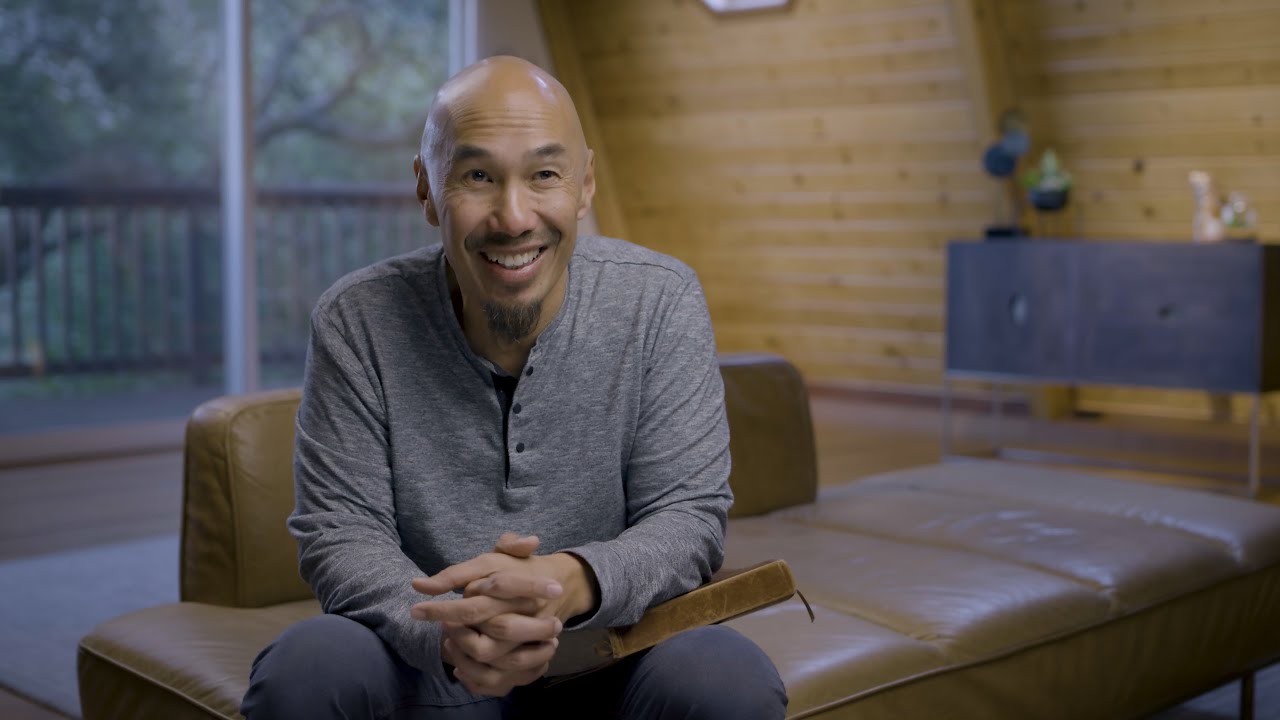
If there is a being up in heaven right now that spoke the world into existence.. If there really is a creator, then why would I value my own opinion so much? When we think about who God is, it puts everything into perspective. In an interview with Christian Sexuality, Francis Chan gives his testimony on his upbringing and relationship with God. Francis dives into the authority of God, denying yourself, and obeying Christ even when you don’t want to. What does it look like to share the hard truth in love for someone even when they don’t want to hear it? What is our responsibility as Christians? www.crazylove.org .
- God's Great Answer for Racism
“Let us make human beings in our image, make them reflecting our nature.” Genesis 1:26 MSG Recent racially charged incidents including the tragic death of George Floyd and others have stirred ensuing riots and torn open the rawest of wounds–racism. Judging a person according to skin color is an ancient sin. For that reason, God gave this ancient solution. In the earliest words of Scripture, God spoke: “Let us make human beings in our image, make them reflecting our nature so they can be responsible for the fish in the sea, the birds in the air, the cattle, and, yes, Earth itself, and every animal that moves on the face of Earth” (Genesis 1:26 MSG). Embedded in these words is the most wonderful of promises: God made us to reflect his image. No one is a god except in his or her own delusion. But everyone carries some of the communicable attributes of God. Wisdom. Love. Grace. Kindness. A longing for eternity. We are made in his image. Sin has distorted this image, but it has not destroyed it. Our moral purity has been tainted. Our intellect is polluted by foolish ideas. We have fallen prey to the elixir of self-promotion rather than God-promotion. The image of God is sometimes difficult to discern. But do not think for a moment that God has rescinded his promise or altered his plan. He still creates people in his image to bear his likeness and reflect his glory. Pop psychology is wrong when it tells you to look inside yourself and find your value. The magazines are wrong when they suggest you are only as good as you are thin, muscular, pimple-free, or perfumed. The movies mislead you when they imply that your value increases as your stamina, intelligence, or net worth does. Religious leaders lie when they urge you to grade your significance according to your church attendance, self-discipline, or spirituality. According to the Bible you are good simply because God made you in his image. Period. He cherishes you because you bear a semblance to him. And you will only be satisfied when you engage in your role as an image-bearer of God. Such was the view of King David. “As for me, I will see your face in righteousness. I shall be satisfied when I awake in your likeness” (Psalm 17:15). How much sadness would evaporate if every person simply chose to believe this: I was made for God’s glory and am being made into his image. Would you let this truth find its way into your heart? You were conceived by God before you were conceived by your parents. You were loved in heaven before you were known on earth. You are not an accident. You aren’t a random fluke of genetics or evolution. You aren’t defined by the number of pounds you weigh, followers you have, car you drive, or clothes you wear. You are made in God’s image. Print that on your resume. You are a diamond, a rose, and a jewel, purchased by the blood of Jesus Christ. In the eyes of God you are worth dying for. Would you let this truth define the way you see yourself? Would you let this truth define the way you see other people? Every person you see was created by God to bear his image, and deserves to be treated with dignity and respect. This means that all people deserve to be seen for who they are: image-bearers of God. Imagine the impact this promise would have upon the society that embraced it. What civility it would engender! What kindness it would foster! Racism will not flourish when people believe their neighbor bears God’s image. The fire of feuds will have no fuel when people believe their adversaries are God’s idea. Will a man abuse a woman? Not if he believes she bears the stamp of God. Will a boss neglect an employee? Not if she believes the employee bears a divine spark. Will society write off the indigent, the mentally ill, the inmate on death row, or the refugee? Not if we believe, truly believe, that every human being is God’s idea. And he has no bad ideas. Parents and grandparents understand the implications of this truth. I recall when my daughter Jenna was pregnant with our first grandchild. She was round as a ladybug. Long before Jenna gave birth to Rosie, I loved our granddaughter. I’d never seen her, but I loved her. She’d done nothing to earn my love. But I loved her. She’d never brought me coffee, or called me Papa. She’d never sung me a song or danced me a dance. She’d done nothing! Yet I loved her already. I would do anything for her. That is not hyperbole. Why? Why did I love her so? Because she carries some of me. A small part for sure, but a part of me, nonetheless. Why does God love you with an everlasting love? It has nothing to do with you. It has everything to do with whose you are. You are his. How can we respect our neighbors? What is God’s solution to angry racism that gives birth to violence and bloodshed? Government programs might help. Lectures might enlighten. But, in the end, God’s plan is the only plan: see every person on the planet as God’s idea. And He has no bad ideas. ©MaxLucado
- 7 Threats to Your Friendships
Why do my friendships fade? Am I not a likeable person? Life coach Deborah Haddix writes: Let’s give a little attention to those things that threaten the very existence of our relationships. The Bible identifies many such characteristics – comparison, envy, jealousy, pretense, and gossip among them. Familiarity with these potent threats will help us better guard our friendships. And while there are many, many threats identified in the Bible, today we will concentrate on the ones found in Ephesians 4:17-32 . 7 Threats to Friendship 1. Self-indulgence/Greed “They have become callous and have given themselves up to sensuality, greedy to practice every kind of impurity. But that is not the way you learned Christ!— assuming that you have heard about him and were taught in him, as the truth is in Jesus, to put off your old self, which belongs to your former manner of life and is corrupt through deceitful desires, and to be renewed in the spirit of your minds, and to put on the new self, created after the likeness of God in true righteousness and holiness.” Ephesians 4:19-24 The first threat is found in verses 19-24. Self-indulgence and greed show up in our friendships when we put our own wants above God’s purposes. 2. Deceit “Therefore, having put away falsehood, let each one of you speak the truth with his neighbor, for we are members one of another.” Ephesians 4:25 A true friend puts away falsehood and speaks the truth. There is no place for dishonest speech and the manipulation of truth in our friendships. 3. Anger “Be angry and do not sin; do not let the sun go down on your anger, and give no opportunity to the devil.” Ephesians 4:26-27 If we are doing biblical friendship the way God designed, there most certainly will be times that bring angst and even anger. The threat here is not so much in the anger, itself, but in hanging on to the anger. These verses in Ephesians tell us that to hang on to our anger is to welcome the devil to wreak havoc in our hearts and in our friendships. 4. Selfishness “Let the thief no longer steal, but rather let him labor, doing honest work with his own hands, so that he may have something to share with anyone in need.” Ephesians 4:28 Selfishness rears its ugly head when we choose to protect what we have rather than offer it in service to our friend. 5. Unhelpful Communication “Let no corrupting talk come out of your mouths, but only such as is good for building up, as fits the occasion, that it may give grace to those who hear. And do not grieve the Holy Spirit of God, by whom you were sealed for the day of redemption.” Ephesians 4:29-30 “Let no corrupting talk come out of your mouths.” This is not referring only to vulgar language and cuss words. Reading on, we get a little more clarification, “but only such as is good for building up… that it may give grace to those who hear.” Any speech that does not build up is a threat to our friendship. Not only does this include speech that tears down, but speech that is neutral or even non-existent. 6. Division “Let all bitterness and wrath and anger and clamor and slander be put away from you, along with all malice.” Ephesians 4:31 The Bible calls us to unity. When we view our friend as an adversary rather than a companion, our unity is broken. 7. An Unforgiving Spirit “Be kind to one another, tenderhearted, forgiving one another, as God in Christ forgave you.” Ephesians 4:32 What’s the old saying? “We want justice for others but forgiveness for ourselves?” Unforgiveness – wanting our friends to pay for their wrongs or misdeeds – is a powerful threat to our friendships. In Real Life Admittedly, it easy enough to read these threats and nod our heads in agreement. Afterall, we surely are not guilty of allowing any of these atrocious threats into our friendships! Or are we? Let’s do a little reality check. Below is a sampling of what some of the threats listed above might look like in a friendship today: Pick at everything our friend says or does Always offer a better suggestion than they made Put down their spouse Drop by unannounced – all. the. time. – and stay forever Offer unsolicited advice Expect our friend’s undivided attention Whine Find fault with their children Bombard them with phone calls Pick apart their every decision Be generally disagreeable Help ourselves to all their possessions Snub their other friends Insist on exclusivity in the friendship This list is a little more difficult to read. Isn’t it? Instead of nodding in agreement, we find ourselves convicted realizing that we have jeopardized a friendship more than once. In Response So, what do we do about the ones we are convicted over? Confess See the struggle for the sin that it is. When we confess our sin, we receive God’s forgiving mercy and empowering grace. God never exposes our sin to embarrass us but to grow us in Christlikeness. Focus Instead of trying to “conquer” every threat that may have slipped into your friendships, choose one or two that the Holy Spirit has convicted you of and focus on it. Pray for God’s help and wisdom in overcoming that sin, meditate on applicable Scriptures, and invite a soul friend to hold you accountable. Let it go! Don’t wallow in past mistakes. God’s timing is perfect. Rather than living with regrets, sulking, and wishing you could go back and fix things, thank God for His perfect timing in revealing truth to you. Go forward living each day in this revealed truth. www.deborahhaddix.com .
- Better Communication in Your Marriage?
“The biggest problem in our marriage is our communication.” It’s perhaps the most frequent issue that is brought to the table when Angel (my wife and counselor) and I meet with couples. At the core of many marriage seminars and conferences is the issue of how to improve the communication in your marriage. I don’t buy it. Your marriage doesn’t need better communication. Alright, alright. I’m overstating that for dramatic effect. There are some helpful things you can do to improve communication in your marriage. But the fact remains: I’ve yet to encounter a marriage that the fundamental issue is communication. More serious issues always lurk beneath the surface. The reason that communication is often fore-fronted is that it is a neutral issue. Being a poor communicator isn’t a sin. We think if we can just learn new techniques, we will experience renewal in our marriage. Communication isn’t your issue. Sin is your issue. Or, to put it in James’s language, your desires are your issue. When James writes to the church, he is crystal clear about what is at the heart of their communication issues. He asks, “What causes quarrels and what causes fights among you?” (James 4:1a). Note what James doesn’t say, “Your poor communication skills.” Nope. Here is James’s answer, “Is it not this, that your passions are at war within you? You desire and do not have, so you murder. You covet and cannot obtain, so you fight and quarrel” (James 4:1b-2). James tells us that at the core of our communication issues is our sin. Our proud and judgmental hearts produce murderous words. Jealous and envious hearts use words to claw and grasp for what they want. Narcissistic hearts spill out words that project themselves on the world. You might struggle with articulating yourself well. You might be an introvert. You might have had parents who were horrible role models at navigating conflict. Those are all real things that need to be overcome. You can become a better communicator. But don’t confuse this skill with the heart of the matter. We have a sin problem, not a communication problem. What is the answer to that sin problem? Turning away from how our hearts have been formed by the world and being formed by God. The answer is found in humble repentance. James concludes, “Submit yourselves therefore to God. Resist the devil, and he will flee from you. Draw near to God, and he will draw near to you. Cleanse your hands, you sinners, and purity your hearts, you double minded” (James 4:7-8). Do you want to experience a renewed marriage? This is where the answer begins. Humble repentance. Transformed desires. When our desires move from a longing to satisfy ourselves to yearning to honor God, then our conversations begin to change. When our hearts are oriented in submission to God, more than just our conversations: our relationships change. James 4 holds the key to rescuing your marriage. I’m still waiting to see a marriage rescued through improved communication skills. God can save your marriage through the cleansing of your heart. I’ve seen that dozens of times.
- What Cultural Challenges Will Churches Face in this Decade?
What challenges will pastors and churches face in this decade? Will ministry ever come more easily? As you know, the last five years have been tough on leaders. Really tough. Pandemic or no pandemic, every leader has realized we’re not in Kansas anymore. In fact, we’re not quite sure where we are. Which is the point of this post. Where exactly are we as a culture, as a society? As leaders? And what can we expect in the next decade? Most of us like to know the future because it gives us some resemblance of control. If you can predict human behavior or world events, you can prepare. Add to that the responsibility those of us in leadership today have for the next generation, and it adds to the urgency that we make some wise moves now. As the post-pandemic world takes shape, there’s a lot of uncertainty. But that doesn’t mean we’re without clues. As uncertain as things are (and they are), here are 5 things every leader should be watching and preparing for in the decade ahead. 1. The Current Instability Will Continue As much as you long for a return to normal, that’s unlikely to happen. Politically, economically, socially and culturally, normal was dying long before COVID. The disruption of a global pandemic was the final nail in normal’s coffin. Politically, economically, socially and culturally, normal was dying long before COVID. The disruption of a global pandemic was the final nail in normal’s coffin.Click to Tweet While it’s tempting to think that post-COVID, the world will stabilize, that’s unlikely to happen. The economy is doing strange things (witness housing prices, the stock market and growing income inequality). Politics is becoming more volatile, and new media and technology keep driving change. If you read books like George Friedman’s The Storm Before the Calm , you realize that there have always been times of great disruption. Friedman argues we are heading into a decade of deep disruption as we move into a new era of economic and institutional (political) change that will stabilize in the 2030s. While I don’t agree with everything he says, Friedman’s analysis certainly makes sense of a lot of things that don’t make sense, including this: The world is increasingly unstable and will likely be that way for a while. When no one knows exactly what will happen, what do you do? Agility is the best antidote to instability. Because agile leaders aren’t committed to a particular model, they’re able to preserve their mission. The world will always have a need for the basics: Food, water, housing, health, safety, meaning, connection, love dignity. The methods may change, but leaders who stay focused on the mission will thrive. The methods may change, but leaders who stay focused on the mission will thrive.Click to Tweet 2. People Will Act More Selfishly There is a looming post-pandemic surge in which people who have not been allowed to do things for over a year will decide they’re going to do whatever they want once all restrictions lift (or, in some cases, before). You’ve already seen that in people breaking rules, hoarding pre and post-pandemic (different things, but still hoarding) jumping vaccine lines, bidding up house prices, booking vacations, boats, bikes, campsites, SUVs or anything else they’ve fixed their hearts on to make sure they get what they want. It’s prudent to prepare for a season where most adults act like teenagers for a while, doing what they want to do when they want to do it. As you’ve probably already realized, self-centered people are often angry people. Which makes selfishness doubly tricky to deal with. Just search the comments on any site or on social for evidence of that. It’s prudent to prepare for a season where most adults act like teenagers for a while, doing what they want to do when they want to do it.Click to Tweet For leaders, the implications are huge. For starters, it means that loyalty will continue to be fickle. People you could count on to never miss a Sunday or workout five times a week at the gym may not. The best way to combat this is not to try to change others but to focus on changing yourself. As a leader, it’s critical for you to get out of your own filter bubble to lead well (I write more on why and how here ). Leaders, if you see the world more broadly, you’ll act less selfishly. You’ll also lead far more capably. You can’t helpfully address the selfishness of others if you yourself are selfish. Leaders, if you see the world more broadly, you’ll act less selfishly. You’ll also lead far more capably. You can’t helpfully address the selfishness of others if you yourself are selfish.Click to Tweet 3. Culture Will Remain Deeply Divided It’s no surprise then, that a selfish culture is a divided culture. In the same way selfishness divides families and friendships, it divides organizations and nations. And our hyper-individualism (which a year of isolation during the pandemic only intensified) fuels division. A selfish culture is a divided culture.Click to Tweet You can see it already in 2021 as Gen Z turns on Millennials for everything from using emojis to skinny clothes to side-parting their hair (btw anyone else notice how many 30-year-olds flipped their hairstyles to a center part overnight?) to Gen Z and Millennials ganging up on Boomers. In addition, you can see it in voting patterns and activism in different generations and the hostility, resentment and acrimony that’s developed. What does this mean for leaders? Unity will be more needed than ever. You’ll win short-term if you demonize the other side, but any victory in that department is false and ill-gotten, especially in the church. No, the real opportunity will be in leaders who can rise above the division and focus on what unites us, not on what divides us. Even as you’re reading that, my guess is there’s something inside you that longs for someone to do just that—unite us. That’s your opportunity. The culture needs an alternative to itself, not an echo of itself. A divided culture needs a united church. The culture needs an alternative to itself, not an echo of itself. A divided culture needs a united church.Click to Tweet 4. The Moral, Theological And Philosophical Questions Will Become More Intense And Important Think, for a moment, about all the issues you’re facing as a leader that didn’t really exist a decade ago. That’s only going to get more intense. And, it’s going to get deeper. The next decade will require deeper and more thoughtful approaches than ever. Something as fun sounding as autonomous cars requires an answer to deep philosophical questions. Water Isaacson’s new book, The Code Breaker , for example, is about Nobel Prize winner Jennifer Doudna gene editing (using CRISPR—short for clustered regularly interspaced short palindromic repeat) and the future of the human race. The advances in RNA-protein biochemistry, CRISPR biology and genome engineering that are happening right now are breathtaking. I know very little about biology, gene editing and RNA-protein biochemistry, but I know enough to recognize that it raises profound theological and philosophical questions that are going to require deeply reasoned, highly nuanced philosophical and theological responses. So do autonomous vehicles (who do you hit, and who do you save?) and the rise of AI. That’s sadly lacking in the thought of today’s church leaders, which, judging from our social media feeds, tends to consist of reactionary, temporary, political and poorly thought-through rants that consistently undermine Christian witness. We live in an era of weakly-formed, strongly-held opinions. We have to do better. I long for the day Adam Grant and I imagined in a recent conversation where, because of the quality of thinking, the openness of dialogue and maturity of dialogue inside the church the best thinkers sense get attracted into ministry and church-life rather than get pulled mostly into the professions or business. Interestingly enough, both Friedman and Isaacson point out that breakthroughs in science, politics and technology often happen through collaboration. The more hyper-individualized and hyper-polemicized we are, the less like breakthroughs become. Maybe start here: Meet with someone outside your area of expertise. Invite a physician, mathematician, plumber or architect out to lunch and learn. Work on something together. You’ll be better for it. We live in an era of weakly-formed, strongly-held opinions.Click to Tweet 5. Deep Leadership Will Be Up To The Challenge. Shallow Leadership Won’t. None of this is particularly encouraging. I fully realize that. In fact, most leaders are perfectly prepared for a world that no longer exists. Most leaders are perfectly prepared for a world that no longer exists.Click to Tweet But, all of it makes your future leadership even more important. Leaders unite people when others divide people. Leaders bring meaning where others only bring confusion. And leaders find a way forward when others stand still or long to go back. The key for leaders who thrive will be to develop a deeper, more robust emotional, intellectual and spiritual life. The deeper you dig in your leadership, the further you and the people you lead will go. The deeper you dig in your leadership, the further you and the people you lead will go.Click to Tweet How do you do that? I’d suggest you open up your learning and understanding. Read more deeply than books published in the last 12 months. Read some history. Study art. Pick up some Kierkegaard or the desert fathers and mothers or someone like Teresa of Avila. Study outside your field and understand how others think, not just how you think. This is hard but good. And, in the meantime, speak a little less and try to understand a little more. It helps. www.careynieuwhof.com . Carey has a number of excellent resources for the challenges pastors face.
- Who Will Control Reality? Demons or Angels?
"Then war broke out in heaven, Michael and his angels going forth to battle with the dragon; and the dragon and his angels fought, but they were defeated and there was no room found for them in heaven any longer" (Rev. 12:7-8 AMP). Notice the phrase, "there was no room . . . for them in heaven." The war against principalities involves displacement: Christ filling the spiritual territories once held by Satan. This war in Heaven is difficult for us to comprehend. How do angels and demons, beings who do not die from wounds, wage war? With what do they do battle? And how do they conquer one another? Without exceeding the bounds of our knowledge, we can safely say this: All spiritual warfare is waged over one essential question: Who will control reality on earth, Heaven or hell? When it comes to angelic and demonic warfare, the battle rests not in physical weaponry but in the agreement between mankind and the spirit realm. We read in Ephesians 6 (NKJV) that "principalities" and "powers" occupy the "heavenly places" (v. 12). But we read in Ephesians 1:10 that it is the Father's expressed purpose to sum up all things in Christ, "things in the heavens and things on the earth." Ephesians 3:10 reveals God's glorious plan, that "through the church" God has purposed to make known His manifold wisdom to the principalities and powers "in the heavenly places." You see, as the body of Christ on earth agrees with its Head in Heaven, the Spirit of Christ Himself displaces the powers of darkness in the heavenly places. In other words, when the church on earth is aggressive in its agreement with the will and Word of God, then the presence of God increases in the spiritual realm, proportionally displacing the influence of hell on earth. Shortly thereafter, manifesting in the world of men, we see revivals, healings and miracles. But when the church is passive, indifferent or carnal, the powers of hell increase their rule over the affairs of men: marriages break up, crime increases, and wantonness becomes unbridled. We must see that our prayers, attitudes, and our agreement with God are an integral part of functionalizing the reality of the kingdom of God on earth! Let me add, that when I refer to the "Kingdom of God on earth," I am not referring to the Second Coming of Christ at the rapture. I am speaking of the reality to which Jesus was referring when He taught us to pray, "Thy Kingdom come, Thy will be done, on earth as it is in heaven" (Matt. 6:10 NKJV). Thus Jesus teaches us to pray in a way that transcends simple requests for blessings or finances -- things that will be supplied to us automatically once we get our priorities right. Jesus calls us to a form of prayer. He says, "Pray, then, in this way: … Thy Kingdom come, Thy will be done, on earth as it is in heaven!" (Matt. 6:9-10 NKJV). This is strong prayer, empowered with the life substance of Heaven itself. This is the prayer that changes societies and rolls back the advance of evil, and ultimately wins the war over reality. www.frangipane.org .
- God's Dreams in Your Heart
[Starts at 3:24] - I wanna to take you guys on to a very special place in Nevada. It's a desert area called Death Valley. Now Death Valley is one of the most barren areas on the face of the planet. It's way too hot and it's way too dry. Nothing can live there and nothing can grow there. But in March, 2005, due to very specific weather conditions, big rain clouds came in. Normally never seen in this area. And for a few hours, rain pour down on the sand on the dry desert land. And as a result, this happened, the whole desert was turned into an amazing, beautiful, colorful garden. Death Valley went all I say are on us. You know, the waste land will be turned into a beautiful garden, Amen? And people from all over the world came to study this amazing miracle. How, what seemed to be the most barren area in the world, turned into this amazing colorful garden. How could this happen? Well, the key, my friend, is because there were seeds in the ground. There were seeds in the ground since years past but they hadn't shown their true potential because the conditions were not yet, right. There were seeds in the ground waiting for the right time and the right conditions to start to grow and unleash their potential. And why do I share this with you? You guys know where I'm going with this. God has placed seeds in your heart my friend. God has placed seeds in your heart and some of those seeds has got 2021 written all over them. Some of those seeds, and maybe the devil tried to give you a hard time and maybe he tried to create Death Valley areas in your life. And you might look at that area of your life. You may look at that area of your marriage or your job, your career, your family, your church, if you're a pastor or a leader and say, there is nothing there, there's no hope. Nothing can grow and nothing can live. But I just speak out over your life for 2021. There's a rain coming your way. There's a rain coming your way and whatever Death Valley you might've stared at for many, many years, I do believe together with you that that Death Valley is gonna be turned into a beautiful garden. Can we give some praise to God, in church. And you know, we always find God in the business of turning Death Valleys into beautiful gardens. We see that all throughout scripture, and I wanna bring you to Genesis 17. And the story of when God comes to a man named Abram. And Abram has a Death Valley in his life, he's got no children. And God speaks some very specific and strange words into Abraham's life. He says, "As for me," Genesis 17:4-5, "this is my covenant with you. You will be the father." Everybody say you will be a father. - [Crowd] You will be a father. - "Of many nations. No longer will you be called Abram. Your name will be Abraham for I have made you a father of many nations." Everybody says I have made you. - [Crowd] I have made you. - So you will be a father for I have made you a father. My friend you can be everything that God has already made you. And what is he made me? We see Ephesians 1 and 4 says that, he planned you, he called you, even before the foundation of the worlds, imagine that. Your life was planned out by God even before he said, let there be light. The whole root of your life, the whole, every single dream, every single seed was already planned out. And then he needed you together in your mother's womb according to Psalms 139. And as he did that, he placed seeds inside your heart, seeds that would come up and come alive in the due time, in the right time, as the rain of the Holy spirit will say, now this is the right time. This is the season. So in God's eyes, because he plans you before the foundation of the world. And he place seeds inside of you from the very beginning, you are already a father Abraham. And because you already are a father you can also become a father. You can always become everything 1 GodsDreamsinYourHeart_1_Transcript that God has already made you. I'm not saying that you can become him anything. Some people think they can become anything, and you can't. You could just have to check out some clips on America's Got Talent? And they've all voice. And there's this guy who really thinks he can sing, and then he opens his mouth and we go, oh, your mother should have told you, before you went on national TV, maybe this is not your thing. Maybe there's something else that you might be really good at. You cannot become anything, my friend but you can become everything that God has already made you. Everything that God has already made you. Everything, he called you to be before the foundation of the world. Anything that connects with the seeds already planted in your heart. He has called you to be Holy so you can live a Holy life. He's called you to be more than a conqueror, so you can become more than a conqueror. Not because of your own strength and personality, but because there are seeds planted in the ground. And even at that ground temporarily might look like a Death Valley, the rain of the Holy spirit can change all that, can we say amen? - [Crowd] Amen. - You see that also in the life of Gideon in Judges 6 remember, Gideon is a young teenager, scared to death, and with the lowest possible self-esteem. And God comes to him and say, "You are a mighty warrior." Is God lying? No, God called Gideon to be a mighty warrior before the foundation of the world. He placed seeds to become a mighty warrior in the heart of Gideon. And that's because that's why Gideon can now be everything that God has already made him. You can be a father for I've made you a father. You can be a mighty warrior for I have made you a mighty warrior, Amen? - [Crowd] Amen. - So if God called you, before the foundation of the world, and if God has already placed seeds in the ground, though they might be in a Death Valley right now. And if God is also the God sending the rain then what is our part in the equation? What are we supposed to do? I'm gonna tell you, we need to make sure that our heart is good ground. Our heart is good ground. My friend, the word heart, the Hebrew and Greek words for the human heart is the second most used word in the Bible. Second only to the name of the Lord. That tells us something. It tells us how important it is that we guard our hearts, that we purify our hearts, that we keep our hearts clean, Amen? - [Crowd] Amen. - Not only because God just wants us to but because our heart is the breeding ground for the seeds of God's plans for our future. And if we keep our hearts pure, if we keep our hearts clean, then there's no Death Valley in the world that can keep God's seeds from growing up in its due time, Amen? - [Crowd] Amen. - Now I wanna share with you today two attitudes of the heart that is needed in order for God's seeds to grow, Amen? So the first attitude that the Bible speaks repeatedly about, it is absolutely vital and important and necessary for God's seeds to grow, is a humble heart. God's seeds will only grow in a humble heart. And every time there is a list in the Bible of stuff that God hates pride will be right there at the top. Why, because pride aborts the seeds in your heart. Pride will take away the power of growth so that 2 GodsDreamsinYourHeart_1_Transcript the plans and the purposes and the dreams for your life and future will not come to pass. That's why God hates pride. James 4:6 says, "God opposes the proud, but shows favor to the humble." And that's also why God has got so many methods to keep us humble. You know, number one, his word. You have an hope, you ever open the YouVersion app, thank you by the way. If you open the YouVersion app, I don't have so many times and I'm expecting to find a beautiful, soothing, calming, inspiring, comforting word. And out from the app comes God's hand that flaps me in the face. Pointing out something that is a weakness in my life or character or leadership. And I thought, okay, here we go again. You know, when God uses his word to keep you humble, it simply so that your heart can be good ground for the seeds that are about to come up in your heart, Amen? So God uses this word. Of course also God uses his spirit to humble us. Every time we say something that we shouldn't say or do something that we shouldn't do. And we feel that nudging of the spirit, calling us to repent, calling us to ask God for forgiveness. And also asking those we might've hurt for forgiveness. That's God humbling us by his spirit, but the worst thing in the world, the method we hate the most, is when God uses other people to humble us. That's that's really, really tough. And I just want to share a story with you about when that happened to me a couple of years ago. Okay, so back home at Word of Life in Sweden, we have a project that we call the Europe Tour. Every other year, our young people, our teenagers, they work for about six months to put together an evangelistic outreach concert production. As a mixture of music and dance and spoken word and drama and multimedia. And they work really hard for that. And then we take that on out in Europe. About 150 to 200 teenagers go on tour in and together with churches in European capitals, we put on big outdoor concert events to reach out with the gospel. And so far we've been in 18 European nations. - [Crowd] Wow. - Collaborating with churches all over the place. And we seen hundreds and hundreds and hundreds of people being saved and accepting Christ in their heart as a result. So a couple of years back, I was sitting in my office. I have the schedule for the Europe Tour. It was pretty much planned out for the upcoming summer. All of a sudden, there's a knock on my door and in comes a 14 year old girl from our youth ministry. She is fired up and she says, "Pastor Joachim," I'm too old to even do the gestures anymore. She says, "Pastor Joachim, I got this great idea. As we go on the Europe tour this summer, let's make a big fat Jesus concert at Disneyland Paris." And I smiled at her, this kind of smile. And I thought, said to her what, interesting idea. I thought in my mind, craziest idea ever. She's 14, she doesn't know what she's talking about. Of course, Disneyland will never allow, you know, sold out evangelistic Jesus event anywhere in the Amusement Park. So I say, okay, thanks, interesting, now leave. And so, was like okay, thanks for listening pastor. And she left and honest to God when she shut the door, her ID was already halfway down my mental wastepaper basket. And the Holy spirit spoke to me. And he said, "Joachim, when did you become so proud to not even consider if an ID is from me simply because the messenger is 14 years old?" And I repented and I got that idea up and I looked at it and said, what in the world do I do with this one? I said the only thing I can do really is to call Disneyland Paris and I so did not want to call Disneyland Paris because I didn't wanna lose faith. I didn't wanna act like a complete idiot but you see that's the definition of pride. When you're so concerned about your own self image, that you elevate that concern above your obedience, to whatever the spirit of God, is telling you to do right now. So I called Disneyland Paris and I hated every second of the call. Hello, I'm the pastor from Sweden. Could we please come to 3 GodsDreamsinYourHeart_1_Transcript your Amusement Park and make a big evangelistic outreach, because we love Jesus and we want the world to hear the gospel. How about that? And they said, we never had that question asked before, happy to be the first. We talked for a while, she really wanted to end the conversation. And then she said, finally, we'll call you back. And it was one of those, yeah, we're totally gonna call you back, not a chance. So at least I knew I've done anything I could do. So a week went by and the called us back. And they said, we checked out your video clips that you sent, this is good stuff. So even though we never done anything like this, we're willing to give you a chance. We're gonna give you a 15 minute slot on the smallest stage of Disneyland, the Winnie the Pooh stage Are you okay with that? I said we are so okay with the Winnie the Pooh. We love Winnie the Pooh from the bottom of our hearts. Winnie the Pooh is best. So that summer we came and as the first Christian act ever performing a Disneyland, we did a 15 minute Jesus concert on Winnie the Pooh stage. After that concert was done, the team, the Disneyland team said that we loved it. Next time you're welcome back and we'll give you 30 minutes at the Bus Light your stage. Come on church. And that's like a middle stage at Disneyland. So we came back two years later, we did a 30 minute slot Jesus concert at the Bus Light your stage. They loved it again. And then they said, you know, we're gonna give you next time you come, 45 minutes at the biggest stage in Disneyland. So we came back and we did a full concert at main stage Disneyland Paris. And as this thing happened and asked so young people got crazy for Jesus on the stage. And I looked at the thousands of people listening. I thought to myself, thank God for a 14 year old girl who heard something that I did not hear and who God used to make me a little bit more humble. Can we make some noise for Jesus? Oh Lord, when God humbles you my friend through his word, his spirit or through other people is because he's about to release a brand new dream that you couldn't even dream up. He's about to start the growth process of a seed that is up until now have been hiding inside your heart, Amen? So a humble heart is the first heart attitude that is needed in order for the seeds of God to grow up in your life and come into fulfillment. Now, the second and last thing I wanna share with you is the importance also to have an open heart. An open heart, because some of the dreams that are coming your way are way too big for the present state of your hearts, Amen? Maybe even some of the 2021 dreams needs either to be shrunk down to your presence size of heart or for your heart to expand to fathom even greater dreams than you ever seen before, Amen? And says in, Isaiah 55:8 9 "For my thoughts are not your thoughts, nor are your ways my ways says the Lord. For as the heavens are higher than the earth, so are my ways higher than your ways and my thoughts than your thoughts." Now, church, this is not a proclamation of how far above you God is. How high he is and how low you are, this is an invitation for you to leave behind your low ways and your low thoughts and come up to his level. Because the verse right before these two, verse seven says, "Let the wicked forsake his ways, and the unrighteous man his thoughts, let him return to the Lord." God is gonna call you this upcoming year to expand your hearts, to open your heart, because there are big dreams coming your way. And you need to be ready, you need to be ready for the dreams on the individual basis. For your marriage dreams, for your family dreams, for your church dreams. Life.Church I do believe the best is yet to come. You've done amazing. You'll change the world, but there're new dreams, bigger dreams. And you just need to expand your heart and prepare yourself to give into those dreams. To serve in in seeing those dreams fulfilled. Because you see the limit is not in the potential of the seed. The limit is in the size of the flower pot. You can take a seed with a potential to grow a big oak and you can put it in the small flower pot and he will come up to a certain level and it might be a great plant and it might be beautiful to behold but it's nowhere near the full potential of that seed. We need a bigger flower pot to grow 4 GodsDreamsinYourHeart_1_Transcript bigger dreams. You need a bigger heart to fathom bigger dreams that are coming your way. And I just also wanna close with one more story where God really challenged me in regards to expanding my heart. Okay, so a few years ago, I took my core staff on a cruise in the Baltic Sea in Scandinavia, okay. American people going on a cruise in the Baltic Sea of Scandinavia is not anywhere near like going on a cruise in The Bahamas. Okay, we're at completely different place, okay? People who would go on cruises in the Baltic Sea in Scandinavia, go for one or two reasons. Either to buy endless amounts of alcohol and get drunk or to use the very good conference facilities. Please note, we went for number two, okay? So we got onboard and we had great time with the staff. We did planning, strategizing, praying, great fellowship. And I remember that in between two sessions, I got up and I can just see this before before me, it was so clear. I had a coffee cup in my hand and I was moving toward the coffee machine because I'm a Swede and we can live without coffee. When there's too much blood in our coffee system, we have to do something about that. And I remember walking up to the coffee machine, I had a new thoughts. Could we rent this entire cruise ship? Could we bring on 2000 on fire Jesus loving teenagers? And do a youth conference at sea. Immediately in my other ear there was another whisper saying, it's impossible. It will cost millions. You can't afford it. It's never been done before. But then in my other ear, again, a little voice said, remember Disneyland. And I remembered Disneyland. And I shared this with my team and we started praying and we prayed, Lord, expand our hearts. If this is from you, even though the dream is crazy big and seem completely unreachable and is something that no one has ever done before, give us the faith to believe for the impossible. Cause God has not called us to build a natural church but as supernatural church. And we can't do that by our own faith. We need his faith in our hearts say Amen. So I called a cruise ship company. I'm getting quite used to these calls now. Is humbling calls. I said hello, I'm a pastor from Sweden. I'd like to know if we could rent your biggest ship and do a big fat youth conference at sea. And he said, we never had that question asked before. So its happy to be the first. And we told him, I said, it's not gonna be really positive. It's gonna be incredibly expensive. And I said, oh, by the way this is a Christian youth conference. So no alcohol can be served at all on board and said you are crazy. Taking for alcohol is $1 million per day. Imagine the amount of money we would lose. Was it safe? Sorry, that's the condition. He said, we will call you back. And we hung up a week. We started praying and believing God for greater things. What we did not know was that the CEO of the big cruise ship company at that time since a few months back had had a real problem with his conscience. Because he realized that I made by fortune from pouring alcohol into people and destroying so many people's lives and so many marriages. All of a sudden he heard that there's this Christian group who wants to rent the boat to do a non-alcoholic youth conference in the name of Jesus. He called the board together and he said, we need to do this for the sake of our own hearts. He was not a Christian or anything. But the Holy spirit was upon this whole process. So what they did was they took the full cost for us to rent this cruise ship. They cut it down by 80%, and all of a sudden it came within reach. So we rented the biggest cruise ship in Scandinavia. And we brought on board 2000 on fire, Jesus loving teenagers. And we had youth meetings and we had concerts and we have prayer nights and we had seminars and we had salvation and no one who was on board this ship will ever never ever forget it. We turned this place into a church for Jesus Christ. National media in Sweden wrote all about it, saying obviously God is not dead after all. And I just loved the fact that God challenged us to dream big. And as a result came a national statement of God's power and the next generation following Jesus Christ. I just wanna share one last anecdote of this whole story. You see, when they build these cruise ships, they build them in a way to distribute the way that the passengers evenly. There will be like one 5 GodsDreamsinYourHeart_1_Transcript restaurant in the front, the one in the back and everything made out so that passing, the weight of the passengers will be evenly spread. Nobody told us about that. So what we did which is found the biggest theater room board which was right at the back and we jam-packed all 2000 kids in that theater and no one on the rest of the ship. And when we got them in the back of the ship, what did we do? We cramped up the praise and worship and everybody started jumping up and down. The captain freaked out for the first time in his life. He felt the whole ferry doing that. And I thought to myself, I would have given anything to sit on an Island in the Swedish Archipelago and see the biggest cruise ship in Scandinavia, pass by, going Jesus, Jesus, Jesus, come on, let's give it out. I'm just praying now that God will be able to break this message down to the exact place where you are. As an individual, as a marriage, as a family, your church, if you're a pastor or a leader, God has got seeds in the ground and the rain is coming your way. Let us walk into 2021 with humble hearts but also open hearts and full of expectancy for every single miracle we're about to see and every single mighty work of God that we are about to experience. Let me just pray God's blessing over you. Father I thank you in Jesus name for every single one in all the physical locations, everyone watching online Father and I thank you that you have great plans. You have called every single one from before the foundation of the world. You have placed seeds in their hearts, needing them together in their mother's womb and now they can be everything you've already made. So father, I pray in Jesus name as we now enter 2021 that we will enter with a humble hearts, that our pride will not stand in the way of your work of the spirit in and through our lives. And we pray Father that our hearts will be able to expand to fathom all the great and beautiful and wonderful dreams that you have in store for this upcoming year. I speak blessing over every single one within the reach of my voice. I pray blessing over Life.Church Father as they go into this new year. I thank you for expansion and breakthroughs and miracles. This we pray, in Jesus mighty name, Amen. 6 GodsDreamsinYourHeart_1_Transcript God has big plans for you. He plants dreams in your heart—and they can bloom when the soil is fertile. Set your sights on what’s ahead and prepare your soul to chase new hopes and goals as we enter this year together. Guest speaker: Pastor Joakim Lundqvist is Senior Pastor of Word of Life Church in Uppsala, Sweden, with 3200 members and an international network including over 700 churches. Word of Life has an extensive international missions program and has produced millions of books and audio and video material containing faith inspiring teaching in several languages. www.lifechurch.tv/open
- How Satan Uses Your Suffering
“I’m done with God.” “No one will ever understand.” “I’m never trusting anyone again.” “I can’t pray.” “I won’t pray.” I’ve heard all of these statements from people in the midst of suffering. The unrelenting blows of suffering can twist our hearts away from God. Satan has purposes for your life. Satan has intentions for your suffering. When you face suffering, remember that the enemy intends to use your suffering to draw you away from God. When Peter warns us of the work of the enemy, he cautions, “Be sober-minded; be watchful. Your adversary the devil prowls around like a roaring lion, seeking someone to devour” (1 Peter 5:8). The enemy is not to be taken lightly. He desires to devour you. The context of this warning is worth noting. Peter continues, “Resist him, firm in your faith, knowing that the same kinds of suffering are being experienced by your brotherhood throughout the world” (1 Peter 5:9). The enemy is prowling around those who are suffering. Like a wounded animal, when we suffer, the enemy smells blood. Satan has used this blunt instrument since Job, and he uses it today. Don’t be ignorant of what the enemy wants to do with your suffering. Satan intends for your suffering to cause you to: 1) LOSE TRUST IN GOD. The enemy wants to shut down your communication with God. He wants you to turn inward for answers or to the counsel of the world. He doesn’t want you to pour out your heart to God. He doesn’t want you to cry out to God. He doesn’t want you to speak your frustration and disappointment to God. He doesn’t want you to seek out scripture for truth and consolation. He wants you to stuff your hurt, he wants the wound to become infected. 2) LEAVE GOD’S PEOPLE. One of Satan’s favorite lies is to tell us that no one understands: no one understands our temptation, no one understands our pain, no one understands what we are going through. Like lions separate weak prey from the pack, Satan loves to isolate the injured. He will tell you that you don’t need to go to your small group; it would be better to self-medicate with Netflix or scroll social media. He will tell you that you will be judged. The enemy’s lies take root best in the soil of the Christian disconnected from community, separated from fellowship, and not regularly listening to the exposition of the Word. 3) GRUMBLE. If the enemy can turn everything sour in your mouth, he all but has you. The serpent slid sin through the crack of ingratitude in the Garden. If Eve could be ungrateful for the one tree withheld from her, they would succumb to the poison leaking from the serpent’s fangs. If Satan can get us to believe that our suffering represents God’s malevolent intentions, then it poisons everything from his hand. Look at the tentacled nature of Israel’s grumbling hearts in the desert. Once they grumbled about being led out into the wilderness (Ex 14:11-12), the grumbling spread everywhere (water (Ex 15:24), food (Ex 16:2, 7-9), manna (Num 11:1-6), death and slavery (Num 14:2, 27-37), leadership (Num 17:5-10). Our grumbling is no different. Once our heart sours on one thing, unless our ingratitude is rooted out, we will sour on everything. The good news is that evil one’s intentions show us the road map for how to navigate suffering well. In our suffering, God invites us to trust him deeper, draw nearer to his people, and find a deep well of gratitude. We can draw closer to God’s heart in “the valley of the shadow of death” when we fix our eyes on he who suffered for our sake. I am sure you have met a saint who has refused Satan’s path of suffering and chosen God’s path instead. You know the depth of their wisdom, the grace of their gentleness, their Christlike humility. You long to become like this, don’t you? I do. The question isn’t whether we will suffer or not. It will. When suffering comes, choose to walk in God’s purposes, not the enemy’s. www.thebeehive.live .
- Disturbing Cultural Trends and How to Prepare
As you know, the last five years have been tough on leaders. Really tough. Pandemic or no pandemic, every leader has realized we’re not in Kansas anymore. In fact, we’re not quite sure where we are. Which is the point of this post. Where exactly are we as a culture, as a society? As leaders? And what can we expect in the next decade? Most of us like to know the future because it gives us some resemblance of control. If you can predict human behavior or world events, you can prepare. Add to that the responsibility those of us in leadership today have for the next generation, and it adds to the urgency that we make some wise moves now. As the post-pandemic world takes shape, there’s a lot of uncertainty. But that doesn’t mean we’re without clues. As uncertain as things are (and they are), here are 5 things every leader should be watching and preparing for in the decade ahead. 1. The Current Instability Will Continue As much as you long for a return to normal, that’s unlikely to happen. Politically, economically, socially and culturally, normal was dying long before COVID. The disruption of a global pandemic was the final nail in normal’s coffin. Politically, economically, socially and culturally, normal was dying long before COVID. The disruption of a global pandemic was the final nail in normal’s coffin.Click to Tweet While it’s tempting to think that post-COVID, the world will stabilize, that’s unlikely to happen. The economy is doing strange things (witness housing prices, the stock market and growing income inequality). Politics is becoming more volatile, and new media and technology keep driving change. If you read books like George Friedman’s The Storm Before the Calm , you realize that there have always been times of great disruption. Friedman argues we are heading into a decade of deep disruption as we move into a new era of economic and institutional (political) change that will stabilize in the 2030s. While I don’t agree with everything he says, Friedman’s analysis certainly makes sense of a lot of things that don’t make sense, including this: The world is increasingly unstable and will likely be that way for a while. When no one knows exactly what will happen, what do you do? Agility is the best antidote to instability. Because agile leaders aren’t committed to a particular model, they’re able to preserve their mission. The world will always have a need for the basics: Food, water, housing, health, safety, meaning, connection, love dignity. The methods may change, but leaders who stay focused on the mission will thrive. The methods may change, but leaders who stay focused on the mission will thrive.Click to Tweet 2. People Will Act More Selfishly There is a looming post-pandemic surge in which people who have not been allowed to do things for over a year will decide they’re going to do whatever they want once all restrictions lift (or, in some cases, before). You’ve already seen that in people breaking rules, hoarding pre and post-pandemic (different things, but still hoarding) jumping vaccine lines, bidding up house prices, booking vacations, boats, bikes, campsites, SUVs or anything else they’ve fixed their hearts on to make sure they get what they want. It’s prudent to prepare for a season where most adults act like teenagers for a while, doing what they want to do when they want to do it. As you’ve probably already realized, self-centered people are often angry people. Which makes selfishness doubly tricky to deal with. Just search the comments on any site or on social for evidence of that. It’s prudent to prepare for a season where most adults act like teenagers for a while, doing what they want to do when they want to do it.Click to Tweet For leaders, the implications are huge. For starters, it means that loyalty will continue to be fickle. People you could count on to never miss a Sunday or workout five times a week at the gym may not. The best way to combat this is not to try to change others but to focus on changing yourself. As a leader, it’s critical for you to get out of your own filter bubble to lead well (I write more on why and how here ). Leaders, if you see the world more broadly, you’ll act less selfishly. You’ll also lead far more capably. You can’t helpfully address the selfishness of others if you yourself are selfish. Leaders, if you see the world more broadly, you’ll act less selfishly. You’ll also lead far more capably. You can’t helpfully address the selfishness of others if you yourself are selfish.Click to Tweet 3. Culture Will Remain Deeply Divided It’s no surprise then, that a selfish culture is a divided culture. In the same way selfishness divides families and friendships, it divides organizations and nations. And our hyper-individualism (which a year of isolation during the pandemic only intensified) fuels division. A selfish culture is a divided culture.Click to Tweet You can see it already in 2021 as Gen Z turns on Millennials for everything from using emojis to skinny clothes to side-parting their hair (btw anyone else notice how many 30-year-olds flipped their hairstyles to a center part overnight?) to Gen Z and Millennials ganging up on Boomers. In addition, you can see it in voting patterns and activism in different generations and the hostility, resentment and acrimony that’s developed. What does this mean for leaders? Unity will be more needed than ever. You’ll win short-term if you demonize the other side, but any victory in that department is false and ill-gotten, especially in the church. No, the real opportunity will be in leaders who can rise above the division and focus on what unites us, not on what divides us. Even as you’re reading that, my guess is there’s something inside you that longs for someone to do just that—unite us. That’s your opportunity. The culture needs an alternative to itself, not an echo of itself. A divided culture needs a united church. The culture needs an alternative to itself, not an echo of itself. A divided culture needs a united church.Click to Tweet 4. The Moral, Theological And Philosophical Questions Will Become More Intense And Important Think, for a moment, about all the issues you’re facing as a leader that didn’t really exist a decade ago. That’s only going to get more intense. And, it’s going to get deeper. The next decade will require deeper and more thoughtful approaches than ever. Something as fun sounding as autonomous cars requires an answer to deep philosophical questions. Water Isaacson’s new book, The Code Breaker , for example, is about Nobel Prize winner Jennifer Doudna gene editing (using CRISPR—short for clustered regularly interspaced short palindromic repeat) and the future of the human race. The advances in RNA-protein biochemistry, CRISPR biology and genome engineering that are happening right now are breathtaking. I know very little about biology, gene editing and RNA-protein biochemistry, but I know enough to recognize that it raises profound theological and philosophical questions that are going to require deeply reasoned, highly nuanced philosophical and theological responses. So do autonomous vehicles (who do you hit, and who do you save?) and the rise of AI. That’s sadly lacking in the thought of today’s church leaders, which, judging from our social media feeds, tends to consist of reactionary, temporary, political and poorly thought-through rants that consistently undermine Christian witness. We live in an era of weakly-formed, strongly-held opinions. We have to do better. I long for the day Adam Grant and I imagined in a recent conversation where, because of the quality of thinking, the openness of dialogue and maturity of dialogue inside the church the best thinkers sense get attracted into ministry and church-life rather than get pulled mostly into the professions or business. Interestingly enough, both Friedman and Isaacson point out that breakthroughs in science, politics and technology often happen through collaboration. The more hyper-individualized and hyper-polemicized we are, the less like breakthroughs become. Maybe start here: Meet with someone outside your area of expertise. Invite a physician, mathematician, plumber or architect out to lunch and learn. Work on something together. You’ll be better for it. We live in an era of weakly-formed, strongly-held opinions.Click to Tweet 5. Deep Leadership Will Be Up To The Challenge. Shallow Leadership Won’t. None of this is particularly encouraging. I fully realize that. In fact, most leaders are perfectly prepared for a world that no longer exists. Most leaders are perfectly prepared for a world that no longer exists.Click to Tweet But, all of it makes your future leadership even more important. Leaders unite people when others divide people. Leaders bring meaning where others only bring confusion. And leaders find a way forward when others stand still or long to go back. The key for leaders who thrive will be to develop a deeper, more robust emotional, intellectual and spiritual life. The deeper you dig in your leadership, the further you and the people you lead will go. The deeper you dig in your leadership, the further you and the people you lead will go.Click to Tweet How do you do that? I’d suggest you open up your learning and understanding. Read more deeply than books published in the last 12 months. Read some history. Study art. Pick up some Kierkegaard or the desert fathers and mothers or someone like Teresa of Avila. Study outside your field and understand how others think, not just how you think. This is hard but good. And, in the meantime, speak a little less and try to understand a little more. It helps. Every Leader Is A Student Leading A Start-Up The good news is that in this new era, we’re all students leading start-ups. I am. You are. If it feels confusing, it’s because it is confusing. Just know this: With great challenges come great hope and tremendous opportunity. So start. Don’t go back, go forward. It will take great humility and great curiosity, but those are the qualities that make great leaders great. In the 2020s, every leader is like a student leading a start-up. SO START! www.careynieuwhof.com .
- Good Friday: When Everything Changed
Fresh Life Church | When Everything Changed | Pastor Levi Lusko | Good Friday message Well, I have a message from God's word this Good Friday that I'm really, really thrilled to bring to you. Did we get Instagram up live? Are we live on Instagram as well? No? Ah, we failed at Instagram Live. That's OK. We're on YouTube. So before we jump into our message, if you wouldn't mind, grab that Share button even right now, and either share this link to a text message to a friend, or maybe share this link to your Facebook page. And I believe that God could use-- are you doing that? Can I get a thumbs up if you're sharing it? I guess you can't multitask. Maybe send me a thumbs up once you've shared it, and then I know that we're going strong on that. I hope so. Amazing. Well, the message I have to bring to you from God's word this Good Friday comes from two parts of scripture. One is Matthew chapter 27, and the other is Colossians chapter 2. So if you can turn-- thank you. I'm seeing all the thumbs up and all the strong arm muscles. Amazing. Also, on the YouTube archive-- oh, that's funny. Someone gave me a Spock. I like that. We are looking at the comments after the fact. So, of course, I'm talking right now live to the audience who's joining us this evening. But if you catch this message later, leave your comments, leave your thoughts, leave your prayer requests. We are praying especially for the parts of our country that are stronger-- are harder hit by this horrible virus, especially New York. I heard on the news today that New York, just the State of New York, has more coronavirus cases than any country on Earth, just the State of New York. So we're especially sending prayers out. God's just had New York so strong on my heart. We're praying for you there. California I know has been hit hard. We're just asking for God to heal and to touch. We're praying for miracle stories and, in the midst of times like this, that God would just reveal special things to hearts. So we are praying for you in areas where you're just really dealing with fear and, on a high level, suffering from this all. But Colossians chapter 2 and Matthew 27. The title of my message is When Everything Changed. When Everything Changed. And I want to first read to you the account of the death of Jesus on the cross from Matthew 27. And then what we're going to read in Colossians 2 is almost like a split screen where we're going to see the impact and the so what factor for us, because the interesting thing about Good Friday, of course, which is today and the day we remember the death of Jesus, is that we're simultaneously mourning what happened that was horrible. But we're also celebrating the outcome of it, that was God's sovereign plan to supersede what the enemy intended to accomplish his own purposes. So we don't have to hide our emotions. They're conflicted, and rightly so, that we would see that it's so awful, our sin and this broken world, that God had to die, but that we're also simultaneously rejoicing in the fact that God loved us so much that Jesus was willing to die. So to put it more saliently and make it a little more rhymey, so maybe more sticky, we should be broken because our sins were so bad that Jesus had to die, but we should rejoice because we are so loved that Jesus was glad to die. And it's those two truths held in tension that we would ever approach the bread and ever approach the wine, remembering the awful, terrible reality that it was only that that could save us. It was those dark measures. It was the worst thing in history that's ever happened that had to be done for us to be able to be saved, but that we are so greatly loved, and prized, and valued by God that he was willing and glad even. The Bible says "for the joy set before him." And we're going to talk more about that on Easter Sunday. So I hope you'll be with us. God has given me a very specific word, a very specific assignment, I would say, for Easter Sunday. And the clarity with which God gave me my message is one that I don't always have. A lot of times, you know, I've described preaching as trying to arm wrestle an octopus in the dark into a straitjacket. And putting an octopus in a straitjacket is not easy. Eight legs, and they're all squirming around. And to do so in the dark, that's sometimes how preaching feels because you're trying to receive from God, trying to communicate the word. But this one was one where it just, it was like lightning striking. It was a Eureka moment for me, for sure, from the Holy Spirit. So I hope you'll be with us on Easter Sunday. But what a wonderful thing that we are loved even in the midst of what it took for us to be loved into righteousness. So two passages. One's the story. You've heard it before. Let it hit you anew. And then the second is the outcome and the results of the cross, results of the crucifixion. Matthew 27 verses 50 through 56. What's my title? Come on. Shout it if you remember it. When Everything Changed. Why? The cross. If you get one thing I say tonight, the cross for us is when everything changed. "And when Jesus had cried out again in a loud voice, he gave up his spirit. At that moment the curtain of the temple was torn in two from top to bottom." Come on, everyone in the chat, tell me which direction the tearing took place. Was it from bottom to top? No. It was from top to bottom. "The earth shook and the rocks split. The tombs broke open and the bodies of many holy people who had died were raised to life. They came out of the tombs, and after Jesus' resurrection, they went into the holy city and appeared to many people. When the centurion and those with him who were guarding Jesus saw the earthquake and all that had happened, they were terrified and exclaimed, 'Surely he was the Son of God!' " And then jumping forward to the book of Colossians-- that's very clever with arrows. I see you. I see you there letting me know which direction the temple veil tore. Colossians 2 verses 13 through 15, rather, not verse 11. Verse 13 says, "When you--" someone chat. "When you were dead in your sins and in the uncircumcision of your sinful nature, God made you alive with Christ. He forgave us all our sins, having canceled the written code, with its regulations, that was against us and that stood opposed to us; he took it away, nailing it to the cross. And having disarmed the powers and authorities, he made a public spectacle of them, triumphing over them by the cross." And Father, I pray that you would help us this Good Friday to properly absorb just what wonderful things, what terrible but wonderful things took place on that long awaited day of salvation, that long foretold day of redemption. You took your time. You didn't rush. It seemed to those of us on this planet that you had forgotten about us. But then, at the perfect time, at the right time, in the fullness of time, you sent forth your Son, born of a woman, born under the law to redeem us from the law, by becoming a curse for us. "For everyone who hangs on a tree is cursed." And that is what you did. You hung on a tree for us, to save us and to redeem this broken world. And so, in the midst of this COVID-19 crisis, we look to the cross. Our eyes are on you, and we have reason to be expectant of you to do great things, not only in this moment but in every moment. So we trust you, we believe in you, and we ask for you to even now, in this moment, do miraculous things in our hearts and lives. Shift things, Father. Open our eyes. Impart things to us. Help us to have perspective that as bad as this is, this will pass. We will move through this. And on the other side, you have new things you want to do. And so God, we want everything you want to give to us now, so we're ready to do what you've called us to do later. And we ask that if even one person watching this message on YouTube, either now, or archived, or watching on Church Online who doesn't know you, who just stumbled upon this link, clicked it because someone put it on their Instagram story, and they clicked to swipe up, and now they're watching. I pray that you would communicate your peace to them, and they would find salvation through the name of Jesus. And we ask this in your name. And we all said together, chatted together, typed together, amen, amen, and amen. When Everything Changed. It feels a little bit like everything's changed in our culture. Everything's changed. It's so funny to be in the city that you live in but to not feel like it's a place that you belong. It's not the same city. It's kind of like being in your home when there's a blackout or a brownout. A while back, really just a couple days ago, we were in our home, and the power went out. And we like, because it's all kind of crazy right now, we're like, oh my gosh. Now the power. The coronavirus cut the power. And my kids were doing school online or trying to. I was trying to write a message. My wife was trying to corral me and the kids, and then the power goes. And, of course, online school is not a reality, because it wasn't just the power. The power controls the internet. So I thought, well, I'll make a hotspot with my phone, make internet for the house. I'm resourceful like that. So I pull my phone out. The phone's down. At that moment, I'm going to be completely honest with you, I began to panic just a little bit. You can take my power. You can take my mobility and ability to move about the country on Delta Airlines, but you take the cellular service down, and I'm going to be a little bit apprehensive. I'm like, I can't text anybody. I can't call anyone. I can't look anywhere to figure out what's going on. And I began to feel like a-- so I needed to do something. I'm like, I'm going to go fill the cars up with gasoline. Because I just need a purpose in this moment. So I leave my wife, leave my kids to fend for themselves while I'm filling up the car with gas. And when I go to do that, I notice there's all kinds of traffic. And of course, I realize that the traffic lights are down. So there's no traffic. There's no sheriff in Nottingham. There's no king in Israel. And the people were doing was right in their own eyes. Cars are just driving whichever way they wanted to go. And so eventually, I make my way into the road, and I see sirens up ahead. And I go, because I'm, like you, curious. So I'm like, I'm going to-- well, I can't get gas anymore. I'm just going to figure out what's going on here. Turns out a guy had been trying to turn into Safeway, probably cause he was out of toilet paper. Turning into Safeway, he crashed into a phone line, and the phone line had fallen down on top of his car. And the power lines had been hit in the process because the phone line coming down crashed into the power line and then landed on his car. Then the power lines were stretched out across the highway, low enough to where you could limbo under them barely. But cars, of course, have stopped in both directions. This guy is trapped inside of his car. It was unbelievable. And I'm just sitting there watching this, of course, on my Instagram story. Well, I'm filming it to put on my Instagram story later, because I couldn't post it because there's no cell service. And I'm just thinking, how vulnerable is our little life, that one dude pulling into a grocery store too quickly can take down the power for a city, can take down the internet for a whole city, and also can take down the entire cellular service where you couldn't even get one single text message out? The phones just said no service. So I eventually got back home. And it took until 7 o'clock to get the power back on. And being in our home without the power, it almost felt like a different home because everything had changed. And I and all my kids-- of course, we're telling our kids, don't open the refrigerator, because you got to keep the food good. Don't open the refrigerator door. Of course, Lennox did that; he opened the door. And then we're like, ah, the food's all going to spoil. And then my daughters kept saying, I kept going upstairs trying to turn the lights on because it's habitual just to turn on the light. And it just felt like we had been betrayed, because everything had changed. And that's a little bit how life feels right now, like what we were used to with school, what we were used to of work, the rhythms we're used to when we approach each other to give a hug. I saw on the news today that there are now experts saying that, even when this is all over, that we should probably as a country stop shaking hands. And I clicked the article to read that they're saying that instead of shaking hands, we should approach each other with a slight bow when we say-- I mean, just to think of how different our culture will be without the handshake and just-- and maybe it's good. I've seen too many guys blow out of the bathroom without washing their hands. But to think of like, we're going to have to change expressions, like my-- I'll take you out your bow. It's going to be completely different to-- but and to some extent, our world has changed. All of us want to get back to normal, but there really is no getting back to normal after something like this. We're going to get through this, but there are going to be the impacts of this. I mean, just to think of the fact that as of the preaching of this message, the death toll in our country alone is 18,000. And those people who have lost a loved one to COVID-19-- the woman in Michigan who I was reading about in the news today who lost her husband and her son this week. And at the funeral, she was forced to stay in the car and could not get close enough to watch both her lover and partner and her baby boy, who was just a graduating senior this year, she could not even go and stay close to them because of the risk of infection and the social distancing. So there's no getting back to normal for that woman. There's no getting back to normal for anybody who's lost someone. One of the most insensitive things you could ever ask someone who's had to grieve is, so are you over it yet? Because you'll never get over loss. And all of us, to some extent, have lost something, but some have lost very significant things. And so we won't ever get over this. We will get through this, and God will bring us on the other side to rich reward and blessing that he intends for us if we'll keep our eyes on him in the midst of this. So When Everything Changed is an appropriate word for us today. And yet truly, God's seeking to broaden our horizons even more as we look to the cross, as we have tunnel eyes upon Jesus. And we will see that those three words, perhaps better than anything else we could say, articulates what was unleashed on our lives at the moment Jesus died. Truly for us, the cross is the moment when everything changed. And I want to show you three ways that's true tonight. Before we take the bread and drink the wine, hopefully you found your way to some elements. It doesn't matter if you don't have Welch's or if you don't have a Cabernet. It doesn't necessarily have to be the fruit of the vine. Jennie and I, at our wedding, we wanted to take communion, but no one thought of actually getting communion elements. So two minutes before the sermon and the ceremony, rather-- and so when you watch our wedding video, when we watch our wedding video-- I'll never post it, because I had bleached tips, and earrings, and a puka shell necklace under my ill-fitting tuxedo. And at the ceremony, you see-- if you watch it, if you can kind of read the lips after we take communion. One of Jennie's bridesmaids had run to a gas station and bought a Snapple. So you see her lips, the moment we take-- I hand her this goblet, and she drinks it. And she goes, that's Snapple. You just watch her lips say that. Can God bless Snapple? Well, our wedding is doing pretty. This month-- well, actually really soon-- April 16th is really soon. Wow. It's like this week. OK. This week-- hello, Jennie. I love you. I have put no thought into a gift. I am so sorry. We'll be celebrating 16 years, 16 years of marriage on April 16th. So it's so special. So that Snapple-blessed union has lasted us this long, and our wedding has never been better. Our marriage has never been better. So if you don't have any grape juice or red wine, I think maybe grab a Snapple, or whatever it is, God will bless it. The point is, when Jesus and his disciples were having a meal, he grabbed what was right there and pointed to it. So in a little bit, we'll do that. And I hope you have something handy for that moment. But I want to show you three things that have changed for you as a Jesus person because of what happened as Christ died at the hill shaped like a skull. And the first thing is your past has changed. It's almost like a-- you know those movies, the time travel movies? You're like, which one? They're all the same. They have to rush to get something changed in the past, and when they change it in the past, its impact is felt in the future. Once it's done, just like almost this ripple wave. All the photos change. Back to the Future, which is streaming, by the way, on Netflix. And I plan to show my children immediately because that so informed me culturally, my world view. Anybody else with me? Impacted by Marty McFly, Doc. Anyhow, flux capacitors and all the rest. So this impact of the cross, as you believe in it today, when your faith intersects with what Jesus did 2000 years ago, your past is changed, not just the past when Jesus died, but the reality of the living Lord and what he did on the cross that day. As you touch him with your faith, it extends into your past, your past issues. What does that mean? It means this. That Jesus's payment was accepted on behalf of your sins, his payment for your sins. That's what Matthew tells us. It was such a colossal event that there was the shaking of the ground. It's almost like the fabric of all things was being altered because as Jesus hung there on the cross, the Bible says in Isaiah 53 that all your sins were laid upon him. So here's Jesus hanging there, and hadn't done anything wrong and yet was dying because he wasn't dying for anything he had done wrong; he was dying for what we had done wrong. And there's no confusion about who killed him. There was a big push from the Jews to get it done. Pilate wanted to wash his hands. So who do we hold responsible for Jesus's death? He died praying, "Father, forgive them. They know not what they do." Who is that prayer for? Now we're almost like in a Carole Baskin situation, right? Like, who killed Jesus? Who did it? Whose fault was it? But we don't have to. It was, yes, it was the Romans. It was, yes, it was Pilate. It was, yes, it was the Jewish leaders. It was, yes, it was you, and, yes, it was me. We killed Jesus. It was my sin that caused Christ to come and to hang on that cross. That's what he was doing. He was paying for our sins. And the moment you believe in Jesus, his payment that was made, his resource, his blood money, this righteous innocent man who was also God dying, the moment you believe, your past is completely altered. So today if you've trusted in Jesus, your past is different than it was while you were doing the deeds in your life. Everything you've ever done has been forgiven. That's what Colossians is saying. It's saying that as he died, he-- this is verse 13. "He forgave us all of our sins." How? He canceled the note of indebtedness. Our text that we read, the version we-- I just shifted into New King James. We read out of the NIV which says, "He canceled the written code." What code is that? Well, it's two things. It's, number one, the code of our conscience, that all of us are aware of the wrong things that we've done. All of us deep down inside of our hearts, we know when we've sinned. We know to do better. Not one of us-- I mean, I was talking about this to my daughter, Clover. I love you, Clover, if you're watching this at home. I was talking to Clover because she was asking about church and asking about God, asking some really great questions. And I asked her, if you saw someone hurt a child, would you know that's right or wrong? And, of course, the answer is it would be wrong. And I said, what if you saw someone breaking a stick? Would you feel the same way? Of course not. There's a reality of the value of humanity. We recognize that we each are made in the image of God. And so something inside of you recoils at the thought of a person being hurt. And while all of us have hurt people, lied to people, done wrong things, those things we know inside to be wrong. Our own conscience accuses us, but there's more. There's also God's word. God has spoken through his word. And specifically in the Old Testament, he revealed thou shalt not kill, thou shalt not lie, thou shalt not commit adultery. All of these things that he codified, a written code that he even clarified and said, if you even look with lust on a woman in your heart, if you even go to Pornhub while in quarantine, if you even are on Tinder looking to have a one night stand with someone, the Bible says clearly, those things, not only because of our conscience, also because of scripture, are revealed to be sins. And, "The wages of sin is death." The Bible says, the soul that sins must surely die. So as Christ hung there, he was doing so because of your bill and my bill. And the Bible says, as he died, the moment he breathed his last, the Bible says, he did so on a cross that had a bill of indebtedness nailed to it, a written code nailed to it. Now, the cool thing about this is that he's using a word in the Greek that's like chiro graphon, I'm not speaking Greek to you, but it's useful when you understand it means a handwritten IOU, like if I wanted to buy something from you, and I couldn't afford it. So I say, hey, look, I'll pay you later. But I want to give you something, not just my handshake or my bow. I'm going to actually write something down with my own hand. I would sign something saying, I promise to pay this back to you when I can or on this schedule. If I gave that to you, you would now have leverage over me. And if I don't meet the terms, if I don't pay this back, then you can, of course, act on it in a legal way because I promised to do something to you. Well, the Bible says that we all, fallen guilty as we are before God, have a note of indebtedness, an IOU to God because we know what's right, and he revealed to us what's right. And we all have sinned and fallen short of his glory. We've all separated ourself from him. That's why there's sin in this world. Make no mistake. The reason that there's COVID-19 in the world is not because God wanted it to be; it's because we invited death into this world through sin. We spoiled the goodness of this world. And that's why animals have diseases, and there's brokenness, and curse, and crying. It was not God's heart. It was our fallenness, our brokenness that brought this in. He, however, is so good that he has a plan to redeem the dark things and eventually to vanquish them altogether. And it happened and it was made possible because of what Christ did on the cross. And he died with an IOU with your signature nailed above his head that he, the great King of the Jews, died for us, died as though he were us. And because that's true, verse 14 says in another translation, he "has utterly wiped out the damning evidence of broken laws and commandments which always hung over our heads." And he "completely annulled it by nailing it over his own head on the cross." Because of those things that we've all done that caused us to fall short, he was willing to have it nailed above his head. That means this, that he didn't just die for you; he died as though he were you, before God's sight. And that's why the Bible says God turned his face away from the Son. And Jesus said, "My God, my God, why have you forsaken me?" Because in that moment, he was being treated like you and I deserved to be treated, so God could treat us like Jesus deserves to be treated. But consequently, once we've accepted that payment, then from that moment forward, every wrong thing we've ever done has been forgiven. Your past is completely changed. It's completely altered. Because of the cross, everything about your whole life up until this point has been altered. And God can't even see those things that you've done that you wish that you could forget. For as he sees you, because of the cross, he only sees his son, Jesus. This is how Romans 8 verse 33 is able to say, "Who then can bring a charge against those whom God has chosen? It is God who justifies." I want you to celebrate. In the chat, you should be throwing emojis with tears, like Rachel Williams did, because in this exchange that happened on the cross, the Bible says that God has chosen you. And those sins were paid for in full. And so now, for all eternity, every sin in your past makes you feel so bad, he's like, I can't even see it. All I see is my son, Jesus. We can't understand that kind of love. We can't explain that kind of love. But what can we do? We can accept that kind of love, lean into that kind of love, and be completely transformed, down to every cell in our bodies by that kind of love, the kind of love you can't explain, that can't stop, can't be defeated, and can't ever go away, because what he did on the cross, he did once and for all. There was a permanence to what he did. In fact, one translation puts it this way. This is the Passion Translation. "He erased it all-- our sins, our stained soul-- he deleted it all and they cannot be retrieved." How good is our God? I did an interview last week. And after the interview was done, it was going to air. They told me the air date for the interview. They let me know later, we need to do the interview again. I said, oh, did we not do a good job? Is it not OK? They go, actually no, the file accidentally got deleted. Oops! And I said, that's totally fine. We went and did the interview again. And maybe, just maybe, it was better the second time. I don't know. I said, maybe the first time was just for us on the call, there's just something about us was-- I actually have a hunch they didn't even push record. I think deleted it-- I don't know who would delete the file. I think maybe just, oops, they forgot to the record that Zoom call or something. But what caught a crazy thing that that file got deleted. And once it's deleted, that's it. The Bible says that God deleted the file of your sin. So any of this fear of, oh, is he going to judge me? Is he mad at me? Does he love me? No. The Bible says he's chosen to delete your sin. It's like it never happened. So that, then, is the cure for our mistaken reaction to our guilty feelings, which is to try to do better. That's often what we do. Instead of leaning into the cross, which doesn't allow us to be the hero, which doesn't allow us to puff up our chests, many of us respond to our guilty feelings by, instead of trusting Jesus, just trying harder and doing good deeds. And I'm going to offset that. And I know I've got some work to do, but I'm really going to improve myself. And that is a mistake, which is actually why Colossians was written. We don't have time to go into all of it. But basically, Paul had started this church in Colossae indirectly. They were like grandchildren to him because he had started a work, and that had led to this work. And they all started by trusting in Jesus, but then they mistakenly turned from following Jesus because some people had come in telling them, that's just a good starting point trusting in Christ. But you got to do this, and this, and this for it to really become good. Instead of what's true, teaching that Jesus paid for our sins, they were being told, Jesus just paid the down payment on the cross. And now you have to pay your monthly payment to stay in good standing with the bank, like my grandma did. She paid my payment for my car, and then I had to keep up the payments. But Paul wrote Colossians in part to say, that's crazy, and that's ridiculous. Jesus couldn't help but overpaying with what he did. If your sins were like a paperclip, he has-- he died. He gave a gold bar. I mean, he gave-- he couldn't help but overpay because he is infinite God dying for finite, created man. And he paid for every last drop of your sins. So you turning to religion, to try and beef yourself up, muscle yourself up, is not only futile; it's insulting to think that he did what he was willing to do on the cross and that you then are going to somehow add to that. Think of it this way. If you and I could just go to church, and read our Bibles, and be better, then why on earth would God ever allow his son Jesus to do what he did? When Jesus was in the Garden of Gethsemane saying, Father, if there is any other way, let this cup pass from me, don't you think the Father would have just said, well, Son, we could just tell them to be good? No, friends. There was no other way for us to be saved. And that is why God was willing to send Jesus. And Jesus, for the joy set before him, was willing to die on the cross for our sins. The gospel and what happened on the cross is not about bad people becoming good; it's about dead people coming to life. And the only way that dead people could come to life is that the author of life was willing to die. It was really at the cross a solution to a problem that's eerily similar to what's going on today in our world, a shortness of breath. If I'm honest, one of the things that has given me the most apprehension about the COVID 19 respiratory virus is, in addition to it being so contagious, is the way it lands in the lungs and attacks in the lungs. And it has brought up a lot of memories for me, painful memories for me with PTSD a little bit on the most challenging night of my life. I did CPR on my daughter as she was coming to an asthma attack that would eventually take her life. And so having watched someone die from asthma, to think of what so many around the world are dealing with is challenging for me, to go into that sort of space of memory and life. And it's challenging knowing that I still have a daughter with asthma. It's challenging for me knowing I have asthma, having many family members and people that I love have asthma, as many of you, no doubt, in the chat, and to think about all of this. But the solution to our shortness of breath, if I may, is to point you to Jesus who knows exactly what that feels like. For it was not the nail wounds, it was not the whip marks on his back. It was not the crown of thorns or the blows to his face. It was, in fact, a death by suffocation. For doctors who have looked into the science and the practice of crucifixion have said that basically, hanging as Jesus was by these nail wounds in his hands and his feet, that his whole chest would have been collapsed, sunken in. And his normal function of his pectoral muscles and diaphragm and the intercostals were basically severely impinged. And so you couldn't breathe as he would hang. The only way to breathe would be to scrape up his back that had been whipped to a point of being raw meat and to come up, putting the weight of his body on the nail wounds in his feet. And then he could breathe. And doing this over and over again, would have, of course, eventually lead to cardiovascular distress. And, in fact, that's what happened. Jesus there on the cross, he died of suffocation. And it was a cardiopulmonary issue. It was an issue of breathing. It was an issue of his not being able to breathe. So he literally suffocated to death on our behalf. I think about the fact that the act of Christ dying for us on the cross was essentially the reason we're trying so hard as a nation and as a world to get ventilators to the hospitals that need them. Ventilators breathe for people who can't breathe for themselves. That is the cross. Jesus Christ, our ventilator, he came into our ICU unit of this world, and he was willing to die for us a death of suffocation. The only way for us to breathe would be for him to stop breathing. And that is why the first thing he did when he rose from the dead and appeared to his disciples was to breathe on them. You see, his act of sacrificial love was to put the air in our lungs that had been knocked out by the fall. Come on, just celebrate with me this Good Friday in your hearts. Right there in your home, worship Jesus. Let even just right now a renewed sense of appreciation, and awe, and holy fear come upon you as you realize that Christ died to put air in your lungs. You never need to fear dying. You ever need to fear no matter what comes against you, because the worst thing that could happen has been sorted out. Your sins have been forgiven. I have the authority on behalf of the Lord Jesus Christ to speak to you who believe in him that your sins have been forgiven. They were paid for at the cross. You no longer need to beat yourself up or carry them around. You no longer need to walk in shame. I speak shame off you, for there is full payment and pardon. Because of the blood of Jesus that has been accepted, that list of all your wrongs was nailed above his head. And he was glad to die so it could be canceled out. The second thing that changes, that changed, is your future. When you trust Christ, not only is your past altered, but your future is completely opened up. Your future is completely changed. In fact, the text speaks of this resurrection power. And it's hinted at this idea of his life in you. What life is that? The resurrection life. His action of dying on the cross was the first in a series of dominoes that will continue to be knocked over for infinity, for all eternity. His coming up from the grave in the same body he went in to the grave in, this is so important. He didn't just have a spiritual resurrection. He wasn't just like a ghost. In fact, he said, give me some food. You want to see that I'm not a ghost? Come on, give me some food. I'll eat. He ate in front of them. He said, touch me. You see that I have bones. And then he said, ghosts don't have bones. Why was he being so almost like creepily-- like, we get it. You're alive. No, touch me, touch me. Ahh! All right? Almost to absurdity. It's because he wanted to nail down that, I'm in the same body that I lived in before, but it was different, too. The same but different. I came out of the body physically. Our existence is going to be for all eternity a spiritual one, yes, but a physical one also. And the same bodies we live in now we will live in ultimately. What is this? This is a part of him bringing everything, reconciling everything to himself because of the power of the cross. If you saw the video that played before we began worship, we referenced Colossians 1, a chapter previously. But in verse 20, one of the most important verses in the Bible with regards to our future, he says this, Paul does, "By the blood of his cross, everything in heaven and earth is brought back to himself, back to its original intent, restored to innocence again!" Now, when you hear that, if you're like me, you think to yourself, well, it looks pretty much the same. If when he died it all was restored, all was right, if all creation was reconciled to him, it doesn't seem like he did a very good job. No, you have to understand, this is what theologians refer to as the already but not yet. We are living in the already in that what was needed to be settled and taken care of for everything to be reset has already been secured. But he has not yet allowed the final dominoes to tip over. Why? Because he's patient and loving and wants many to be saved before that happens. If he were to even right now hit that button and cause it all happen, well, all instantly who do not believe and have not believed would enter into a Christ-less eternity. He continues to unfold his grace, continues to unfold his love so that many would put their faith in him. And when that all takes place, when that grand resetting of all things actually is executed on, that he has the authority and the power because he paid for, he's able to take that scroll. He's able to do so because he laid down his life, and he's able to open up the seals. All of Revelation, all of the prophecies from Isaiah of the trees clapping their hands and of the mountains singing. What will your body be able to do? Jesus was able to eat but also walk through walls. He was able to fly, and he was able to run really fast. All the things he did in his body were normal and extraordinary, and all that will be for you. What is it that I'm trying to say? I'm trying to say this is so amazing that because of the cross for you, friend, there is life after death, and there is life after life after death. What do you mean? Well, life after death is heaven, the heaven that we know of right now, the heaven that the Bible speaks so little of. There is almost no information given to us about life after death. You're like, wait. No, no. You just said trees are clapping, and fields are-- there's Hawaiian Punch in the water fountains. You just said-- yes, I did. But that's not life after death. That's life after life after death. There is an intermediate state. There's a version of heaven that we are given almost nothing about. Why are we given so little about it? Well, because the Bible just says we're with Jesus, and he thinks that should suffice. To be with Jesus is to have it pretty good. Paradise and with Jesus, that's pretty much what we know. So there's life after death. So that should right there just give you peace. If this situation is what were to take your life, or any other, because eventually something will happen, we should begin to just settle into the grace of God. He knows the hairs of our head. He knows how many days you're going to live and what the situation is going to be like when you die, whether it's a car accident or cancer, or you drift peacefully off to sleep at the age of 105. When that happens, what's going to happen to you? Life after death. But the Bible also says, just so you know, there's also life after life after death, which is to say the resurrection, which is to say the lion laying down with the lamb, which is to say this whole world getting a renewed version of itself. Not a different world. This world but the sin pulled out, this world but going into the ground as an acorn, coming out as a mighty tree. This world as it was meant to be, as it will always be without sin or anything that defiles. So because of Jesus and his blood on the cross, we have the promise of life after death and even more beyond that. And our bodies will get their own Extreme Makeover Body Edition. Philippians 3:21, he "will transform our lowly body that it may be conformed to his glorious body." So our fear of death should dissolve into basically nothingness. Why? He already defeated it for us. Jesus did it. He stared it down. In fact, this is what many people believe David was getting at when he talked about, you know that beloved Psalm 23 verse 4, the shadow? I will not fear though I walk through the valley of the shadow of death, for your rod and your staff, they comfort me. Many people believe that he was actually hearkening back to the Passover, and to the Exodus, and to Moses' rod and the Red Sea parting, that because of the power of God demonstrated through Moses' rod, the water had to part. But because of the tenderness of Moses' shepherd's staff, they knew who to follow as they went across on dry land. David is saying what you should be able to say confidently today on this Good Friday. I am not scared of this plague or any other. My life is in God's hands, and I'm going to take all the wise steps and wash my hands and social distance because I love, and I want to serve the city and give healing and alleviation, putting my needs behind those needs of other people. You think about, oh, I'm not going to fear God. So I'm just going to be out. No, listen, we should be serving the city and loving those people, especially those in our world who don't know Jesus yet. But we are not going to fear death because we know when we die, Jesus is going to stand there with his rod, and death is going to have to part. And he's going to stand there with his shepherd staff, and he's going to show you the way through the valley of the shadow of death. You will not touch death. He already touched it for you. So it has to part as you approach. This gives me the greatest comfort, that I know that the night that my little girl, Lenya, she left her body to go to be with Jesus while awaiting life after life after death, that I know Jesus was there with his rod. And death, that wanted to collapse in on her, had to part for her, that he with his shepherd's staff led her as his little lamb to be with him in paradise until that glorious day. And the same is going to happen to you, friend. If you've trusted in Christ, your future is secure. When you breathe your last here, you don't have to be afraid. Death can't touch you. It touched him. So what will touch you? Just the shadow. And you're like, that sounds pretty bad. Well, let me ask you a question. Would you rather get hit by a car or a car's shadow? Exactly. F.B. Meyer put it this way. Christ met the substance, so we just encounter the shadow. The monster is now deprived of teeth and claws. The wasp stung the Good Shepherd to death and has left the stinger fixed in that cross where he died. Come on. If you believe your future is certain, give me a cross or a heart in that chat. You just let that praise rise up from your home, as God sees. We saw a minute ago West Virginia, Arkansas, California, Montana, Utah. Let the praise rise up. Come on, from all of our homes, just like the death angel passed over in Egypt during the plague of the firstborn dying, we can believe that all of us, as God sees it from heaven, his blood on our homes, his praise on our homes, his protection and power upon us. We will not fear. Our future has changed. Church, everything has changed, our past, our future, leaving only-- Solomon, help me out-- our present. The third and final thing I want to show you that has changed because of the cross, and that makes this a truly Good Friday, is the fact that our present has changed, too. Our present has changed, too. I want you to understand, and God put it heavy on my heart to tell you that God didn't just send his son Jesus to die to save you from something or to something but for something. If he wanted to just save us and get us to heaven, if he wanted to just save us and get us out of our sins, he could have just sent us to heaven, loaded up a big bus the moment we all believed. But we're here for something. He spared us for something. There are many things that could have taken you out, many times that you had no idea guardian angels were sent to save you. If you're alive today, if there's breath in your lungs today, if you're a Jesus person today, he has you on this Earth for a purpose, for a reason. He has a plan. What am I trying to say? Everything shifted, when Jesus died on that cross, with regards to your present, because now, he has a plan to use you to touch, and love, and serve, and impact all kinds of people before you go home. The text that we read from Matthew says the veil was torn top to bottom. Not bottom up, as though we earned our way up, but top to bottom because God saw what Jesus did and was able to tear open what separated to invite us into his presence. The reason I think that's key when you remember your present right now, his plan for you, to use you, to bless you and to bless others through you, is to remember that's a lot that weighs on you. And so you have access to God for help in time of need. You have access to God, to His presence to receive the help that you need to do all that he's called you to do because it's a big mission. Much like Frodo getting that ring into the volcano, it's a big mission. It causes us to say things like Frodo did. Mr. Gandalf, I wish this ring never came to me. And Gandalf wisely said that no one gets to pick the times that they are handed. They just get to do the best for the times that they're in. And so here we are in these times like never before, with opportunity to reach out, and to show love, and to get behind the Kingdom of God coming and being felt on this Earth as it is in heaven. 2 Corinthians 5, Paul puts it this way. "God put the world square with himself through the Messiah, giving the world a fresh start by offering forgiveness of sins. God has given us--" someone shout, "Us." Come on, shout, "Us." Come on, someone shout, "Us." "God has given us the task of telling everyone what he is doing." We have been called and born and chosen for just such a moment as this. It's not an accident that of all the generations, he would allow us. It's not a mistake that we're alive in these historic times. And it is for us to let the world know that there is fresh life, that there is forgiveness, that there is peace, that there is a relationship with God that can change everything for them. God did it all on the cross, but the delivery of that news, he's left to you and to me. And because that's so heavy, we must remember we have access. There's no veil. We don't have to show up on one day of the year, Yom Kippur, the Day of Atonement like in the Old Testament. We don't have to show up doing the song and dance of kosher kitchen and this, that, and the other. We don't have to worry about circumcision. We don't have to make the mistake of turning to religion, of turning to tradition, of thinking something like circumcision could save us. It's not an outward thing; it's an inward thing. We get to rush into the veil. Dad, I need help. Jesus, I need you. Fill me with your Spirit. Send me into my neighborhood. Send me into the social distancing chalk drawing on the sidewalk, whatever it is that you're called to do to express that love, but that you would use your microphone, your platform to articulate to a dying, broken world what Jesus did on that cross 2,000 years ago where the enemy thought he won. But he actually served up the situation that would bring about the salvation of the world. The enemy, at the cross, thought Jesus was their prisoner. But it turns out, as the forces of darkness took the life of the Prince of Light, that they were actually becoming his prisoners. And that's where I want to end this message with this beautiful idea that Jesus, when he was killed, he through that action disarmed principalities and powers, making a public spectacle of them, triumphing over them by the cross. And every commentary I've read on this passage-- and I consulted this week probably 12 or 15 of them-- agrees that Paul is explicitly referencing the tradition in the Roman Empire, because remember, we don't have to ask who killed Jesus. We knows it was under the Roman governor, Pontius Pilate, who tried to wash his hands of it because of the Jews and ultimately because of our sins. But through that Roman Empire, there was a tradition. If a general of Rome won a battle in a far-flung province or area, he got a victory parade when he showed back up in the capital city. If you were Maximus-- Maximus, Maximus-- they're cheering for you, Emperor. No, they're cheering for you, Maximus. If the victorious general, who did such a great job on the battlefield, was able to defeat the enemy wherever he fought the war, when they came back to Rome, that general would often be given a victory parade, a victory parade. All the people in the grandstands, [CHEERING] Are you not entertained? [CHEERING]." And then, all of the soldiers who marched under that general would come, broadly swinging their arms as they made their way down the Via Sacra, the main thoroughfare. And last but not least would come that general on a chariot. And there are lots of different things you can read that are very fascinating about that. One that I read said that a certain emperor would cause there to be a servant whispering into the ear of the general, "Memento mori." Remember you are mortal, trying to keep the general humble, because supposedly the emperor was God, not the general. And I kind of like that, that no what we do for God, god always wants us to remember that the praise goes to him, that he is the true sovereign, the true emperor. Remember we are mortal. But the beautiful thing would be that general coming down that street. He would have dragging behind him all the prisoners of war, all of the defeated generals that he had defeated on the battlefield. And they would be chained to the wheels of the general's chariot. And he would come, and everyone would be screaming, and giving adulation, and throwing up their Hook 'em Horns or whatever they were doing, basically to say, you have conquered. You have overcome. Look who you have defeated. And Paul says that is what happened in the corridors of hell when Jesus died. The devil and all the forces of darkness thought that they had won. This is their moment. This is what they thought they could do. They could take the life of Jesus if he couldn't save us from our sins. They didn't understand his battle strategy was to die. And when he came into hell, he showed up with power. He showed up with glory. He showed up with triumph. And he shackled the forces of darkness. And he made a spectacle of them, dragging them through the streets of heaven behind his chariot. And all of the angels and all of the Saints in paradise who he brought from the place of waiting to be with him in heaven, they were there celebrating, giving him glory, giving him honor, giving him praise as he dragged the forces of darkness behind the wheels of his chariot. The enemy thought Jesus would be his prisoner. He had no idea that he served up the circumstances under which he would become prisoner to Jesus. I'm reminded of a picture of this reality that happened not too long ago in the World War II, the Battle of Midway. And this followed on the heels of Pearl Harbor. It's been called one of the most decisive moments in all of World War II, especially the Pacific theater, and the most decisive naval battle that America has ever been in. And I've just been nerding out looking at it because of the similarities. In fact, to me read you just one statement that was made about the Battle for Midway. "Almost never in history does history itself tip swiftly and decisively in such a tiny moment." Never. You almost feel like you're hearing about the cross, aren't you? "Never in history does history itself tip swiftly and decisively in such a tiny moment." Now, that is referencing the Imperial Japanese Army that was seeking to finish the job they started at Pearl Harbor. You see, at Pearl Harbor, they took-- they decimated, of course, our Navy in December of 1941 as we were sleeping on a Sunday morning. And they just came in with their kamikaze planes and torpedoes that had learned to swim in shallow water. And they took out basically our whole fleet. Fortunately, our aircraft carriers were not in Pearl Harbor that day. They were outside doing some exercises. And so, fortunately, we still had these few aircraft carriers. And so their big plan, the Japanese plan, was to completely gut our Navy by taking out these aircraft carriers. But to do so, they had to lure them out from Pearl Harbor. They knew they-- shame on me if I'm fooled twice. They're not going to fall for that there. So we've got to get these aircraft carriers out to where we can take them out. Now, you have to understand, going into World War II, we had like the 17th most powerful military in the world, so not very big. And our Navy was nothing compared to Japan's. After Pearl Harbor, they had 10 aircraft carriers to our 3. They had 9 battleships to our zero. And they had much more sophisticated weaponry. And so, if they took out these three remaining aircraft carriers, it would be basically a complete loss for us at the sea. And so their plan to lure us out was to attack a little island called Midway, or a group of islands called Midway. And so their plan was to attack the islands and take control over it, basically turning the island into their aircraft carrier to launch planes off of. And when we heard about this, we would rush out-- doo doo doo doo doo doo doo doo doo-- with our aircraft carriers. And they would be able to take them out with a surprise battle fleet that we didn't know about that was hiding out of sight. Well, fortunately, we were able to discover this plan. And so we were able to get there ahead of time with our aircraft carriers and be waiting and be actually able to do a surprise attack on them. And even though we had the element of surprise, it all went sideways for just a moment when all of our torpedo airplanes failed. 90% of the torpedoes we dropped didn't do anything. And so it almost looked like we were going to lose again, as now their ships start sending out their airplanes that are skilled. And they're going to try and take out all of our planes. But fortunately, some very, very brave men began doing dive bombing, which is absolutely taking your life into your hands, to be in a dead dive, and then at the last second, drop a bomb and then pull away. And we were able in five minutes to take out almost all of their aircraft carriers and basically turn the tide of war. And it's literally been said that at 10:25 AM, it looked like Japan was going to win the Pacific theater of World War II. But by 10:30, it had completely shifted into the side of America. Five minutes changed history. How did it happen? Two things, a rainbow and a code, a rainbow and a code. You see, there was a man who was a dutiful code breaker. He'd spent his entire life listening to and reading thousands upon thousands of codes being sent by Japan back and forth. And he managed to break the code and figure out this whole plan for the island group of Midway. And so we were able to be waiting and to be there to attack them as they were trying to surprise us. So it was a code being broken. And then the second thing is it was a rainbow. You see, even though we knew this was happening when all of our torpedo bombers were getting taken out and many were losing their lives, our dive bombers were looking for this surprise battleship group that was floating out there somewhere, hundreds of miles. They were trying to find this, and it's a needle in a haystack in the ocean. And they're running out of fuel. And at the last second, when they were about to have to turn back and they would have had to leave the Japanese to fight another day, someone, one of these bombers, these dive bombers, in the distance saw a rainbow. And that rainbow caused him to take a second look and turn around. And turns out it wasn't a real rainbow. It was the rainbow of the sun glinting off the water being kicked up in the wake of one of these battleships that were out there in the water. And so that rainbow he saw on the water caused everyone to turn around and be able to come in and take out this group of battleships and aircraft carriers that day, sacrificially diving down. So think about that, a code being broken and a rainbow in the sky. Now, here's what we have in Colossians. At the moment when Jesus died, everything changed because he broke the code that was hanging over us all of our lives, keeping us separated from God, the code and the written law of every wrong thing we've done. And because now Jesus has paid for it, we see, God sees, heaven sees the rainbow in the sky. We are no longer at war with God. We no longer are dead in our sins. We have forgiveness. We have wholeness. We stand on tiptoes waiting for the renewal of all things. And in the meantime, we've been sent into a broken world with the message of peace. And so, Father, we thank you for your son breaking the code. We thank you that the rainbow still fills the sky. We thank you that because of Jesus, we have safety in that ark. Loaded up in our relationship with you, Father, we can rise above it all. We have the promise of life and the message of peace on our lips. And I pray for every single person watching, every single person listening to this after the fact on Spotify or on the iTunes podcast. I pray that right now, you would draw many to yourself. And if you would, we're all praying, just bow your head. Close your eyes. Right there on your sofa or in your kitchen, maybe you're still cleaning up some dishes, mom. Just pause right there. Just turn the water off for just a quick second. Let's just pray together, believing this is not an accident that you're listening to this. Never in human history has history itself tipped so swiftly and decisively in such a tiny moment as when Jesus hung on that cross. Your past can change, sins forgiving. Your future can change, heaven and resurrection. Your present can change, a plan of peace and hope. But it all swings on the fulcrum of whether or not you've received salvation through the name of Jesus. So as we're praying with heads bowed and eyes closed, if you would say, Levi, I might be religious, I might know some stuff about the Bible, but I don't have a relationship with God, I would just say that God loves you and wants to save you. And it's for that reason you're listening to this message. If your heart's beating, there's still time. C.S. Lewis once said that, "It's hardly complimentary to God that we should choose him as an alternative to Hell; yet even this He accepts." Are you ready to stand before God? Are you ready to go into eternity? If not, this is the moment. You don't have to go to hell. You don't have to live with your sins hanging over you one second longer. You can trust Jesus. Receive Him into your heart. He'll make you new. With heads bowed and eyes closed, if that's you I'm describing, could you just pray that to him? Could you say, I believe, Jesus. I receive what you did on the cross. Come into my heart. Make me new. I give my life to you. In Jesus' name I pray, amen. I believe in power that flows through us in response to hands being lifted. The Bible says men and women should lift holy hands. If you just prayed that prayer, could you just right there in your living while we're praying just raise a hand up, raise a hand up, raise a hand up? There's a little button that's showing up, Church Online, that you can click to raise your hand digitally. I think the most important thing is that it actually flows through you, through your hand, salvation flowing into your life. God sees you, God sees you, God sees you, God sees you in every home and every situation. He sees the salvation. Your whole past is changed. Your future is altered. Your present is being made new. Right now, salvation rises because of Jesus. I would love if you would just take a moment, and grab your phone, and send a text message to let us know that we can be praying for you in these days of you being new in your faith. Just send a quick text message to 97,000. And put the words Fresh Life. Two words, Fresh Life in the text to 97,000, so we can be praying for you. In the chat of YouTube, you see a link. You can fill it out there if you'd rather do it that way. We just want to be able to encourage you and pray for you in these days, as you begin to take these first steps walking with Jesus. When Christ died on the cross, everything changed. Three things that have changed for you as a Jesus person because of what happened as Christ died at the hill shaped like a skull. And the first thing is your past has changed. God was willing to send Jesus. The good news about what happened on the cross is not about bad people becoming good, it’s about dead people coming to life. And the only way that dead people could come to life is that the author of life was willing to die. www.freshlifechurch.org .
- Come Alive! Easter
Come Alive Easter Skip Heitzig Come Alive - Ephesians 2:1-7 - Skip Heitzig Let me begin by saying Happy Easter, or I should say Happy Resurrection Weekend. You know, we are celebrating the greatest event of human history. That is Jesus Christ, who died on the cross for our sins rose again from the grave, which means he's alive right now. And there's no virus in the world that is going to stop the Christian from celebrating the resurrection. It might stop us from getting together in large groups, but we're able to get together like this. And we're glad you joined us for this broadcast. You might be watching on television. You might be watching on your phone or on your computer. But we want to welcome you to this service. We're doing this one from our Westside campus foyer. We have four campuses in the state of New Mexico, and we want to welcome you to this service. A few hours ago, I spoke with the governor of the state of New Mexico. She called to thank me and to thank you, our congregation, for the way we are celebrating Easter this year, taking all the extra precautions of social distancing, and disinfecting, and watching out for one another, showing love to one another. So she called to say thank you. I returned by saying thank you for what you are doing, and I told her we would be praying for her and our government officials going forward. And I also wanted to thank her for supporting what we're doing on Sunday with a drive-in church at our campus for two services. And we can't wait for that. We're so glad you joined us, and I'm going to be bringing a message today called Come Alive out of the book of Ephesians chapter 2. The resurrection of Jesus Christ is a fairy tale, or it's the most notable, the most joyful, and the most hopeful fact of history. It's one of those two. It's either false or it's real. And if it's real, it brings real hope. Now the idea of a resurrection honestly sounds ridiculous because people once they die, they don't get back up. Normally, you just don't ever see that happening. And that's why skeptics throughout history, including a guy by the name of David Hume, who had a huge influence on philosophers afterwards said, all miracles, including a resurrection, can only mean one thing, that the person who believed it happened is deceived. So he doesn't believe in the resurrection at all. A lot of people find trouble with this great fact of history. There was once a little boy at school. And the teacher was telling them about the Christian belief in the resurrection, that Jesus died, but then after death, he got back again from the dead and lives. And he was a four-year-old son of an undertaker who raised his hand and he said, if my daddy would have worked on him, he never would have gotten up. But that's not the truth. Jesus got up anyway. Now there have been several stories throughout history of resuscitation, that people had near-death experiences, that they died, and then minutes later they revived, that they came back to life. That's called the Lazarus phenomenon. A person can die, and then cardiac activity can begin some minutes later. But experts tell us that anything over 20 minutes will cause irreparable brain damage. So for a person to come back to life days later, not minutes later but days later, in Jesus case, three days later, defies natural law. But the entire framework of Christian belief rests upon a physical resurrection. Christianity is, at its heart, a resurrection religion, even though it's not really a religion. It's a relationship with God. At its very core is the resurrection of Christ. Arnold Toynbee, British philosopher and historian, said find the body of that Jew and Christianity crumbles into ruins. Paul the Apostle would agree with him. For Paul wrote in 1 Corinthians 15, if Christ has not been raised, then your faith is useless and you are still under the condemnation for your sins. If we have hope in Christ only for this life, then we are of all men most miserable. So why is it we believe this idea, this truth that Jesus rose from the dead? How can we believe that? Well, I'll go through a few quick reasons and then jump into the text. Number one, most scholars agree that the tomb of Jesus Christ was empty shortly after his death. Jesus died on a cross, was taken down, was placed in a tomb. They put a huge stone over the entrance to that tomb. They set a Roman guard, a group of men to guard it. And all of the theories like the body was stolen, or they went to the wrong tomb, or the body just swooned-- Jesus just fainted and swooned and then got up and was revived. All of those are unsatisfactory explanations. Some years ago someone wrote to a newspaper and to the advice column and said, our preacher said on Easter that Jesus just swooned on the cross and that the disciples nursed him back to health. What do you think? Signed Bewildered. Somebody wrote back, dear, Bewildered, beat your preacher with a cat o' nine tails with 39 heavy strokes. Nail him to a cross. Hang him in the sun for six hours. Run a spear through his heart. Embalm him. Put him in an airless tomb for 36 hours and see what happens. He's not going to come back, but Jesus came back. And most scholars believe that that tomb once occupied by Jesus was empty shortly thereafter. Second reason, there were eyewitnesses, both individuals and groups, who saw him and attested to the fact that they saw him alive. Fact number three, many of those eyewitnesses, including the apostles who were close to him who disbelieved at first in the resurrection, not only came to believe it, but they died for it. They were martyred. Now, listen, some people will die for a good idea. But unless you are convinced that that idea is true, you won't die for it. The fact that they were martyred believing in the resurrection shows they believed it with all their heart. They were convinced. And number four, Jesus predicted in advance that he would die and be raised from the dead three days later. He said that not once but on several different occasions. So we believe it happened. Now in Ephesians chapter 2, Paul describes what happens to a person who gives their life to Jesus Christ, who comes to believe in him. And he uses a metaphor for of the resurrection, that is, life from the dead. And just as miraculous as Jesus once dead coming back to life, it's just as awesome when God gets a hold of a human being and changes them. It is no less miraculous. So in these verses, he describes the past, the present, and the future of a person who has a relationship with God. It could be summed up in three words, wandering, walking, watching. So we're going to look at the past, present, and future. And if you're a believer in Jesus Christ, this is your life. First of all, your past. In verse 1 of Ephesians 2 Paul said, "and you he made alive who were dead in trespasses and sins, in which you once walked according to the course of this world, according to the prince of the power of the air, the spirit who now works in the sons of disobedience, among whom also we all once conducted ourselves in the lust of our flesh, fulfilling the desires of the flesh and of the mind, and were by nature the children of wrath just as others." That's your life past tense. You were dead. You were wandering from God. You once walked according to the course of this world. In other words, you were before Christ the walking dead. You were spiritually deceased. You were born on planet Earth DOA. That's what they used in the medical terminology, dead on arrival. You were born separated from God. What this means is that unbelievers aren't just sick. They're dead. They're lifeless. They don't need a self-help course to improve. They don't need a personality adjustment. They need to be saved by God. You can put a person in school, and you'll have an educated sinner. Put a person in therapy, and you'll have a well adjusted sinner. Put a person in a church, and you'll have a religious sinner. You have to take a person to the cross of Jesus Christ for him to give his life to Christ. Now you have a saved sinner. Now I know people don't like the word sin. It's too harsh. It's too crass. It's too unsophisticated to call it sin. Let's soften it a little bit and call it something else. But what if you did that with say the coronavirus? What if you decided to say, oh, it's not real, it's not a big deal like some have done at the beginning of this pandemic when they called it a media induced panic? Well, what happened is more people are susceptible to its spread, and more people can die. You see if you took a bottle that read poison and you decided, well, that's too harsh of a title, I'd like to soften the title a little bit-- let's write cough syrup on the bottle-- you won't be doing anybody any favors. You will actually be causing something to be more dangerous. You see, we have to know how bad our spiritual condition is in order to get a cure. And this is the reason why unbelievers don't understand spiritual things. That's why when you share with an unbeliever about faith, and about their need to give their life to Christ, and about forgiveness of sin, they scratch their head and they go, I don't get it. I can't see it. Well, of course, you can't. The Bible says the natural man does not understand spiritual things. I've had people tell me all the time, well, I've tried to read that Bible, and I can never understand it. You're right. You can't understand it. You're like a corpse. A corpse can't hear, or feel, or see. I've been at funerals where the deceased has been in a casket. And the relatives are lined up and encircling the casket. And I've watched relatives look down and speak to the deceased and even ask questions to the deceased and say parting words. And I want to say, you do know they can hear you, right? They lack any capability at all to respond. And when a person is dead, they can't improve their condition. They can't get a little bit less dead. They're all dead. You can't be more dead than somebody else. And this is why Jesus said to a religious person no less, you must be born again. It is a spiritual necessity because that is the past life of every person. But here a person who comes to Christ, you were dead in trespasses and sins. Now he goes on and says, in which you once walked according to the course of this world. One scholar suggests the word walk could be translated meander, or stroll, or browse, or wander. That's why I've chose the word wandering. Have you ever gone into a store and you went in there not intending to buy anything? But then you walk out of the store and look. And you've just purchased things you really didn't think you were going to. And then you come home and you go, now how did that happen? Here's how it happened. It's called browsing. You browsed your way into buying something. That's what happened. Paul says, we used to browse through this world with no real purpose, with no real goal. We were just meandering, wandering, browsing, no real fixed purpose or goal. The prophet Isaiah said, all we like sheep have gone astray. We have all turned to our own way. If you ever watched on television the show The Walking Dead, there's always like corpses around that seem to follow the main characters. And they're just kind of lumbering around, and they're just meandering through life. That was you. You were like that walking dead. I'm speaking right now to someone who is lacking real purpose in his or her life. You don't have meaning. You don't have purpose. And maybe this whole coronavirus has agitated you to the point where you've even started asking what is the purpose and meaning and goal of life itself? I'm glad you're asking that question because the Bible has real answers for it. And it's time that you find the answer to it. If you're feeling empty, you can be filled. So that's your past. Your past you were wandering from God. But then the apostle moves into the present tense. This is you now if you're a Christian. You went from wandering to walking with God. Verse 4, "but God, who is rich in mercy, because of his great love with which he loved us, even when we were dead in trespasses, made us alive together with Christ-- by grace you have been saved-- and raised us up together, and made us sit together in the heavenly places in Christ Jesus. Did you notice that transition? Two of the greatest words in literary history, but God, but God. It's one of the great transitions in the Bible. In fact, it occurs 45 times in the Bible. And whenever you find in scripture the words but God, it signifies great change. What it was like before those two words and what it's like after those two words is radically different. So there's one situation, but God, and then there's the different situations. So these two words that Paul says here are two of the most hopeful and helpful words ever. They point to God as the great interrupter. That's right, the great interrupter. He wants to interrupt whatever meandering you are in right now, purposeless existence you have right now, and give you real hope to interrupt this day with real life. I hope you let him do that. These two words can change your life. These two words can change bad news into good news. They can change wandering into walking. Now all of those who are believers right now and listening to this you can all remember your own but God moment, your conversion, the moment you were saved. One hymn writer in the great hymn "Amazing Grace," said, I once was lost, but now am found, was blind, but now I see. Do you remember when that happened for you? I do. It was a summer day. It was in my brother's apartment. It was San Jose, California afternoon. I was turning on the television. I watched an evangelist, Billy Graham, on television. The Lord use that to bring me to him, and every thing after that day changed. It was my but God moment. So what did God do in the present? Paul said, he made us alive. Down a few verses after that, he says, he made us alive together. Four words, made us alive together. In the original language, it's one word. And it could be translated, he reanimated us. I like that. I love that word. He reanimated us. Now my mind goes back-- when I read this, my mind went back to all those Frankenstein movies I saw as a kid, and Dr. Frankenstein talking about the reanimation of dead tissue. But that's the idea here. He reanimated us. In fact, all the times this word is used in the Greek New Testament it's a synonym for the resurrection from the dead. So Paul is using the resurrection of Christ as a metaphor for what happens to a person when God gets a hold of them and changes their lives. So he took us from the wandering dead to the wonderfully alive. He made us alive together. He made us alive with a purpose. He made us alive with joy. He made us alive with hope. He made us alive together. This is the reason Peter, another of the apostles of Jesus, called it a living hope, referred to the resurrection as a living hope. In 1 Peter Chapter 1, verse 3, Peter writes, according to his abundant mercy, he has begotten us again or we are born again into a living hope through the resurrection of Jesus Christ from the dead. I want you to think for a moment what it was like to be Peter. He wrote those words. Peter at one time was a fisherman. His life was getting up in the morning, putting nets in a boat, taking the boat out into the lake, throwing the nets out, catching fish, going home, doing it again every single day. There was a lot of predictability built into Peter's life, a lot of boredom. No, we love the idea of going fishing, but he did it every day, every day. That was his occupation. I bet after a while, Peter started asking questions like, is this all there is in life just working all day, coming home, doing it again, coming home doing it again? All of that monotony and boredom, I bet he started thinking, is there anything more to life than that? And then one day somebody walked into his life and said, Peter, from now on, you're going to catch men not fish. His name was Jesus. And Peter listened to this Jesus and started following him around, and hope was birthed in him, a hope he never had before. He was so excited, and he did that for three years until one day he got nervous because Jesus predicted that he would die on a cross. And one day Jesus did die on a cross. And when Jesus died on a cross, Peter's hope died along with him. Peter went from hope to hopeless when Jesus died on the cross. They hoped that he would be the Messiah. In fact, those are the words that two other disciples used on the road to Emmaus. When Jesus walked up after the resurrection, they didn't know it was Jesus. Luke chapter 24 says, Jesus walked up incognito said, hey, what are you guys talking about? He said, oh, we're talking about a guy named Jesus who said this and said that. And we hoped, past tense-- we hoped that he would be the one who would save and redeem Israel. Peter had no hope when Jesus died on the cross. He went from hopeful to no hope until the day of the resurrection. On the day that Peter went to the tomb and looked in and saw that Jesus was alive from the dead, hope made a comeback. And Peter calls it a living hope not just a hope. He went from hope to hopeless but now to a living hope because what this means for Peter is that every single promise Jesus made will also come true. Jesus promised that he would die and rise from the dead. It happened. Now all those other promises must be true, promises like I am the resurrection and the life. He who believes in me will never die but will live. Promises like because I live, you also will live. You see he made all those promises. Now if he promised those things and then he died and that was it, then Peter could have said along with the other disciples, yeah, so what? Big deal, whatever. But the fact that he made those promises and then rose again from the dead, that's something completely different. Peter said, we have a living hope, so that's the present tense. We went from wandering to walking, walking with God. Now how can he do it? He can do it because it says he's rich in mercy. Verse 4, but God who is rich in mercy because of his great love with which he loved us raised us up together. God is rich in mercy, which means we're a perfect match with God. God is rich in mercy. We are poor in sin. You get poor in sin and rich in mercy together, you have a perfect combination. That's what God provided. He's so merciful. In the Book of Lamentations, the prophet Jeremiah said, through the Lord's mercies, we are not consumed. His compassions fail not. They are new every morning. God is so merciful. That means that God doesn't give us what we deserve. And he's rich in that. And because we are poor in sin, we need somebody who's rich in mercy. And God is that. And Paul says, God is rich in mercy. And he said, because of the great love with which he loved us. And if there's one message I want you to hear this Easter is that no matter who you are, what you've done, where you've came from, what your background is, what your addiction might be, how hard life is for you, God loves you. He really loves you. I remember when I first heard that I didn't quite know what to do with it. I thought, well, loves me. See, I wasn't even sure God even liked me. And somebody said God loves you. And I discovered that God loves me, and it's a great love. I want you to hear that. No matter who you are, no matter what you've done, no matter how you've lived, no matter what mistakes you've made, no matter how many failures you have perpetrated, no matter how many failures you've been involved in or addictions you might have, you can have a but God moment where you discover a merciful, loving God who will change you forever and give you hope. That's what Easter is all about. So that's the past, and that's the present. The past you were wandering. The present you're now walking with God. That's what he's calling us to. Brings us to the third phase, the future, past, present, future. Future, watching for God. That's one verse, verse 7. "That in the ages to come," future tense, "He might show the exceeding riches of His grace and His kindness toward us in Christ Jesus." I remember how I felt that afternoon in San Jose when I was watching the television program. And I turned it off, and I prayed a bumbling prayer really to ask Jesus into my heart. It wasn't a good prayer, but it was from my heart. I meant it. I asked him to come in and save me. And I remember after saying amen how I felt. I didn't hear a voice. I didn't see a light, but I did feel something. I felt unburdened. I felt lighter. I felt freer. I felt like shackles had fallen from my life. I felt like I had purpose. I knew my past was forgiven. I knew my life wasn't the same. I could feel the joy. But at some point afterwards, there was a transition. At some point afterwards, I realized all of this joy, all of this salvation, this is not the end of the story. This is just the beginning of the story. This life change, this joy, this peace, this purpose that I feel, that's just the beginning. It is leading somewhere else. My future started to open up. All of a sudden, I realized there's eternity in front of me. I realized that heaven is my home. Not only do I have peace now and forgiveness now, but I have heaven afterwards. And the Bible tells us to watch for that, to think about that, to focus on the future. In Titus chapter 2, the Bible says, looking for that blessed hope and glorious appearing of our great God and Savior Jesus Christ. In 1 Thessalonians chapter 1, Paul writes, you turn to God from idols to serve the living and true God and to wait for His son from heaven. Philippians chapter 3, for our citizenship is in heaven from which we also eagerly wait for the Savior, the Lord Jesus Christ. So past, present, future, looking, eagerly waiting, watching-- that's hope. During this coronavirus, I've had my finger to the wind, so to speak, kind of getting a read on what people are thinking in our culture, in our society. I've been looking at a lot of different blogs, reading a lot of different articles. And I've noticed that people are losing hope and feeling really lonely and disoriented. I found an article by a New York Times writer who interacted with 5,000 people in his audience. He asked people to write and say, how's your mental health? How are you guys doing through all this? How are you faring? And he said, the responses I got broke my heart. 5,000 emails came back to him. Of course, I can't read all 5,000 to you. But he summed it up this author, this writer by saying there is a river of woe running through our world. A significant portion of our friends and neighbors are in agony. One college student wrote to him and said, I've been gripped by fear and depression. My future which seemed so bright a few months ago as I anticipated graduating in May now seems bleak and hopeless. Another person, an older person wrote, I cry a lot, which is my new norm. So to sum it up, I'm feeling totally alone in this crisis and hopeless. Now maybe that touched a nerve with you. Maybe that's how some of you are feeling as you're watching this. Listen, I want you-- I want to get you to lift your eyes beyond the horizon, beyond what you are seeing in this world with this coronavirus. I want you to raise your eyes up and tell you you can have hope now and a home later. You can have both. You can have hope in Christ now and hope in that Christ will give you a home in heaven forever. See the question is not am I going to die? If you're wondering with his coronavirus, am I going to die, yes, you are. You have a death sentence. So do I. We all do. It's appointed unto every man wants to die. The question is not if you'll die but when you'll die, and more than that, how you'll die, and more than that, where are you going to go when you die? You need to think about that. Now let me address the Christian for a moment. Christian, you're told to wait for Jesus' return eagerly. Let me ask you a question. How are you waiting for Jesus? Do you wait for him eagerly? Do you watch for him? Do you think, Jesus could come back today, or are you passive about it? It's no big deal. You know, one of my favorite movies growing up, which incidentally was filmed way before I was born, was called The Wizard of Oz. In The Wizard of Oz, Dorothy clicks her heels, remember? And she goes, there's no place like home. There's no place like home. There's no place like home. She was talking about Kansas. If she can talk that way about Kansas, I think Christian should talk that way about heaven. There's no place like heaven. There's no place like heaven. There's no place like heaven. One Scotsman, I think his name was Duncan Matheson, had a prayer, very cool prayer. He said, Lord, stamp eternity on my eyes. You know, if God did stamp eternity on your eyes, you would live differently. You would make choices on a daily basis differently. Now why are we so eager? We are so eager because it says in verse 7-- listen to it. Let it sink into your heart. That in the ages to come God might show the exceeding riches of his grace and his kindness toward us in Christ Jesus. Let me translate that in my translation. God loves you so much it's going to take him all eternity to show you. He's going to be unfolding it as eternity goes on. It's going to take him forever to unfold a new aspect of his grace, a new aspect of his love. Now I've heard for years, Christians have been called escape artists. We talk about the coming of the Lord. We sometimes talk about the end of the world, and this sort of makes unbelievers a little nervous. And they go you guys are so heavenly minded. You're no earthly good. You're always trying to escape what's going on. No, we're not. Our hope is not in the coming of the Lord. Our hope is in the Lord who is coming. Our hope is in a person not an event. We believe that this Jesus whom we love is going to show up again, and we can't wait to see him. We can't wait to see what he is going to show us throughout eternity. CS Lewis, a great author, once wrote a continual looking forward to the eternal world is not as some modern people think a form of escapism or wishful thinking but is one of the great things a Christian is meant to do. If you read history, you will find that the Christians who did the most for this present world were those who thought the most of the next. It is since Christians have largely ceased to think about the other world that they have become so ineffective in this. Listen, if God stamped eternity on your eyes and you were thinking about what's coming afterwards as a hope, as a joy, it would change the way you live. My prayer, my prayer is that you will go from wandering to walking to watching and worshipping in a real relationship with him. Now because of this coronavirus and because it's so serious, everyone everywhere in the world has been told they need to change their way of living dramatically. They have to change everything. Everything they knew before has gone away. Everything becomes new now. And I was wondering what if we treated sin like we treat coronavirus because it's far more serious. It has far more lasting effects than coronavirus. COVID-19, they tell us, has an infection rate of 2.5%. Now some are saying, oh, no, it's much higher. It's 5% or 6%. OK, sin has a 100% infection rate. For all have sinned and fallen short of the glory of God. Now because of the infection rate and people are worried about it, we're told to do things like social distancing. I think when it comes to sin we need to do some spiritual distancing. We need to separate ourselves from sin. The Bible tells us to do that, by the way, separate ourselves. After all, sin separates us from God, so we should separate ourselves from sin. We're told to wash our hands. We're told to disinfect things around us to decrease the infection rate. Let's take the same precautions spiritually. Let's cleanse our eyes from lustful views. Let's cleanse our mouths from foul speech. Let's cleanse our minds from impure, bad, hateful, hurtful, thoughts. And then at the same time, the medical community is out there frantically trying to find a vaccine to treat this. So they're trying things like hydroxychloroquine, which was used to treat malaria along with a few other drugs. And they're watching to see if this works. And they're taking and studying the blood of infected people to find antibodies that will fight the disease. Do you know that our Savior came and got infected? The Bible says the blood of Jesus Christ, God's son, cleanses a man from all sin. He came to this earth, and the Bible says he took our sin on himself. And that's why he died on a cross. He took the infection to keep you from suffering, to provide an antibody, to provide a vaccine, a cure for you. So we're here to tell you on this resurrection weekend that the best news the world ever heard came from a graveyard. And that was the news that Jesus Christ is risen from the dead. And that's just not some empty event. That brings hope. It means he conquered death. And it means everything he ever promised can also come true. The best news you'll ever hear in the middle of this coronavirus is God loves you. God has a plan for your life, and God wants to save you of your sin and give you hope and give you home in heaven with him. Whatever past you have, you were wandering. You can have a walk with God, a but God moment. You can have that moment today right here, right where you're at. And then you can have a future with him forever. How do you do that? Well, the Bible just says you believe in Him. It's simple. He did all the work. So you have to say, I believe he did that, and I believe he is my Savior. And I'm going to let Jesus provide the cure for me. I'm going to let Jesus take my sin, and I'm going to take that vaccine. I'm going to take the blood of Jesus Christ, which cleanses me from all sin and put that to my account. It's a simple act of faith. I'm going to lead you in a prayer right now where you are. And if you want a life change, you want hope now and a home later, you want a moment where everything begins to make sense and you have purpose and meaning, you have not just a past but a radically different present and a wonderful future, then right where you're at pray. Give your life to Christ. I'm not saying be religious, or you got to join a special church, or do a special thing. No, all you have to do is come as you are and give your life to Christ and take him as your Savior. You say, well, Skip, it's for other people. You couldn't be more wrong. It's for you. It's for you because the infection rate is 100%. All have sinned and fallen short of the glory of God. Well, you don't know how bad it's been for me in my life. I've done so many bad things, and I'm going to clean up my act. And when I get a little better, then I'll-- no, not then, now. Jesus came for the worst of people. [MUSIC PLAYING] More than that, you might be there hiding behind your religious mask and think, yep, other people need that but not me. I've been a religious person. I believed in the good book and in the good Lord all my life. But you don't have a personal relationship with Him perhaps. That's all it is to you. It's a distant, aloof, faraway thing. You can have a real change right where you're at. You just come as a child. You receive him as your cure, your Savior, the lover of your soul. I'm going to lead you in a prayer. If you want a life change, I want you to pray this prayer right where you're at with me. Just say this to him. Lord, I know I'm a sinner. I admit that. I've blown it. I failed. Forgive me. I believe in Jesus. I believe He came to this earth, and I believe He died on a cross for my sin. And I believe He rose from the dead, and He's alive right now. And I believe in His promises. And so I turn, I repent of my sin, of my past. I turn to Jesus with everything in me. All of me, I turn to Jesus as my Savior, as my Lord. [MUSIC PLAYING] Forgive me. Cleanse me. Take me. Use me. In Jesus' name, Amen. If you said that simple prayer, whether you said it out loud or just in your heart, I want to just say this, welcome to God's family. You are saved. You go, I don't feel any different. Don't care. I didn't see any lights. Neither did I. I didn't hear a voice. Neither did I. But you're saved. God takes you as you are, and he's going to show you-- as time goes on, he'll show you life change. But I want you to do something right now. If you have a little mobile device, I want you to text the word SAVED, S-A-V-E-D, as in I'm saved-- text the words SAVED to this number 505-509-5433. So if you have a phone text that, SAVED, to 505-509-5433 or visit on the worldwide web calvarynm.church and click on the little Know God button. The K-N-O-W, Know God button, click on that, and there'll be instructions of what to do. Happy Resurrection Weekend. Jesus is alive. And I hope you're more alive than ever before. God bless you. And pray for our governor. Pray for our president. Pray for our nation. Pray for our world this week. God bless you. The resurrection of Jesus is either a fairy tale or the most wonderful and hopeful event in history. A resurrection from the dead may sound ridiculous to some, but for others it’s the resounding act of God. A dead man coming back to life defies natural law, but it doesn’t defy supernatural leverage. Christianity is a religion of resurrection; the dead coming to life is the core of the gospel. In this message, Skip Heitzig shares how the truth of the resurrection transforms your life. www.skipheitzig.com .
- Easter After: The Show on the Road
Fresh Life Church | The Show On The Road | Pastor Levi Lusko | Fresh Life Easter We are concluding a collection of messages that we've called "Easter People" and looking at some of the significant stories of those whose lives were impacted by the resurrection of Jesus Christ. And in my opinion, we've saved the best for last, although the series could continue. There's some stories we didn't get to. We didn't get to talk about old Peter. We didn't get to talk about how Peter experienced-- are we Instagramming while I'm preaching? That is a lot to think about. [LAUGHTER] So Peter experienced the resurrection because he thought he had failed Jesus and Jesus wouldn't want anything to do with him. And Jesus sought him out and restored him. I preached that text from John 21 one time and I called it "Good night, failure. Good morning, grace." Because the night that Jesus was arrested, Peter three times swore that he had never met Jesus-- never heard of Jesus, because he didn't want to get put on a cross like Jesus. And so he denied being Jesus' friend-- said, I've never met the guy, I swear. May God send me to hell if it's not true. I've never met Jesus. I would never follow Jesus. And he felt so bad about what he had done. And Jesus sought him out and made sure he knew it's OK. He actually arranged it to where Peter would have no mistake that he was loved. Because he had denied Jesus by a fireside, and so when Jesus restored him, he prepared a fire because he knew that memory and scent are closely connected. And that's because your olfactory nerve runs right by the part of your brain that processes memories, and so that's why we can smell something and bang! We're taken right back to a situation. And Jesus made sure that whenever Peter smelled smoke, he didn't just remember his failure-- "good night, failure." He remembered "good morning, grace." And he cooked him breakfast and restored him. And Jesus says the same thing to you. I don't care what you've done or how bad you feel. Maybe you haven't been the perfect mom in quarantine. Maybe you haven't learned a new language. Maybe you haven't learned how to yodel, right? Yodel. [LAUGHTER] What are we talking about here? You came into this time like, I'm going to do this. I'm going to clean the house. And now it's like, the house is a mess. The kids haven't done any homeschooling. You just feel like an absolute failure. I'm just telling you, you have woken up today to brand-new grace, brand-new mercy, brand-new compassions that do not fail. Jesus is alive, and he is seeking you out. There's new grace every single morning. So yeah, we could continue this series. We could talk about lots of different Easter people We could talk about Paul the Apostle. He was an Easter person. He got to meet Jesus as one born out of time. And yet we have chosen to end the series here with two who met Jesus on a road. We've been throughout this series saying that Easter is the greatest show. We began several weeks back with this idea of-- apologies to the circus. Easter is the greatest show as defined by a spectacle, a display-- something that demonstrates something. That is, in fact, Easter to a T. You think about just what happened in the garden. The stone-- how dramatic was this? The stone is rolled away and Jesus's grave clothes are left there in the tomb. And by the way, folded. He fold-- this is not a guy who is stressed. This is not a guy who is in a hurry. You've just risen from the dead. What are you going to do? I'm going to make my bed is what I'm going to go ahead and do. He folds it all up and walks out nonchalantly. And then the soldiers are fallen over, stupefied. The angels show up. This is a display. This is a demonstration. And that's just what we can see with the naked eye. That's what we could see in the human. In the unseen realm, there was a whole demonstration of God's power as well. In fact, if you were with us at our Good Friday service, we preached a message called "When Everything Changed." And it was all about how Colossians says the moment Jesus died, he showed up in the underworld. He showed up in the realm of the dead, and he had something to do. In fact, Colossians 2 puts it this way. "He took away the weapons of the powers and authorities. He made a public show of them. He won the battle over them by dying on the cross." What Paul is saying in Colossians 2 is that when Jesus died, it was the death of death. The enemy was fist pumping and all of a sudden, there was a tap on his shoulder and he turned around to see Jesus saying, hey, hand them over. Hand what over? Those keys-- the keys to death, the keys to Hades, to keys to hell-- for I will live forever but death must die. There was a triumphant spectacle that took place as Jesus marched the devil and his demons up and down the corridors of eternity and showed that they had been defanged. This is the greatest show. Easter-- spectacle, demonstration, display. And this week, we're going to see the show on the road. That's the title of my message-- "The Show on the Road." Let me read to you this passage. This is Luke 24, verse 13. It says, "Now that same day," which is Resurrection Sunday, "two of them were going to a village called Emmaus, about seven miles from Jerusalem. They were talking with each other about everything that had happened. As they talked and discussed these things with each other, Jesus himself came up and walked along with them, but they were kept from recognizing him. He asked them, 'What are you discussing together as you walk along?' They stood still, their faces downcast. One of them, named Cleopas, asked him, 'Are you only a visitor to Jerusalem and do not know the things that have happened here in these days?' 'What things?' Jesus asked. 'About Jesus of Nazareth,' they replied. 'He was a prophet, powerful in word and deed before God and all the people. The chief priests and our rulers handed him over to be sentenced to death, and they crucified him. But we had hoped that he was the one who was going to redeem Israel. And what is more, it is the third day since all this took place. In addition, some of our women amazed us. They went to the tomb early this morning but didn't find his body. They came and told us that they had seen a vision of angels, who said he was alive. Then some of our companions went to the tomb and found it just as the woman had said, but him they did not see.' He said to them," verse 25, "'How foolish you are, and how slow of heart to believe all that the prophets have spoken! Did not the Christ have to suffer these things and then enter his glory?' And beginning with Moses and all the Prophets, he explained to them what was said in all the Scriptures concerning himself. As they approached the village to which they were going, Jesus acted as if he were going father. But they urged him strongly, 'Stay with us, for it is nearly evening. The day is almost over.' So he went in to stay with them. When he was at the table with them, he took bread, gave thanks, broke it and began to give it to them. Then their eyes were opened and they recognized him, and he disappeared from their sight. They asked each other, 'Were not our hearts burning within us while he talked with us on the road and opened the Scriptures to us? ' They got up and returned at once to Jerusalem. There they found the 11 and those with them assembled together, and saying, "It is true! The Lord has risen and has appeared to Simon.' Then the two told what had happened on the way, and how Jesus was recognized by them when he broke the bread." And Father, I believe that even just the reading of your word has power-- power to shape us, to encourage us, to calm us, and to wake us up. And I pray for those of us who are watching this in homes and apartments and condos and vehicles-- all around the world-- someone watching maybe in their backyard, feeling the sun warm on their face. I pray that as these words penetrate us, that we would encounter you. Just like those two had no idea that they were in for the conversation of a lifetime as you showed up on the road, we pray that as we've all from our church buildings where we would normally maybe be, have gone mobile to different homes-- we've gone on the-- we pray that your great show of the Easter power would go on the road to us even now in a new way. Meet us where we are. They weren't in Jerusalem. They were in Emmaus and they were amazed in Emmaus. We pray for something like that to happen to us today. And we pray that you would do what we've been seeing you do all weekend long-- draw people to yourself who don't know you. For the one person perhaps right now who just needs to know they're loved and can be forgiven-- that there is hope. We pray you would touch them, Jesus. And we pray that this would be happening at churches and broadcast as they go out all around the world today. Thank you that your Son is alive. We pray this in Jesus' name, amen. Amen. I think Mark Twain once said that-- and he defined golf this way. Golf-- what's golf? He said golf is a good walk spoiled. And not being much of a golfer myself, I've always kind of liked that, right? Might as well just go take a walk. Why mess the walk up by having to golf while you're doing it? This is a sad walk brightened. These two were sad as they walked on the road. The text says their faces were downcast and that they stood still when Jesus said, hey, what are you so sad for? They stopped. They were walking. They stopped because they were stunned that anybody would not be sad and not understand the cause for the sadness. It's an amazing thing how quickly what you thought was going to be your life can just come to an end-- can be derailed. Feels a bit like-- you know that horrible sensation when you're sleeping but you have that weird-- what is it, like you're falling? Anybody with me? Come on. Raise your hand. Have you ever had that where you're like-- for me, it's almost always just after I've drifted off to sleep. You'll have the dream where you're falling in a pit and you kind of lurched to wake. For me, it's always like a weird leg kick. It's like, uh! I don't know what I think I'm going to do it, but I'm lying there-- uh! It's such an awful feeling, right? Just because to all of a sudden being a freefall and to feel your stomach-- because the whole ground just gave way beneath your feet. For many of us, that's how this time feels. It's like everything that was-- 2020 was shaping up to be oh, this is going to be this amazing year. 2020-- the year of vision. The year of seeing new things, man. 2020 is our year. And then all of a sudden it's like, oh, economy. Oh, my business. Oh, school. Oh, graduation. And then for so many, they've been plunged into grief, just like that freefall. Just doesn't matter how you kick. You are still falling. And it's crazy for me that earlier this year, I had the team put this image on the screen. I was preaching a message in our "Not Quickly Broken" series and I made reference to the Dust Bowl-- this time in America in the 1930s when you couldn't leave your house without a mask on if you lived in Oklahoma-- Texas. Many people are watching from these parts of the country. And I remember putting this on the screen and saying, how crazy is it that kids had to have masks on to keep dust out? Well, it's not for dust, but today we're very much living in a time when masks are now being recommended. Don't leave your house without a mask. CDC says children should wear face coverings. Here's how to make your own. How incredible that what at one point just months ago seemed outlandish is now like, well, I need to get me a mask. I'm preaching to many camera operators wearing masks at this moment. We're trying to be safe. We're distancing. As a team, it's like, how did we get here? How are we now in what is normal what just a minute ago seemed absolutely ridiculous? The ground gave way beneath our feet. These two were downcast-- sad as they walked. And in that situation, Jesus came to brighten their perspective. Jesus came to inform their understanding. Not to change any of the situations-- not to change the reality, but to help them see it from a different perspective. Here's the first takeaway truth I need you to jot down this Easter. The circumstances you face aren't nearly as important as the conclusions you draw. The problem wasn't what had happened. The problem was the conclusions that they had come to as a result. Jesus challenged their assumptions. But he did so after he first walked with them and listened to them. And let me encourage you in the coming weeks as more and more-- right now the death toll some 20,000 in our country alone. More and more of us are going to have people in our lives who have lost someone. And we must not belittle this time. And maybe for you it's like, yeah, this is a great quarantine. I love it. It's finally some time not traveling and not having to work so much. I'm getting more time around the house. But for people who we're going to be around, this is the loss of a loved one. This is absolute devastation from a financial perspective. People are afraid of losing homes. We saw in the video that many are going to become homeless in this time. So we must not treat it as though it's some trivial thing. And Jesus actually models for us how to minister to someone who's grieving. He walked with them and listened to them before he even spoke to them. It almost seems as though-- and the text says it was a seven-mile journey-- a seven-mile distance they had to travel. Who knows how long he had been just walking silently with them-- just listening? The text says he observed and listened and watched. They had no idea who he was. Which I guess it's another lesson in this that we never know what's inside the people that we walk around-- the people that we bump into every day, the people that we see from six feet away in the grocery store, the people that we interact with in a chat in an online service. We have no idea who we're actually dealing with. Doesn't Hebrews say that when we show kindness to a stranger, you might have no clue that you're actually speaking to an angel unaware? Talk about an angel on the inside. You mustn't judge a book by the cover. They just saw this random guy. In fact, one of the two actually goes, are you-- you're clearly not from around here. You have no idea. Ha ha ha. You have no idea what you're talking-- you haven't heard the news. How uninformed you are. Do you not have access to CNN? Jesus goes, what news? The news about Jesus. And he's like, who's he? [SNICKERS] Right? So we must never assume that just talking to someone or seeing someone-- what actually is happening on the inside. But Jesus-- after he walks with them, after he listens to them, then he finally speaks to them. And when he does, he challenges their assumptions. The conclusion they drew was that this whole thing was the end of the line. Why were they headed to Emmaus? Because party was over in Jerusalem. The party was over. They actually three different times said that they had hoped-- verse 21. "We had hoped he was the one who was going to redeem Israel." And then notice in verse 19, "he was a prophet." "He was a prophet." "We had hoped." "He was going." What do we see? Past tense. The past tense comes up three different times. They thought their best days were behind them. They really thought Jesus had a lot of potential. Some of those miracles were great. His baklava was delicious. Mwah! There was en-- he was amazing. Too bad he died. Now, Jesus didn't tell them Jesus hadn't died. He didn't tell them that what they had experienced wasn't brutal. It was. No doubt some PTSD to see someone just wrenched from their lives and taken so viciously-- suffocated publicly in front of them. And yet what he was saying is that the conclusions you've come to as a result of this is what's incorrect. The same information about the women-- the woman had reported that Jesus wasn't there anymore. They heard that. And what conclusion they came to is that the body must have been stolen. It seemed to them as an idle tale that the women had seen angels. So same information, different conclusion. He didn't say that the circumstances were hard. He just said, you've come to the wrong conclusion about it. Now listen, what you're dealing with is difficult. It is painful. This is bad. But what conclusion are you coming to? These two were suffering under the weight of a story that wasn't true. Jesus had died. But here's the question this Easter. Who told you to use the past tense? That's what Jesus was saying. I know you're saying I was, but newsflash. I still am. I'm still standing. I did die but now I'm alive. Come on. I'm preaching too good for you not to throw some hands up-- some woo-woo hands up in that chat. Let me see. How do we feel? I'm telling you, right now I wonder if there's not somebody and you've been using the past tense. Oh, that business was. My dream was. I was living in the best time. I can't believe this happened. And Jesus says, I've got more in front of you than there is behind you. Your best days are still to come. Come on. There's great things on the horizon. Dawn is coming. He's about to do something. Let's come to different conclusions about the same circumstances. And once their assumptions were challenged, once they began to think correctly-- because listen. Wrong thinking will always lead to wrong living. And inaccurate information will lead to unnecessary fear. And once they began to see things correctly, they were opened up to a life of hope. It's so important you realize the power you have in taking the same information but coming to a different conclusion. Charles Swindoll once put it this way. "Life is 10% what happens to me and 90% how I react to it." You can't control what happens. You can't, if you're Job, control that your business was lost and you had loved ones die. And even your health was taken from you. That's 10%, though. 90% is that I'm going to kneel down and say, God gives and God takes away but blessed be the name of the Lord. And so in our situation, we can still choose to respond in faith and respond in worship. And when he helped them to see the same situation differently-- once their eyes were opened, they had potential that was unlocked by perspective. So what do I mean? I mean this. They previously viewed walking any further as a futile endeavor. When Jesus indicated he still was going-- they were, we're going to Emmaus. This is our off ramp. He goes, oh, I'm going to-- I may just walk a little further. They said, are you kidding me? It's too late. You can't be walking. They didn't have street lights in those days. They didn't have flashlights on their iPhones. So once illumination was gone, you really shouldn't be out walking. The moon was going to be getting smaller and smaller and smaller. So there was some moonlight, but it would've been hard and tricky and perhaps even dangerous. So they said, no, no, no. You can't walk further. Why don't you come in and stay with us? And you could set on your journey tomorrow. So they viewed travel as no longer possible when they were uninformed. Once they were informed as to actually what was going on and they were given hope, they saw things differently, didn't they? They left that very hour and traveled the seven miles back to Jerusalem. In the dark? Yeah. After eating a meal, the sun had gone down even further. And what am I trying to say? I'm trying to say hope gives you wings. I'm trying to say they did have a light now-- a light on the inside, knowing that Jesus was alive. And so what previously would have been an inconvenience and an impossibility was now no big impediment at all. They were ready to rush back to Jerusalem, never mind how dark it was, to let other people know. Hope will give you power to embrace what you previously wanted to escape. They wanted to be anywhere but Jerusalem, because it was just full of reminders-- triggers about the pain that they experienced. Oh, there's the cross where Jesus died. Oh, there's the place where our dreams crushed. There's where we once were. I choose to write a different story, though. When I see the cemetery where my daughter was buried, I choose to say that's the place where she's going to rise from. When I see the funeral home where we had to go through the unimaginable hardship of the visitation and the viewing, I choose to say, there was the last time I saw her face but it's not the last time I ever will see her face. We can choose to have a different conclusion we draw based on the same circumstance that we faced. Two people can watch their home burn. One person can say, God must not be good because my home has burned. Or the other person can say, because my home has burned and God is good, he must have something else for me, and so I can't wait to see what it is. It's all about perspective. Don't suffer under the weight of a story that isn't true, don't put a period where God has put a comma, and don't use the past tense when God is a God who is not dead, who is alive, and has something in store for you. I came to encourage you this Easter. The second takeaway truth of four I see in this passage is that there is a wrong way to read the Bible. There is a wrong way to read the Bible and it's the way that they had previously, clearly, been reading it. Because they said, we thought Jesus was going to redeem Israel. Too bad he died. We thought he was going to redeem they said, we thought Jesus was going to redeem Israel. Too bad he died. We thought he was going to redeem Israel and then he died, which is to say they ignored the fact that the entirety of the Old Testament pointed forward to a messiah who is going to redeem Israel by dying. So the very same thing that they thought stopped Jesus from redeeming Israel was in fact the one thing that was necessary in order for Israel to be redeemed. But they thought that Jesus was on a political campaign. They thought that all the prophesies that are still future to us about Revelation and his return and the lion lying down with the lamb and all the beautiful things of his kingdom being established-- they thought those things were going to be established without him dying. Friends, they wanted to see the crown but not the cross. They wanted the blessings of what it would look like without the broken messiah. They wanted to see him on the throne without him ever having to wear a crown of thorns. But these things are not possible because of the price of sin. He had to die to redeem us from our sin. He had to go to the cross in order for him to wear the crown as king and victor of a people who have been redeemed out of every tribe and tongue and nation and language. That was what the Bible said he was going to do. But they read the Bible looking for things that would benefit their lives and how they could participate in it. There is a right and a wrong way to read the Bible. The right way to read the Bible is in every verse to look for what Jesus is going to do, what he promised he would do-- what he was able to do and alone able to do as the God-Man. So as we read the Bible, we're not looking primarily for 10 ways to be a better husband or four ways to better manager of your money or principles on wisdom or for some parenting tips. We're not looking for new commandments to keep or things we have to do, because to look at the Bible that way will lead to failure and heartache. It'll lead to you being downcast because you can't keep up with all the things you hope to do. But when you look to the Bible as God saying, here's what my son Jesus is going to do, here's what Jesus is going to do, here's what Jesus is going to do, now you realize it's not about what we can do. It's about what he has done. It's not about works we do that gets us righteousness. It's about the work Jesus did as he hung on the cross. And when you see the scripture that way, these are they which testify to me, Jesus said. Moses and the prophets-- he's talking about Isaiah in Isaiah 53. He's talking about David in Psalms 22. He's talking about Moses in Genesis 3. He's talking about a lamb slain from before the foundation of the world. When you see all about Jesus, all about redemption, all about his blood, all about sacrifice, now we don't look to the Bible to go, all right. What do you want me to do today, God? I'm going to be the messiah. I'm going to tap into the things you've called me to do. You instead see it about Jesus and his fulfillment of prophecies that began in the Garden of Eden. And now you get to walk in the peace and the power of the gospel because it's not up to you to keep yourself saved. It's up to Jesus, who paid the price for you to be saved. And you don't then think if I behave, I'll get saved. You think, I believe and so I receive. And the works we do-- the being a better husband and being a better wife-- flows out of him having healed us. What am I trying to say? I'm trying to say that Jesus didn't come to make your life better. He came to save your soul. Fortunately, life is a lot better with a saved soul. And when that power has worked on the inside, we then get to see it flow out on the outside. They thought he was going to bring them a kingdom. But had he brought the kingdom without first dying on the cross, they would not have been able to participate in that kingdom. He wasn't the king we wanted. He was the king we needed. The right way to read the Bible is to look for Jesus in it and what he's done and how that life can flow outside of us every single day. And when read properly, what we will realize is that his coming up out of the tomb has everyday implications for us as well. Just as he dying on the cross was paying the price for our sins, him rising from the dead was securing and giving us resurrection power that we're meant to tap into all the time. Third takeaway truth-- Easter isn't a holiday, then. It's an identity. It's not a once-a-year event on the calendar. It is an everyday reality. Easter is who we are. We are the Easter people and hallelujah is our song. We are meant to not look back on Easter and go, that's so inspiring. Thanks, Jesus. Wow. 2,000 years ago, he got up. That's great. No. We're meant to be living in the power of the resurrection today, preaching in the power of the resurrection, parenting in the power of the resurrection, dealing with a pandemic in the power of the resurrection-- you have the power of the risen God to homeschool your kids tomorrow, to resist the carbohydrates in your cupboard. Come on, somebody. We have the power of the resurrection at our beck and call. We have been filled with the spirit that rose Christ Jesus from the dead. We are more than conquerors. Our best days are in front of us. It's always too soon to give up. Don't be leaving Jerusalem, heading to Emmaus going, well, that was great. No, come on. This pandemic can't get in the way of God's plans. He is up to something. The story of the Bible begins with creation and ends with his rule and reign forever, so it all works out in the end. Yes. So since it hasn't worked out yet so far, that just means it's not the end. And we have his power in us to charge into our future filled with peace-- filled with hope that gives us power, that unlocks potential, that hopes for God's plan. We're not going to give up on Saturday, scarred by the trauma of Friday. We are going to stand on the power of the triumph of Resurrection Sunday and we're going to let that bleed into our Monday, spill into our Tuesday, cascade into our Wednesday, be a tidal wave on Thursday, give us phenomenal power on Friday. And on Saturday, we're going to rejoice in what he has done. Yes! Amen. The problem is, we view Easter as an end and not a beginning. It's no fault of ours. We read Scripture and so we build tradition. We look at chronology, and it's human nature to form a countdown. The problem is, we have our countdown backwards. Because depending on how you roll, Ash Wednesday or Palm Sunday springboards us into our Easter countdown. But whether it's 46 days or one holy week, we think, all right. Easter's coming. Easter's coming. Sunday's coming. Sunday' coming. Sunday's coming. We almost see this as 10, 9-- and we do it with our family. On this day, Jesus prayed with his disciples. On this day, he rode a donkey. On this day, Judas betrayed him. Ooh, Judas, right? And then we-- what do we do now? We get to Easter and it's like all right. Well, OK. Well, that was great. Zero-- it's done. We'll put the Easter egg kit away and the baskets away and the green grass away and it gets stored next to the Christmas box in the garage or the storage unit. And well, that was great. And we see Easter as the end of something instead of what it actually is-- the beginning of something. And that's why Easter occurred on day one. On the first day of the week, Jesus rose. He could have risen on any day he wanted to. He intended-- he'd been planning this from before the foundation of the world. God intended for Jesus to rise from the dead on the beginning of a brand-new week. Why? He was explaining through that act that the original week of creation was done and something new was beginning. He created the world. In the Garden of Eden, we're told that whole Genesis account. On the first day of the week, he said let there be light. And then on the following days, there was land and water and planets and beavers and fish and all those things. And on day six, he made man. And on the seventh day, he created rest. That was day seven. Rest was the final act of creation. He gave us rest to delight in what he had done on day seven. Now, that original week was spoiled by sin, which is why there is COVID-19 in the world-- which is why there's disease and pain and cancer. Because under the first Adam's headship, we who had control of this world took things in a very dark direction and chose to worship things as God instead of God and disobey God. And so we spoiled a perfect world. And that has been the state we were stuck in as mankind from the Garden on to Jesus. When Jesus came, he came to do what the first Adam failed to do. And in rising from the dead, he proved that he is capable of leading this planet in a way that honors God. And that's why it was in the Garden he chose to not do his will, but to take up the cup and do what his father had called him to do. And that's why when he died, he chose to die and come back to life from death on the first day of the week, showing there is a man at the helm of the universe who will honor his father and lead us into a new week. And so his action of rising was the beginning of a brand-new week that will have no end, that will never be spoiled, that eventually ultimately will consummate in a brand-new world recreated like this world, made from and fashioned from the bits and stuff and chemicals and-- I don't have a lot of more analogies I can use besides that. But he's going to use this world, turning it into a big old seed and to bring out a brand-new world, just like his body came out of the grave the same. It was still him, but it was different. He could fly. He could ascend to heaven, just like a hot air balloon. He could walk through walls with doors that were locked-- just appear. Hey! He was very, very fast. The two disciples on the road to Emmaus, once they realized it was him and he had vanished from their sight-- which is a great new trick, by the way-- the Invisible Man. They said, we've got to get back to Jerusalem. And so they fumbled their way through the dark-- seven miles, if you can imagine, by moonlight. And they get back to Jerusalem and they're like, Jesus is alive. We saw him. They're like, yeah, we know. He was just here. He talked to Peter just a minute ago. And they're like, dang. He's very, very sneaky. Jesus said, I fear you are underestimating my sneakiness. And so you have this-- and he did like to wash feet, too. So here's Je-- this is the Gospel according to Mr. Deeds. That's my next book. All right, so-- that's Hawaiian punch. (WITH ACCENT) Ah, he adored Hawaiian punch, sir. (NORMALLY) So here's what happens. Come on in the chat. Are you with me still? Are we awake? Am I preaching good on Easter Sunday? So here is Jesus showing us that there's still days two, three, four, five, and six-- all the things that he will remake, including you. The body of every single follower of Christ will be refashioned immortal, like this body but with new features unlocked. And so we still wait. We right now are in between day one of the new creation and all the following days. We're living in what theologians call the already but not yet. It's kind of like when Steve Jobs used to get on stage and be like, here's the iPhone. You're like, they still do that with Tim Cook. Yeah, we-- just no one cares as much. Steve Jobs would get up with his turtleneck on and his jeans on and his white, terrible shoes. He would just be like, this is the iPhone. Now, you couldn't go to the Apple store and buy the iPhone. You couldn't go get your own yet, but you got to see it. And then eventually you got to hold it. We today live where there is a prototype. We have seen it. We saw the demonstration. Jesus showed us what it's going to be like. So the same thing that happened to his body will happen to this world and will happen to your body. We just are awaiting the power of that. And you're like, why doesn't he do it sooner? Well, I sure am glad he waited for me to get saved. And right now, he's seeking to build his bride and change the world and touch people all over the world so that they can participate in that moment. He holds back the judgment that will come so that as many can be saved as possible. He is long-suffering and not willing to any should perish but that all should come to everlasting life. So in between day one and day two through six of his new creation week, and then seven will be all of the triumph of heaven forever-- all of the beauty of heaven on earth forever, the kingdom forever. And that's why, by the way, every single time you take one out of seven now and take a Sabbath day, you're getting just a taste of heaven. It's just this little moment of heaven. It's this delight of what heaven on earth will be like, and we just get to taste and anticipate. We're not just looking backwards to what he did in the Garden when we Sabbath. We're looking forward to being with Jesus in perfection forever. Easter is not a holiday. It's our identity. And when you really get that up in your soul-- when you really get that in your pipe and you smoke it, I am telling you something. The thing that you will watch released into the world is joy. Joy will be the result of you comprehending the resurrection not as a holiday, but as your identity. Not as a day on a calendar, but as an ever-present reality, for Jesus is the resurrection. He is the life. If you understand that, you will walk in joy. And I feel like if there is one word-- and we're going to talk about this more. Come back next week. Cabin fever for two weeks. I really want to live in this idea of what does that joy look like when we walk in it? I feel stuck. No, no, no, no. I'm sent into quarantine. I'm commissioned to be still working in a hospital or driving for UPS. We're going to talk about that-- how to deal with the spirit of cabin fever that comes upon us. Here's what that joy is. Joy is you actually getting the resurrection. We can know when the Resurrection is really something you're living in the power of when you walk in joy. This is, in fact, what Jesus predicted would happen in John 16. If you look back at John 16 verse 22, Jesus-- this is before he ever went to the cross. He said to his disciples, you now have sorrow. He predicted sorrow. Why? They were going to watch him die. Cleopas, I understand your sadness. You're going to have to watch me nailed to a cross. "But I will see you again." Come on. How great is that? Jesus said, I'm going to die but you will see me again. And when you do, "your heart will rejoice, and your joy no one will take from you." So Jesus said, the worst thing that could ever happen is me being taken from you. But when I'm given back to you in resurrection, and then to the whole body of Christ as my spirit comes, you will be able to walk in joy-- a joy that the world can't take, because the world didn't give it to you. Take my home from me. Take my health for me. Take my money from me. Take my car from me. But guess what? You didn't give me my joy so you can't take my joy. My joy comes from Jesus. He was taken from me so I did sorrow, but now that he's come back and is inside of me and death will take me to him, my joy will never be taken from me. And this prophecy, John 16:22-- I'm so excited to tell you about this. It came to pass in John 20:20. Come on, 2020. We had dreams for the year. We had hopes for the year. We had plans for the year. And guess what? 2020 is the year of all of our eyes being opened to the fact that joy can't be taken from us because we have Jesus. And if we have Jesus, we have everything we need. We have heaven. We have life on this earth once again to look forward to. And we have a plan right now to bring the world hope, to bring the world love, to bring the world the gospel-- John 20:20. John what? 20:20. Come on. Chat it if you see it-- 2020. This is our year-- a year of vision, a year of joy, a year of our eyes being opened, a year of our hearts burning, a year of God being near to us in our brokenness. Why has God allowed this pandemic? Because he wants us to exhibit joy. He wants us to show the world what joy looks like-- joy that the world can't take because the world didn't give it. [MUSIC PLAYING] When did they walk in joy? Verse 20-- when "he showed them His hands and His side." Then the disciples were glad when they saw the Lord." When they saw the holes in his hands and they realized it was him who had been taken away-- that he was now back. He was there as he was being given to them-- then they were glad. And then a joy was unleashed in their lives that every single one of them would carry for the rest of their lives. Here's the reason I preached this to you. I believe my assignment this Easter-- the reason the Holy Spirit has sent me into your home right now is to tell you this, Church. Joy is not just a privilege. It's a responsibility. A kind of joy unleashed on a life from being given something that can never be taken away-- resurrection power. That kind of a joy-- the joy that shines in a pandemic, the joy that sparkles in a cemetery, the joy that is exhibited in an emergency-- that joy is ours. And when they saw his wounds, they were glad. That reminds me. When was it that Cleopas and his companion realized that it was Jesus? It was at the table when he broke the bread. That's verse 35. It was when he broke the bread. Why was it then? Because as he walked, they couldn't see it. But when he was at the table breaking bread, they saw what they hadn't noticed before-- the holes in his hands. Blessing and brokenness go together. The bread was broken as he blessed it. He was broken to bless us. Never assume that because your life is full of pain that God is there. For in His hands, suffering and glory always go together. And the greater the suffering, the greater the glory. The greater the pain, the bigger the power. And when you can see the hole in his hands and see that though he was taken from you by death, he has been given back to you, you are opened up to live a life of joy-- joy that is the flag that flies high above the castle of my heart, because the king is in residence here. Our joy to the world-- joy in losing, joy in dying, in sickness and in health and in blessing and in cursing-- no matter what happens to us, should it be this situation that rocks our world or another-- no matter what's taken from our hands that we still have joy. It's not just a privilege. It's a responsibility. Do you feel it? Is your joy not being given back to you? Are you not seeing that it was never based on circumstances? We can enjoy blessings, but we're not defined by them. It's a privilege, yes, to have that joy. But it is a responsibility. And may God through His spirit give us the grace to suffer well with the joy flying as the flag over the castle of our hearts because the king is in residence here. The blessedness of being broken is that it gives a chance for the waiting, watching, worrying world to see what it looks like to suffer with a king in our hearts. Aslan asks the children in the last Chronicle of Narnia, The Last Battle, when they finally had gotten through redemption and the stone table had cracked and he had come back to life and began to breathe flowers and bring those who were stone back to life-- he had fixed the treacherous heart of Edmund. All that needed to be done had been done. All that could be done was done. But the children were sorrowful still. And Aslan said to the boys and girls, You are not "so happy as I mean you to be." You are not-- is it possible, Church, that the great lion who died is a lamb but rose as lion is not saying to our hearts who are just as worried as the rest of the world watching CNN, refreshing our Charles Schwab account as though we were defined by the treasures of this world-- I've lost everything. You've lost nothing. You've gained everything in Christ. May we not hear him saying to us, with holes in his hands, you are not yet so happy as I mean you to be. I paid it all. Now walk in joy. You are opened up to a life of joy. Now, I can't end this message without giving an invitation, in case even one person has come on to YouTube. And maybe you're in Pittsburgh. Maybe you're in Nebraska. Maybe you're in Bozeman and you're watching this message and you've never yet said yes to Jesus. Oh, you've tried to do good things and you've tried to be kind and nice and noble. And maybe you give to the poor. But you're reading the Bible as something you need to do as opposed to something that Jesus did for you. And today is the day to invite him into your heart. And yes, you must invite him into your heart. Do you see it in the text? This is in verse 29. When they urged him to come, stay with us, only then did he come in to stay with them. Translation? Jesus-- get this-- who could not be contained by a grave, who couldn't be stopped by a stone sealed by soldiers, who couldn't be held back by even death itself, waited to be welcomed into their home. And today, he stands at the door of your heart, wishing you would welcome him in. And you would say to me, Levi, I would believe if I saw holes in his hands. Well, what you're actually missing out on is the blessing of believing without seeing. Did not Jesus say to Thomas, who finally believed when he saw, it's really great that you do. You've seen me and you believe. But Jesus said-- this is in John chapter 20. He said, "Blessed are they who believe in me though they haven't seen me with their own eyes." And you're like, I don't know. How can I believe if I don't get to see it? Well, how would you believe anything? How is anything established in a court of law? How much that has happened in history do you know for sure happened? Was there ever a George Washington? Did Napoleon Bonaparte ever exist? How do you know anything? People saw and wrote it down. People saw and told others about it. Look into it. The resurrection of Jesus Christ from the dead has been called one of the greatest attested facts in all of history. There were eyewitness accounts who did see. No, we can't see and touch the print in his hands, but we can see the impact-- the imprint left on those who did get to see, and the joy they walked in for the rest of their lives. Peter, who was willing to lie in order to not die, now fearlessly went to his death and was crucified upside down, willing to rejoice all the way to the grave. And when we believe, even though we haven't seen, what are we given? First Peter 1:8 tells us that we are given "an ecstatic joy, indescribably sublime and immersed in glory," when we believe in him who we did not see but we believe in him nonetheless. So today, the invitation is to a life of joy. Not without pain, but that will thrive in the midst of your suffering. And if you invite Jesus into your heart, on the authority of God's Word, I can tell you that your sins will be forgiven. You will be given a new heart and a new life and an invitation to participate in all that is coming in days two through seven of this new creation week that began on Easter Sunday. Would you bow your head with me and pray? Jesus, we thank you that as this stream goes into kitchens and living rooms, bedrooms, cars, backyards all over this world, we thank you that your spirit is helping us to do what those two did. The moment they saw you, they had to tell. The moment they experienced, they had to share. It is our privilege to send this message of freedom for the captive, of healing for the sick, of sight for the blind, because of Jesus. And if you're listening to this and you've never said yes to him-- you've never turned your heart over to him-- this is your moment and now is your time. I'm going to say a prayer. And if you're ready to turn from your sins and experience resurrection life, I want you to pray this prayer to God. Mean it in your heart. Say it with your lips. Say, "Dear God, I know I'm a sinner and I can't fix myself. But I believe you can. Please come into my heart and make me new. I give myself to you in Jesus' name." It may feel like the end, but it’s always too soon to give up. With the power and perspective of the resurrection, we can find blessing when things feel broken, and walk in joy, come what may. www.freshlifechurch.org .