Search Results
Search this site
3667 results found
- Holidazed? God's Unexpected Blessings
God has blessings for you in categories that you don’t even know exist. Preached at National Community Church.
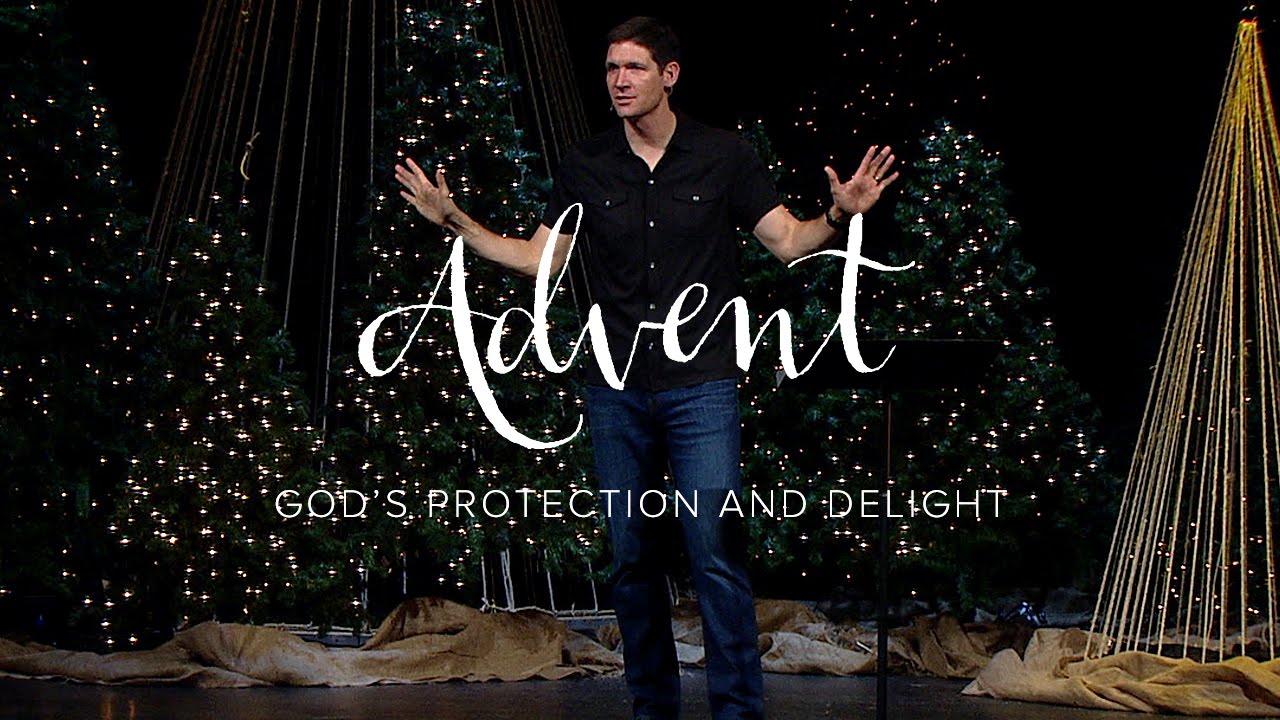
- Advent: God's Protection and Delight (Zephaniah)
The Book of Zephaniah contains a wonderful and moving description of God’s love. We don’t deserve God’s love, but He offers it to us in the gift of Jesus Christ. And nothing can keep us from the joy of the risen King. The Village Church. Used by permission.
- Top 10 Ways to Beat the Christmas Blues
What do you do when you are feeling blue? You don’t need to feel helpless! Many of us experience depression at a significant holiday like Christmas. Especially this year….Sometimes it’s the loss of a loved one, a job or your health. Sometimes it’s isolation, fear and depression. Here are a few practical steps you can take to beat the doldrums. 1. Socialize and Think Positively! When a person is feeling blue or depressed, often the last thing they want to do is be around others or socialize. The fact is, however, when we are feeling blue or down, if we choose to isolate ourselves and hold up in our room or home, we will tend to focus on the same mental tapes that are causing us to feel down in the first place! If you will force yourself to call a friend and meet for coffee, a movie, a walk, a talk – anything to get out and change your atmosphere, the chances are good that will have a good effect on changing your mood for the better. For all but those who have a severe depression problem re-quiring a doctor’s help, try and remember, we are what we think. Our thoughts can propel us into ecstasy or into the depths of the blues. And most of us have control over our thoughts. It takes being conscious of them, and it takes practice. Remember: We are always at choice as to thought, actions, etc. 2. Do Something Just for Yourself! Be totally selfish here. Think of something you want to do for yourself… a short trip, a manicure, a haircut, buying yourself the coat or scarf you have been wanting. It does not have to be extravagant or costly. The point is you are being good to yourself, and that will sink in, and a part of yourself will say, “Gee, I deserve this, and things aren’t so bad after all.” This is not going to necessarily get to the root of what caused you to feel down or blue, but it will make you feel better long enough that maybe you can put the cause in a different perspective, or simply not take it as seriously. 3. Give Something to Another Person One of the best ways we can get beyond our own physical and emotional self is to find something bigger than our own familiar problems upon which to concentrate! Think about your friends, relatives, the poor people in your church, or the local charities. Pick a person or cause that appeals to you and decide to give to that person or that cause. It can be your time or money, a toy, or whatever. Giving to others makes most people feel good in their heart. Feeling good in our heart can have a great impact on how we feel in our mind and body. It is the thought and the symbolism. The gift may be small, but the thought is all. You will feel better! 4. Rent or Go See a Happy/Funny Movie Laughter has long been a quick and effective panacea for ills of all kinds. Medical studies show that it creates endorphins (body hormones that act as natural pain killers as well as mood elevators) as well as red blood cells and t-cells (the good cells which make up a part of the body’s auto-immune system and help us fight disease). When we laugh we also force our mind (although there is not any real struggle) to change modes and to be up and to feel up, not down or blue or depressed. We substitute our own thoughts and feelings for those of the people on the movie or television screen. Watching an hour long comedy where we laugh and take our mind off our daily problems can last for hours or days as far as re-ducing chronic pain, a blue mood feeling, etc. It is cheap, easy, and if we allow it to be it is fun! 5. Volunteer Your Time One of the best ways we can help pull ourselves out of feeling sorry for ourselves, or feeling blue, or concentrating on our own aches and pains, is by helping other people who have problems of their own … often much more severe. Jobless families need a “leg up” right now. World Vision, Samaritan’s purse and a host of other organizations need your help. Giving time to others is a very good way to get outside of our own situation. Every city has volunteer bureaus and other places that need help, even if it is for an hour a day or a week! Giving to others will come back to us many times over in positive ways if we allow ourselves to try it. Of course, minister safely and observe guidelines for contact with others. 6. Get Out of the Past and Into The Present! Most bad moods and mental attitudes are a result of what has happened to us in the past. This can be the recent past, or long ago. It is vital to your body and energy and life as a whole that you stay in the present with your thought and feelings. The past is over! Hanging onto old hurts, pains, anger, etc. will do you much harm emotionally and physically over time. We can choose to focus on creating a positive and healthy present for ourselves, or dwell in the past, creating anxiety, depressed moods, anger, guilt, etc. Do you want to live your life in the present or live it based on the past onto which you are still hanging? Let old hurts and pains and anger go! Doing so will free up all kinds of positive energy and your body and mind will have a chance to be much healthier as a result. 7. Walk to Cheer Up Walking is prescribed by many doctors to help depression. Maybe your finances are what have you down in the dumps. If that is the case, drive to the closest mall and walk and just look in the windows. Buy an orange freeze or soda, sit on a bench and watch the people and the children. Realize that every person you see has their own problems, and has days when they are blue or down. Some may feel much worse, and even be clinically depressed. Taking action fights the blues and the funk one feels by sitting or lying down at home brooding indulging in self-blame or pity. Remember misery loves company? Well, at a mall you can be assured you have hundreds if not thousand of men and women who have felt or are feeling just as bad or worse than you at the very time you are there! You are not alone. Life will go one … things can get better. You must make the choice to help make them better. 8. Call or Skype Someone You Like Who Is a Positive Person and Chat The idea here is to get out of yourself, and have some interaction, and hear about someone else’s life and take your mind off your own stuff for a while. It’s okay to let them know you are feeling a bit low or down, and if they ask, you can briefly tell them what is going on. But, ask them about their life and job and family, etc. Get involved with someone else, and your mind will take a turn as well. Let them talk about their life and current situation. The more you listen to them and talk about things other than your own current situation, the better the chances are your mood will lift and you’ll feel better after connecting in times of isolation. 9. Meditate or Listen To Relaxation or Ministry Resources Meditation can be a very good way to change your mood. It works whether you are depressed/down, or anxious/hyper. We suggest taking a course or getting good quality tapes which teach meditation and prayer. It is amazing what it can do to quiet down the mind and release the stress caused by both anxiety and depressed feelings. Abide and Pray are both relaxation apps as well as self-affirmation. Louise Hay and Wayne Dyer are two of the most well known authors of books and tapes on health issues, specializing in “positive thinking” and how they affect our physical and emotional health. They can be found in most bookstores, or on the Internet. The investment in these tapes is quite small compared to the benefits they can give the user. 10. Be Creative! Creating things alters our mood. It shifts us from the right side of our brain to the left side, etc. Creating can be through cooking foods, painting (walls or on canvas or paper) making something using needle and thread, yarn, or Legos! It is also “creating” to play music if you are musical. Play what you wish as loud or as soft as you wish. Make up a song. Music (hearing it or playing it) has long been used by people of all cultures to create or alter a mood. Whatever type of music makes you feel good… play it or create it. It will change your mood for the better if you allow it to and if you concentrate on the music and creating and forget how you have been “feeling.”
- When Was the Silent Night? Sukkot, the Feast of Joy!
Professor Julia Blum teaches at eteacherbiblical.com out of Tel Aviv, Israel. Her profound knowledge of the Bible and Jewish history will greatly bless you this Christmas: When was the Silent Night? In Luke 2, an angel appeared to the shepherds in the fields and said to them, “I bring you good news … great joy for all the people”[1]. When did that happen? When was this great joy declared? The Gospel writers either did not know the time of Jesus’ birth or didn’t consider it important, therefore the time of year that Jesus was born is a matter of debate and guesses. Of course the traditional date of celebrating Jesus’ birth is December 25, however most historians agree that Christmas was not observed until about 300 years after Christ’s death, and the origins of Christmas cannot be traced back to either the teachings or the practices of the first believers. Certainly, the Bible nowhere indicates that Jesus was born in winter. So, if Jesus wasn’t born on December 25, when was He born? Based on the New Testament accounts (first of all, on calculations regarding the conception and birth of John the Baptist), late summer or early fall seem to be the most likely time of Jesus’ birth. Many Messianic believers celebrate Jesus’ birth during Sukkot (the Feast of Tabernacles). Let’s look at their arguments. The first argument is very simple and has to do with the weather. Anyone who has been to Israel at the end of December would definitely agree that December 25 couldn’t be the date for Christ’s birth. Here are two primary reasons: First, we know that the shepherds were in the fields watching their flocks at the time of Jesus’ birth.[2] That would not happen in December, since December in Judea is very cold and wet, so the weather would not permit shepherds to stay in the fields at night. The end of December is in the middle of the rainy season in Israel, which lasts from Sukkot through Passover. Of course there is no way of knowing whether that particular December was wet, however, in December the nights are always very cold, sometimes below zero even if the days are nice and sunny, so the shepherds, along with their flocks, would at least be in some shelter at night. On the other hand, early fall – the time of Sukkot – fits perfectly with Luke’s account. Second, many scholars think that December would not have been an appropriate time for a Roman census either: such censuses were not taken in winter, when temperatures sometimes dropped below freezing and roads were in a very poor condition. And here again, early fall would be a great time for traveling to Bethlehem. There is even a theory that Joseph and Mary planned their trip to Bethlehem to coincide with the Sukkot pilgrimage to Jerusalem. Traveling with a pilgrimage caravan from Galilee could have provided them safety on the journey. The busy time of pilgrimage might also explain the “no room at the inn” situation in Bethlehem. The third and most significant argument is based on the timing of John the Baptist’s birth. John’s father, a priest named Zechariah, belonged to the “priestly division of Abijah”.[3] He was taking his turn to serve in the Temple when the angel Gabriel appeared to him and announced that Elizabeth, Zechariah’s wife, would conceive a son. After Zechariah returned home, his wife conceived, just as the angel had said. In the sixth month of Elizabeth’s pregnancy, Gabriel visited Mary to announce the miraculous conception of Jesus.[4] The 24 courses of the temple priesthood are found in 1 Chronicles 24. Calculations are made showing that the Abijah division served in June. After Zechariah completed his service and traveled home, Elizabeth conceived.[5] Assuming John’s conception took place near the end of June, adding nine months brings us to the end of March as the most likely time for John’s birth. If we add another six months, we arrive to the end of September – Sukkot time – as the likely time of Jesus’ birth. However, all these arguments, as important and convincing as they might be, fade into insignificance if we think of the essence: why Jesus came to this earth and when it could – and had to – be done? I personally think that the most crucial aspects here are theological reasons – once we know and recognize God’s handwriting in history (His story), we can ascertain when, why and how Jesus had to be born. Here are some of the thoughts. First of all, we already know that Sukkot is a biblical Feast of joy, zman simchateynu , “the season of our joy”. Would it not be a proper time to declare “great joy for all people”? Second, when John says that the “The Word became flesh and tabernacled among us”, [6] we can see this as an allusion to Him coming into this world during the Feast of Tabernacles. A third possible reason for Jesus being born on Sukkot concerns bringing the nations of the world to the recognition and worship of the God of Israel – a theme common to Sukkot and to the mission and ministry of Jesus. It was God’s original design that the festival of Sukkot would bring the nations of the world to the true God, and this theme of Sukkot is expressed in many prophecies. Thus, in the prophecy of Zechariah we read that at the end of days, all the nations will come to celebrate the festival of Sukkot: And it shall come to pass that everyone that is left of all the nations who came against Jerusalem shall go up from year to year to worship the King, the Lord of hosts, and to observe the festival of Sukkot. [7] Anyone who has had the privilege of participating in, or even just watching the Jerusalem March that takes place every Sukkot, would know, without a shadow of a doubt, that the mission of Sukkot and the mission of Jesus – to reach the nations of the world and to bring them to God of Israel – are intertwined. Fourth, King Solomon inaugurated the First Temple on the festival of Sukkot: And all the men of Israel assembled themselves to King Solomon at the festival in the month of Eitanim, which is the seventh month…. [8] Evidently, the timing of this event was not coincidental, but rather the result of Solomon’s thorough planning. How much more then, would it be a proper time to inaugurate the One who is indeed greater than Solomon and greater than Temple. Finally, let us remember that Sukkot is a time of renewed fellowship with God. Moses came back with the second set of the tablets on Yom Kippur – so on Yom Kippur the people of Israel already knew they were forgiven. However, it was not until Sukkot that the presence of God filled sukkot -the tabernacles. That is why Sukkot is the most joyful of all the holidays: the broken are healed; we are no longer orphans; God came again to tabernacle with us! Immanu El – God is with us! Would it not have been the most appropriate time for Immanuel to come to this Earth? PS Dear friends, my Rosh Hashanah gift is still available, so if you haven’t done it yet, you can now go to this link and download a free copy of my book “Abraham had two sons”. https://juliablumbooks.sendlane.com/view/julia-blum [1] Lk. 2:10 [2] Lk. 2:7-8 [3] Lk. 1:5 [4] Lk. 1:26-36 [5] Lk. 1:23-24 [6] John 1:14 [7] Zech. 14:16 [8] I Kings 8:1-6 Reprinted by permission of Dr. Eli Lyzorkin-Eyezenberg, eteacherbiblical.com.
- 7 Bible Truths That Bring Great Happiness
Do you want to experience true happiness? God’s Word gives us seven ways to be happy in Him. 1. God’s Immeasurable Love for Us In Ephesians, Paul prays that the recipients of his letter may “have strength to comprehend with all the saints what is the breadth and length and height and depth, and to know the love of Christ that surpasses knowledge, that you may be filled with all the fullness of God” (Ephesians 3:18-19). He ends the chapter saying, “To him who is able to do far more abundantly than all that we ask or think, according to the power at work within us, to him be glory in the church and in Christ Jesus throughout all generations, forever and ever” (Ephesians 3:20-21). After reading this inspired text, how great should our expectations of God be? 2. God’s Willingness to Completely Forgive Us Whenever We Confess Our Sins Ironically, it’s easier to be restored to a positive relationship with God than with any other being. As difficult as this is to grasp, when we do, it’s happy-making in the extreme. God is the holiest being in the universe, meaning that His standards are infinitely higher than any creature’s. It would be easy to conclude, then, that God would be more prone than anyone else to hold our offenses against us. Yet the opposite is true. “If we confess our sins, he is faithful and just to forgive us our sins and to cleanse us from all unrighteousness” (1 John 1:9). Who else will forgive us of everything, absolutely and every time—even when we’ve deeply hurt them? It’s not the sinless God but sinful people who sometimes refuse to forgive us—just as we are sometimes slow to forgive. Nothing we’ve done or can ever do will surprise God or cause Him to change His mind about us. No skeletons will fall out of our closets in eternity. He has seen us at our worst and still loves us. Arms wide open, He invites our confession and repentance, which He always meets with His grace and forgiveness. How secure are we in God’s love? Jesus said, “My sheep hear my voice, and I know them, and they follow me. I give them eternal life, and they will never perish, and no one will snatch them out of my hand” (John 10:27-28). 3. God’s Constant Presence in Us and with Us Matthew Henry said, “Happy are those who have the Lord for their God, for they have a God that they cannot be robbed of. Enemies may steal our goods, but not our God.”[i] Joshua 1:9 offers this encouragement: “The Lord your God is with you wherever you go.” Jesus promised His disciples, “I am with you always” (Matthew 28:20). Here is a source of both comfort and courage: “Fear not, for I am with you; be not dismayed, for I am your God; I will strengthen you, I will help you, I will uphold you with my righteous right hand” (Isaiah 41:10). Our happiness is largely determined by who or what we depend on. If we depend on God, we’ll be happy because God is always with us: “God’s Spirit dwells in you” (1 Corinthians 3:16). Of course, sometimes we’ll sense His presence more than other times. But He is there for us when life is dry, stressful, or traumatic, helping us and even praying for us: “The Spirit helps us in our weakness. . . . The Spirit himself intercedes for us with groanings too deep for words” (Romans 8:26). The stories of many prisoners—including Corrie ten Boom, Richard Wurmbrand, and Aleksandr Solzhenitsyn—document that they survived imprisonment and torture because God’s supernatural indwelling presence was their lifeline. We who know Jesus have the same. “God has said, ‘Never will I leave you; never will I forsake you’” (Hebrews 13:5, NIV). Such a promise offers us happiness in the most difficult times and places. 4. The Transforming Power of God’s Word Never underestimate the life-changing nature of God’s inspired Word: “All Scripture is inspired by God and is useful to teach us what is true and to make us realize what is wrong in our lives. It corrects us when we are wrong and teaches us to do what is right. God uses it to prepare and equip his people to do every good work” (2 Timothy 3:16-17, NLT). Meditating on Scripture, which God uses to make us more like Christ, is a powerful source of personal happiness. God promises that His Word “will not return to me empty, but will accomplish what I desire and achieve the purpose for which I sent it” (Isaiah 55:11). He does not promise that about OUR words, but HIS. If we want our words to have lasting value and impact, they need to be touched and shaped by His words—and that won’t happen without a daily choice to expose our minds to Scripture. 5. The Sufficiency of Christ’s Work on Our Behalf When Jesus said “it is finished” John 19:30), he used the Greek word teleo, which was commonly written over certificates of debt once they were fully paid. It means “nothing more is owed; there is no more debt to be paid.” It’s not that Christ took on 99% of our sin and guilt and we must carry the other 1%. It’s that He took it all on. Consider this promise: “[God’s] divine power has granted to us all things that pertain to life and godliness” (2 Peter 1:3). We’re also told that God has “blessed us in Christ with every spiritual blessing in the heavenly places” (Ephesians 1:3). We can rejoice knowing that Christ has already provided all we need for salvation and eternal happiness. 6. The Providence of God and His Sovereign Purpose in Our Lives We can be confident knowing that God is in control of the details of our lives: “Yours, O Lord, is the greatness and the power and the glory and the victory and the majesty, for all that is in the heavens and in the earth is yours. Yours is the kingdom, O Lord, and you are exalted as head above all. Both riches and honor come from you, and you rule over all. In your hand are power and might, and in your hand it is to make great and to give strength to all” (1 Chronicles 29:11-12). God pays a great deal of attention to the “little things.” He numbers the hairs on our heads and cares for the lilies of the field. Jesus said, “Are not two sparrows sold for a penny? And not one of them will fall to the ground apart from your Father. But even the hairs of your head are all numbered. Fear not, therefore; you are of more value than many sparrows” (Matthew 10:29-31). Our fates do not rest in the hands of fallen humankind: politicians, lawyers, military officers, employers, or even spouses and children. No matter what happens, and how much it hurts, God is fully capable of using painful events for good. 7. The Undiluted and Eternal Happiness That Awaits Us “You have endowed him with eternal blessings and given him the joy of your presence” (Psalm 21:6, NLT). “And the ransomed of the LORD shall return and come to Zion with singing; everlasting joy shall be upon their heads; they shall obtain gladness and joy, and sorrow and sighing shall flee away” (Isaiah 51:11). Jonathan Edwards wrote, “After they have had the pleasure of beholding the face of God millions of ages, it will not grow a dull story; the relish of this delight will be as exquisite as ever.”[ii] Undiminished happiness is promised us—what other king has ever promised his people anything so great? And what other king has undergone for his subjects the ultimate sacrifice to fulfill that promise? [i] Matthew Henry, Matthew Henry’s Commentary on the Whole Bible, vol. 1, Genesis 31:25-35. [ii] Jonathan Edwards, “The Pure in Heart Blessed,” The Works of Jonathan Edwards, vol. 2. epm.org . Used by permission.
- Me-First Prayers
Why do flight attendants give parents flying with young children the instructions, “If there is a change in the air pressure in the cabin and the oxygen masks are deployed always put the oxygen mask on yourself first and then on your child,”? It’s because if the parent puts the mask on the child first they might risk passing out. Flight attendants can’t place the oxygen mask on everybody. They need people in the event of an emergency to follow their instructions to the letter. It would be infinitely worse for the child to permanently lose a parent than to momentarily pass out from a lack of oxygen. As soon as the parent has the mask on they are free to help their child. At first it might seem selfish, but when you think about these instructions you know it is the most loving choice we can make for the sake of our child. I am reminded of the wisdom of praying for myself first whenever I fly and hear these instructions. Praying for myself is never selfish. It is a mature precaution. When a friend calls with a serious prayer requests I can easily become emotionally overwhelmed without this me-first prayer cover. But, if I petition first for myself I am strengthened to intercede for others and can continue seeking God’s heart about a need. In Ephesians 3:14-21 Paul prays a prayer for the church in Ephesus. Technically Paul is not praying for himself in this passage, but his prayer is so insightful we would be prudent to apply some of these words. As we analyze the makeup of this prayer we uncover some great direction for me-first prayers. 14) For this reason I bow my knees before the Father, 15) from whom every family in heaven and on earth is named, 16) that according to the riches of his glory he may grant you to be strengthened with power through his Spirit in your inner being, 17) so that Christ may dwell in your hearts through faith—that you, being rooted and grounded in love, 18) may have strength to comprehend with all the saints what is the breadth and length and height and depth, 19) and to know the love of Christ that surpasses knowledge, t hat you may be filled with all the fullness of God. 20) Now to him who is able to do far more abundantly than all that we ask or think, according to the power at work within us, to him be glory in the church and in Christ Jesus throughout all generations, forever and ever. Amen ESV Before Paul begins he asks God to draw from the riches of his glory (16), when he answers this prayer. Jesus is rich in glory; he does not have to be stingy when we seek his intervention. We are not going to exhaust the riches of Christ’s glory by petitioning God too much with a need. First, in verse 16, Paul prays that the Christians in Ephesus would be strengthened with power through his Spirit in in their inner being . So, it is easy to see from reading this prayer that one of the most important things I need to pray for myself is that my inner being would be made strong. What would it really look like if, with God’s power through his Spirit I was made strong? To further explain this Paul is going to pray for their faith and a deeper experience of God’s love for the Ephesians. In verse 17 Paul’s next phrase is, “ so , that Christ may dwell in your heart through faith .” One way God strengthens me is through faith, so I can experience Christ’s indwelling presence. An increase of faith is an important request because without an active trust in Christ I struggle to discern his activity within me. Jesus is still active and alive in my life, but I can be clueless to his presence. Continued faith and trust in him is the key to my growing awareness of his movement. Trust will also be the key to experiencing Jesus presence when I don’t understand confusing events. I become aware of Christ’s indwelling presence through faith in him. Secondly, I need to be strengthened in my inner man so I can be rooted and grounded in love (17). Growing up in a desert region like Tucson I have always been fascinated when a drought-tolerant plant rooted and established in the soil can survive on less water. It is fascinating to watch these plants put out roots into the deep recesses of the soil, searching even around solid rocks to find hidden water. The Ocotillo is an extremely drought-tolerant plant when it is established, but it can take two summers of regular watering to ground this plant in your landscape. When watering the Ocotillo you have to do more than water the root ball; you also have to water the canes of the plant. If you sprinkle the canes you will trick the plant into thinking it rained and it will leaf out. If it leafs out you know it is growing roots. Once it is established it can live on the normal rainfall of an arid region. During drought it might drop its leaves but it will not die. Paul wants the Christians in Ephesus to be rooted and established in love. Why? Without love we are nothing ( 1 Cor. 13:2 ). So, what does it look like to be rooted and established in love? If we are not careful to cover ourselves first in prayer we endanger our spiritual lives like a young Ocotillo. To be grounded in God’s love, we need a deep, regular watering of God’s love because our roots are often still too shallow. Every traumatic story dries us out, but the answer is not to run from hurting people. In the desert shallow watering will produce plants with shallow roots. Any small windstorm can topple a plant with shallow roots. The answer is to grow deeper roots and deeper roots only grow when the water runs deep. The roots will always follow the depth of the water. Every summer the Sonoran Desert is visited by a deluge called the monsoon rains. Theses storms flood the region and establish drought-tolerant plants across the valley. Cacti are not no-water plants; they are low-water plants. A succulent collects and stores water for a drought every time it rains. Like the desert flora our spiritual lives will not be established without a deep flooding of God’s love. To be rooted and established in love Paul writes I must know the breadth, the length, the height and the depth of Christ’s love (18). Paul is describing massiveness when he chooses words like breadth, length, height, and depth. God’s love is massive. I need a greater revelation of how massive is this love. If I am to be useful as an intercessor, I will be placed in many situations where I see, hear, and share life with those in heart-breaking trauma. Emotionally, I will not be able to handle the sadness I encounter in others or the sadness I encounter in my own life without a greater revelation of the massiveness of God’s love. I must see God’s love as greater than the prayer request before me. Not only do I need a fresh revelation to strengthen my inner being, but also this love needs to move beyond mere head knowledge. Paul wants me to know the love of Christ that surpasses knowledge (19). An intellectual or purely doctrinal pursuit of God’s love will not strengthen me enough. Sound doctrine is important, but intellectual knowledge alone will not be a deep enough watering for me to draw from. I need examples in my life of when the love of God washed over me and filled every empty crevice of my heart. I need to know the love of Christ experientially and emotionally, for it to enter my core being. I need to know in my deepest heart that God loves me with completeness. When I am convinced God’s love has touched me, my inner personhood will be transformed and I will gain a new holy boldness when petitioning for others. When I am made strong in my inner being, Christ dwells in my heart by faith and I emotionally have experienced God’s love. These all lead to the last phrase from verses 19. I will be filled with all the fullness of God. Being filled with the fullness of God is a by-product of being strengthened in my core being. So, what might change if we first chose to pray Paul’s prayer for ourselves? Don’t we want to find out? I do. Father I thank you that all the families of the earth are named by you. I thank you that Jesus is rich in glory and that my prayer requests are not going to exhaust your glory. With your great power strengthen my inner being so that Christ may dwell in my heart through faith. I want to trust you even when things I don’t understand happen. Make me strong in faith so I can discern your presence i n me even in the midst of the unknown. Father I want to be rooted and established in love so my core strength draws from your love. I want a fresh revelation of how massive is your love for me. I need this revelation to surpass my head knowledge. I want the love of Christ to wash over me and flood the deepest crevices of my emotions today. Because I want to do things in your strength, not mine, I want to be filled with your fullness, God. I can ask these things because you are abundantly able in your great power to do all I ask or can even think of. To you alone be the glory in the church and in Christ Jesus throughout all generations, forever and ever. Amen.
- Defeating Satan's Footholds and Strongholds
We overcome Satan’s schemes when we understand how he oppresses us and how we must defeat him. Here are some clear ways to recognize demonic oppression in your life and find victory! The Evil One and his demons seize opportunities to cunningly influence our thinking in many different ways and to varying degrees. If his schemes remain hidden from our conscience thought, they can form a foothold or establish a stronghold in our souls from which evil spirits can operate unimpeded. Footholds: The most common use of the word foothold today is as a place or thing that will support a climber’s foot or as a secure starting position from which further advance can be made. In biblical Greek it can refer to a spot, place, location, room, home, position, tract, occasion, opportunity, locality, region, or condition. Paul gives us insight into how Satan might establish a foothold in our thinking from which further advancement can be made. He says, “In your anger do not sin”: Do not let the sun go down while you are still angry, and do not give the devil a foothold. (Ephesians 4:26-27) In these verses Paul warns us to quickly forgive an offense so that retained anger does not turn into bitterness, because bitterness (long-held unforgiveness) gives Satan a “foot up” in our thought life. It can give him a platform that will support further incursions into our thought life. Let me illustrate. When I am offended or emotionally wounded, becoming angry or embittered, I may think things such as: 1. If I forgive the person who offended me, he/she will just hurt me again. 2. By holding onto my anger, I can punish the one who offended me. 3. This offense is so egregious, I cannot forgive. There is no truth in any of these thinking patterns. The behavior that typically follows these kinds of deception is sinful disobedience of Christ’s instruction and example of forgiveness. Through unwillingness to forgive, the evil one gains a foothold—gains ground, a place, or a spot from which to make further advances into his target’s thought processes and actions. STRONGHOLDS: Another of Satan’s deceptive schemes is to establish strongholds in our mind. Look at what the Apostle Paul has to say about this: “…though we live in the world we do not wage war as the world does. The weapons we fight with are not the weapons of the world. On the contrary, they have divine power to demolish strongholds. We demolish arguments and every pretension that sets itself up against the knowledge of God, and we take captive every thought to make it obedient to Christ. (2 Corinthians 10:3-5) The Greek word for stronghold is used in the Greek Old Testament several times where it always carries the literal meaning of a fortress. The above passage is the only occurrence of the word stronghold in the New Testament and it is used figuratively to refer to the “strength of false arguments.” The words rendered arguments and pretension in the Greek tell us that the stronghold—the strong false argument—is established by a proud adversary for evil purposes. Look at the way Today’s English Version expresses it: “The weapons we use in our fight are not the world’s weapons but God’s powerful weapons, which we use to destroy strongholds. We destroy false arguments; we pull down every proud obstacle that is raised against the knowledge of God; we take every thought captive and make it obey Christ. (2 Corinthians 10:4-5, TEV) Author Mark Bubeck defines stronghold, saying: “a stronghold is an idea, belief, fear, feeling, desire, or anything else (arguments, pretensions against the knowledge of God) that has a strong hold, or a firm grip on, our mind, spirit, body, or heart—enslaving us—motivating us to act out against God’s will through repeated sinful behavior. A stronghold is a believed lie we have allowed to become reality to us and hold us in bondage to sin. It’s a lie that has darkened our minds to the truth of Christ.” The differences between footholds and strongholds are subtle. But we can make this distinction. A foothold is based upon lies one believes that lead him/her into sin for which he/she remains unrepentant. Continuing to function in that sin gives Satan a place from which to advance against us—to gain more ground in our lives. A stronghold seems to be directly connected to a proudly held strong argument or belief that weakens a person’s faith in God or leads the person away from God. Such false beliefs may stem from apostasy, habitual sin, or from misinterpretations of traumatic events in a person’s life. The false belief is so deeply ensconced in the person’s thinking that Satan can safely operate in the person’s life as if he were protected within the walls of a strong fortress. Now let’s look at some ways we can give evil spirits an opportunity to establish footholds and/or strongholds in our lives—ways in which we can become vulnerable to demonic attack. BECOMING VULNERABLE The door for spiritual attack in our life is opened both by the sins we commit and the sins committed against us. A review of writings of the “experts” in the field of spiritual warfare reveals that there are numerous areas of sin through which the enemy gains ground in our lives so that he can harass, oppress, and oppress believers. These include involvement in the occult (false religions), deception, bitterness, rebellion, pride, habitual sin, and generational sin. OCCULT INVOLVEMENT: Replacing the worship of God with the worship of Satan is the core characteristic of involvement in the occult. The worship of Satan is often hidden in the activities and beliefs of occult groups (occult means “hidden”). Just as Satan in his Temptations of Christ openly offered Jesus ruling power (Matt. 4: 8-9), the occult is seductive and deceptive as it offers power to the seeker. (Deuteronomy 18:9-13). BITTERNESS: Bitterness (unforgiveness) is one of the primary areas of vulnerability for many Christians. Some people struggle with bitterness because they have misconceptions about what it means to forgive. Forgiveness assaults the bitter person’s sense of justice. For these, forgiving someone for an offense means to let the offender off the hook. This smacks of weakness and codependency. The opposite, of course, is true. Forgiveness takes great courage and it reflects the grace and mercy of Christ. Some do not want to forgive because they want vengeance. And they are dedicated to extracting that vengeance. Some do it with cruel and direct retaliation. Others are more covert. They get their vengeance through gossip, manipulation of relationships, and other passive-aggressive behaviors. Some just enjoy hating the offender. Hanging onto bitterness is self-destructive and poisons the soul (Heb. 12:15; Eph. 4:30- 32). It is a violation of love (1 Cor. 13:5); it is rebellion against Jesus’ instruction to His followers (Matt. 6:12, 14-15). 1. Forgiveness is not forgetting. 2. Forgiveness is letting go of resentment; we forgive in order to heal. 3. Forgiveness is not seeking revenge (overtly or covertly). 4. Forgiveness is something you do for your sake; it is between you and God. 5. Forgiveness is agreeing to live with the consequences of another’s sin. We pay the price for the evil we forgive, just as Christ did. 6. Forgiveness is a crisis of the soul; it is an act of the will—a choice we make even if we do not feel like it. 7. Forgiveness sets the offended one free to heal and grow beyond the pain of the offense. DECEPTION: Jesus described the evil one as a liar and the father or progenitor of lies. “You belong to your father, the devil, and you want to carry out your father’s desire. He was a murderer from the beginning, not holding to the truth, for there is no truth in him. When he lies, he speaks his native language, for he is a liar and the father of lies.” (John 8:44) Satan and his army of demons seek to impact our thinking process primarily through deception or lies. The evil one is described as a deceiver and a liar. We also can be indirectly impacted by the evil one’s deception of others. Paul warned Timothy about deceiving spirits operating in men for the purpose of seducing them away from the truth: “The Spirit clearly says that in later times some will abandon the faith and follow deceiving spirits and things taught by demons. Such teachings come through hypocritical liars, whose consciences have been seared as with a hot iron. (1 Timothy 4:1-2) Paul tells us in Romans 12:2 that we can be deceived by the world—led by cultural messages, behaviors, and customs into false beliefs. Scripture also teaches that we can deceive ourselves (1 Cor. 3:18). In summary, we can say that Satan seeks to capture our mind, emotions and will through deception. We know that we need to be alert to several sources of deception. 1. Satan and his demons can directly deceive people (1 Tim. 4:1). 2. Other people can deceive us (Matt. 24:4-11). 3. We can be deceived by the culture in which we live (Rom. 12:2). 4. We can deceive ourselves (1 Cor. 3:18). Although it often is difficult to pinpoint a direct cause-effect relationship between a lie that we believe and the source of the lie, we know that Satan’s power is always in the lie, because he is the father of lies. REBELLION: Rebellion is failing to submit to the authority of God and to the authorities that He has placed over us in the structures He has ordained. The essence of rebellion is rooted in this question: Who is in control? When we rebel against those God has placed in authority over us we are taking control away from God and claiming it for ourselves. The Bible says this about rebellion: Rebellion is as sinful as witchcraft, and stubbornness [insubordination] is as bad as worshiping idols. (1 Samuel 15:23, NLT) Witchcraft and idolatry are both on God’s list of “detestable ways.” That makes rebellion and stubbornness [insubordination] detestable to God. How sobering! The Word gives us specific information about those to whom we are to submit—those not to rebel against. PRIDE: When we behave arrogantly or harbor prideful attitudes, we are emulating Satan rather than being an image-bearer of Christ. Remember that Satan was removed from the presence of God and cast to the earth because of his pride. Notice the connection between pride and spiritual warfare in the following verses: He gives us more and more strength to stand against such evil desires. As the Scriptures say, “God sets himself against the proud, but he shows favor to the humble. So humble yourselves before God. Resist the Devil, and he will flee from you. Draw close to God, and God will draw close to you.” (James 4:6-8, NLT) Pride often manifests itself in self-reliance, selfishness, and self-condemnation. HABITUAL SIN: The habitual practice of a specific sin can lead to bondage to “the god of this age.” In the previous lesson we learned that Paul, using the sin of bitterness and unforgiveness as the example, clearly identifies this principle. “In your anger do not sin”: Do not let the sun go down while you are still angry, and do not give the devil a foothold. (Ephesians 4:26-27) If we habitually remain unforgiving, holding onto anger, we create an opportunity for Satan to establish a foothold or beachhead in our life from which he may advance. This principle works because it is based on the nature of sin. Sin is rebellion against God and rebellion is at the core of who Satan is. He was the first rebel against God and has continued to work his plans against God by tempting man to join with him in his rebellion by committing sin. Demonization can take place when we join Satan in his rebellion by our habitual sin, giving him a place to build a stronghold. Of course, unforgiveness is not the only habitual sin that can give evil spirits entrance into our mind and will. A habitual gossip, liar, thief, etc., can open himself or herself to demonization as well. This principle is at work in the lives of many addicts, too. Drug addiction, sexual addiction, and alcoholism are all forms of habitual sin that open people up to demonization. GENERATIONAL SIN: People can be spiritually influenced in a negative way by the idolatrous sins of four generations of their ancestors. Look at these passages: “You shall not make for yourself an idol in the form of anything in heaven above or on the earth beneath or in the waters below. You shall not bow down to them or worship them; for I, the Lord your God, am a jealous God, punishing the children for the sin of the fathers to the third and fourth generation of those who hate me, but showing love to a thousand [generations] of those who love me and keep my commandments….” (Exodus 20:4-6) It is easy to connect the sins of the fathers in a social context. A person who has been physically abused by his father is likely to abuse his own children. Addiction has a genetic component and is easily tracked from one generation to the next. Sexual sin can be observed generation to generation. Obviously, the grace of God can change any pattern with Divine Power. SYMPTOMS OF OPPRESSION: Disinterest in or inability to read Scripture, comprehend the teaching of the Word, or participate in worship and prayer Possession of items used in Pagan, New Age, Eastern, or Native American worship rituals or in Freemasonry ceremonies Fearful, bizarre dreams and/or night experiences related to sexual perversion, occultic symbolism, or violence; evil presences, visitations, or impressions of demonic faces Conscious invitation extended to Satan and/or demons to become involved in one’s life Systematic patterns of personal sinfulness, i.e., lying, dishonesty, and resentment toward others; sexual acting out; and racial hatred Personality disturbance, i.e., paranoia, vengefulness, abuse of others (physical, emotional, sexual, or spiritual), self-mutilation, suicide attempts, depression, rebellion, and bizarre, violent, blasphemous thoughts Addictions to alcohol, drugs, sex, work, food, exercise, internet, or television Experiencing no relief from medical treatments (including prescribed drugs), personal prayer, or psychological counseling A family history of demonic influence coming from witchcraft or satanic worship; Native American, New Age, or Eastern religious practices; Freemasonry HERE IS A POWERFUL PROTECTION PRAYER: Holy Spirit, the Word of God declares that you are the Spirit of Truth who has come to guide me into all truth. I submit myself to You and ask that You reveal to my mind—or confirm to me—truth concerning these indicators that may reveal where I have made myself vulnerable to demonic oppression (John 16:13). It is the desire of my heart to recognize and destroy footholds and strongholds that evil spirits may have established in order to influence my thoughts and actions (Psalm 21:2; Eph. 4:26-27; 2 Cor. 10:3-5). I thank You in the Name and Authority of Jesus, the Christ. Amen.
- Why We Can Look Forward to Heaven
What difference is Heaven supposed to make in our lives now? Why do you think many Christians don’t look forward to Heaven anymore? What are some of the biggest misconceptions about Heaven? Christians faced with death often feel they’re leaving the party before it’s over, going home early. They’re disappointed, thinking of all the people and things they’ll miss when they leave. But for God’s children the real party awaits—think of the Father making merry and celebrating with a feast for the prodigal son who’s come home (Luke 15). The celebration is already underway at our true home, where we’ve not yet lived—and that’s precisely where death will take us. As others will welcome us to Heaven’s party, so we’ll one day welcome those who arrive later. God commands us in his Word to set our minds in Heaven where Christ is (Colossians 3:1). We focus on an actual place where the eternally incarnate, resurrected Christ lives. We’re commanded to be “looking forward to the new Heavens and New Earth where righteousness dwells” (2 Peter 3:13)—the resurrected cosmos, our future and eternal home. Paul says, “I consider that the sufferings of this present time are not worth comparing with the glory that is to be revealed to us” (Romans 8:18). If we don’t understand this future glory of Heaven that awaits us, we won’t see our present sufferings shrink in comparison to its greatness. What God made us to desire is exactly what he promises to those who follow Jesus Christ: a resurrected life in a resurrected body, with the resurrected Christ on a resurrected earth. Our desires correspond precisely to God’s plans. It’s not that we want something, so we engage in wishful thinking. It’s the opposite—we want real human lives as real embodied people because God has wired us that way, and has always planned for it. Will Heaven ever be boring? We will be more likely to think of Heaven as boring if we think of it as a disembodied state. But the ultimate Heaven where we’ll live forever is defined by resurrection, and resurrection is by definition embodied. Jesus spoke of the coming “renewal of all things” (Matthew 19:27-28). Peter preached of “the time for restoring all the things about which God spoke by the mouth of his holy prophets” (Acts 3:21). For resurrected people in a renewed universe, boredom will be unthinkable. Our belief that Heaven will be boring betrays a heresy—that God himself is boring. There’s no greater nonsense. Our desire for pleasure and the experience of joy come directly from God’s hand. He made our taste buds, adrenaline, and the nerve endings that convey pleasure to our brains. Likewise, our imaginations and capacity for joy were made by the God whom some imagine is boring. Are we so arrogant as to imagine that human beings came up with the idea of having fun? “Won’t it be boring to be good all the time?” This assumes sin is exciting and righteousness is boring, which is one of the Devil’s most strategic lies. Sin doesn’t bring fulfillment, it robs us of it. When there’s beauty, when we see God as he truly is—an endless reservoir of fascination—boredom becomes impossible. God delegates rule of his creation to us, and we’ll reign with him over his new creation. We’ll have things to do, places to go, people to see. Heaven is guaranteed to be a thrilling adventure because Jesus is a thrilling person—the source of all great adventures, including those awaiting us in the new universe. Will we eat and drink in Heaven? Words describing eating, meals, and food appear more than a thousand times in Scripture, with the English translation “feast” occurring 187 times. Feasting involves celebration and fun; it’s profoundly relational. Great conversation, storytelling, relationship-building, and laughter happen during mealtimes. Feasts, including Passover, were spiritual gatherings that drew attention to God, his greatness, and his redemption. People who love each other love eating together. Jesus said to his disciples, “I confer on you a kingdom, just as my Father conferred one on me, so that you may eat and drink at my table in my kingdom” (Luke 22:29-30). He promised, “Many will come from the east and the west, and will take their places at the feast with Abraham, Isaac, and Jacob in the kingdom of Heaven” (Matthew 8:11). The finest foods and drinks, according to Isaiah 25:6, will be prepared for us by God himself. Jesus knew his words would be attractive to all who heard them. How can it be trivial or unspiritual to anticipate such things? Don’t you think he wants us to look forward to eating at his table? In my book Heaven I coined the term Christoplatonism. It’s reflected by a Christian man in our church, who told me after I preached on the resurrected life, “This idea of having bodies and eating food and being in an earthly place . . . it just sounds so unspiritual .” If we believe that bodies and the earth and material things are unspiritual, then we’ll inevitably reject biblical revelation about our bodily resurrection or the physical characteristics of the New Earth. But the idea that physicality is inherently unspiritual is not biblical. As C. S. Lewis said of God, “He likes matter. He invented it.”[1] What will relationships in Heaven be like? Scripture tells us we will all be living with the same person (Jesus), in the same place (Heaven), with God’s people (the church). Paul says in 1 Thessalonians 4:18 that we are to “comfort one another with these words,” in reference to our being together with the Lord forever. So clearly we will be spending eternity with our loved ones in Jesus. Christ said that there won’t be human marriage in Heaven (Matthew 22:30).Yet there will be marriage in Heaven, one marriage, between Christ and his bride—and his people will all be part of it (Ephesians 5:31-32). Nanci and I won’t be married to each other but will be part of the same marriage to Jesus. I have every reason to believe that in Heaven, I will be closer to my wife and kids and grandkids than ever. It won’t be the end of our relationships, but they’ll be taken to a new level. Our source of comfort isn’t only that we’ll be with the Lord in Heaven but also that we’ll be with each other. Will we be capable of sinning in Heaven? Christ promises on the New Earth, “There will be no more death or mourning or crying or pain, for the old order of things has passed away” (Revelation 21:4). Since “the wages of sin is death” (Romans 6:23), the promise of no more death is a promise of no more sin. Those who will never die can never sin, since sinners always die. Sin causes mourning, crying, and pain. If those will never occur again, then sin can’t. We’ll have true freedom in Heaven, a righteous freedom that never sins. Since Adam and Eve sinned, despite living in a perfect place, as did Satan, many people wonder if we’ll sin someday in Heaven. The Bible says that God cannot sin. It would be against his nature. Once we’re with him, it’ll be against our nature too. We won’t want to sin any more than Jesus does. Jesus said, “The Son of Man will send out his angels, and they will weed out of his kingdom everything that causes sin and all who do evil. . . . Then the righteous will shine like the sun in the kingdom of their Father” (Matthew 13:41-43). What will be weeded out? Everything that causes sin and all who do evil. Sin will have absolutely no appeal to us. It will be literally unthinkable. The memory of evil and suffering in this life will serve as an eternal reminder of sin’s horrors and emptiness. Sin? Been there, done that; seen how ugly and disastrous it was! Paul Helm writes, “The freedom of Heaven, then, is the freedom from sin; not that the believer just happens to be free from sin, but that he is so constituted or reconstituted that he cannot sin. He doesn’t want to sin, and he does not want to want to sin.”[2] How might you use the doctrine of Heaven when sharing the gospel with someone? Heaven is a terrific evangelistic subject when we portray it as the Bible does. Satan has vested interests in our misconceptions regarding Heaven. When he depicts it as a dull, drab, tedious, boring place where nobody would want to go, all motivation for evangelism is removed. Why would we want our friends to spend eternity in an eternally dull place? And why would they want to go there? Nobody wants to be a ghost when he dies—people will no sooner develop a taste for a disembodied life than for broken glass. On the other hand, when Christians understand Heaven is an exciting physical place on a redeemed world with redeemed people in redeemed relationships without sin and death, where there is music, art, science, sports, literature, and culture, it’s a great source of encouragement and motivation. “They all lived happily ever after” is not merely a fairy tale. It’s the blood-bought promise of God for all who trust in the gospel. The New Earth is where there’ll be no more pain and sorrow and God will wipe away the tears from every eye (Revelation 21:4). That’s the perfect promise to share with unbelievers. We should unapologetically tell them that the happiness they long for, the reconciliation to the God from whom happiness flows, is found in Jesus alone—this is what makes the gospel “good news of great joy”! epm.org . Used by permission [1] C. S. Lewis, C. S. Lewis and His Circle (Oxford University Press, New York, 2015), 57. [2] Paul Helm, The Last Things (Carlisle, PA: Banner of Truth, 1989), 92.
- 31 Biblical Virtues to Pray for Your Children
What should you pray for your children? Pray a virtue a day: 1. Salvation —”Lord, let salvation spring up within my children, that they may obtain the salvation that is in Christ Jesus, with eternal glory.” (Isa. 45:8; 2 Tim. 2:10) 2. Growth in Grace —”I pray that my children may grow in the grace and knowledge of our Lord and Savior Jesus Christ.” (2 Pet. 3:18) 3. Love —”Grant, Lord, that my children may learn to live a life of love, through the Spirit who dwells in them.” (Gal. 5:25; Eph. 5:2) 4. Honesty and Integrity —”May integrity and honesty be their virtue and their protection.” (Ps. 25:21) 5. Self-Control —”Father, help my children not to be like many others around them, but let them be alert and self-controlled in all they do.” (1 Thess. 5:6) 6. Love for God’s Word —”May my children grow to find Your Word more precious than much pure gold and sweeter than honey from the comb.” (Ps. 19:10) 7. Justice —”God, help my children to love justice as You do and act justly in all they do.” (Ps. 11:7);Mic. 6:8) 8. Mercy —”May my children always be merciful, just as their Father is merciful.” (Luke 6:36) 9. Respect (for self, others, and authority) —”Father, grant that my children may show proper respect to everyone, as Your Word commands.” (1 Pet. 2:17) 10. Biblical Self-Esteem —”Help my children develop a strong self-esteem that is rooted in the realization that they are God’s workmanship, created in Christ Jesus.” (Eph. 2:10) 11. Faithfulness —”Let love and faithfulness never leave my children, but bind these twin virtues around their necks and write them on the tablet of their hearts.” (Prov. 3:3) 12. Courage —”May my children always be strong and courageous in their character and in their actions.” (Deut. 31:6) 13. Purity —”Create in them a pure heart, O God, and let that purity of heart be shown in their actions.” (Ps. 51:10) 14. Kindness —”Lord, may my children always try to be kind to each other and to everyone else.” (1 Thes. 5:15) 15. Generosity —”Grant that my children may be generous and willing to share, and so lay up treasure for themselves as a firm foundation for the coming age.” (1 Tim. 6:18-19) 16. Peace-Loving —”Father, let my children make every effort to do what leads to peace.” (Rom. 14:19) 17. Joy —”May my children be filled with the joy given by the Holy Spirit.” (1 Thes. 1:6) 18. Perseverance —”Lord, teach my children perseverance in all they do, and help them especially to run with perseverance the race marked out for them.” (Heb. 12:1) 19. Humility —”God, please cultivate in my children the ability to show true humility toward all.” (Titus 3:2) 20. Compassion —”Lord, please clothe my children with the virtue of compassion.” (Col. 3:12) 21. Responsibility —”Grant that my children may learn responsibility, for each one should carry his own load.” (Gal. 6:5) 22. Contentment —”Father, teach my children the secret of being content in any and every situation, through Him who gives them strength.” (Phil. 4:12-13) 23. Faith —”I pray that faith will find root and grow in my children’s hearts, that by faith they may gain what has been promised to them.” (Luke 17:5-6; Heb. 11:1-40) 24. A Servant’s Heart —”God, please help my children develop servant’s hearts, that they may serve wholeheartedly, as if they were serving the Lord, not men.” (Eph. 6:7) 25. Hope —”May the God of hope grant that my children may overflow with hope and hopefulness by the power of the Holy Spirit.” (Rom. 15:13) 26. Willingness and Ability to Work —”Teach my children, Lord, to value work and to work at it with all their heart, as working for the Lord and not for men.” (Col. 3:23) 27. Passion for God —”Lord, please instill in my children a soul that ‘followeth hard after thee,’ one that clings passionately to You.” (Ps. 63:8) 28. Self-Discipline —”Father, I pray that my children may acquire a disciplined and prudent life, doing what is right and just and fair.” (Prov. 1:3) 29. Prayerfulness —”Grant, Lord, that my children’s lives may be marked by prayerfulness, that they may learn to pray in the Spirit on all occasions with all kinds of prayers.” (1 Thess. 5:17) 30. Gratitude —”Help my children to live lives that are always overflowing with thankfulness and always giving thanks to God the Father for everything, in the name of our Lord Jesus Christ.” (Eph. 5:20; Col. 2:7) 31. A Heart for Missions —”Lord, please help my children to develop a desire to see Your glory declared among the nations, Your marvelous deeds among the peoples.” (Ps. 96:3) © Bob Hostetler. Used with permission. www.ReviveOurHearts.com
- Simple Ways to Get on the Same Page as Parents
Andrea and I grew up in homes that had very different views on eating. Andrea’s family had a value of healthy living. My (Doug’s) family came from a carefree and celebratory view of eating, especially when it came to candy and other sweets. When we got married, we did not agree at all on this issue. Eventually, we found some resolution, but not completely. We still can get into minor skirmishes about it. Andrea has agreed to lovingly come closer to my views. I, on the other hand, need to stop pushing for his way all the time. Candy and sweets are not a major issue of parenting. Yet, parenting differences play out in fights in many families. I want to give you action steps for getting on the same parenting page. Step 1: Recognize why you don’t agree. When we say that our spouse is undermining our efforts to parent our kids correctly, we are really saying that we have not submitted to each other. We aren’t going to give in to the other person. It is like saying, “I am right and you are wrong.” Here is the key: You must realize that you may be wrong. Or. . . you might be making a mountain out of a mole hill. Competitive parenting never works, because someone is winning and someone is losing. Competitive parenting leads to a competitive marriage–which often ends badly. One reason you may not be on the same parenting page is because you refuse to agree with them. Try opening yourself up to listen and consider the possibility that you may not be right. Step 2: Get on their page. Once you open yourself up to listen to them, try getting on their parenting page. In fact, get on their parenting page EVEN if it is the wrong page. By getting on the same page, you do three things. One, your child no longer can run wild between your differences. Secondly, you will stop fighting with each other and start looking at the behavior of the child. Lastly, your spouse can no longer blame you for parenting incorrectly. Their parenting style is now on full display. You may need to will yourself to their page. You will likely need to bite your tongue. Remember, if their parenting style is abusive or they have destructive behaviors like alcoholism, then don’t jump over there. Be reasonable, and of course, keep your kids safe. Step 3: How to talk about parenting issues Now that you are on the same page with your spouse, when a behavior problem arises, ask your spouse for their input on how to solve it. Use the words like “maybe” and “we”. If your spouse grounds your son, Bob, and doesn’t realize the effect on you, try asking them this, “Dear, thanks for engaging Bob. Do you think MAYBE we could talk about grounding him before you ground him? This way we could explore options together and consider the ramifications.” Now that you are using their play book, when your kid behaves really badly, feel free to walk away and let them deal with the consequences. Go to the bathroom or leave for a short walk. By letting them deal with it, they will likely realize this isn’t working. When it gets bad enough, ask if maybe the two of you together could explore different options. Ask them to find the solution. If they don’t have time to research other options, ask them if it would be okay if you did some research and brought a summary of what you found. Build the plan together. It won’t happen overnight, but being on different pages is destructive on many levels. Work to get on the same page. Action Steps to get on the same page: Be open to their different opinions Get on their page, even if it is the wrong page. Wait and be silent as you parent on their page. When things get bad enough, ask if there is a different option to explore together. Parenting Tip/ Pocket Answer Get on their page, even if it is the wrong page. & Parenting is not a competitive sport. From www.birthorderguy.com. Used by permission.
- Quantum Mechanics Shows How God Spoke the Creation into Being?
Dear Roger, Please explain to me how quantum mechanics explains the reality and existence of God? Sincerely, Julie Dear Reader, Julie didn’t ask the question quite like that—just sort of. Let me summarize what happened and my answer to her. I hope you find my thoughts stimulating, intriguing and assuring. “I can’t believe how much I enjoy reading physics books and thinking about how God organized and created the universe,” I said to Julie as we lay in bed one night. I was reading another book about quantum mechanics, and she was hoping that I would soon turn off the light so she could go to sleep. “I’ve read about ten books on the subject and I think I am starting to understand it just a little bit,” I said to her. “In fact, I think that I’ve figured out how quantum mechanics verifies the existence of God.” “That sounds exciting. Tell me about it.” “Well, I am not really sure that I can. It’s too complicated. “You are good at making things simple,” she said, “try me.” So, I did. Let’s start with Isaac Newton. Alexander Pope entwined: “Nature and Nature’s laws lay hid in night: God said ‘Let Newton be! And all was light.” Newton’s laws explain how the world works in the physical realm in which we live. From the orbits of planets to measuring force, mass and acceleration Newton’s laws explain it all. Then, along came Albert Einstein to upset the physics apple cart with his general theory of relativity. The general theory explains how gravity curves space as illustrated by the bending of light photons as they pass near a massive star. When his theory was actually verified experimentally it became obvious to many physicists that Newton’s Laws simply didn’t work on the macro level—like the size of the universe. For example, scientists must factor in general relativity in plotting satellite orbits if they have any intention actually putting an object in the proper orbit. It they were to depend on Newton they would miss the proper orbit every time. Newton’s laws are now known to be simply approximations—on every level. On the other hand, Quantum Mechanics explains the behaviors of atoms on the micro level. Newton’s laws don’t work on this level either. The energy of an atom was found to change only by a discrete quantity named a “quantum”. In other words, you can’t have half of a quantum. They either come whole or not at all. Einstein used Max Planck’s work that explained the glow of hot bodies to suggest that light was a stream of discrete particles. Each particle had the energy level of one quantum. Quantum Mechanics explains how the sun shines; how TVs produce pictures; why grass is green and the big bang eruption that brought our universe into existence. Computers, game boys, iPads and lasers all depend on the application of quantum mechanics. Without quantum mechanics none of the things mentioned above could be understood or applied. What makes quantum mechanics so difficult to understand is that everything about it goes against our every day experiences and common sense. J.B.S. Haldane marveled: “Quantum theory is not only queerer than we suppose. It is queerer than we can suppose.” Niels Bohr said, “Anyone not shocked by quantum Mechanics has not understood it”. Here are some counter intuitive truths about Quantum Mechanics. Remember that everything I am about to share has been experimentally verified. In fact, no part of Quantum Mechanics has ever been shown to be inaccurate or false. QM tells us that an observation of one object can instantaneously influence the behavior of another greatly distant object even if no physical force connects the two. QM tells us that observing an object to be some place causes it to be there. It wasn’t there before you observed it. If we observe an atom to be someplace, it was our looking at it that caused it to be there. QM tells us that an object can be in many places and many states at once. QM denies the existence of a physically real world independent of someone’s observations of it. It is not common sense that one object can be in two far apart places at once. Common sense tells us that there is a “real world” whether or not we look at it. But, that is not true. Nothing is real until someone observes it. A photon of light—or an atom—is either a wave or a particle depending on what we want it to be. Objects can exist in multiple places and only become real and localized when an observer expects it to be somewhere and actually looks for it there. Einstein struggled with accepting quantum theory and its implications. “I cannot seriously believe in quantum theory because … physics should represent a reality in time and space, free from spooky actions at a distance.” “Spooky actions at a distance” means that two objects speeding away from each other at the speed of light are still instantaneously connected. Fiddle with one particle and the other is fiddled exactly the same even though no one is fiddling with it. In other words, Einstein wanted things to be real and separate from each other whether someone was looking or not. However, QM reveals that matter is not real and separate—it is unreal while being completely intertwined with everything in existence. If a tree falls in the forest, does it make any sound? No, of course not. The falling tree produces air waves, not sound. Sound only occurs when a human ear is near enough to process the moving air waves into electrical signals that we “hear” in our brains as “sounds.” It should be obvious by now that the implications of quantum demand an encounter with human consciousness. Eugene Wigner declared: “It is not possible to formulate the laws of Quantum Mechanics in a fully consistent way without reference to the consciousness.” I think that it is safe to say that many physicists ignore the implication that objects in a physical world can actually be directed and influenced by human consciousness. physicists utilize the mechanics and mathematics of QM but most refuse to acknowledge the consciousness enigma (By the way, QM does not support the ideas of mysticism, ESP, etc. for reasons we won’t take time to engage with now). That evening in bed I was pondering something Einstein said when I had my “eureka” moment. Einstein once said, “I’d like to think that the moon was there even when I was not looking at it.” Then it hit me. Einstein may not be observing the moon at some particular moment—but God is. His observation makes it real! We live in a world with substance and reality because God is presently observing everything on earth as well as all in the universe surrounding us. From our perspective we live on a big earth in a big universe. We might do well to consider a broader perspective. Maybe our universe is more like the sphere dangling from the cat collar in the movie, “Men in Black.” The sphere was dazzling. Look really closely and see that what hangs around the cat’s neck is actually an entire universe. Hebrews 11:3 is my Biblical outline of quantum mechanics: “By faith we understand that the universe was formed at God’s command, so that what is seen was not made out of what was visible.” In Genesis 1:1-31 the Bible describes God as thinking and speaking the universe into existence: And God said, “Let there be light,” and there was light. … And God said, “Let there be an expanse between the waters to separate water from water.” And it was so. … And God said, “Let the water under the sky be gathered to one place, and let dry ground appear.”… And it was so. … Then God said, “Let the land produce vegetation: seed-bearing plants and trees on the land that bear fruit with seed in it, according to their various kinds.” And it was so. … And God said, “Let there be lights in the expanse of the sky to separate the day from the night, … And it was so. … And God said, “Let the water teem with living creatures, and let birds fly above the earth across the expanse of the sky.” … And God saw that it was good. … And God said, “Let the land produce living creatures according to their kinds … And God saw that it was good. Then God said, “Let us make man in our image,” … God saw (observed) all that he had made, and it was very good. John 1:1-3 reveals that God the Son, Jesus Christ, was the One Who carried out the actual creation to make something out of nothing: “In the beginning was the Word, and the Word was with God, and the Word was God. He was with God in the beginning. Through him all things were made; without him nothing was made that has been made”. When I finished my explanation to Julie, she said, “That was really good. Why don’t you make it an Ask Roger answer for next week?” So I did. Love, Roger
- How Do I Help an Alcoholic Friend?
Share 0 Hi Roger, I have a small group I am teaching, actually three of my best friends, one a Catholic, one a Lutheran, and one an alcoholic. They really need the Lord; however, the alcoholic says she doesn’t believe in God, what do I say? She drinks even at our study and I am torn about how to proceed or if I should. Name Withheld” Dear Name Withheld, I am sorry about your friend; alcoholism usually ends in tragedy not only for the alcoholic but for everyone around them. The devastation spreads like the ripples of a stone tossed into a pond. I understand both your pain and your concern for her wellbeing. You would do most anything to help her get help, wouldn’t you? Of course you would. The obvious answer is Christ is greater than any addiction. Your friend’s salvation is the key to deliverance. But few find victory instantaneously. What can you do—really? The person has to be ready. The denial mechanism is so strong that most alcoholics have considerable difficulty both seeing the oncoming destruction and doing anything to avert the tragedy. But, the situation is not hopeless. Consider talking to her family and close friends about arranging an “intervention” for her. An intervention occurs when family and close friends all get together for a surprise confrontation with their alcoholic friend. Sometimes the shock of experiencing so many close friends and family sharing their concern for her will cause the alcoholic to surrender to treatment. Unfortunately, this process is usually not successful; however, fortunately, sometimes, it does work. It is important to have planned in advance which treatment center he/she will go to that very night. The move to treatment must occur immediately following the intervention, otherwise he/she will soon change their minds and the intervention will be for naught. It is wise for you to work out with the family and other friends a treatment plan for when the alcoholic finally reaches “bottom” and is so broken that they will surrender for help. Regarding the non belief and/or need for the Lord among your friends, my suggestion is to continue focusing on your daily walk with Christ. Nothing pushy, just authentic. No rational arguments, just the indwelling life of Christ that you enjoy. The picture of Christ is beautiful to behold and desirably attractive for people whose lives are a mess. I believe that the advice Peter gave to wives about winning their non-Christian husbands is applicable in every situation where we are longing to lead a friend or loved one to Christ: Wives, in the same way be submissive to your husbands so that, if any of them do not believe the word, they may be won over without words by the behavior of their wives, when they see the purity and reverence of your lives. Your beauty should not come from outward adornment, such as braided hair and the wearing of gold jewelry and fine clothes. Instead, it should be that of your inner self, the unfading beauty of a gentle and quiet spirit, which is of great worth in God’s sight (1 Peter 3:1-5). Of course, prayer can change things. So we add a dose of prayer to our endeavors. While your friend has free will to make any choice she wants, you may pray for Jesus to place her in circumstances which might pave the way for her surrender to the Person and Lordship of Christ. By the way, remember that coming to Christ always involves a spiritual battle. Pray against the spiritual blindness Satan imparts to souls in hindering their coming to Christ. Paul gave us insight into this behind-the-scenes battle over the souls of men and women: The god of this age has blinded the minds of unbelievers, so that they cannot see the light of the gospel of the glory of Christ, who is the image of God. For we do not preach ourselves, but Jesus Christ as Lord, and ourselves as your servants for Jesus’ sake. For God, who said, “Let light shine out of darkness,” made his light shine in our hearts to give us the light of the knowledge of the glory of God in the face of Christ (2 Corinthians 4:4-6). I hope that my answer helps to give some positive direction for a difficult situation. Love, Roger