Search Results
Search this site
3674 results found
- Prepare Your Children to Spread Their Wings
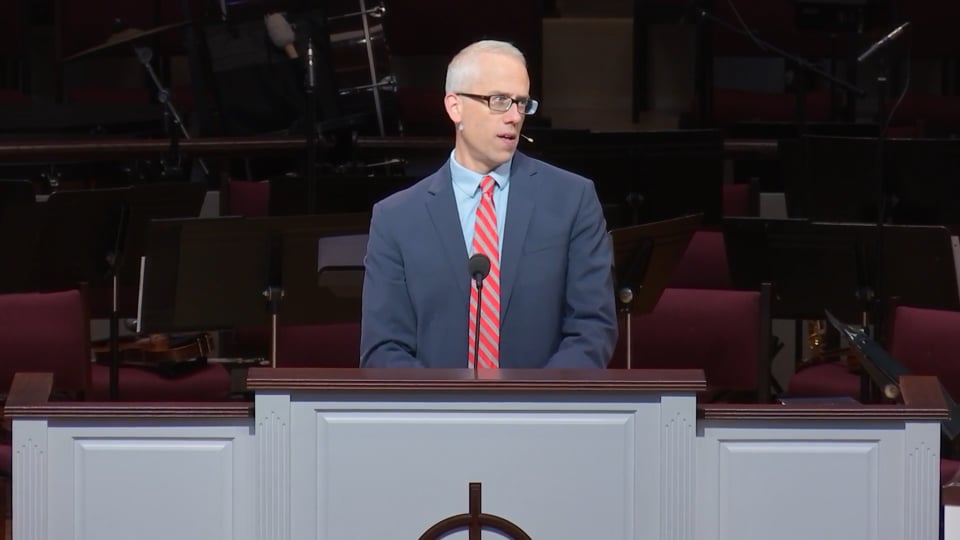
Psalm 128 is where we are if you're just coming in now. We are in a series of messages, or really, one message broken up into multiple weeks, which is how we generally approach things around here, which is why it's so awesome to come back, and then to come back again, and then to keep on coming back. And we're digging into Psalm 128, a passage of scripture we encouraged you to memorize. Did anybody memorize Psalm 128, anybody here? How about... OK, come on up here. Let's hear you say. Come on up here. You notice that? That hits different, doesn't it? You're like, yeah, I had memorized it. You're like, no, I don't know about that. Who memorized it and is willing to say it up here right here? Anybody? I know Kyle will. Yeah, but you were paid to memorize it. What are you talking about? Anybody not on the church staff or internship that's like, I've committed Psalm 128, don't make me start walking around. I'm going to, there's not one person who will say this scripture verse on the microphone today? Not one person? OK, there we go. That's my guy right here. What's your name. Mark. OK. My first time here, and you're going to make me do that. It's your first time here, and you already know Psalm 128? Yeah. All right, let's see it. All right, so... No, I get to hold the mic. OK. Blessed is the man that feareth the Lord and walketh in his ways. He shall eat the fruit of his hands and, I haven't done this for a while. And you shall be happy. And you shall be happy all the days of your life. Your wife should be like a fruitful vine. I like the mid-stream shout out right there, "by the fruitful vine by the size of your house and your children like olive plants". Well, that's another psalm. No, that's it. That's it. Is children like olive plants? That's what I'm preaching about today. Round about your table. Yeah. Wow. OK, and then it says something else. "The Lord bless you out of Zion. Oh, the Lord bless you out of Zion and children's children. May you see the good of Jerusalem all the days of your life". Yes, may you see your children's children's children. And peace be upon Israel. Come on, let's hear for Mark, everybody. Mark crushed it. Crushed it. So that's what we're talking about in these days. And in this specific message series, my assignment is to talk to you about preparing your children to spread their wings. I want to talk to you about preparing your children to spread their wings. It's been said that the only kind of exam you can't cram for is a dental exam, and there is some truth to that. Man, when you get to that, you can't like spend the, say, I stayed up all night drinking Red Bull and flossing the night before my... when you get a dental exam, you find out what you did or what you didn't do. And I think when your kids turn 18, when your kids grow up, when your kids get to that spot, you find out. It's like an acid test. It tells you what you did or didn't do. You can't stay up the night before your child's 18th birthday and cram a decade worth of daddy daughter dates, and intentional conversations, and weekends where you were in church together, and summer camps, and you can't do that. You get to that moment and you discover, did I or did I not do the things that I was called to do? And so what I want to do today in this time that we have before we take Communion and come to the Lord's table with our hearts as they are, not as we wish they were. So if any of this message touches regret, touches "I wish I had," touches "I'm not where I wish I would be, and there's divorce in my story," and all the myriad things that the enemy is going to try and rub your nose in, we're going to bring all that with us to the Cross. We're going to bring all that with us to the table. We're going to bring all that with us as we remind ourselves again that there's one perfect parent, and it's not you, and it's not me. Good news and bad news. Good news, your kids need a perfect parent. Actually, that's bad news. The bad news is, your kids need a perfect parent. I'm like, nailed that line at the 11:00. You just watch me. Kyle is going to be like, nailed it. When I do it at 11:00, you just watch that. And tell me, at the 9:00, you get the rough stuff, all right? The good news is, we have a perfect parent for every one of us, for our kids and for ourselves, and it's our Heavenly Father. And so we can all just relax a little bit and where we wish we were. We can start out with this agreement, that every one of us have room to grow when it comes to our parenting. God knows I do. I mean, geez, I was, ugh. This week, spending the time trying to prepare a message about this subject, it's just so many things that I think I want to grow, and I have a long way to go. And yet I'm thankful that Jennie and I, in these years, as we've been in this journey of parenting, 16 years, that we have learned so much, and we've gotten to see proof of concept on some things. And so I want to share with you what God's Word has to say, some things we've learned, and hopefully it's practical and helpful and that God uses it to bless you. Psalm 128 verse 3 says that your kids shall be like olive plants around your table. Mark crushed that line. I mean, he did think it was in a different Psalm, but he just crushed it eventually. And I want to talk to you about children like olive plants. Why is it that the psalmist, when describing the results of the blessings that come upon you, the aura of divine blessing, we have said that is just on the person who fears God and commits to walking his ways? And I want to come back and anchor our comments today on that opening line. Because if we just get down to, what are four things you can do today to be a better mom? And six ways to be an intentional father, there's probably some good in that. But then it puts it back on us. But what the psalmist knew, what Jesus knows, what you and I need to know is when we start with the foundation, when we start with doing what it takes to build a storm-proof life, we anchor our hearts on the fear of the Lord. And when we resolve out of that fear, out of that love of who He is, and that revelation of what he's done to live a life that pleases him, the outcome of that is we're going to see His blessing in our marriage. We're going to see His blessing work itself out in our children, and our grandchildren, and beyond. And so we're not making the goal, be a better parent. We're not making the goal, have a better marriage. We're making the goal, anchor our souls on Jesus. Commit to love Him and do whatever He's called us to do. And we're going to watch that stream of goodness and mercy follow us. So it's going to be an outcome and not the thing that we're fixated and focused The greatest thing you can do for your family is to have a strong and healthy marriage, and the greatest single thing that you and I can do for our marriages is to have a strong and healthy soul. So when we look out at the world and we see so much brokenness, we see so much pain, and we see tragedy, and we see things that we wish could be different, our response should be to not be overwhelmed by what we can't do but to do the things that we can do. I can have a strong soul. I can have a strong marriage. I can see that my family is well-watered, and I can believe that God will use that to do great things in the world. The Psalm ends with, peace be upon Israel when it started with, here's what I'm doing for my own soul. So that's where we've been organizing our thoughts again, and again, and again. And today, we want to ask the question, why would the psalmist describe children as olive plants? Now, of course, to some degree, you cannot help but envy a table with a beautiful vine growing that you can just pluck grapes off of whenever you want and trees that are producing olives all around it. I mean, the thought of a parenthood type of a backyard eating situation is what comes to my mind. I see Coach there. I see all the kids, the table, the lights, the trees. You have shade. It's a pleasant place to be. We have, in our backyard, these trees we planted years ago. And to watch them grow has been so beautiful. And now, years later, we're just starting to see proof of concept, just starting to see that pay off, that shade. And so that's what's on the mind. The picture is these children. They were olive trees planted, and now they're providing shade. Now, they're providing blessing. They're olive trees around the table. And I love the family home being organized around the table. I love this idea of the gathering around the table, wanting to be there at the table, food served at the table. It is, I've said before, one of my favorite pictures of what the church should be, a table, a place where the bread of life is served, a place where we're always making more room to extend. We had a party this week and my wife said, can you add the leaves to the table? We need to make more room for some more people. That should be the heart of the Church always. If you're new here, we always come around the end of the year, what does it look like to expand the vision? What does it look like to expand the reach? What are the other places that we can go wide? We want more leaves in the table. We want to put a few more plates out. We want a few more settings. We want there to be a few more people who have heard this beautiful message. The Church loses its effectiveness and power when it becomes inward-focused, when it just becomes about my blessing, and my needs, and what can I get out of it? As opposed to, I don't come to Church to get something. I am the Church. I'm here to do something. It's a whole different thing. And the best kind of discipleship is mission. Jesus taught His disciples on the go. Tell me the time in Jesus's life where he pulled them aside for a year and just did Bible college classes with them. It was always on the way to this, on the way to that. OK, now go try it and come back. How to go casting out those demons? How did it go doing that sermon? How did it go feeding those people? And they were just debriefing on the way, coming and going. The Psalms of Ascent were sung as they went to Jerusalem for yet another feast. That's how he taught them as they went to go teach, and heal, and reach. And the Church should be like that. I need to get focused and going because I got seven points, and I haven't even given you the first one, and we still got a ways to go. Seven things to write down we can learn from both raising kids and planting olive trees. And according to the Psalm, I think it begins with this. Think like a grandparent. Think like a grandparent. I love how towards the end this prayer is prophetically spoken with the idea of longevity of life, and it is, may you see your children's children. And that should be something we would long for and hope for, that we would literally live physically long enough to see our children's children. And if you're not taking care of yourself, and if you're not making good eating decisions, and if you're not working out and taking care of your body physically speaking, you're potentially not doing what is necessary to be a part of an active participant in that prophecy. Think about it. One in three children in this day and age have obesity. And it has tripled the rates of obesity since the 1970s. And we're just not eating well and able to sit around all the time and watch TVs and not drink water, these basic simple things. So we have to ask the hard questions. Are we doing what's needed to take care of ourselves so we can hold our grandchildren in our arms? We should want to. That should be a desire in your heart. But I think there's more to it than just a little, simple, cute, little blessing. I love the idea of walking my daughter down the altar, down the aisle towards the altar. I love the idea of her babies and his babies, they're coming, calling me G Daddy and hanging out with me, all that. I think, because I've already picked my grandpa name, and that's it. I also think there's something to it. May you see your children's children. How do you parent little olive plants? I think there's something to be gleaned from the subtle art of being a grandmother, the subtle art of being a grandfather. What if you and I, you know they say it skips a generation? What if we just went ahead and skipped a generation in how we approach the kids in our home? By the time you get to be a grandparent, here's the thing, I think, that makes being a grandparent so awesome. You're a little more relaxed. Especially new parents, so uptight, so white-knuckling everything, just straining so much, right? But that's how you get hemorrhoids. Just ease up. Ease up, right? I think it comes from a failure to realize and remember that your family began the day you said, I do. So if you think your family begins when Billy or Sally comes into the home or whatever you choose to name them, then they're now the center of this thing because they made it a family. So let me ask a question. Does it stop being a family when they leave, when they launch, when they go? No. So you are a family. You became a family, this thing began, this mission began, this calling began when you came together in marriage hopefully because you both feared God so much and wanted to walk in His ways that you thought, hey, let's just walk in His ways together. You doing anything later? I'm going to walk in His ways. You seem to want to walk in His ways. Let's walk in His ways and do it together, all right? That was Jennie and I, literally. For us, it was like, you seek God. You seek His kingdom, and that's what I want for my life. Why don't we do that at the same time? You doing, and that's how I literally asked her out, in that voice and everything. It's an amazing thing that she said yes. So when the kid comes into the life, we're not going to change anything. Why? Because this family is a boat in a river towards the glory of God. We're glad you're in it, but we're not pulling off the boat, now. We're not going to... sorry, I can't serve. Sorry, I can't serve. Now we have a family. Now we're building a family. No. We got married together serving God. We got married together wanting to build the Kingdom, and now there's a child in it. Guess what? Gues where we're going? Guess what we're up to? Guess the family that you're a part of? And so for us, it was always a given. We're going to continue serving. We're going to bring the children along the journey. We're going to bring, I got a great memory. Some of my best memories are Lenya in a car seat in the Strand, one of our early buildings we would meet in. And she's there. It's 2:00 in the morning. Every volunteer and person we could scrape together, and bribe, and coax is there because we had run out of money to build out the church. We were trying to do a building project literally in the heels of the '08 recession, and raising money was not going to happen. And we had run out of money, and contractors packed up and left. So we were literally shoe-stringing, and painting, and doing anything we could just to get the building open to believe for this, to believe for reaching people around the world, to believe for this sort of thing to happen. And Lenya is there in her car seat. We would put the Pack 'n Play into the scariest room where they used to make popcorn. And Olivia's in that Pack 'n Play. This just a fun journey in the adventure. And I'm telling you, I would rather raise my kids seeking God and serving God than doing anything else on this earth. And we bring them along the way. Why? Because we're already a family when we come to know the truth of what it means for two become one. And if we think like a grandparent, we're on that mission. We're on that journey. And now we're not attaching, I think here's the second thing that grandparents have that's so beautiful. Not only are they more relaxed, but they also know the difference between what's precious and what's not. As you get a little older, you start to realize, I'm not impressed by what I used to be impressed by. One of the things my counselor keeps telling me is, Levi, you need different metrics as you get older. When you're a young man, your metrics are, how big? How fast? How flashy? And as you get older, you have to have, just value different things than those same things, or it leads to despair. You have to start valuing unique metrics that are opened up to you in that new season of life. How many people can you release? How many people can you encourage? How can you build them up to do what they're called to do? That sort of a mentality shift takes place if you're doing it right. And I think the preciousness and non-preciousness, I sometimes as a young parent, you're wowed and impressed by maybe the wrong things. And when you get a little bit older, you look back on it, and you'll see things differently. So if you can parent seeing your children's children in your mind's eye, you can adjust and adapt your approach. I think, thirdly, when you're a grandparent, you also have this beautiful mentality that is free from attachment, by way of your ego, to how your children are doing. A grandparent's ego isn't connected as much to their grandchildren. When you're a parent, you can, at times, parent badly because your ego's attached to it, because you're seeing it as a reflection, how your child's doing as a reflection of the job that you're doing. And so you're trying to, like, be good, be good, be good. Do this. Put a nice face on your child because your ego is wrapped up in it. By the time you get to be a grandparent, you just love that little baby for who that baby is because your ego is not attached to it. You just love them for them. You're not so much bothered by how they reflect back on you. So what if we can parent our kids with that perspective, and wisdom, and superpower of being a grandparent? I think the world of olive trees, I watched a lot about raising olive trees this week. And one of the things they do is they take these bamboo stakes, and they stake the tree. And it gives the tree something to guide it, something to grow it. It's that vertical axis of fearing God. It's that stake into the ground. These bamboo sticks, but the gardeners I was listening to said, don't tie it to the stake too tight or you'll scar the tree. And it'll have permanent scars in its trunk because it was staked too tight. So I think grandparents have a looser touch. If we can approach our kids like a grandparent, we won't tie them so tight to the stake. There will be a little bit of sense of a relaxed perspective on it. Our ego's out of it. We're not in such a hurry. We're not so serious. We see time is this beautiful, precious gift. We love them for who they are. Second thing we can do as we raise our kids with a mentality towards them spreading their wings is to be patient. Can we be patient with our kids? Did you know that the average olive tree does not bear fruit until the age of four on the low end, seven on the high end? A lot of work, a lot of diligence you've got to do so it's not a wild olive tree which will never bear as much fruit. You have to be patient knowing that every year you're working, every year you're laboring, every year you're tending it, every year you're pruning, every year you're assessing the stake... is it too tight to it? All of those things knowing, I'm not even going to get any fruit for the first seven years. And get this, that a significant crop will not come from that tree till year 10 or year 15. What does that mean? You're in it for a long-term investment. You're not day trading. You're not judging on, am I get anything out of this right now? I mean, for this for those first 10 to 15 years, all that labor is really not having any big, significant payoff, and so it is in parenting. There's a lot of unseen. There's a lot of secret. There's a lot of, I don't know if this is working, but I'm continuing to do this. We have to be patient with our little olive trees that were raising and not be in such a rush. There will come a payoff if you just keep going. And I think you also, that needs to extend to yourself. Can you be patient with yourself as a parent, that you've never been here before, you've never done this? That terrible moment when the nurse loads you up and gets you out to the front of the hospital and you almost want to look to them like, what do I do next? And they turn on their heel and they walk away. And you got a 500-page-long book printed in seven languages to install the car seat but not a shred of documentation as to what to do with this little baby. You're like, what? There's no manual. What am I to do? And so we have to be patient with ourselves that we're growing. We're learning. But part of that patience is to take the tools that you have at your disposal. Of course, God's word does teach much about how to approach our kids. And just as we can talk about the way that being a part of a local church, an active part of a local church literally causes divorce rates to plummet by as low as 30%, by as much as 50% if you're an active part of a local church, not just coming, but engaging. It literally affects the divorce rate. But similarly speaking, it has positive effects on the family. That's true for both parents, but it is skewed heavily on the side of the father. In fact, one Swedish study showed, and you can look it up yourself, Swedish study on the effect of the father's attendance in church on their children, their successive generations going to church, showed that if a father does not go to church, no matter how faithful the wife is at showing up to church, only one child in 50 will become a regular worshipper down the road. If a father does go to church, though, regardless of what the mom does, between 2/3 and 3/4 of the children will become regular churchgoers. So yes, it's important, of course. And we're not saying there's... Heaven knows, we need you, mom. But what this world needs is strong men who fear God and who say, as for me and my house, we will serve the Lord. We will seek God. I fear God. I'm anchored in his ways. It's like the study on reading. How can we know whether our kids will become readers? The two determining factors is, do you read to them when they're young, and do they see you reading? Because as we know, kids do hear what we say, but they end up doing what we do. And so we must be patient, but we must also have a mind to grow. Thirdly, we need to practice humility. Practice humility. When we're humble, we have the spirit that says, I don't know what I'm doing. And I actively tell my kids all the time, I have no idea what I'm doing, just FYI. Let's get that elephant out of the room right now, or in the room, that's in the room. Let's call it out. Let's get that cat out of the bag. I'm mixing all my metaphors today. I sat my daughter Olivia down who's... by the way, her name means olive branch or olive tree, and I said, honey, I know I've got a lot of room to improve. There are a lot of things that your mom and I do that we know they're wrong, you know they're wrong, and we hopefully call each other out on those things. But is there anything that we've done right that I might not realize? And I just want to just write it down in case, and specifically, I said, is there anything that we have done and do as parents that you already in your mind know you want to put into place with your children, my grandchildren, one day? And she said, and I wrote them down. And this is it was a humble thing for me to ask her, but I was learning from her. I think that's powerful. She said that she loves that in how we've raised her and her siblings that you never have to earn trust, but you can earn distrust. And if we start out with the assumption that trust is given, distrust is earned. We give you trust, the benefit of the doubt as the beginning place. You have to earn distrust, not the opposite way around. She said that she likes it. There's not a pressure to perform, specifically scholastically, just to do her best. She said she has loved that we always pointed her to Jesus, but she's never had it stuffed down her throat as something that she has to choose to do or in any way connected to me being a pastor, that that's somehow, now, something that's on her, that she has to choose. She said she loves time together. And she said, and I love this. She said, "I haven't always, but I love that we do so much stuff together on family day". And here she is 16, now. There was plenty of times when she rolled her eyes, plenty of time she didn't want the waffles, plenty of time she didn't want to do the thing. But she looks back on it now fondly. And then she said, I love, also, that whenever you and mom fight, which happens every week or so, day or so, she said, I love that you apologize to us, too, and not just to each other. That if we've seen, and know that you always will come to us and call yourselves out on it. And then she said, and here's, lastly, she said, I love that you've admitted to us that everything you're doing as a parent is all based on a theory and a hunch at the moment. And we're adapting, and adjusting, and learning, and tweaking, and oftentimes learning from our mistakes. But it really is all theories, like how we're doing as parents in the moment. And we have to choose to be humble. And in being humble, we will be servants. And in being servants, we will be giving our little olive trees what they need. For one of the things I found in everything I read on olive trees is that olive trees hate having wet feet. Olive trees hate having we feet. So drainage is important when planning an olive tree. That's why river rocks are often used. Whatever the case is, you have to make sure that the water that you give them doesn't stay there at their feet. It has to go away. And that's why olive trees thrive in such inhospitable places. Mark Twain said, the olive tree and the cactus, I think we have the quote on the screen. These two plants, in particular, are fast friends of a worthless soil. They do well in dark places. They do well in hard places, and that's because, oftentimes, in the desert, in the hard places they live in, any water they get is immediately taken away. They hate having wet feet. And I got to thinking when I was reading that about how Jesus, we're told in John's Gospel, rose from supper, laid aside his garments, John 13:4 says, took a towel and girded himself. He poured water into a basin and began to wash the disciples' feet, and then he wiped them with a towel with which he was girded. I love this picture of Jesus, the ultimate tender of the olive plants, drying the feet of his little olive plants around the table. And with humility, with service, when we take care of our olive plants in that way, we admit and acknowledge when we've blown it. Tell your kids you blew it. Tell your kids you lost your temper. Call yourself out on the things you're hopefully pointing them to and that you see in them that you're struggling with yourselves. Point them to our perfect Father who is good to us even when we're not. Be patient. Think like a grandparent. Practice humility. Here's number four. Approach each child carefully, individually, and creatively. Creatively. There is one image your child was meant to be created in, and it's not yours. Let us make man in our image, God said. Your child is not meant to be the spitting image of you but the spitting image of your Creator. And just as there are over 500 different varieties of olive trees in the world, that's an astounding number. There are a billion olive trees, but there are 500 different kinds. And different olive trees are grown for different purposes. Some, believe it or not, are grown just for the wood. Some are grown for oil but to be used in machinery. Some are grown for the oil but to be consumed. Some are grown, as you know, for the delicious fruit that is to be eaten, the olive that eat, that we think of. Kalamata olives, we love it in a salad. We love eating them with hummus and with some pita bread. There's lots of different kind of olive trees, is the point. And they all bring glory to God as they all reflect a different image of who He is. So we are, then, to approach each child. There's no baking cookies formula. Anybody who tells you there is trying to sell you something. We have to look at each child and ask ourselves the question, what did God put in that I can coax out? Wow. So good. Therefore, listen to me very carefully. Your child is to be unfolded, not molded. God folded something in. And you're unfolding what he put in, not molding that child in your image, to walk into your steps, to fulfill your dreams that you had probably for your life that you didn't see come about, and so now you're ramming on them. But where to ask the question, God, what did you put in that I can coax out? And I need to take care of this tree individually to give it what it needs to get to where God wanted it to go. Those are the footsteps we want them to walk in in the feet of Jesus. And how do we tailor our approach to them? We prune based on fruitfulness. Olive trees are unique to most fruit trees because you don't ever prune them in winter. You prune them in summer just after they've given off their fruit. That way, you know where to prune based on the fruit that's been produced. Otherwise, if you prune in winter, you're going to probably prune off buds that are meant to produce next year because it is the olive wood that actually leads to that next crop. And so we should be asking the question, where is their fruit and I can prune to get to more of that? Parenting towards the bright spots is what that means. Like Chip and Dan Heath say in their book, they talk about, your kid brings a report card home. It's got four D's, a C, and a B. Most of us would spend the talk we have about the report card on the D's. How do we get those D's up? What's going wrong? What's the matter with you? I pay for this, blah, blah, blah. There's all this nonsense. We should be going, there's a B! Oh, my goodness. Look at that B! What are you doing right? What is it about that B? You've proven, there's a proof of concept. So that's fruit. So we're pruning towards the fruit that has been created. Because obviously, there's something that they are doing right, and we're trying to figure that out and unfold and not mold. And then number five, we never underestimate the importance of what we're doing. Never, as parents, are you to underestimate the importance and the power, the solemnity and the privilege, the honor and the regality of what we're a part of when we're parenting. Why? Because this text says, if we want to get to peace upon Israel, which is the whole country, the whole country, it's going to start in the home. It's going to start in the soul, the marriage, the children. So as I take care of my kids, I can believe I'm doing something that can and will lead to peace to be upon Israel. And simply by being there in the home, father, simply by being present in the home, mom, being there for those conversations, being there for those moments, being there to teach, to love, to cry with, we can believe we're a part of something that will be doing work on this earth long after we're gone. Do you know the oldest tree on this entire planet is an olive tree? Its nickname is The Big One. I have a photo of it I brought for you. This is a picture of The Big One. It's believed to be, this is a Smithsonian magazine, by the way. The oldest olive tree on the earth, do you know where it is? It's in Bethlehem. Think about it: 4,000 to 5,000 years old. That means that Abraham, this tree was there. David, King David, when he's writing Psalm 23, that frickin' tree heard. I'm impressed. That means that Jesus Christ himself, who was born in Bethlehem, this tree saw. Maybe the Wise Men passed it. Maybe Jesus ate fruit from it. The three that takes 10 to 15 years to get its first real crop, the tree that takes four to seven years to bear any fruit at all, it can last, it does last for centuries. The trees that are in the Garden of Gethsemane today where Jesus prayed, the olive trees that are there today, are basically babies, only 900 years old. These things, they last for centuries. And that's what we can believe for generational change, generational impact. God is faithful to keep his covenant to thousand generations. We can truly believe, just as he is the God of Abraham, and Isaac, and Jacob, that as we parent like a grandparent, as we love our little olive plants, we can believe we are unleashing something. As we point our kids to Jesus and our grandkids to Jesus, there will be a Godly, righteous legacy unleashed that can overcome and overturn generational sins and patterns of habitual blindness. And God can and will use your small, unseen act of faithfulness today, mom, dad, to do something that even 1,000 years from now will be pointed back to and in Heaven will be celebrated for all eternity. So don't you dare underestimate the importance of what you're doing as you continue to show up in your home. How are we to talk about parenting? We're to talk about it like it the blessing that it is. Oh, I know it's hard. I know it's heavy. I know it's a lot. I know. I know tripping on LEGOs you want to cuss, right? I get it. I get it. I'm in it. I understand. There are these stupid green Orbeez all around my house. There are so many things about parenting that are heavy. But that's how we remind ourselves that it's a blessing. All blessings weigh a lot. Whenever parenting feels heavy, remind yourself, of course it does. Because blessings are always heavy, and God's given me something weighty. Kids are a blessing from God, a reward from him. They're not just olive plants. They're also offensive weapons, arrows in the hands of a warrior. Your children are to be launched out to bring God glory and to expand his kingdom as they shine as great lights in this dark world. Amen. Yeah. All right, that's my message. I hope you liked it. The final point, though, is where we're going to end and land this plane. And we're going to remind ourselves to not attempt to in our own strength. How do we remember, what should we know is we raise our kids? To never attempt to in our own strength. That's actually number five... or actually number six. Do you have notes, Jane? Where am I at? Is that six? OK, excellent. That's not my message. It's not over is what I mean. When I said that's my message, I was, I mean, it's part of my message, but it's not all my message. Don't attempt to in your own strength. There's this beautiful story in Zechariah 4 involving two olive trees. And it's told as a way of getting across this point. Jot this down, Zachariah 4:6. This is the word of the Lord, parents. Not by might, not by power, but by my spirit, says the Lord Almighty. That whole story talks about a perpetual olive oil machine meant to remind Zerubbable, who was trying to do something that felt impossible, that it was God's strength and not his. It was two steps to the left from human achievement, getting over to the grace lane into what God can do as you trust in his Holy Spirit. Olives are always a picture of the Spirit. When the oil is produced, that is something that speaks of blessing refreshment, but ultimately, God's power and anointing on your life. And if he's called you to it, he is faithful to see you through it. So you can trust in his power today. All right, lastly, the real end, the actual close, begin with the end in mind. If you brought your child home from the hospital yesterday, if you brought your... and you're watching probably online in that postpartum life. It's real. You, from the very beginning, want to have the end in mind. Now, of course, I do mean the end of releasing them into their calling, releasing them into what God has for them. Think about it. When you hold your baby in your arms, you are 936 weeks away from their high school graduation. It sounds like a lot, but it's not, is it? 936 weeks. I know it sounds like this huge thing. 936 weeks is all the Saturdays you're going to get. That's all. That's all of them. 936 weeks is this journey. So you want to begin parenting with that end in mind. What do you want it to be like as they get to that moment? And to do that carefully, don't get overwhelmed by the immensity of the journey. Break it down by remembering the stages. Break it down by remembering the stages. Sandra Stanley, my friend Andy Stanley's wife, she says there are four stages to parenting. The first stage is discipline. Obviously, discipleship is part of that. The second stage is training. The third stage is coaching. And then, hopefully, the fourth stage that lasts forever is friendship. And a lot of mistakes are made when you try and bring friendship up too soon and be buddies when you need to be a coach and your kid needs more of a parent than they need a friend in that phase. But it also is a mistake when you skip the first stage and try and bring that in later and they're undisciplined because you didn't take that phase to actually discipline them. But I love this, because it takes those 936 weeks and it breaks it down into chunks to know what phase you're in. And I really think this is how God wants us to think about parenting because of something in the Bible called the rule of first mentions. And some of you might know that the first time a word is ever used in the Bible is significant because it tips God's hand as to how he wants us to think about and have our informed thoughts on that word. Most of them are in the book of Genesis. The first mention of the word worship, the first mention of the word love, the first mention of the word covenant, the first mention of the word grace, and so many of these things point back to things that took place in the life of Abraham or things that were in connection to Adam and Eve. But one of my favorites I discovered this week, I didn't know it. They didn't teach it to me in Bible college, was the first mention of the word olive is when Noah and his family at the end of the flood are trying to figure out, because they're done. They're parked. The boat's done. It's not moving. It's on Mount Ararat. And they're trying to figure, Noah is trying to figure, is it safe to send my kids out into this world yet to start their new lives? First, he sends out a bird called a raven, and it just flies around. It doesn't find anywhere to land. And he does that because ravens are basically the garbage disposal of the sky. Apparently, they'll eat anything. So if there's anything edible, if it's safe to live out there, they'll find it first. But that thing just flies around. And then he sends out a dove. And the dove flies around for a while then comes back. And then he sends another dove out a week later, and that dove comes back with an olive branch in its mouth. Meaning, the trees are starting to show up. And then he waits another week and he sends it out, and it doesn't come back at all. Why? Because it's found a home. It's now spread its wings. How interesting that in Psalm 128, kids are like olive plants when the very first mention of the olive is thinking about in stages and increments... is it safe to send out? Are they ready to go out? Is it is it now time to go out? From the very beginning of parenting, we should be thinking about that moment when they have all discretion, all options, no guardrails, no training wheels. And if we're not preparing them for that by allowing them the grit to make some decisions, and a little bit more, and incrementally more, OK, now you're out, and it's back. Now, you're out, and it's olive branch. Now, you're out, and it's this. We really do have to feather the clutch. Can't be too much. Can't be too little, or they will not be ready. But it's not just the end of high school, the end of the college years that we should be thinking of. We should be, our entire lives, those 936 weeks of parents, be thinking about the end of their life. Is your child... have you prepared them? Are they ready to stand before God? Getting into college is awesome. Getting into Heaven is better. And what have you done? How have you shouldered up to the task of getting your child ready to stand before God, and to know the Gospel, and to know grace, and understand you can't get into Heaven based on what you did but based on what Jesus did? Nothing will give you greater peace of mind, nothing will cause you to be able to say, laying your head on your pillow, I finished the work God called me to do, and I prioritized the winning of my soul to Jesus Christ, to know him and to know that whatever I do, if my kid gets into the NFL, if my kid goes off to dance and sing on Broadway, great. If you end up in an Ivy League school, fantastic. Praise God for you. I hope you excel in everything he has for you, little olive plant. But more than anything else, I want you to know Jesus and be found in him so we together have forever. What have we done if we haven't focused on that? Jesus prayed in a garden surrounded by olive trees before he went to the Cross, and I think it's fitting for us to launch into this time resetting, recalibrating, retruing our hearts, our families, our homes, and our forever by coming again to the Cross. This picture of prayer, this picture of the bread, and the table, and the cup, it's a chance for us all to do what's needed on each moment of crossroads, each moment of transition, each moment of a new season. And Father, we do sense you calling us to something different, to abandon, maybe, old plans, to confess, God, patterns that have shown up again and again, ways that we haven't even realized we ended up becoming our parent or our grandparent even though we set out not wanting to. We thank you for being our perfect parent. And we believe for our sons' daughters, and our sons', and our sons' sons, and our daughters' daughters to do great things for you through us building that altar in our home, planning our family in the house of God, prioritizing being in his presence. Thank you for what you're going to do, which is keep your covenant, keep your word, do what you said you would do. As we fear you and walk in your ways, believe for your blessing, and with prayers in our heart, we stand on the promises of peace being unleashed to infinity and beyond. If you're here today and there's something in your heart, something in your spirit that you just need to give to God, maybe it's a vow, maybe it's an I'm sorry, maybe it's an I love you. Maybe you're single and you say, I'm not even married yet, but I already know that's what I want. I want that picture. I want to be a part of that. Could I just ask whatever your hand means to you, that in this moment, church online, every location, you just raise up a hand to God if he's touching some part of your story today, some part of your heart today. Thank you, Jesus. Thank you, Jesus. Thank you, Jesus. With your hands still raised: Father, I pray your blessing upon these who are committing to walking your ways, who are saying, I want little olive plants. I want a fruitful vine. I want a table in my story, a place of laughter, a place of gathering, a place of meals. I want to walk with Jesus and point my children to you. I'm believing for some, there's the heartache of maybe kids that won't even answer phone calls, relationship that's not there. Some of those things weren't done, so now it's hard to experience that friendship phase that could be there because there was an absence, an anger, and an icy silence back then. So we believe you today to restore, God, what locusts have eaten. We believe today as we confess our sins, you are faithful and just to forgive us and cleanse us well in righteousness. Bless these as they raise their hearts up to. You can put your hands down. I want to now give a moment for anybody who's not yet said yes to Jesus to make that all-important decision of giving your life to Christ. You know, you'll never be right with your son, or daughter, or wife, or husband until you're right with God. The best thing you can do for the world is to get right with God in your own soul. We talk about our kids being in Heaven. Let me ask you this question. Will you be in Heaven? Jesus said to a group of religious people one day that there are many who will not be in Heaven who thought they would and they will argue all the way to Hell about what they did for God and how they were good people and religious people and kept the Ten Commandments. He said, but I'm going to tell them on that day, I never knew you. Ultimately, we're not talking about religion. We're talking about a relationship. And if you would like to have a relationship with Jesus, he wants that. So what do you do? You tell him you want that. So right now, I'm going to give you space to do that. This could be your day of salvation. This could be your moment of a new beginning with God. Everything could change right here, right now. I'm going to pray a prayer. And if you're ready, say it out loud with me. Mean it in your heart. Church family, say it with us. We're making some more room at the table: Dear God, I know I'm a sinner. I'm lost. I'm empty. Please forgive me. Come into my heart. Thank you for your love. I turn for my sins. I turn to you. Just like the Resurrection of Jesus from the dead, thank you for new life in my heart. Preparing your kids to spread their wings requires patience, humility, creativity, uniqueness, and parenting with the end in mind. Discover 7 tips that will grow you as a parent while you lean on the only perfect parent — your Heavenly Father. Psalm 128
- Humility: Your Rule of Life
Rule of Life: Humility July 10, 2022 Dr. Mark Batterson “’MY THOUGHTS are not YOUR THOUGHTS, neither are my WAYS your ways,’ declares the Lord. ‘As the HEAVENS are HIGHER than the EARTH, so are my WAYS higher than your ways and my THOUGHTS than your thoughts,’ says the Lord.” - Isaiah 55:8-9 Your BEST THOUGHT on your BEST DAY is 93 billion light-years short of HOW GREAT and HOW GOOD God is. “The Spirit that DWELLS IN US jealously regards us as His own.” James 4:5 Theory of Everything—the answer to every prayer is MORE of the holy spirit “If we think of the Holy Spirit as merely a power or influence, our constant thought will be, how can I get more of the Holy Spirit. If we think of Him in the biblical way as a DIVINE PERSON, our thought will rather be, how can the Holy Spirit have more of me?” —R.A. Torrey . God GOES where He is WANTED. Revival is God’s response to HUNGER The opposite of IDOLATRY is humility . “God OPPOSES the PROUD, but GIVES GRACE to the HUMBLE. SUBMIT yourselves, then to God. RESIST the devil, and he will flee from you. DRAW NEAR to God, and He will draw near to God. HUMBLE YOURSELVES before the Lord, and he will lift you up.” -James 4:6-7, 10 To think of yourself as anything less than WHO YOU ARE in Christ is FALSE humility HUMILITY is HOLY CURIOSITY . HUMILITY is filling the gaps with positive assumptions. Humility is CHECKING YOUR EGO AT THE DOOR. Humility is RELINQUISHING YOUR RIGHTS Humility is GOING THE EXTRA MILE. . Humility is giving the SEAT OF HONOR to others. HUMILITY is WASHING FEET . “Jesus knew that the Father had given him AUTHORITY over EVERYTHING and that He had come FROM GOD and would return TO GOD. So he got up from the meal, and he did the last thing the disciples would have ever imagined, he took off his outer clothing, wrapped a towel around his waist, and poured water into a basin. Then he began to wash the disciples’ feet, drying them with the towel he had around him.” -John 13:3-4 Make your personal notes here: QUESTION: Are you washing your hands? Or are you washing others feet? “Worship is the STRATEGY whereby we INTERRUPT PREOCCUPATION with ourselves.” our —Eugene Peterson “Then the WORD OF THE LORD came to him: “You will have a son of your own who will be your heir. Then the Lord TOOK HIM OUTSIDE and said, “LOOK UP into the sky and COUNT THE STARS if you can. So shall your offspring be. Abram BELIEVED GOD, and it was CREDITED to him as righteousness.” Genesis 15:4-6 Make your personal notes here: LOVE is our CALLING FAITH is our CREDIT CARD. CARD. “Day and night they never stop saying: ‘Holy, Holy, Holy is the Lord God Almighty, who was, and is, and is to come. ‘They lay their crowns before the throne and say, ‘You are worthy, our Lord and God, to receive glory and honor and power, for your created all things, for thy pleasure they are and were created.’ Then I heard every creature IN HEAVEN and ON EARTH and UNDER THE EARTH and IN THE SEA. They sang: ‘To Him who sits on the throne and to the Lamb be blessing and honor and glory and power, for ever and ever!’” -Revelation 4:8, 10-11 “WORSHIP is transcendent wonder.” —Thomas Carlyle HUMILITY always ends with HOLY, HOLY, HOLY Humility is not thinking less of yourself or having low self-esteem, it is thinking of yourself less, by thinking of others and God more. As the Spirit of God dwells in us, and we focus on His glory, His ways, and His thoughts, humility blossoms. As we take time to worship God, we turn the tables on idolatry and embrace a Christ-like humility. This turning of attention gives us the capacity and motivation to follow Jesus’ example of washing the feet of others.
- Dark Room: Joseph in Prison
Welcome to the Darkroom - Genesis 39:20-23 - Skip Heitzig [MUSIC PLAYING] Welcome to Calvary Church, with Skip Heitzig. We're so glad you've joined us for Darkroom. In this teaching series, Pastor Skip shows how God often develops his children through hardship, the dark times in life. Here's Pastor Skip. Would you turn in your Bibles this morning to the Book of Genesis, the first book in the Bible, Genesis chapter 39. We're beginning a new series called Darkroom And this is a message I'm calling Welcome to the Darkroom. Today, most photographs how in the world are taken on this, a little pocket device, your phone. This is all relatively new. For that matter, photography is relatively new. Americans take most photographs. If you were to look at it country by country, people group by people group, Americans take more photographs on their phone than any other people, for some reason. The average American takes 20 pictures per day on this, 20.2-- to be exact-- photographs on their phone. Every two minutes, every two minutes, we take more pictures then all of humanity took in the 1800s, in the entire century. We do that every two minutes. And we do it with a phone, principally. But this is a camera. This is a real camera. These are real cameras. These are cameras that I've had for years I've traveled the world with and photographed with. And they use something-- and you have to explain this to newer generations. They use something called film. [LAUGHTER] And this is a roll of film for this particular camera. And then I also have a contact sheet and negatives all developed in a darkroom that I used to have. I spent years in a darkroom. You're saying, you spent years in dark rooms? That explains a lot. [LAUGHTER] But I did. I had a darkroom when I was a little kid. I had access to one. My brother had one. My first apartment, I built a little darkroom. In my parents' house before that, there was the darkroom. And just about every place since that I've been, I've had access to film photography and darkroom. So the way film works is that you load it into the camera. It is basically made out of emulsion. And on the emulsion-- in this particular instance, on the emulsion is a little substance of silver halide crystals. And silver halide is sensitive to light. So when you organize the light through a lens, and the shutter opens and closes, and the light comes in and strikes the emulsion, the silver halide on that emulsion gets what they call "excited." And it actually burns an image that you cannot see into the film. It's called a latent image. Then when you put this emulsion-filled film into a bath of chemicals, a developer, it takes the silver halide and transforms it into metallic silver so that the areas of the emulsion that are most exposed by light turn black, because the chemicals clumped together. And the parts that were least exposed are clear or white. So it's an exact negative. So when you take a photograph on this kind of film, you have a negative. You take the negative into a darkroom, put it in a device called an enlarger, and you expose it on a piece of paper. And that becomes a positive. So that which is positive comes from that, which is negative. And so we're going through a series, Darkroom, how the negatives in your life, how God turns them into positives. Now, in the old days, when you had these hefty things called cameras, you would wind it up, you'd take the picture, and you didn't know what it looked like. Because you didn't have a screen on the back where you could, like, oh, I like that, OK good, or, I'll take another one. So you had to take the picture-- [CLICK] --and then you had to wait four days or weeks, right? You'd send the film in. You'd drop the film off, you'd send it in, you'd pick it up, and then you'd see if it was good or not. Well, if you're a wedding photographer, you're doing this for, like, two weeks or you're, like, I hope, man, because that's my job on the line. You got to make sure that those pictures are good. So you took the picture. You didn't see it, but you had to trust the chemistry. You had to trust the darkroom. You trusted the process that the professionals went through in the darkroom to produce that picture. But in fact, many photographers saw the darkroom as the place where art was created, not the camera as much, not the film as much. But once it gets in the darkroom, that's where the art begins. Somebody who was very famous for doing that is a photographer I'm guessing some of you have heard of called Ansel Adams. Ever hear of Ansel Adams? Took a lot of black and white pictures. Ansel Adams was a master at going into the darkroom, manipulating chemistry, manipulating ISO ratings-- or ASA ratings they were called in those days-- manipulating exposure times, dodging and burning the photograph-- having some parts more exposed and less exposed. He came up with what was called the zone system, where the photographs he produced had this incredible dynamic range of perfect exposure, from the darkest part of the picture to the lightest part of the picture. So the next time you look at an Ansel Adams photograph and you go, man, that's stunning, remember, it's because of what he did in the dark. The mastery was done in the dark. In fact, this photograph of Ansel Adams, the grand Teton Mountains. Isn't that beautiful? It doesn't even do it justice looking at it on this screen, with the Snake River. This photograph, the original photograph, just sold at auction in 2020 for $988,000, a black and white picture for almost $1 million. Why? Because this is the work of a master who manipulated scenes in the dark. I think where I'm heading with this. You've been in the darkroom. You've been in God's darkroom. You have experiences in your life that are dark, unexplainable to you. You don't know why you went through them, very, very painful, hard times of affliction. Well, you're in the right place. You're in good company, because the Bible itself is a darkroom. In fact, one of the great themes of the scripture is the theme of suffering. In almost every book of the Bible, suffering is one of the principal themes. And you should know that the Bible never skirts the issue of pain, and suffering, and dark times. It meets it head-on. It deals with it head-on. So when you turn to the Book of Genesis, it begins by an account of how evil and death came into the world. When you read the next book, the Book of Exodus, it's a story of the 40 years of wilderness wandering of the children of Israel. It was a darkroom for them. They were being developed by God. The Books of Job and Ecclesiastes are books almost wholly dedicated to the theme of pain, and suffering, and dark times. That's the theme. The Book of Psalms, filled with prayers and songs of worship that are birthed in seasons of pain. In fact, Psalms even asked the question to God, why, God, why, God, why? Why do you allow this darkness in my life? You get to the prophets, like Jeremiah, written during a time of captivity. Another book by Jeremiah, the Book of Lamentations, how's that for dark? Lamentations, where he's spouting off in the darkest time of Israel's history of the captivity, as the city is being burned by fire and falling to the Babylonians. You get to the little prophetic Book of Habakkuk, and you have a prophet complaining to God about the evil in the world and the suffering around him. Suffering has run amok. And God comes to him and says, you ain't seen nothing yet. It's going to get much worse. Then you get to the New Testament, and you have the Book of Hebrews and the Book of First Peter that were written principally to help believers, who were struggling in dark times. Then you have, of course, the Book of Revelation, which predicts the darkest time in history yet to come, when, literally, the world will be darkened. The sun will grow dark. The stars will fall from the sky. And then towering above all of that is the hero of the Bible himself, the Lord Jesus Christ, called a man of sorrows and acquainted with grief. So we approach the dark room of the scripture. And today, we look at a man who was developed in the dark, Joseph, in Genesis chapter 39. Now, here's what I think is good for you to keep in mind about Joseph. There is more written about Joseph than written about Abraham, Isaac, and Jacob put together. There is more written about Joseph than the, what we call, chapters of origin in the Book of Genesis. More written about Joseph than the creation, more written about Joseph than the fall of man, more written about Joseph than the flood, more written about Joseph than the Tower of Babel. Than all of those events put together, there is more written about this one man, named Joseph. Chapters 37 all the way to chapter 50 are about Joseph. We begin in chapter 39, and we're going to begin around verse 19. And what I want to show you in Joseph's life is four certainties about dark times in the life of a believer. And here's the first certainty. This is something you can rest assured. Dark times are permitted by God. That's pretty basic, right? God allows that. Most of us know that by now. Dark times are permitted by God. We begin where Joseph is serving a prison sentence in verse 19. "And so it was, when his master--" his master was a man by the name of Potiphar-- "heard the words which his wife had spoken to him, saying, 'your servant did to me after this manner,' that his anger was aroused. His wife lied about Joseph, said to her husband that Joseph made a pass at her. He did not. He was pure. She lied. She made it up. But it says, "Joseph's master took him and put him into the prison, a place where the king's prisoners were confined. And he was there in prison." Now, here's what you need to know. God let this happen. God let this happen. In fact, the overriding theme of all these chapters about Joseph is that God is superintending the dark times of this man named Joseph and developing a character out of him that is second to none. God is permitting the difficulties. In fact, Joseph's entire life has been hard, ever since he was a kid. He had a dad. His dad was named Jacob. As you know, Jacob was, I would call, a passive father, a very preoccupied dad. And so Joseph grew up in an environment of relational tension. I think it's safe to say that. His dad, Jacob, and his uncle, Esau, had a falling out over a birthright, so much so that Esau said, next time I see Jacob, I'm going to kill him. Joseph was raised in that family. Also, Joseph's dad, Jacob, and Jacob's father-in-law, Laban, had a falling out over flocks, and herds, and property. Then Joseph's mother, Rachel, died when Joseph was quite young, giving birth to his younger brother. If that's not bad enough, his oldest brother, Reuben, had an incestuous relationship with one of his father's wives, by the name of Bilhah. Then Joseph's sister, Dinah, was abducted and raped near the town of Shechem. And in response to that, Joseph's two older brothers went and committed genocide, killing all the males in that town. Now, that's a dysfunctional family, wouldn't you say? It's safe to say that. That's just the early years of Joseph's life. That's just the early years. After that, his brothers hated him, the Bible says. Now, I had three older brothers. We didn't get along all the time, but his brothers hated him. And they hated him so much they human-trafficked him, sold him to midianites, who brought him down to Egypt and took him to Potiphar's house, who became a slave to Potiphar. And his wife makes a pass at him. That's why he is in prison. So I'm going to sum it up by saying this. Joseph did everything right, but everything wrong happened to him. Joseph did everything right, but everything wrong happened to him. Now, there's lots of reasons why suffering exists in the world. Most of the time, suffering is just the result of consequences of the fall. We live in a fallen world. Sometimes, however, we suffer as a direct consequence to our sin. So if a person gets drunk and goes out into traffic, wandering around, he might get hit by a car and suffer years of pain because of that. He is suffering the consequence of sinful behavior. But sometimes we suffer as a direct judgment from God. The Old Testament shows how God promised the children of Israel they would go into captivity if they continue a certain path. They continued in that path. God brought them judgment. Sometimes suffering as the result of persecution. You love God. You shine the light of Christ. You're positive about all of it, but the world doesn't like that, and you get persecuted. Sometimes we suffer as a direct attack from Satan, like Job did in the first two chapters of that book. So there's a variety of reasons why we can suffer. I just want to say, it's not important that you figure out the source. We kind of get hung up on that. Is this from me, or is this from God, or is this from the devil? Who cares? It's happening to you. More important than trying to figure out why you suffer, you need to figure out how you're going to suffer. How you suffer is far more important than why you are suffering. Look, suffering is a fact of life, all of life, every life, your life included. Job said, "man is born to trouble surely as the sparks fly upward." You can bank on it. It's going to happen. Jesus said to the 12, "in the world, you shall have tribulation," not, you might have tribulation, boys. It might happen. He said, you're going to have it, guaranteed. In the Book of James, he writes, "count it all joy my brothers, when you fall into various trials." Not if you fall, when you fall. So many of the songs of our life are sung in the minor key while in the dark. That is a fact of life, even God's people. Jesus said that God causes the sun to fall on the just and the unjust, and the rain to fall on the just and the unjust, the godly and the ungodly. That's why it's wrong to come up with this false theology that says, godly people don't suffer like ungodly people. That's true in an eternal sense. That is true. But in a temporal sense, we go through pain, and cancer, and broken bones, like everybody else. Sun and rain falls on the just and the unjust. The idea that if I just had enough faith, I wouldn't have to suffer, is nonsense. In fact, I don't trust people who don't suffer. I don't even like them. [LAUGHTER] Charles Hadden Spurgeon said, "I believe the hardest-hearted, most unlovely Christians in all the world are those who never had much trouble. And those who are the most sympathizing, loving, and Christ-like are those that have had the most afflictions. The worst thing that can happen to any of us is to have our path made too smooth." Dark times are permitted by God. That's first. The second certainty is that dark times enhance the presence of God. Dark times enhanced the presence of God. I know that if I were to give you an open mic right now and say, just shout out of experiences where you have experienced the presence of God, so many of you would say, in the darkest moment of my life, God showed up. You would have that testimony. Look at verse 21. It says, "but the Lord was with Joseph and showed him mercy, and He gave him favor in the sight of the keeper of the prison." So Joseph is put in prison, but the Lord was with Joseph, the presence of God. I know it's true that when suffering happens to some people, they walk away from God. That happens a lot. I hear that a lot. Yeah, you know, I trusted God. I put my faith in him, and he let this happen to me. So I just I quit going to church, man. I quit read my Bible. I'm not praying. I'm not trusting God. If I trust God and that happens to me-- I know people who walk away when suffering happens. But I also know that it's true that many find God when they start suffering. That is often what I find. I find that suffering doesn't move them away from God. Many times, suffering moves them right toward God. It's the time they get woken up out of their lethargy, out of their sleep God gets their attention. So you might say pain moves people in different directions, toward God or away from God. I've often said, pain and suffering will either break your back or bend your knee. I guess you need to choose today what you're going to let that be. Is it going to break your back, or is it going to bend your knee? Sometimes people suffer and they get bitter. I find that. They turn inward. They get angry. They're resentful. They're filled with self-pity. Other people go through suffering, and they don't get really bitter. I just say they get battered. They just get beat up. They hold on. It's sort of like a white knuckle it, they grit their teeth. They weather the storm. They make it through, barely. So some get bitter, some get battered, but then there are others who actually get better. They become better people. And that's not just a preacher's talking point. It's absolutely true. They become better people. I'm going to put up a letter that I got recently from Jenn. And she said, "I grew up in Calvary and your teachings. When I was 16, I gave my life to the Lord. However, when I turned 18 years old, I rebelled." Now, I find this to be a pretty regular pattern. "For the majority of my adult life, I lived how I wanted. Then this virus hit, and it was the wake up call that I needed. Four weeks ago, I rededicated my life to the Lord." And she said, "I have never experienced such peace in my heart. I am hungry--" I love this-- "ravenous, even, for the Word! I know that the Holy Spirit is with me. I praise Him for my salvation." There's an example of pain moving somebody toward God. [APPLAUSE] It moved Jenn in the right direction. She became better, a better person. CS Lewis said, "pain plants the flag of truth in the fortress of a rebel soul." So good. "Pain plants the flag of truth in the fortress of a rebel soul." It was CS Lewis who said, "God whispers to us in our pleasures, but he shouts to us in our pain. Pain is God's megaphone to rouse a deaf world." So dark times enhance the presence of God. You remember when the disciples once were on the Sea of Galilee, and that storm came up, and it was in the middle of the night? It was dark, and they looked out and they saw somebody walking toward them on the water. It was Jesus. I just think Jesus just had fun with that one. It's like the ultimate fun, practical joke to play in your buddies, because they're going to freak out. And they did, and I think Jesus kind of liked it. But have you ever thought about that, Jesus walking on the water, that Jesus came to them on the very thing they feared the most? What did they fear the most? The storm. They'd been on the Sea of Galilee. Boats had sunk to the bottom of that lake because of those storms. They feared those storms. They feared those waves. And lo and behold, the presence of God was made clearer to them on the very thing they feared the most, the storm itself. I have a hunch that Jesus just might do the same in some of your experiences. The image of God is developed in the negatives. The image of God's presence is developed in the negatives of life, during those dark times, when the blotches of black get imprinted and developed. It's the image of God's presence. Dark times enhance the presence of God. Let me take you to a third certainty. Dark times are a pathway for God, a pathway for God. Go back to verse 20. Joseph's master took him, put him in prison, a place where the king's prisoners were confined. And he was there in the prison. Verse 22, it says, "and the keeper of the prison committed to Joseph's hand all the prisoners who were in prison. Whatever they did there, it was his doing." So Joseph gets promoted to, like, assistant prison warden, even though he's a prisoner himself. There are many benefits to trials. I guess the most obvious benefit when you're going through a trial is it makes you appreciate all the times you don't have trials, right? Darkness has a way of making us appreciate the light, but it develops our character. And I guess the majority of the Bible promises focus on that, that fact that when you go through difficult times, God is doing something with and in you to develop your character to make you a much better human being. All things work together for good to those who love God and are the called according to His purpose. Listen to these benefits. James, chapter 1. "Knowing this, the testing of your faith produces patience." You want patience? Really? You're praying for that? Good, but that's like a guarantee for the testing of your faith, because it says, "the testing of your faith produces patience." Romans, chapter 5, "tribulation produces perseverance, and perseverance, character, and character, hope. And hope does not disappoint." Suffering does get our attention, as I just mentioned. Psalm 119, the psalm that said, "before I was afflicted, I went astray, but now I keep your word." It sounds like Jenn's letter. Before I was afflicted, I went astray. But now I keep your word. Suffering also shows us our weakness. 2 Corinthians, chapter 12, Paul talked about his thorn in the flesh. He said, "lest I be exalted above measure, a thorn in the flesh, a messenger of Satan, was given to buffet me." Also, another benefit of suffering is it disciplines us Hebrews, chapter 12, "whom the Lord loves, he chastens." Whom the Lord loves, he chastens. Ouch! I love you. If you think, well, that's weird, it's not weird. If you're a parent, you get it. All parents do this. "Whom the Lord loves, he chastens and scourges every son that he receives." So it disciplines us. Also, suffering reminds us that the world is not our home. Romans, chapter 8, "the suffering of this present time is not worthy to be compared with the glory that will be revealed in us." So all of that is character development. All of that is personal improvement. But wait, there's more. You see, when God takes you through trials, hardships, darkness, dark times, it's more than personal improvement. It's purposeful improvement, or I would even say, it's purposeful movement, that God is using the trial to position you for greater impact in this world. That's exactly what happened with Joseph's life. And that is the theme of all these chapters, how God trained this man, Joseph, to be the leader of the world or the second in command of the world during the world's darkest time during that era, which was a worldwide famine. He went through times of darkness and positioning to get him right there to make the most impact. So think of it. If Joseph's brothers didn't hate him, they never would have sold him. If they wouldn't have sold him, he wouldn't have gotten down to Egypt. If he didn't go down to Egypt, he wouldn't have worked for Potiphar. If he wouldn't have worked for Potiphar, he never would have been thrown in jail. If he hadn't gotten thrown in jail, he never would have interpreted the dreams for the butler and the baker. If he wouldn't have interpreted the dreams for the butler and the baker, he never would have stood before the Pharaoh to interpret his dream. If he never would have stood before Pharaoh to interpret his dream, he wouldn't have come up with the most awesome solution on how to fix the problem and become the prime minister, second in control, of the world. God moved him into position. With each hardship, with each darkness, with each exposure to difficult affliction, God is knocking off the rough edges and moving him like a chess piece to usability. Now, life is a series of problems. Have you noticed that? It's not like every now and then, every blue moon, maybe once every decade, you have a hardship. The truth is life is a series of these things. I would say this. You are either in a trial now, or you're coming out of a trial, or you're about to go into one. That's where you are today. You've just come out of one, you're in one now, or you're about to go in one. And why is that? Let's just examine that. Why on Earth-- how can we trust a God that when we trust him, he allows a litany of things like what happened to Joseph to happen, a series of problems? Why we got to do that? Where's the love of God in that? Here's the answer. I'm glad you asked. It's because God is more interested in your character than he is in your comfort. It's because God is more interested in making you holy than making you happy. It's because God is more interested in making you valuable to others, not just joyful for yourself. It's about that. It's about a pathway to purpose. Pain is part of the path that takes us directly into the will of God. Pain is part of the path that takes us directly into the will of God. Joseph spent years, I'm sure, going, now, why did this happen, and then why did that happen, and my mother's dead, and my brother's a creep, and they all hate me, and now I'm in prison, and then I got falsely accused, and now I'm forgotten in prison, and year after year after year, until the day where all of that is behind him, and he is second in command just under Pharaoh. Amazing. Samuel Rutherford, one of my favorite old dead guys and author-- there's a book called The Letters of Samuel Rutherford, one of the best books ever. And he wrote a little poem about suffering. He said, "why should I tremble at the plow of my Lord, that maketh deep furrows in my soul. He's no idle husbandman. He purposeth a crop!" That little poem is profound to me. It's like, why should I tremble when God digs those deep furrows in my soul of experience, the hardships, the agony? Why should I tremble at that? He's a farmer who knows what he's up to. He purposes a crop. He wants me to grow, and he wants wonderful things to grow out of my life. He purposes a crop. Imagine if Christopher Columbus would have turned back and not come to the New World. What if he had just gone back to Spain and he goes, you know what, those waves are so big and this journey is so hard, so I'm back home? Nobody would blame him if he would have turned back. But if he would have turned back, nobody would have remembered him either. If you want to be memorable, if you want to be valuable, then you have to allow a little bit of the miserable, by the glory of God, to shape you and to take you places. So dark times are permitted by God. They enhance the presence of God. They're a pathway for God. I want to close on this note and the fourth certainty about dark times for a believer. Dark times include perks from God. They include perks. So Joseph is in prison. We've established this. He's there not because of his own fault. He's done everything right. Everything wrong has happened to him. It happens month after month, year after year after year. But did you notice in verse 21 it says, "but the Lord was with Joseph--" now watch this-- "and showed him mercy, and gave him favor in the sight of the keeper of the prison?" In verse 23, "the keeper of the prison did not look into anything that was under Joseph's authority, because the Lord was with him. And whatever he did, the Lord made it prosper." You see, though, God allows him into these dark times. These little rays of light keep popping up in these verses that show us the God is mitigating the severity of the darkness. He's taking the trial and pulling the edge off of it just a little bit. He's peppering his suffering with blessing. Verse 21, "the Lord showed him mercy." You know what that means? It's like, he's in prison, he's suffering, but the Lord showed him mercy. In other words, it could have been much worse. It could have been much worse. Joseph could have lost his life. Joseph could have gotten severely beaten up. He could have been maimed for life because of his prison sentence. He could have been ill-treated, but he wasn't, because the Lord showed him mercy. Then it says also in verse 21, "and he--" the Lord-- "gave him favor." And we know what that means. Though he is incarcerated, he's allowed to be elevated. He comes into a position of leadership, even in jail, as an assistant supervisor. So all of that previous suffering of those years in his life have created now a wonderful man, a tempered and trustworthy man that the prison supervisor notices and elevates. And then in verse 23, "whatever he did, the Lord made it prosper." So God is working behind the scenes. He's being kind. He's being favorable. He's being merciful. He's giving him the advantage, so to speak. I'm drawing your attention to this because I want you to learn to start looking for these perks. Start looking for the silver lining in the dark times. Start noticing where God puts the favor and the mercy and prospers you, even in the trial. You know, when you get into a dark room at first, you're blinded. You can't see anything. But if you sit-in the darkness for a while, your eyes grow accustomed to it. And another set of cells in your eyes start taking over. At first, you've been focusing and looking at the objects delineated by the cone cells of the eye. But in the darkness, when you have no ability for those cells to work, another set of cells, called the rods, that control your peripheral vision become very active so that you can start seeing things you couldn't see before. It's funny, in the middle of the night, if I have to get up sometimes in a pitch dark room, my bedroom is pitch dark-- trust me, that's how my wife wants it, pitch black. But in the middle of the night, I can get up and I can barely notice little objects on the floor, like, oh, there's my dog. I better not step on him. And there's that toy that my dog left. I better not step on that. I can notice that. My eyes have grown accustomed to the dark. And so what I want to say to you is, let your eyes grow accustomed to the dark experience you are in so you can start noticing the favor, and the mercies, and God prospering you. Notice that. Start looking for that. How do you do that? Develop a thankful heart. Develop a thankful heart. Jeremiah, when the city of Jerusalem was burning down around him, and people had been taken captive, and the Babylonians were taking over his town in the middle of that, you know what he said? You know what he said? You know what he said. It's one of your favorite verses. Lamentations, chapter 3, "through the Lord's mercies, we are not consumed." "Through-- the Lord's mercies, we are not consumed, because his compassions fail not. Great is thy faithfulness." If you take a handful of sand-- I've used this illustration a number of time. Take a handful of sand, and if you start kind of combing through it with your fingers to find pieces of metal, good luck. But if you take a magnet, sweep it over that sand, foomph, comes up, right? A thankful heart is like a magnet. A thankful heart will start noticing the mercy, start noticing the perks, start noticing the blessing, and God prospering. But it's so dark. Yeah, but I notice that. It could be worse. This is what God is doing. This is how God is sustaining me. Now, just a final word in closing to those of you who are, right now, in the midst of a dark trial. You've never experienced anything like this before. It's an affliction. I just want you to hear this. The righteous are resilient. The righteous are resilient. Yeah, the righteous fall down. We get scuffed up. We get hurt. But they always get back up. Proverbs 24:16, "though a righteous man falls seven times, he rises again." So I want to say to you, dear Christian brother or sister, get up, because you are more than a conqueror through God, who loved us. You are more than a conqueror. Get up, move on, keep going. This is not the end. You're being developed in the darkness. The negative is for a positive result. The master, far better than Ansel Adams, is manipulating the chemistry of your life that you can't see or appreciate right now to make you into a work of art more valuable and precious than gold. And if you have derailed a little bit because you've gone through a tough time and I'm taking my ball and going to go home, wah, sorry for me not being more sympathetic than that, but I'm not that sympathetic. Because whatever life you had in Christ, as bad as it could get, is far better than the alternative, far better than the alternative. And I want to say to you, get back on track with Him. [APPLAUSE] Come back to Him. Settle in with Him. Father, we pray as we close this message. I think of so many things I could say, and I just need to stop. But I am so grateful that you are a good God, that you are a merciful God, that you're a God who prospers us in the darkness, who is merciful to us and is favorable toward us in the prison. I pray we'd look for those perks, those little granules of grace that you show us. I pray that you strengthen your people, who have fallen during a time of great difficulty and darkness. Give them strength to rise up for your glory in Jesus's name. Amen. Speaking of rising up, let's all rise up and we'll sing this last song of praise. Let your heart be filled with the Spirit of trust, as you entrust your future into his hands. We are so glad you've joined us for Darkroom. We would love to know how this message impacted you. Share your story with us. Email mystory@calvarynm.church. And if you'd like to support this Bible teaching ministry with a financial gift, visit calvarynm.church/give. Dark Times Are Permitted by God. They enhance the presence of God. They are a pathway for God and include perks from God. skipheitzig.com .
- Oneisiphorus: The Loyal Friend
Oneisephorus: the Loyal Friend 2 Timothy 1:15-18 Kevin DeYoung O God of our fathers, God of Abraham, Isaac, and Jacob, we rejoice to know You as our God and our Father, the God who was and is and is to come, the one true and living God, and so we pray that you would speak now to us, through Your Living Word, in Jesus’ name. Amen. Our text this morning comes from 2 Timothy, chapter 1. Please turn in your Bibles to 2 Timothy chapter 1, verses 15 through 18. Our series is called Unsung Heroes, those men and women who are heroes of the faith in the Word of God and yet lesser known than Abraham or Esther, Moses, or David. Their songs are not so widely sung and yet there is much to learn from them. We come to one such man in this paragraph this morning, 2 Timothy 1, beginning at verse 15. “You are aware that all who are in Asia turned away from me, among whom are Phygelus and Hermogenes. May the Lord grant mercy to the household of Onesiphorus, for he often refreshed me and was not ashamed of my chains, but when he arrived in Rome he searched for me earnestly and found me— may the Lord grant him to find mercy from the Lord on that day!—and you well know all the service he rendered at Ephesus.” Here is a good, simple prayer I encourage you to pray for yourself this week, and it would be a good prayer for any week: Lord, make me a loyal, refreshing, diligent servant in the cause of Christ. It’s a good prayer for this week, any week, for you, for anyone in Christ. Try, just a few times this week to pray this prayer, “Lord, make me a loyal, refreshing, diligent servant in the cause of Christ.” That in a sentence was this man, Onesiphorus. Or if you like, One Sip Hours, that’s what they called him as they gathered their sweet tea together. Onesiphorus. Like most of the unsung heroes in this series, we don’t know a lot about him, but what we do know makes him worthy of praise and emulation. Onesiphorus is a Greek name, so likely this is a gentile. His name means “bringing profit,” or “useful,” or “helpful.” Try that sometime with a new child. I’ve never baptized a young man named Helpful, but that’s sort of putting all your cards, all your chips into the table with that one. Helpful, useful, bringing profit. And indeed, that’s what he was. Not just one time but many times. Note the word here “often,” he often refreshed me, Paul says. Now this man is mentioned only two times in the Bible, here in 2 Timothy chapter 1 and then again in chapter 4, and that’s not much. We don’t know of any books that he wrote. We don’t know of any reformation he sparked. We don’t know of any large donation he made. We don’t know of any great civic reforms he enacted. According to the Greek Orthodox Church, he was later a bishop in Asia Minor. According to the Orthodox Church and the Catholic Church, said that he was martyred. But we don’t know that to be the case for sure. What we do know for sure is what we have in these few verses that Onesiphorus was a loyal, refreshing, diligent servant in the cause of Christ. Those four words form our outline this morning, and a prayer that I hope you’ll pray this coming week. So first of all, Onesiphorus was loyal. This is an attribute and a virtue we don’t hear much about and we don’t think much about until you need someone to be loyal to you. Tomorrow’s the Fourth of July, Independence Day, we think about our nation’s history and I’ve been on a bit of a reading kick through the Revolutionary War period and various founders and you perhaps know the name Benedict Arnold. Now Benedict Arnold is one of those persons in history who had the unfortunate occurrence of living too long. If he had died in say the late 1770s, he would probably be one of the great heroes in American history. There would be monuments to him and colleges named after him. He helped to capture Fort Ticonderoga in 1775. He was instrumental in what some say was one of the turning points in the Battle of Saratoga in 1777. He was a valiant soldier on the side of the American Revolution. Yet, now he’s come to us and his name is synonymous with one thing – being a traitor. So if you ever call someone a Benedict Arnold, at least in this country, I don’t know what they say over there in the British Isles, but here it’s not a compliment. Because he went over to the other side. There is a monument in Connecticut that says there in the memory of the brave patriots massacred at Fort Griswold on the sixth of September 1781 under the command of the traitor Benedict Arnold, who burnt the towns of New London and Groton, and spread desolation and woe throughout the region. May there never be a monument in your honor which says such things, “to the traitor Benedict Arnold.” His very name is synonymous with being dis-loyal. Well, we have this man Onesiphorus who is quite the opposite. Paul says you are aware, verse 15, all who are in Asia, and remember here, Asia think Turkey roughly, all who are in Asia are deserting him. Now not everyone, he’s writing to Timothy, he’ll mention Luke, but there was a defection on a large scale. Some left simply because they had other ministry opportunities to go to. We don’t fault them for that. But others left for less noble reasons. Turn to the last chapter, 4. You get a sense for this if you look at chapter 4, verse 9. Paul writes to his young pastoral protégé Timothy in Ephesus, which is part of Asia Minor, he says, “Do your best to come to me soon. For Demas, in love with this present world, has deserted me and gone to Thessalonica. Crescens has gone to Galatia. Titus to Dalmatia. Luke alone is with me. Get Mark and bring him with you, for he is very useful to me for ministry. Tychicus,” who we saw two weeks ago, “I have sent to Ephesus. When you come, bring the cloak that I left with Carpus at Troas, also the books, and above all the parchments. Alexander the coppersmith did me great harm; the Lord will repay him according to his deeds. Beware of him yourself, for he strongly opposed our message.” And then this line in verse 16: “At my first defense no one came to stand by me, but all deserted me.” Paul is writing this letter toward the very end of his life, in prison, under Nero, and he says about this incident in the past, “When I most needed somebody to come and stand up for me, when I was standing there, facing my trial, these false accusations,” and just to use a little sanctified imagination, and the judge said, “Is there anyone who would come to speak in defense of this traitorous man?” Paul says the room was silent. Nobody was there. They had all left. Now some of these he had sent off to other places in ministry, but he names names. Demas, in love with the present world. Alexander the coppersmith did me great harm. Back in chapter 1 he mentions Phygelus and Hermogenes. Many of these deserters were probably scared of what would happen if they associated with a criminal, if they openly declared themselves to be on the side of the Gospel. This is why Paul starts this letter with an exhortation not to be ashamed. Now we hear that language in Scripture and we know famously Romans chapter 1, “I am not ashamed of the Gospel,” and we might put it on a bracelet or put it somewhere on a wall or we put it on a book cover and that’s great. They had many reasons to be tempted to be ashamed of the Gospel, and increasingly we do so in our day. Shame is a powerful emotion. Sometimes Paul uses shame instructively. There are some things that we ought to be ashamed of, certain behaviors. But yet the world tries to give to us a sense of embarrassment, humiliation, and shame for the very contours and convictions of the Christian faith. That’s what’s happening with Paul. Look at verse 8 of chapter 1: “Therefore do not be ashamed of the testimony about our Lord, nor of me His prisoner, but share in suffering for the Gospel by the power of God.” He knew that as he was in prison, it would be a risky thing for anyone to associate with him. He mentions in verse 15 those who turned away, Phygelus and Hermogenes. How would you like this to be your legacy? Forever memorialized in Scripture as those who deserted the Apostle Paul. Now these were leaders or close friends, which is why they needed to be named. They were cowards. Their passivity hurt the Church, hurt Paul personally. Sometimes we think the only way to really do damage to someone is if we actively are trying to be a mean person, or if we are actively going after something, doing something wrong. Well, that’s true, but just as often we can be hurtful to our friends, we can be hurtful to the cause of Christ, by being passive, by being cowards. It’s one of the first sins mentioned in Revelation 21 when it talks about those who are outside of the gates of the New Jerusalem. Cowards. Now it doesn’t mean that one time when you had your Bible open in Starbucks and you didn’t share your faith with somebody or they asked you. It’s not talking about that, though it’d be good to share our faith. It’s talking about the person who in that moment of crisis, in that moment when all of the Christians must be counted for, he or she deserts. And so it happened with Phygelus and Hermogenes. Oftentimes, Christians believe the right things, they want to do the right things, but they refuse to stand and be counted. Do not be a deserter. Leaving people when times are rough, giving up on the cause when opposition is fierce, chickening out on your friends because your neck is on the line. So considering all that was surrounding Paul in prison, you can see why he is so thankful for this man Onesiphorus. Verse 16: May the Lord grant mercy to the household of Onesiphorus, for he often refreshed me and was not ashamed of my chains. This, in the first century, was an even more severe cancel culture. We can see the same things in our day. You can just imagine how Paul would have been labeled, “The controversial Apostle Paul,” “The man from tarsus has been dogged by allegations from the very beginning,” “This man has been credibly accused of various sins and scandals.” The Jews, many of them thought he was a hater of the Temple. He despised their traditions. The Romans thought he was a rabble rouser, a threat to the well-being of the Empire. Now, of course, parentheses here, of course unthinking loyalty, blind support, is no virtue. Our friends, our leaders, our heroes, do sometimes let us down. Sometimes they are accused of things for which they have done wrongly. Faithful are the wounds of a friend. True love, actually true loyalty sometimes looks like correcting those who are in fault. So this is no excuse for circling the wagons when the one in the middle of the wagons is a fake or a phony. But think about that image, circling the wagons, sort of a wild west shootout and who are you after and all the wagons circle to protect. Well, that’s a bad thing, circling the wagons, unless, of course, the person that you’re protecting is, in fact, innocent, in which case you would be very thankful to have some wagons encircling you. What if the person is like Paul? Condemned by the ruling elite, suspected of wrongdoing by his culture, held in derision by most people who knew his name. What then do you need? Well, private reassurances are nice. If somebody walked by and just whispered, “Praying for you, Paul.” That would be nice if somebody could send just a secret text message to Paul, “Just wanted you to know we’re all pulling for you.” Well, those private assurances would be nice, but what you need when the mob comes are public friends. Prisoners in the ancient world were often dependent on the kindness of friends and family. They’re not getting three square meals. They’re having people to have to come by and through the gates or the bars or the stocks, give them food. The Empire is not going to spend their money to help provide for these people, so you, if you care for them and you know them and you love them, you come take care of them or they die. That’s how it worked. Turn over for a moment to Hebrews. You can get a sense for this in Hebrews chapter 10, Hebrews 10, verse 32. You just read between the lines and you get an understanding of how this prison deal worked. “But recall the former days when, after you were enlightened, you endured a hard struggle with sufferings, sometimes being publicly exposed to reproach and affliction, and sometimes being partners with those so treated.” All right, you’re friends with the wrong people. You’re connected to the wrong people. Okay, I don’t know if you did anything wrong, but your friendly with some of these people who we know did something wrong. Verse 34, and here’s their fault: “For you had compassion on those in prison, and you joyfully accepted the plundering of your property, since you knew that you yourselves had a better possession and an abiding one.” Some of these Christians were suffering not because they had been thrown into prison, but because they showed compassion to their brothers and sisters in Christ who had, and you can understand how this works. People in the town square see: What are you doing? You’re bringing bread and water, slipping it through the bars for this man, who’s in prison, because he’s a cannibal and drinks the blood of his God, or because he’s a sexual malefactor having love feasts, agape feasts, with brothers and sisters in Christ. Or he’s not a good Roman because we know that the gods of the Romans you can see. You Christians, you don’t have any gods you can see. They called the Christians atheists because they didn’t have any statues, they didn’t have any gods you could visibly see. So when they see you provide a meal, a cup of cold water, to one of these brothers and sisters, everyone starts whispering, “Did you see that? Did you see who they associated with? Did you see who they cared for? Ah, let’s go after them tonight. Let’s take their property tonight.” Onesiphorus put his own life on the line by coming to search for Paul when he was chains. He was a loyal friend. He knew who Paul was even when others had maligned him or had forgotten, had deserted him. Maybe you remember from way back learning in school and reading the tales of Odysseus that when he returns home after 20 long years, disguised as a beggar because he’s going to try to rid his household of all of these suitors and it’s overrun, and there, do you remember? The only one who recognizes Odysseus in disguise, it’s his dog, a man’s best friend, Argos recognized him, and he’s overrun with fleas and he soon will breathe his last because the poor dog has been neglected. But you can read there in The Odyssey it says Argos had just enough strength to droop his ears and wag his tail because he knew that this was his master. He alone could recognize who had really returned. Onesiphorus knows who the Apostle Paul really is and he’s not the person that everybody says about him, all the allegations. Are you loyal in the same way to your friends? Again, not unthinking, not that we don’t correct people when they need correction. You understand. But are you loyal to your brothers and sisters in Christ? Are you eager to defend their honor before others? Or do you help cut them down? Or do you stand in silence? Would you deliver a meal to them in prison if it meant that your possessions might be plundered that night for doing so? We all want friends like Onesiphorus. Loyal friends who show up. I remember when I was just starting to preach as a young man and the first sermons I did were at the Holland City Rescue Mission, because they would let somebody like me come and preach. I didn’t know what I was doing, those poor men heard some really bad sermons, and then they got a meal, so they were there. I was so excited because I was getting a chance to preach. I remember going, and I did it a few times, this was maybe my last year in college, and sure enough when I would go to the Rescue Mission and I would preach these sermons, I would see two or three or four of my friends who were there to listen and encourage me and support me. Then later when I had opportunities during some of the summer months when I was in seminary or before seminary to preach at churches in the evening service usually, during the summer, there would be some of my friends. Whether I was any good or not, it was such an encouragement to see them there. I have had the experience before as a pastor, rushing to a hospital room to pray for somebody, to be there, something joyful has happened, a baby has been born, or something very bad has happened, an accident, and sometimes you rush there as a pastor and it’s a wonderful occasion when the room is already packed. Now I understand that often can’t be the case and maybe it was packed 10 minutes before I got there, so if your room’s not packed the next time, don’t feel discouraged. But, boy, that’s what’d we’d want in our hour of need, isn’t it? Here comes the pastor to pray. There’s already 12 people here praying. I’ve heard many times, from the nurses on charge, “There have been people in and out of this room. We have heard hymns being sung all day long.” You want friends who are loyal. That as Onesiphorus. He was not ashamed of Paul’s chain. We will have occasion, many of us, if we live long enough in these days, to prove that we are not ashamed to be called brothers and sisters in Christ with one another, and with those who may be mistreated for the cause of Christ, in this place or around the world. He was loyal. He was, second, refreshing. That word, you go back to chapter 1, “He often refreshed me.” That’s almost a word you don’t expect to find in the Bible. It sounds like a commercial for a soft drink or as I grew up calling it “pop.” That’s what it sounds like, refreshing. But it’s here. It’s a good word. It means to cheer up. Now for Onesiphorus it probably meant he brought Paul food, sustenance. He physically gave him refreshment. But it also means spiritual encouragement. He probably came, prayed with his friend in prison. This was not a one-time thing. It was a mark of his character, “He often refreshed me.” Are you a refresher? Or a depresser? In people’s lives. Some people are joy-givers, and some people, how shall we put it, are joy-suckers. They [sound effect] they suck it out of you. Don’t be a spiritual mosquito. It’s often, it’s a real theological conundrum. Were there mosquitoes before the Fall? If there were, they just sang in your ear and brought you nectar or something. But no longer. And when you have one of these nice summer nights and you sit out on the back porch, you put a chair in your driveway, and maybe you’ll do it in these coming days and you’ll do some fireworks, on these warm summer nights, sometimes you get a lovely breeze, and even when it’s hot and humid, that breeze, that summer breeze at night, is refreshing. Other times, a stagnant air sits in and you’re out there swatting yourself the whole time with mosquitoes. Friends, would you be a summer breeze instead of summer mosquitoes? The sort of person that you want to be around. Ah, this person is a blast of some cool air in a summer sweltering heat rather than a pesky mosquito. Trisha and I used to be better at this when we were younger and able to get out more, had fewer kids, but we would go to someone’s house and our prayer in the car along the way would be simply, “Lord, let us be refreshers. Let us be a refreshment. Let us be de-odorants, not odorants.” Now what does that mean for you? Well, you have different personalities. Some of you are introverts, some of you are extroverts. Some of you love to host people, some of you it’s more difficult. For some of you to be invited over to someone’s house would be the greatest refreshment, for others, that seems like a stressful undertaking. So the Lord understands were wired differently. Maybe to be a refreshment means that you talk a little less, or maybe it means you talk a little more. Maybe it means you give people the gift of your curiosity and you ask them good questions. Maybe it’s a home-cooked meal. Maybe it’s a gift card. Maybe it’s a baby-sitter. Maybe it’s giving somebody peace and quiet. Maybe it’s learning to smile. Calvinists smile. We should. Of all people, we should smile. We’re saved from our sins, we know that God’s in control from beginning to last. You’ve heard the joke before: The Calvinist wakes up in the morning, he stubs his toe and he says, “Well, I’m glad I got that out of the way.” [laughter] We have every reason to be cheerful. Of course, life is difficult, filled with suffering. But perhaps being a refresher is simply to smile, to laugh, to think of others before yourself. You think of the difference. When you come to a hot car. Sometimes I’ll drive somewhere, I’ll go on a run, and I’ll come back and no matter how long I’m gone in these summer months, the car is just sweltering hot. Sometimes I’ll have thought ahead and I’ll have a water bottle and I’ll have ice in it, and you get back and it’s still cold and you see the water running down the side. Oh, I’m making you thirsty right now. You know when I was growing up, at one point my church switched from a nice wooden pulpit to a plexiglas pulpit. We’re not going there. They had a plexiglas pulpit and they had a little plexiglas stand that the pastor put his water bottle on there. It was actually a glass of water. I remember many summer Sundays, now I’m only giving you one thing to think about, but I would, I would look at that and it was just the condensation was coming down and [sound effect] [laughter] I just thought, “He’s not even drinking it. He’s just taunting us with his wonderful, cold glass. It looks to refreshing. I wish we all had that glass.” Well, you come back to a hot car, you have that, or sometimes I’ve forgotten to get a cold glass of water there and I have like a, you know, half-drunk through can of Mountain Dew that’s been boiling in the sun. I think, “I’m desperate but I’m not that desperate.” It’s not refreshing. If you’ve ever had in your mind, your mind plays tricks on you, you think you’re grabbing one thing, a glass of cold water, and it’s room temperature milk or something. [sound effect] Would you be, to your brothers and sisters, to your family and friends, that cold glass of water, not a baked, flat can of Coke? It was said of John Eliot, the famous missionary to the American Indians, by one of his friends, “I was never with him but I got or might have got some good from him.” Some good from him. You walked away and you felt spiritually better. You felt like serving Christ more. You felt a little extra spring in your step. And as C.S. Lewis famously wrote one time, “When you meet someone like that, a humble person, you don’t walk away thinking, ‘My, they were so humble,’ like they talked about how humble they were. No, you walk away feeling encouraged and refreshed and then you realize, ‘Oh, it’s because they cared for me, they asked questions about me. They served me rather than themselves. They didn’t get bent out of shape about how everything was situated. They were thinking of others.’” Wouldn’t it be great when we were on somebody’s calendar, it was a get-to and not a have-to. How might you be a refresher this week? Or this summer? Or as a way of life? I remember a pastor early in my ministry, and I’m sorry to say I have not kept up with his good habit, but I commend it to others who are better than myself. He would write a handwritten note to someone. I think he said he did two notes first thing every Monday morning. I’ve continued years later to still get one or two of those, so he’s still doing it. Might it be a handwritten note, might it be an e-mail to a missionary. Maybe you plan a night out with another couple and you find the baby-sitter, or maybe you organize something, a movie night, a fishing trip, a basketball game, scrapbooking, I don’t know. Or you visit, you visit your aging parents, you visit someone in the hospital. It doesn’t have to be long. Don’t worry what you’ll say. Or maybe it’s simply putting into your vocabulary “thank you”, “that was really nice,” “that was so thoughtful.” Give good Gospel compliments. Love others as you would want to be loved. Honor others above yourselves. Rely on the Lord’s grace to refresh even difficult people. Live a contagious life of resurrection hope. May we be the sort of people that when our presence is gone, they say, “Boy, that was a cold glass of water on a hot day.” He was loyal. He was refreshing. He was diligent. Notice it says, “He often refreshed me, was not ashamed of my chains,” verse 17, “When he arrived in Rome he searched for me earnestly and found me.” We don’t know why he came to Rome. Maybe he had other business. Maybe he just came to find Paul in prison. He had to search for him earnestly. This took some work, some digging, some danger, some inconvenience. We like to think it’s the thought that counts. Ha, ha, I’ve tried that before on birthdays or anniversaries. [laughter] Honey, whoo, lots of really good thoughts. I thought of doing some amazing stuff for you. But of course we know it’s rarely the thought that counts, it’s the effort that counts. Would we show up in Rome to look for Paul? Now we can’t do everything. You can’t be everywhere. You can’t encourage everyone, write a note to everyone. We understand that. But if everyone else abandons your friend, would you still be there? There is the undeniable importance of simply working hard for others. He searched for me, and he found me. It didn’t come easy. He had to make an effort to get there and find Paul. He wasn’t going to take no for an answer. When I was in seminary I had to do some clinical pastoral education, which was a unit of hospital calling. This was scary anyway. Now I’m a young man, I haven’t done a lot of, been in a lot of hospitals. I was born there and I didn’t want to go back. So it was intimidating, and there I was at a hospital in Boston and I wasn’t calling on people from the church or people that I knew. I would go each night and you’d look up the census and people when they were admitted, could put Protestant or Catholic, and most of them put nothing. It was Boston, so if they put something, most of them put Catholic, but there was a few P’s there, a few Protestants, and when I was on duty, it was my job to go through and find the little P for Protestant. They didn’t ask for a chaplain, they just happened to mention, they were soon to regret, that they were Protestants. So I would knock on the door, and being somewhat intimidated of the whole experience, I know that sometimes I poked my head in the door and said something like, “I’m the chaplain on duty. It looks like you’re busy. We’ll try to come back soon.” [laughter] “I’m sure you would rather have a real chaplain come and visit you.” Usually the person would say, “No, no. I’m not going anywhere. So come on in.” It was the first year that the Patriots won the Super Bowl and I spent a lot of visits talking about Tom Brady, at least had something to converse with, trying to move into spiritual conversations. I was looking for an out. So sometimes we are in serving others, but not Onesiphorus. He would have an easy out. Oh, it’s a long ways away. He’s in prison. There’s danger. But he searched for me and he found me. Do you have people in your life who would drop everything, you know they would get in a car, they would hop on a plane, they would come to be with you, in your moment of deepest need? Are you that phone call for someone? That they would call you because they know, marriage is falling apart; he’ll come. I’m absolutely at the end of my wits; she’ll run over. Now you may feel like in those moments you don’t know what to say, or you aren’t good at praying, or your uncomfortable in funeral homes or hospitals or prisons. Many people are. But the old adage is true – very rarely will they remember what you said, but they will remember that you showed up. They will remember not some great theological soliloquy, but you were there. You made a point. Young people, young people. It’s amazing how far you can get in life by showing up and working hard. We just had this missions conference here and one of the things that they said about missionaries that they’re looking for, usually it’s young people who are going to this training school, two things. Of course you want spiritual maturity, you want theological acumen, all that, but if you simply can find someone who is teachable and will work hard, and then they added and has semi-normal social skills. You show up. Do not neglect all the good you can do in your life, in your church, by simply showing up, because most people don’t. And older adults. Your opportunities maybe are different. Your energy level is different. Your health is not what it once was. Are you still doing what you can? Diligently? With whatever providential limitations you may now have? George Whitefield once asked the preacher William Tennant in his old age whether he rejoiced that his time was almost done and he would soon be in heaven. Tennant replied, “My business is to live as long as I can, as well as I can, and to serve my Master as faithfully as I can, until He shall think proper to call me home.” Is that your mindset? My business is to live as long as I can, as well as I can, to serve my Master as faithfully as I can until He calls me home. He was diligent. Finally, he was a servant. You notice he has a reputation for this service. He was probably a Gospel co-laborer with Paul. They had had some good times together. We read in verse 18, “You well know, Timothy, his reputation precedes himself. We all know the service he rendered at Ephesus.” Perhaps Paul wasn’t even surprised when Onesiphorus showed up in Rome, because it was keeping with his whole life and his well-earned reputation. Paul thought, “If anyone’s going to show up and knock on my door, it’s good old One Sip Horus.” You know the saying that character is who you are when no one’s looking. That’s true. But you could also say character is whatever people are not surprised to find you doing. Character is whatever people are not surprised to find you doing. Here, when Onesiphorus showed up, I imagine Paul said, “Onesiphorus, my friend, my brother. I thought you might come.” You know well all the service he rendered. His reputation was well-established. Every church I’ve had the privilege of being a part of has had these servants. I could mention many of you by name, but you’re the sort of servants you would want me to mention you by name, but you can think, I hope, of some of these brothers and sisters in our body at Christ Covenant. When you hear their names, you immediately think, “Oh, he’s wonderful. She’s the best. Oh, they are so kind. They are so helpful. Always with a word of encouragement. Always with a smile. Always with a good handshake, a pat on the shoulder, with a meal. They are there. Dependable, trustworthy, kind.” We have many such people in this church. In one sense being a hero, now that’s a big word, but being a hero is quite simple – sacrifice self to serve others. Sacrifice self to serve others. That’s a Christian hero. You could even say in a common grace way that that used to be how the world understood heroes. Sacrifice self to serve others. Our world is in the process of completely reversing that, so today’s heroes, “Express yourself and then demand that others affirm that expression.” You express yourself, and you expect everyone else to affirm and change the world around you to support that expression and that is a hero. It’s not a biblical hero. Sacrifice self to serve others. Consider praying this week, “Lord, make me a loyal, refreshing, diligent servant in the cause of Christ.” We’re here on this Fourth of July weekend, spend some time perhaps thinking about our own country’s history. There are many heroes. And all of them are flawed. But we lose all of our heroes at a great cost. We need people to inspire us. When a child or a culture or a church doesn’t have heroes, they end up with anti-heroes, cynics, scoffers, late-night talk show hosts. If you don’t have a hero, you will find another hero and that’s the hero who’s too cool for school and knows how everybody has all the flaws and he’s a cynic. The Bible makes no apologies for telling us to have heroes. 1 Corinthians 10 lays out good and bad examples, and says follow this, don’t follow that. You have a whole chapter, Hebrews chapter 11, the famous hall of faith, all of those men and women. Or you think of Paul saying “follow me as I follow Christ.” That is fundamentally a Christian hero. Someone worth following because he or she follows hard after Christ, and we need those heroes. Yes, all but one will have many faults, and we will be honest about their sins, and yet we will aspire to that which is truly good and virtuous, and we have such a man here in Onesiphorus. Do you see, let me say in closing, do you see how this man points us to the hero of the story? How he followed Christ? Think about what Christ did. Hebrews 2:11 says Christ was not ashamed to call us brothers. He had a lot of reasons to be ashamed, to take on human flesh, and all of the suffering that comes with it? All of the persecution, the mockery, the derision, and scorn? To be mistaken in His identity? To be crucified because of false accusations and a sham trial? He had reason to be ashamed. Why would the God of the universe want to come to earth and say, “Yeah, that’s my family”? But He was not ashamed to be called our brother. Did he not, like Onesiphorus, search for us? And He found us when we had no ability to be free in ourselves, no opportunity to go search and find Him. We were completely dependent upon His mercy, His grace, His initiative, and not only that, but He died for us. While we were still sinners, Christ died for us. When we were slaves to sin and unrighteousness, when we deserved, in fact, His punishment, He came and He found us, imprisoned in our sin, and He said, “Come to Me, all you who are weary, heavy-laden. Come to Me. My yoke is easy. My burden is light. I have a meal for you – it’s My body. I have a glass of cold refreshing water for you, and I will be crucified, but I’ve come to refresh you.” Will you, friends, welcome Christ into your sin-sick, weary soul? You don’t have to live in prison. You don’t have to feast on the dregs of the world. There is One searching for you, to find you, to give to you that food which will truly satisfy, and that water which will never run out. And He means to refresh your souls. Let’s pray. Our gracious heavenly Father, we thank You for the Lord Jesus who, indeed, sought us and found us, died for us, saved us, and now ever lives to make intercession for us. We pray that we might come to Him Paul mentions Oneisiphorus in the book of 2 Timothy. He was a loyal man, an encourager to Paul. He was an unsung hero of the Bible who exemplified friendship! www.kevindeyoung.org
- Why Would I Seek Counseling?
I’ve missed more annual well-checks to the doctor than I’ve made. It seems like a waste of time to tell the doctor that I’m not experiencing any physical difficulties, have him check my blood pressure only to confirm it is within the healthy range, and then pay on my way out the door for what I already knew. Most of us feel the same way about counseling. Why would I go to a counselor unless things are falling apart? There is a grain of truth in this impulse. Under normal circumstances, we should have layers of relationships that support us. Ideally, we have a strong network of godly Christian friends with whom we are transparent and who tell us hard truths. Ideally, we have mentors and pastors in our lives who we can seek out and who will speak encouragement and exhortation to us. Unfortunately, few of us have both godly friends and mentors. Even those who do would still be blessed to have a good counselor in their lives. Noted psychologist John Gottman reports that couples wait an average of six years before seeking help from a counselor.[i] Six years! Here’s the truth. First, I ought to go to my annual well-check, even if I don’t think I need to. Several friends who have had prostate cancer have urged me not to take those check-ups lightly. Second, there is no one who cannot improve their relational, emotional, and spiritual health. No one wouldn’t benefit from having a wise and godly man or woman ask them penetrating questions and press them to consider ways in which they could improve their mental, emotional, and spiritual health. I asked three godly friends of mine who are in the field to answer two questions: Why should someone who isn’t in crisis seek counseling? What should someone look for in a counselor? My three friends are my wife, Angel Beeson, a biblical counselor at Whole Hope Christian Counseling, Gary Smith, a soul care provider at Journey Companions Ministry, and Mark Nichols, a counselor at Mark Nichols Counseling. Why should someone who isn’t in crisis seek counseling? Angel Beeson: “’The heart is deceitful above all things, and desperately sick. Who can understand it?’ (Jer 17:9). One doesn’t have to be in crisis mode to benefit from the gift of dissecting the heart and mind. We all have room to die to ourselves, put on humility, and be transformed by the power of the Holy Spirit. In counseling, we give the Spirit room to move in power in our hearts. In many ways, counseling when we aren’t in crisis is much more beneficial than counseling when we are in trouble. We are able to consider motivations, patterns, and strategies in ways that can help us see ourselves and God more clearly and experience his sanctifying work in our lives.” Gary Smith: “Everything we do originates in our heart (Prov 4:23). There is ample evidence in Scripture of godly men being deceived by their heart. We see Abraham trying to preserve his own life rather than trusting God (Gen 12:11-13, 20:11-13). We see Moses, knowing God would use him to deliver Egypt, acted apart from God (Ex 2:11-12) (Acts 7:23-25). We have the account of Job, a righteous man, who still needed to repent after his encounter with God (Job 1:1, 8, 2:3) (42:5-6). It can be helpful to have another person help us see what is in our heart. ‘Counsel in the heart of man is like deep water, but a man of understanding will draw it out’ (Prov 20:5). We all have blind spots. Others can often see what we cannot see in ourselves. Asking hard questions requires thinking more deeply about what is in our hearts. We all have sin in our hearts. God wants to shine His light on our sin. ‘If we say that we have no sin, we deceive ourselves, and the truth is not in us. If we confess our sins, He is faithful and just to forgive us our sins and to cleanse us from all unrighteousness’ (1 John 1:8-9). Spiritual training and checkups can help us avoid a crisis in our life just as physical training and checkups can help us avoid a serious health issue. ‘Physical training is good, but training for godliness is much better, promising benefits in this life and in the life to come’ (1 Tim 4:8).” Mark Nichols: “Significant changes in heart, behavior or thought rarely occur in crisis moments. Energy is diverted to management of the crisis, not change. Frequently, people will stop counseling once the crisis has subsided – the pain is diminished, calm restored, and there is a bit of breathing room so “things are OK, right?” Foundational concerns can be examined when the storm has passed, and conversations can occur with the information from the crisis. The disciples could hear Jesus after he calmed the storm. I encourage people to “begin the work” in order to prevent future disruptions and make lasting change, to learn how to be comfortable when it is uncomfortable, to avoid unhealthy behaviors/patterns/sin; and learn how to cultivate contentment and peace. This is the time to learn how to be congruent – insides and outsides matching – body and spirit. What should someone look for as they consider what counselor to see? Angel Beeson: “The counseling space must be a trusted space. Counselees must know the counselor is there for them. Look for a counselor who asks good questions with an intentional desire to know them well in a posture of love while able to guide in wisdom with discernment. One cannot speak into what they do not know. Look for a counselor who is willing to walk the journey alongside them, not afraid of the hard spaces, can speak hard truths in love, is reliant upon the Word of God, dependent on the Holy Spirit, and is able to maintain appropriate boundaries.” Gary Smith: “Someone well versed in Scripture, well respected by others, and having the fruit of the Spirit. The character qualities of an elder provide a good basis (Titus 1:5-9) (1 Tim 3:2-7). Ask God to send someone to you. Agree to meet one time, then ask God if this is the one. You should be comfortable, yet uncomfortable; confident, yet willing to question your motives. Developing trust is essential which will allow you to tell the truth about yourself. Even though we all have similar issues, we are all unique individuals. There is no ‘One size fits all’ soul care provider. Find the one who will best help you see what is hidden in your heart.” Mark Nichols: “Someone with a good reputation, credentials, experience, and someone who just doesn’t say the same things. Did the counselor hear you, give clear feedback and helpful strategies? Did they ask what you thought of the session – what is the take-away? Is the setting professional? Are boundaries clear and sustained? What are the assurances of confidentiality? Is there a plan or vision for the sessions? To seek someone who knows and follows Jesus is important because the Spirit, if sought, will guide the sessions, reveal what is important to heal from or to learn, and will bring lasting peace. Unnecessary clutter will not be introduced, worldly distractions will not be encouraged, and people should be redirected to what the Word says. Spiritual growth principals will be encouraged. Spiritual/church-hurts/wounds can begin to be healed. New understandings through new lenses can mend misconceptions, hypocrisies, and old abuses of power, control, legalism, and trauma.” You may also appreciate: Every Week My Dog Protects Us From the Amazon Delivery Driver: On the Danger of Learning the Wrong Lesson [i] https://www.gottman.com/blog/timing-is-everything-when-it-comes-to-marriage-counseling/
- Why Aren't There Many Good Dads in the Bible?
Dear Roger, It’s approaching Father’s Day. Why are there so many bad dads mentioned in the Bible? What do you think are some of the most important things about being a good dad? How can I be a good dad? Sincerely, Scott Dear Scott, Why are there so few good fathers mentioned in the Bible? The answer is simple. Because there aren’t many good dads around. Being a Dad is a difficult task. Let’s discuss some of the fathers in the Bible—good and bad—and then learn a few lessons on how to be a good one. First, dads are human. They’re fallible. They’re broken. And they’re far from perfect. When God didn’t come through quickly enough, Abraham got impatient and used his concubine to have a child. Instead of fathering one family, Abraham now had two. The result was untold misery (Genesis 21-22). His sons, Isaac and Ishmael, spent their lives in competition and battle against each other. Isaac and his wife Rebekah birthed Jacob and Esau. They played favorites with their twin sons (Genesis 26:1-27:). Many research projects reveal that while denying it vehemently, most parents really do have a favorite child. Don’t think for a moment that brothers and sisters aren’t aware of which child is the favorite. Jacob fathered twelve children. His awful fathering produced a family filled with deceit, rape, murder, regrets, anger, adultery, and mistrust (Genesis 30-31). David had at least 30 sons and daughters. His family was dominated by death, murder, incest, rape, adultery, and rebellion (1 Samuel 13). David was a neglectful, permissive, absent father. Also, like many biblical fathers, David was a polygamist. Unfortunately, he had more wives, concubines, and children than he had time to care for. It’s time to recognize that many men in our society are serial polygamists. They just don’t have all of their wives at the same time like David did. They have three or four wives spread out over several years. Unfortunately, many of their children face horrible consequences just like David’s did. Second, the Bible has only a few good fathers to put on display. I can only think of three. Job was involved with his children socially and prayed for their spiritual lives (Job 1:4-5). His heart broke when they suffered. He loved and cared for them in a hands-on way. The father of the Prodigal Son was loving and forgiving. Even after all the misery, selfishness, worry and grief that the Prodigal Son caused had caused his father, dad’s arms were still open with love, forgiveness, acceptance, and rejoicing (Luke 15:11-27). Joseph, the earthly father of Jesus, must have been a great father. Otherwise, God would have chosen someone else to help with parenting! It’s not hard to imagine Joseph caring for Mary and protecting baby Jesus when Herod called for the slaughter of the two-year-olds. As Jesus was growing and maturing, Joseph obviously saw to Jesus' education and to his spiritual, emotional, mental and physical needs. Joseph taught Jesus the carpentry trade. The Bible calls Joseph a righteous man. Joseph was a father of quiet strength, honesty, and kindness (Matthew 1). And Jesus must have loved him dearly. I imagine that multiple thousands of books and articles have been written on how to be a good parent. My intention is not to relate them all. However, let me mention a few characteristics of good fathering that mean a lot to me. 1. Build a solid spiritual foundation. A vibrant spiritual life is more caught than taught. If we are walking in the spirit, nine times out of ten, so will our children. I remember looking through the door to the den early one morning and seeing my dad on his knees in prayer. You never get over that. When I became a father, I glued a small plaque to the outside door which led into the kitchen. Every time my children went in or out of the house they were reminded: “As for me and my house, we will serve the Lord” (Joshua 1:7). We must raise our children “In the nurture and admonition of the Lord and on his precepts” (Ephesians 6:4). In other words, take the time to read and study the Bible on your own and with your children. You have the opportunity to help them develop a rich relationship with Jesus and a reverence for God’s Word. 2. Take the time to develop an intimate relationship with your children. Busy fathers often say, “I may not have much time for my children; but, the time we do have is quality time.” Don’t be deceived. Having a little quality time doesn’t come close to the quantity of time that children really need. Based on actual face time, the average father spends fourteen minutes a day with his teenage children. Christians fathers aren’t much better. They average seventeen! Children spell love, T-I-M-E. Think about what happens when most fathers try to discipline their teenagers. The teenager brings all of his/her emotional baggage to the conflict. Dad brings his. Their issues immediately clash. Imagine the explosive scene. Everyone gets hurt. Now, imagine a situation where mom and dad have built a loving relationship with their teenager. Can you imagine that the confrontation would have a much better outcome? It’s hard to discipline a child you don’t even know. 3. Meet the needs of your children by implementing these top ten intimacy principles. Most people don’t think they really have many needs. But they do! It’s important for fathers to meet the needs of their children. Meeting their needs is the physical, emotional, and spiritual practice of love. When meeting the needs of our children, we look most like Jesus. The Top Ten Intimacy Needs Acceptance: Can you receive me and unconditionally love me even if I never change? Affection: We are talking about touches and cuddles and verbalized expressions of love. Appreciation: This has to do with someone commending the things you do. Attention: Who is spending time with you? Approval: This is close to appreciation but also contains an affirmation of who you are. Comfort: Who will let you cry? Who will cry with you? If you only have one temperature, you don’t have enough. Encouragement: This is to urge others on to fulfill their dreams, goals, and desires. Who’s your cheerleader? Respect: The key word here is value. I need someone to value my opinions, ideas, thoughts and convictions. Security: This is not just freedom from physical harm and having the doors locked. It has to do with emotional protection. Support: This is a practical need. I don’t need you to criticize me or advise me, I need you to get under this burden and share the load with me.” Pay attention to your children’s needs and deliberately meet them daily. You’ll be a great father. Our hope is that our children have no unmet needs. Be encouraged; even if your child is an adult, you can still begin filling the holes left by unmet needs. It’s never too late! One Friday, Julie and I were teaching a number of couples about the importance of having needs met. On Saturday morning we regathered, and one father could hardly wait to tell us a story. It seems that last night while pumping gas he got a call on his cell phone from his daughter. She had been in an accident. He said, my old model was to ask questions like: “What happened? Were you hurt? Was anyone else hurt? Was it all your fault? Did you call the police? How many times did I have to tell you to be more careful?” He continued, “I decided to try out what I just learned in the conference. I said to her, ‘I’m so sorry this happened to you. You must be so scared. Please be at peace. We will work everything out for the best. No harm done. There is nothing here that can’t be fixed. Relax, I’ll be there soon to help you.’” There was a long pause on the phone, and then she said, “Daddy, is that you?” Good fathering means meeting the needs of our children. 4. Some dads are really good. You were fortunate if you had one. I was fortunate. I had a great dad who invested time, energy, and wisdom to help prepare my brother and me for life. For example, he was constantly searching for words of wisdom to pass on to us. Perhaps the wisest thing ever said to us was: “Son, if you have to love people and work hard, you will always be a success in life. Here are just a few sayings that he drilled into us: “Life by the yard is hard; but by the inch it’s a cinch.” “The squeaky wheel gets the grease.” “A journey of a thousand miles begins with the first step.” “Don’t sell your peanuts at the end of the parade.” “He who whispers down the well, about the goods he has to sell, will not have as many dollars, as he climbs a tree that hollers.” His favorite words of advice were from the Bible. He must’ve quoted Philippians 4:13 twenty times a day: “I can do all things through Christ who strengthens me.” Be at peace. You are not doomed pass along to your children the mistakes of your past. Many men have raised successful children despite a tough childhood. By the way, don’t be too angry if you had a poor dad. Give him room for some grace. If you don’t get appreciation from your dad, there’s a good chance he didn’t get some from his father either. It’s very hard to pass on what you have never received. Fortunately, if we didn’t have a good dad, the Holy Spirit, the Word of God, and special people around us can minister to the unfulfilled needs in our lives. We can then pass them along to our children. Well Scott, I hope this is helpful. May God bless you and your children. Love, Roger
- When Christians Let You Down
- The biggest complaint about the church from many people around the world, unfortunately, is they would say that the church is full of a bunch of narrow minded, judgemental, hypocrites. We are in a mess of series called doubting God. And sadly, there are many people who doubt God, because there are Christians who claim one thing and they live another. Have you ever noticed that? - [Speaker One] Yeah. - There are people who say, Hey, this is what we're about, but then the way they live, they do something entirely different. And this can honestly be very, very confusing. You may have seen it somewhere in your own life. You might have a classmate that posts Bible verses nonstop on Instagram during the week, and then parties her little brain out on the weekend, and you say that's a little bit confusing. Or you might have worked for a boss that talked all about Jesus in the business and then treated the employees with disrespect and that can be confusing. Or it might have been a dad that corrected his daughter for dressing immodestly and they found out later the dad had a porn problem and that's confusing. Or sadly, it might be a pastor that you admired and you looked up to, and you found out the pastor wasn't living the life that the pastor was claiming to live. And that can be very confusing. Is a little bit like a gym that I read about, why do you go to the gym? You go to the gym to get in shape, right? I read about a gym that has free pizza Friday. That's confusing to me honestly, it's confusing. I guess some hope is alive. People here today, they're celebrating sobriety and they're really excited about sobriety. It would be a little bit like going to an AA meeting and having margarita Monday or tequila Tuesday when whiskey sour Wednesday stopped back ago and all week long. I've been there before. It's a little bit confusing when people claim one thing and then they end up doing something else. And sometimes a world that would like to believe in God, looks on it the people of God and says you claim one thing, you do something different and that's confusing. And tragically, when some people think of the church today, they think of scandals, they think of abuse, corruption, hypocrisy, judgment, and hate. And people look on and scratch their head confused and say if Jesus came full of grace and truth, Why do so many Christians seem to be full of hate and lies? In fact, there's a piercing quote by an author named Brennan Manning, and he wrote this. He said, the single greatest cause of atheism in the world is Christians who acknowledge Jesus with their lips, then walk out the door and deny Him by their lifestyle. This is what an unbelieving world simply finds unbelievable. And that's why the title of today's message is, when Christians let you down. Let's all pray. Father, We ask that in your presence and by the power of your living word, that your holy spirit would help heal those who are hurting. Give me wisdom, God to teach your word in a consistent manner with your heart, that lives would be changed and Jesus would be glorified. We prayed this in his name and everybody who agree says? - [Congregation] Amen. - Amen. If you've ever been confused and maybe hurt, disappointed or disillusioned by Christians that don't live like Jesus, you're not alone. Jesus didn't like it when people claimed one thing and lived another. In fact, when you look at the gospels, Jesus never spoke more harshly about anyone or anything than he did those that he called hypocrites. In fact, in Matthew chapter 23, there's what theologians call the seven woe's. Seven different times Jesus said, woe, to those who are claiming one thing and living something else. This is what he said in verse 27. He said, what sorrow awaits you teachers of religious law and you Pharisees. Then he calls him hypocrites. Now watch 1 DoubtingGod_4_Transcript what he says, for you are like whitewashed tombs, beautiful on the outside, but filled on the inside with dead people's bones and all sorts of impurity. You're putting on a good show, but on the inside, you're filthy, and you're so far from God. He's an outwardly, you look like righteous people, but inwardly, your hearts are filled with hypocrisy and lawlessness. 17 different times in the Bible, you'll see the word hypocrite. Every time you see the word hypocrite, Jesus used the word hypocrite. And every time Jesus used the word hypocrite, he was correcting those who claimed one thing and lived another. Interestingly enough, Jesus was the first person to use the word hypocrite in this context. Originally, this was a word that you would've thought of in the Greek actors society, where the actors would be called hippocrates, which was they put on a mask and they would act like one character. And they put on a different mask to act like another. And this was the first time that anyone to our knowledge use the word hypocrite outside of the context of the theater. And Jesus was saying, Hey, when you're giving to be seen, you're a hypocrite. Whenever you're fasting to impress, look how holy I am, you're a hypocrite. When you're praying to be heard, you're a hypocrite. When you're acting like you're generous, and yet you're taking advantage of the poor. He said, you're a play actor, you're a hypocrite. And Jesus had zero tolerance for hypocrites. What's interesting is you'll notice he wasn't calling out their sin, he wasn't calling out their sin. What he was calling out was their show. - [Congregation] That's right. He didn't say woe to you who curse on the golf course, when you slice one off the fairway. He didn't say, woe to those of you who watch really bad shows on Netflix every day of your life. He said woe to you who are hypocrites, woe to you that do the wrong things, but act like you don't. And in Matthew 23 verse 33, Jesus called the hypocrite this. He said, you snakes, you brood of Vipers, how will you escape being condemned to hell? Jesus, why don't you tell us how you really feel about this? If you've ever been frustrated by those who claim one thing and live something else, Jesus was frustrated by it too. It kind of raises the question. Why do so many Christians get it wrong? If we really hope to represent Jesus in the church, why is it that sometimes we do a good job, and other times we fail miserably. And I wanna look today at three different reasons why so-called Christians could get it wrong. And then we'll look to some teaching to see if we can find healing. Why do so-called Christians occasionally or off and get it wrong? Number one, we need to recognize this, that some people who claim Christ, aren't really Christians. There are some people who go to church and may call themselves a Christian, but they really are not born of the spirit of God. They've never been transformed by Jesus. They may be a church member, they may carry a Bible, they may claim one thing, but they've never been converted, forgiven and transformed by the power of Jesus. In fact, Titus 116 says, there are some that claim to know God, but by their actions, they deny him. In other words, we need to understand that going to church doesn't make you a Christian, following Jesus does. Claiming God or going to a Bible study doesn't make you a Christian, following Jesus does. Even believing in God Doesn't it make you a Christian, but following Jesus does. Why is it sometimes the so-called Christians let us down hurt us, betray us, do things that are really, really horrible and disheartening? Is because some of them aren't Christians. To give you an example, my family in high school, we moved to a small town in Southern Oklahoma. And there was a very well respected teacher in the community who also taught in Sunday school, and people looked up to this ma'am and admired this man. And in the sixth grade, this man started abusing my sister. We found out later on along with many others and sexually abused her in a horrific way for years. And for by posture, I can't judge where the guy stood with God, but he may have claimed him and his actions denied him. And tragically, there are some who claim Christ, but they simply 2 DoubtingGod_4_Transcript do not know him. And that's why we often hurt because of what they do. Why is it that sometimes so-called Christians fall short? Well, some of 'em claim Christ, but they are not really walking with and following Jesus. There's a second reason. And that is this. Some are Christians, but they're not mature. They're Christians, but they're still young in their spiritual development. We could say they're baby Christians. They haven't learned everything yet. And the author to the Hebrews describes them this way in the fifth chapter versus 13 and 14. For someone who lives on milk is still an infant. In other words, they're a baby Christian and doesn't know how to do what's right. Solid food, is for those who are mature, who through training have the skill to recognize the difference between right and wrong. Why is it that some Christians do say the wrong thing or act in the wrong way or betray your trust or morally do something that's confusing? It's because they actually are born into the kingdom of God, but they're still developing in their faith. They're still immature and they're still growing. I'll give you a very embarrassing example. But in college I was building my testimony for a few years. Do any of, you know what I'm talking about? - [Congregation] Yeah. - Yes. So someone was like building, you maybe still be building your testimony, you're so excited. And I was living in a way that was really far from God. And so was my buddy who was, maybe is wild or Wilder than I was. And one week unbeknownst to him, I knelt down and prayed God, if you're there, I didn't even know how to really pray. If you're there, just show me, I'll give you my life. And he came back after being somewhere else, unbeknownst to me and had a similar experience. And when he came in said, I don't know how to tell you this, and I don't really like my words today, but I said, I think I've decided I'm religious. That's just kind of all what I said. And he goes no F way. That's what he said, because he didn't know any better. And he said, me too. I was like, that's amazing. And so to celebrate, we went out and got wasted. That's what we did, now for those of you that choose to follow Jesus today, I'm recommending a life group or baptism as your next step. Not margarita Monday with 19 margaritas. Okay? I'm not recommending you do that. But I was a brand new follower of Jesus. I didn't know any better. I was still maturing. I didn't know what was right. I didn't know what was wrong. And it is really still no excuse to say, why did they do something that was so hurtful? But there is an understanding and explanation. There are some people that are still developing in their faith. - [Congregation] Yeah. - Why is it that sometimes we find ourselves disappointed and let down, or even tragically hurt by those who call themselves Christians? Well, some of 'em aren't really Christians. Some of them, they are Christians, but they they're still maturing. And number three, some are Christians in maturing and they still mess up. They still fall into sin. They're still tempted by a very sly and slippery spiritual enemy that still can wage attack against the mature and faithful followers of Jesus. And when they do mess up like this, this doesn't necessarily mean they're a hell bound hypocrite. They may love Jesus, and in a moment of peer pressure, tell a lie. They may genuinely love Jesus and speak harshly when their flesh rises up. They may love Jesus and be in a bad spot in their marriage and give to temptation and betray their marital vows. And it's a heartbreaker and there is no excuse. But the explanation is that sometimes even the most faithful give in temptation, are deceived and step off of the path and end up hurting others. And I'm gonna tell you right now, no matter how mature you are, you're 3 DoubtingGod_4_Transcript still vulnerable. And the moment you think you're not, you're even more vulnerable. Be careful when you think you're not vulnerable to temptation because pride often comes before a fall. Here's the problem though. We're all gonna let each other down at times. And the problem is whenever we fall short, you know what we do? We blame our circumstances. If I do something that's not acceptable, I'm like, Hey, you know me? You know, I didn't mean that, it wasn't that big of a deal. I was just tired. I was just under pressure. I mean, you know my heart, don't you? You know, I'm not that kind of person. I mean, come on, Hey, it was a bad day. It was a bad week. It's not that big of a deal. I mean, you've done things too. If I fall short, I blame my circumstances. But the challenge is when someone else falls short, we tend to blame their character. Oh, they're the bad ones, oh, you're the wrong one, oh, you're the hypocrites. And when we blame our circumstances in someone else's character, isn't that hypocrisy in our own lives? Oh, you think I'm stepping on your toes now, just get ready, 'cause it's gonna get worse. You better just hide your toes up under those chairs wherever you are. Why is it that when we sin, God, doesn't just like fall off the throne. Oh, I don't think they do that. I can't believe they did that. I can't believe they did... God isn't shocked, because he knows that we're prone to sin, that we are born with the sin nature. He knows that when we do mess up it's because we are sinners in need of redemption. In fact scripture says this in Psalm 103 verse 14, what God knows. God knows what? How weak we are. We give into peer pressure. We give into temptation. We're vulnerable. We want to be liked. We tend to take the easy way out. He knows how weak we are. And he remembers we are only dust. Would you look at the person sitting next to you and say, you're just dust. Just tell him right now. You're only dust. Tell him you're only dust. In fact, if you wanna make it really, really funny you're ready for this. The new American standard version translates it this way. It says we are, butt dust. And you have to say it, right? Because if you say it this way, we are butt dust. It totally changes the meaning. Look at the other person, your second favorite neighbor and tell him you're butt dust. Just tell him that right now, you ain't nothing butt dust, you're butt dust. Tell him that, you're butt dust. You butt dust. This is in the Bible. We're dust. Some of you, your butt dust. And that means sometimes we're weak. And sometimes we say the wrong things. And sometimes, unfortunately we hurt people. And so when you find yourself hurt by Christians, maybe your expectations were too high. Maybe you were just expecting something out of someone that's never gonna always be like Jesus. And so I just want to tell you right now when I do something that lets you down. For example, some of you are leaving the church because I said, but dust, I say something sarcastic, or I say something that's inappropriate or something you theologically disagree with or whatever. Just remember, I'm a bag of dirt. That's what I am. I'm dust. And so are you, you had nothing but some potting soil. That's what you are. - [Speaker] Yeah. - That's what you are. You just go in there, sit there, looking all church pretty with your makeup on and your best shoes and your little Instagram hashtag thing. You're still your filters, you're still potting soil. That's what you are. You came from dust, you go back to dust. We were born with the sin nature, redeemed by Jesus, but still capable of sin. And this is the first time in the history of church. anybody's clapped when I said you're capable of sin, but we are. We are. In fact in Acts chapter 13, there's a really powerful story about Paul and Barnabas. And I wanna show you this story Acts 13:49 says the word of the Lord spread through the whole region. So God's moving. Good things are happening. The word Lord is spreading, but what happened to Jewish leader who incited inside. I wanna want you to notice who they incited. The God fearing women of 4 DoubtingGod_4_Transcript high standing. These were the prayer warrior ladies. These were the faithful women of God. These leaders inside of the God fearing women of high standing and the leading men of the city. These were the ones everybody respected. And what did they do? They stirred up persecution against Paul and Barnabas and expelled them from their region. Good charged people, got led astray and hurt Paul and Barnabas. So you know what Paul and Barnabas did? They quit church. They left Christianity. They called everybody a bunch of hypocrites. They didn't do that. They could have. And they would have, if they had focused on the offense. But in their mind, I can't tell you for sure what they said to themselves. But every time I've been hurt by those who claim Christ. I tell myself this, I tell myself that the church didn't let me down a person let me down. The church didn't betray me, a couple of people betrayed me. I tell myself, God didn't let me down, a big old bag of dirt let me down. And so the logic goes like this and I understand it. They hurt me. I can't trust the church. So I'm not gonna go to church anymore. We do that with church. We don't do it with restaurants. Right? - [Speaker] Yeah. - I had bad service, so I'm never gonna eat again. Took 15 minutes to get my burger the fries weren't good. I'm never gonna eat again. We don't do that. We go back because there's food in the house. And when people let us down, we go back, 'cause there's spiritual food in the house. And we worship God in the house. Paul and Barnabas of us decided this. They decided we're not gonna let the sins of people keep us from the goodness of God. We're not gonna know what they did. Draw us away from the grace, the love, the power of God. who let Him down? Some dust. And watch what they did. Scripture said, the very next verse says this. So what they do? So they shook the dust off their feet as a warning to them and went to to Iconium and the disciples were filled with joy and the holy spirit. What do they do? They shook the dust off their feet and they went on and they were full of joy and the holy spirit. I don't know who this is for, but somebody you've been hurt and at some point, and I don't wanna minimize your hurt because I know there's deep hurt. At some point you gotta shake it off. You gotta shake it off. And some again, I don't wanna *minimize it. Meaning he touched me. She lied to me. They abused me. That takes a lot of shaken and a lot of praying and maybe some counseling and some more shaking and some more praying and maybe some more counseling and maybe some more introspection and maybe some more humbling yourself and more asking God to help you. But at some point you gotta shake it off, and when you shake it off and when you let it go and when you start healing, you go on full of joy and full of the holy spirit. I don't know anybody full of joy, who still carries a grudge. Even if they're not sorry. sometimes you gotta shake it off. Sometimes you gotta shake it off and I'm not telling you it is easy, I gotta shake things off a couple times a week, and about once a month, I gotta shake something big off. I've been doing it for years. There's a verse in the Bible that says where two or three gather together in my name one of 'em mean. It's not really there, but it's kind of true. Not just in the church, it's wherever you go. Anywhere you go, everywhere you go. Anywhere you go, people are people, people let you down. And so, the biggest complaint about the church from some people is full of a bunch of narrow-minded judgmental, hypocrites. And so I just wanna say from the bottom of my heart, if you've been hurt in the church, If you've been hurt by a Christian, If you have disdain for the hypocrisy inside the church, I apologize, because we have not always gotten it, right. We haven't. We in the church sometimes say one thing and then do something different. As much as I don't wanna admit it, it is dead untrue. Some Christians, some church leaders have abused their power and hurt people. Sometimes Christians can be arrogant, we can be harsh, 5 DoubtingGod_4_Transcript we can be unkind we can be unloving and it's not right. There's nothing right about, it's not God honor, it's not what Jesus wants and I'm sorry. Sincerely, sorry. I'm sorry when we don't get it right. I'm sorry when I don't get it right. The reality is all of us have been heard by hypocrites. And if you're honest enough, you'll have to recognize. And let me just say it you've been a hypocrite too. You've been hypocrite too. None of us are perfect. The only thing I can promise you is, as much as I don't want to at some point, I'll let you down. I'll say something you disagree with. I'll lose my temper, I'll slip into a moment of pride, I'll be critical of somebody else. I'll be more focused on being right than being loving. And when I am that way, I will repent before God, and I will apologize. As I have two different times in the last week. I'm sorry. I'm sorry. I should have done better. Will you forgive me? And two Christians looked on and said course as Jesus has forgiven me, so I forgive you. And that's the beauty of the body of Christ. So I just wanna say this and I don't want this to be, I don't want this to come across as unkind, but I wanna say it. If you've lost faith in Jesus, because of people, maybe your faith is in people when it should be in Jesus. If you're doubting God, because of what someone else did, I just say, look to Jesus, cause he never let you down. Look at how he lived. Look at how he loved. Look at how he confronted the hypocrisy. Look at how he would confront it in us. How he lovingly corrects us and convicts us and changes us. Look at what he did in the gospels. If anyone in power would abuse their power, Jesus would correct them and defend the oppressed, the widows and the poor. When church people might snub their nose at those who are different, people who are nothing like Jesus, they liked Jesus. They liked him, because he loved the sinners and the broken and the prostitutes and the outcast. He loved them where they were, but he didn't leave them where they were. When someone was caught in sin and everybody else wanted to stone him, kill her, kill her, kill her. He just ran. 'em off, looked down and said, Honey, where are your accusers? She said, they're all gone. He said, then I don't condemn you. Now go, don't do it anymore. Go your way and sin no more. The love of a savior. When people accuse Christians of being narrow and judgmental, just remember everywhere that Jesus went, he showed compassion for the least for the last and for the lost. - [Speaker] Yeah. If you've ever been hurt by hypocrisy, Jesus, he has zero tolerance for hypocrisy. But he has unlimited grace for a sinner in need of forgiveness. He continues to love. He continues to heal. He continues to offer hope, that's how good he is. And so, when we get it wrong and we will, I'm sorry, please forgive me a bag of dirt. We're not perfect, but we're striving to be perfected by one who lives inside of us. We're not gonna make excuses, we're gonna continue to be conformed, to reflect the goodness of Jesus. The man that abused my sister and others, never apologized, claimed Christ his whole life. And our family together decided, to forgive him. It took a lot of years. It took a lot of shaking. It took a lot of counseling. It took a lot of praying. He's a box of dirt. Sometimes you gotta shake the dirt off. And we wrote him a note explaining to him why we will forgive him and presented the gospel to him. And his nurse read it to him on his death bed when he was dying. And I understand from her that she was very moved and he was very moved and they prayed together. And I don't know what happened to him in that moment, but what I know happened to us. Is we let it go, we let it go. - [Speaker] Yes. - Because Jesus has zero tolerance for hypocrisy, but he's got unlimited grace for a sinner in need of repentance. And I can't speak for you, but I wanna offer the same grace to others that was given to me. And if you let me down or if I let you down, what do we do? We do what spirit-filled believers do? We repent. We apologize. We show 6 DoubtingGod_4_Transcript back up in the house and the world looks on and doesn't say, they're a hypocrites , but the world says, wow, they're different. And they will know that we are disciples, not by our theology, not by our buildings, not by our worship style, not by our sermons. They'll know that we are disciples of Jesus by how we love one, another. One of the most powerful ways you love is to forgive. And so if you're carrying a hurt today, I understand. If our church has let you down, I sincerely apologize. As hard as we try, we don't always get it right. And in the same way that I've been forgiven, I want to forgive others. And my prayer is that you would find healing. Shake the dirt off and find joy as the holy spirit fills you. So Father we ask today, for you to do what only you can do. For miraculous healing from heaven. As you pray today, I really don't want anybody looking around right now. And I am not gonna hard. I'm not gonna push you on this. I'm just gonna give you a chance for those of you that have a hurt. It may not even be like a church hurt. It may be a family wound. It may be someone that lied to you. Someone that betrayed you, it could be in your marriage. It could be that your kids aren't respecting. It could be a family member. It could be a parent that's no longer alive, that hurts. You could be you we're abused when you are a child. You're carrying a wound right now and you may not be ready to shake it off, and you may not even be ready in this moment to forgive. And you don't even think you can heal, but you wanna reach out to God and ask him to help. If that's you today, just reach out to and ask him to help. Would you lift up your hands right now? Just lift up your hands. You can type it in the chat. Help me heal if you want. Father, there are so many today and God, I know it grieves you when your children hurt. And so we just look to you, we look to you and we ask God that you would do a work by the power of your holy spirit. Bring healing in our hearts. God, I would believe there would be some that even by faith in this moment can say, I choose to let it go, I choose to forgive. And God I know there are others that it would be. This would be a step in the process of healing, but we take that step, we take that step toward you. In the same way God you've forgiven us, give us the power to heal. Give us the power to display your grace, your forgiveness. And the world would look on and say, oh my gosh, they love so well, they love so well. They love like Jesus loves. God for those who've been hurt, I ask in the name of Jesus, that today would be a significant moment toward healing in their lives. We believe you're here, we believe you're here. The cries of our heart, you'll bring healing. As you keep praying today, there are those of you that, you're not right with God. There's some of you like me, you grew up in the church and claimed Jesus, but you are not following him right now. There are many one day who would stand before him and say, Lord, Lord, didn't we go to church, didn't we do good things. And he'll say, I didn't know you. There are those of you, you've claimed it. People think you're a Christian, but you're not. And today is the day of your salvation. Others of you, you look like you're far from God, you've messed up. Let me tell you who, who Jesus came for. He came for people like you. For people like me. He came for broken people. He came for sinful people. He was without sin, he became sin on the cross. He died in our place and God raised him from the dead so that anyone and this includes you, no matter how broken you are, no matter how far from God you are. Anyone who calls on Jesus, should be forgiven. You'd be healed. He has zero tolerance for hypocrisy, but he has unlimited grace for a sinner in need of forgiveness. Wherever you're watching from, those who say, I need his grace, I want his forgiveness, I step away from my sin, I step toward Jesus by faith, I give my life to him. That's your prayer. Lift your hands high right now. All over the place, lifting up right here. Praise God for you. If I hear others of you today saying yes, both of you right over here, I'll come on somebody. Let's give God some praise today. Others of you saying yes, Jesus, Jesus. Those of you online just type it in the chat. I'm giving my life to Jesus and wherever you're watching from today, would you just pray aloud? Pray, heavenly father. 7 DoubtingGod_4_Transcript - [Congregation] Heavenly father. - Forgive me. - [Congregation] Forgive me. - For my sins. - [Congregation] For my sins. - Save me. - [Congregation] Save me. - By your grace. - [Congregation] By your grace. - Thank you Jesus. - [Congregation] Thank you Jesus. - For your perfect work. - [Congregation] For your perfect work. - Fill me with your spirit. - [Congregation] Fill me with your spirit. - So I could know you and show your love. My life is not my own. I give it all to you. Thank you for new life. Now you have mine in Jesus name, I pray. Somebody better give God praise right now for new life in Christ. 8 DoubtingGod_4_Transcript n this message, we’re digging into a subject that hits close to home for many people. In fact, it’s one of the biggest reasons people leave the church. We’re talking about what to do when Christians let you down and how you can heal from past hurts. www.lifechurch.tv/open . Used by permission.
- Embrace Your Place
Embrace Your Place Series: In His House 1 Corinthians 12:12-27 Hey, everybody, two weeks from now we’re launching our big new series for the Fall; it’s called Love Song. On that weekend, we’re going to baptize, at all our locations. If you need to be baptized, this is the time to do it, and you’re going to want to bring friends like crazy to see you declare your faith in Christ. Also, there are few subjects in the world I love to talk about more than how to have a great relationship, a great marriage. We’re going to look at the Book of Song of Solomon, talk to single adults about, how do we prepare for marriage, talk to married adults about how we grow in our relationship with one another. That starts in two weeks. Today, though, I want to introduce to you one of my favorite people in the whole world, for part one of a two-part message series called In His House. This weekend, we have Christine Caine, one of the greatest communicators on Planet Earth. She just got through overcoming cancer surgery. By the glory of God, she is cancer free. She leads A21 Ministry, rescuing women out of human trafficking all over the world. She’s a very, very dear friend. Amy and I love Chris and Nick with all of our hearts. She is from Hillsong Church, based out of Sydney, Australia, but now every major city in the world © LifeChurch.tv has a Hillsong Church. Would you show honor today by welcoming my very, very good friend, Christine Caine? Christine Caine Thank you, Pastor. Thank you so much. Hey! Hi, church! I am so excited to be here, and … One of my greatest honors is always coming to Life Church. Nick and I desperately love Pastor Craig and Amy. And I love this church, because I always kind of feel like this church is a little bit like God – you’re just omnipresent. And I’m standing here, talking to twenty locations, a hundred and twenty-odd churches around the world, including Zoe Church in Thessaloniki, Warsaw, and in Sofia, Bulgaria. I’m giving them a shout out, because Nick and I oversee them, and they download all the time. So, I’m so grateful to have this opportunity to be here, all over the world. So, I’m loving that, and I’m talking about my favorite subject. Well, it was my favorite subject, until Pastor Craig did tell us what he’s talking about in a couple of weeks, and anything to do out of Song of Solomon, I am going to be listening. You are going to want to be there, because – My husband’s eyes just really lit up at that moment, and he’s like, “Christine, he’s talking about … marriage.” Anyway, so, thank you for having us. I’m loving it, and there’s such a lot of faith in here. You know, I’ve got lots of quirks in my life – there is no doubt about that – and one of my greatest quirks is that I love everything in order, and everything in place. And that’s © LifeChurch.tv because we travel so much. And so, I like everything ordered. And we have a little mantra in our home. We say, “There’s a place for everything, and everything is in its place” – in all of our locations, I hope, that you just said that – everything in its place. And in fact, I’m so obsessive-compulsive, if my kids – Christmas presents and everything – if it’s not in its place, like, within five minutes, they’ve been known to be in the little wheelie bin, and I’ve been known, at 11:00 at night, to be hanging in the wheelie bin because my eight-year-old’s traumatized that her new doll was thrown out because it wasn’t in place. Okay, so, my kids are going to need therapy when they grow up; we’re all aware of that. But I am married – God, in His infinite wisdom, tends to do this. I’m sure Pastor Craig will talk about this in a couple of weeks. He tends to match you up with somebody that has a real different philosophy of life, when it comes to some of these ordered things. And so, as much as I believe there’s a place for everything, I am married to a man who believes that one shouldn’t limit a thing to only one place, that there are many, many potential places for something. And so, there is no doubt, at least three mornings out of five, if not more, that Nick and I end up in incredibly intense fellowship, as we discuss, yet again, in which one of the many potential places his car keys might be. And, inevitably, it would end up with © LifeChurch.tv me saying, at the end of it all, “Babe, if you’d just put the keys in their place, everything would be nice and peaceful.” Now, for a chick, for a chick communicator, there is nothing that is more fulfilling in life than when God actually agrees with you, and when you actually go to the Word of God, and you know that He and you are on the same page. So, today I want you to turn with me to 1 Corinthians chapter 12, and we’re just going to show how the apostle Paul and myself are in full agreement under the inspiration of the Holy Spirit. In holy [unintelligible, 04:57] right here, God Himself says that there’s a place for everything, and everything in its place. I hope my husband just turned the dial up on this right now. And so, 1 Corinthians chapter 12, verse 12 … Scripture says: 12 Just as a body, though one, has many parts, but all its many parts form one body, so it is with Christ. 13 For we [are] all baptized by one Spirit so as to form one body – whether Jews or Gentiles, slave or free – and we were all given the one Spirit to drink. 14 Even so the body is not made up of one part but … many. 15 Now if the foot should say, “Because I am not a hand, I do not belong to the body,” it would not for that reason stop being part of the body. 16 And if the ear should say, “Because I am not an eye, I do not belong to the body,” it would not for that reason stop being part of the body. 17 If the whole body were an eye, © LifeChurch.tv where would the sense of hearing be? If the whole body were an ear, where would the sense of smell be? And here we go. This is where God and Christine are in agreement: “18 But in fact God has placed” – everyone say “placed.” 18 … God has placed the parts [of] the body, every one of them, just as He wanted them to be. 19 If they were all one part, where would the body be? 20 As it is, there are many parts, but one body. 21 The eye cannot say to the hand, “I don’t need you!” And the head cannot say to the feet, “I don’t need you!” 22 On the contrary, those parts of the body that seem to be weaker are indispensable, 23 and the parts that we think are less honorable we treat with special honor. And the parts that are unpresentable are treated with special modesty, 24 while our presentable parts need no special treatment. Tuck that away in your mind. 24 … But God has put the body together, giving greater honor to the parts that lacked it, 25 so that there should be no division in the body, but that its parts © LifeChurch.tv should have equal concern for each other. 26 If one part suffers, every part suffers with it; if one part is honored, every part rejoices with it. 27 Now you are the body of Christ, and each one of you is a part of it. I love this text. I love it so powerfully. And as we’re reading through, and we got to the second last verse, where it says, “If one part [of the body] suffers, [then] every part suffers with it,” I did not really realize the extent of just that verse alone, in this whole text that says every single one of us is part of the body of Christ, until I was skiing a couple of years ago, in Colorado. It was with Nick, our whole family, and there were four other families that were all from America. We were the only Australian family. It was actually during the Vancouver Olympic Games. Now, I’m from Australia, so we surf; we don’t really ski. There’s not that much snow. But I thought that surfing and skiing were very similar sports, and so it wouldn’t really be a problem, because our American friends said, “Come on, why don’t we go to Colorado and ski?” And I thought, Awesome! And so, what I did was, I would watch the Olympic games, at night, and I would watch the downhill skiing, and I’d think, This can’t be that hard. I surf, so this has got to be okay. © LifeChurch.tv And then, I felt very patriotic, and I felt a moral responsibility to represent Australia. And so, we would get to the top of the chair lift, and I would go, “I am representing Australia! This is it!” And the fact that I didn’t know how to ski was incidental. And so, this one day, we go off, and all the guys are on this black double-diamond run that’s, like, this suicide run, and Nick came with me. And I was on my green, flat slope, and I thought I was all that, and I was going for it. And so, I turned around to Nick, at one point, and I go, “Hey, babe, if you were with the guys right now, you wouldn’t be having a better time, would you?” Now, of course – and if you don’t know, in a couple of weeks Pastor Craig’s going to be teaching you this, but if you’re married, and your wife ever asks you a loaded question like that, and you want to remain married, or you want to have any action that night, the right answer to that question is always, “Babe, there is nothing I would rather be doing than being here on this flat, green slope with you. This is the pinnacle of my skiing experience.” That’s exactly what you would say. But my husband, being a man of integrity, and always telling the truth, he goes, “Yeah, babe, if I was with the guys, I’d be having so much more fun.” Now, that is like putting a red rag in front of a bull, when it comes to me. So, these are my famous last words. I look over my shoulder, and I went, “Well, sweetheart, eat my snow.” And with that, I looked down the hill, and down I went. © LifeChurch.tv Now, I knew I was in really serious trouble about 20 seconds later, on my second somersault that was not intentional, as my skis went in the sky. And I heard, in that moment, the loudest pop, pop, pop, that you have ever heard in your life. And with that, I fell down, and I had, in one fell swoop – I’d snapped my ACL, tore my MCL, tore my meniscus, and fractured my knee. And I couldn’t move. And Nick had to call the ski patrol. They come, they put you in that little coffin. You assume death posture; they take you down the mountain. And they were putting me into the ambulance. Now, in that moment, as I was being put into the ambulance – up until that point – I come from a very staunch, kind of, Greek family. Greeks are fatalists. It doesn’t matter how bad things are; they can always get worse. And so, I would always leave my home, and my mother would say to me – my Greek mother – to this day, “Christina, are you wearing good, new, clean underwear?” To which I would always say, “Why, Mom?” “Christine, if you ever have an accident, and you end up in the back of an ambulance, you want to make sure that you’ve got really good underwear,” to which I would always say to my mother, “Mom, if I ended up in the kind of accident where I would be in the back of an ambulance, the last thing I would care less about is the condition of my undergarments!” Now, I’m just here to tell you, at 48 years old, church, that I have lived yet another year to utter the words, “My mother was right.” As they were putting me into that ambulance, the only thing I could think about … And if I wasn’t talking to the whole © LifeChurch.tv church today, and this was just the women, I would give you the finer details, actually, of what was going on. But all you men out there, you’re going to have to listen to Pastor Craig and Song of Solomon – that’s here – to get the rest. So, anyway … So, in that moment, I snapped my ACL, totally. Do you know that before that accident, I didn’t even know I had an ACL? I didn’t even know what an ACL – I didn’t even know if I had an ABC, XYZ, EFG, in my knee. I had no idea! But in that moment, a ligament, smaller than my little finger, tucked in behind my knee, a ligament that I never knew was there, a ligament that I had never seen – it becoming displaced instantly crippled and immobilized my entire body. And everything that you can see me doing right now, I could do none of it. The pain was so excruciating, I could not even hold myself up. I couldn’t walk; I couldn’t move. I couldn’t think, because a tiny ligament that I never knew was there, that nobody ever saw, was tucked away, and had become displaced – in a moment. You see, the Church is full of those kind of ligaments. I don’t know what campus you’re at this morning – one of our twenty locations, or any one of the churches that are listening to this today, this weekend – but the fact of the matter is, Scripture tells us, in verse 21, that those parts of the body that seem weaker are indispensable. There’s a whole lot of unseen parts. © LifeChurch.tv Oftentimes, we think that it’s who you see here on the platform, for a 40-minute period on a Sunday – that’s the only important part of the body. But the fact of the matter is, a part that I thought was not important had the capacity to entirely immobilize me, and to make me not be able to do what I could do – a part smaller than my little finger! You see, every time you think, It doesn’t matter if I go to church on Sunday. No one is going to miss me! I mean, I sit at the very ba – I mean, my campus isn’t really even important. You know what? It really doesn’t matter if I tune in. My tithe is so incidental, it really doesn’t matter if I put it in the offering bucket this week. It doesn’t really matter. No one’s going to notice. I mean, it’s not the full leg. I mean, it’s not the arm. Why would anyone notice if I put – You know, if I serve in the nursery, if I turn up – what does it really matter? I mean, who sees the nursery? It’s really only Pastor Craig that everyone sees, or the worship team. That’s what’s really important. And since I can’t sing, and since I can’t preach, it really doesn’t matter if I come and just work in the parking lot, or if I help to hold an umbrella to help a single mom walk into church during the rain. What does it really matter? Well, I’m here to tell you, everything matters. Because the fact of the matter is, it all matters. It all matters. Because you simply not turning up, and embracing your place – because Scripture tells us that God sets every member in place. © LifeChurch.tv So, my ACL came out of place! That one little ligament, out of place, crippled my whole body. If we, the body of Christ, would understand the power and the magnitude of this, we would never devalue every phone call that we’re prompted to bring that maybe is to give encouragement to somebody else, perhaps to go and take a meal to somebody else in the church that, for that week, has had some kind of problem, or challenge, or accident, or sickness. We end up devaluing ligaments that God has set in place, simply because they’re not prominent, and simply because they’re not acknowledged, and simply because they are unapplauded, or unrecognized. And God says, “How dare you diminish My body? I have set you in place – every sinew, every muscle, and every ligament.” You see, because we have such a celebrity-oriented culture, where we are obsessed with who is in the limelight, and who is in the spotlight, we’ve ended up putting certain parts of the body in the limelight and the spotlight, as if that is the whole body. And God says, “My whole body is walking around, crippled and immobilized, because there are so many displaced ligaments, and sinews, and muscles.” And they’re all important to God. They’re important enough that the Creator of the universe would choose to create them, and put them in place. © LifeChurch.tv And yet, we devalue it because it’s not sensational, and it’s not celebrity, and it’s not cool. And God says, man, could you imagine the potential of Life Church, if every one of us embraced our place? Could you imagine what this church could do on the earth, if we all embraced our place? Could you imagine – God has planted us in this house, and we’re in the middle of a two-week series about the house. You’re in the house! And Scripture tells us, in Psalm 92, that those that are planted in the house of the Lord, their lives will flourish – not those that occasionally attend, those that every now and again bless the house with their presence. It’s those that are planted, whose roots are deep, who have embraced their place, who say, “I am there.” Well, our lives, then, will flourish. Already, this church is of international influence and impact. But there are seven billion people on the planet. I don’t know that we’ve ever had the opportunity, in this nation of a church, to grow so large, so effective, have so many spheres of influence, and be such a potent force! But if you could see it in the spirit, we’re really just kind of limping around, compared to our potential to be running and soaring, simply because so many members have devalued the place in which God has set them, and think it really doesn’t matter. My service, my contribution, my attendance in a small group, my signing up to help serve in the kids ministry, or the youth ministry, or perhaps in some community-based service – © LifeChurch.tv we just think it doesn’t really matter. My tithe is not really important, my offering’s not really important – and we just end up devaluing our contribution. And God says, “Do you realize how much you’re crippling and immobilizing the body?” I had a leg brace – and I just grabbed this. My husband’s going to give this to me. I had to walk around – and you’re going to see, this leg brace is positively awesome, compared to the one I was wearing. I’m going to try to awkwardly put it on here, and hopefully not kill myself, because then I don’t want to end up in another one and displace more of my body. But this – I had to walk around, and I had to preach, for weeks, and this is how I moved. I just had to move – I couldn’t even do – And if we could get a picture of the Church … Because what happens is, one part of the body has to compensate for the other part of the body. That’s what happened to me. I had displaced my ACL. I had snapped it. So, this other side of my body had to end up carrying all the weight, and all the effort, to carry this part of the body. And we think we’re soaring here, because some people are carrying a lot of the load! And what ends up is, half the body is ending up burnt out, tired, and weary, not because they’re doing, necessarily, too much, but what is happening is, they’re carrying the load for a part of the body that’s not carrying their load. So, they’re giving more than © LifeChurch.tv they should. They’re serving more than they should. Because they’re trying to carry the whole rest of the body. Whereas, if we just all simply embraced our place, if we all just embraced the place that God had for us, we would all flourish. Nobody would be getting burnt out. Nobody would be falling apart. Everybody would be flourishing, and the body itself would have so much momentum, so much strength, that the gates of hell would not prevail against the Church of the living God, and we would continue to move forward, if we just understood! But we’ve got so many under the burden! It’s so hard, and we’re just barely making it because they’re trying to carry the other side of the body that just says, “I don’t want to be an ACL.” “I don’t want to be an MCL.” “I don’t want to be a meniscus.” “I don’t want to be hidden behind the little knee.” Well, when I went back to Australia for my surgery, I had to have a hamstring graft. There are times when there are transplants in the body. The challenge is, we treat the body of Christ like an NFL football team. We think there are free agents. But there are no free agents in the body of Christ! God sets us in place. God sets us in place. If we would understand that … © LifeChurch.tv I’ve been part of one house for 25 years, under one senior leader. It has not hindered my growth. It has not hindered my potential. It has not stopped my destiny. But destiny is attached to a place. If we would understand that, we would stop trying to chase a career, we would embrace our place in our calling, and then we would allow God to open doors that no man can shut, and we would understand that promotion doesn’t come from the north, south, east, or west, it comes from God. All I have to do is get in place, and God will catapult me to my destiny. That’s what would happen! And so, I had a hamstring graft, because there are times that transplants happen. Now, imagine, when the surgeon went in to do a hamstring graft, imagine if, the week before my surgery, my hamstring decided to say, “I don’t want to be a hamstring anymore! I don’t like being a hamstring! I’m never recognized! No one ever sees me. I mean, I hold Christine’s leg up. When she speaks across that platform and does aerobics, I’m the one that always holds her up. But no, I don’t get any recognition. No, no, no, it’s always her mouth – mouth, mouth, mouth, mouth, mouth. The mouth, mouth, mouth gets all the glory. I don’t get any recognition or glory, just the mouth does, but I do all the work!” So, imagine, then, if the hamstring thought, You know, I don’t want to be a hamstring. I want to be an elbow. No, no, I think I might be a liver. No, I think I’d like to be a foot. We would all think that’s ridiculous. We would think that’s absurd. © LifeChurch.tv But if you could look, spiritually speaking, at the body of Christ, we’ve got a whole lot of hamstrings that are trying to be elbows, or they’re trying to be mouths, or they’re trying to be eyes, or they’re trying to be noses, because they simply won’t embrace their place as the hamstring that God called them to be. In all of our locations, just imagine if we all just simply embraced the place that God had for us, and we would understand, there is grace for the place that we’re in. And with that grace comes an enablement, and comes a flourishing, and comes a prosperity – relationally, emotionally, physically, financially. So many of the stresses that we encounter in life are because we will not embrace our place! And so, if we did that, and then we trusted that God would put us where He wants to put us, then we would, very simply, take the place that He has placed us in. You see, what we’ve done in the body, so often, is, we’ve disconnected a ligament, or a sinew, or a muscle, and what we’ve done then, is, we’ve said, “Oh, no, no, let’s just pretend this is an ACL” – this is not an ACL, but let’s just pretend that it is right here, and we go, “Awesome! The ACL wants all the recognition! And so, let’s take a musician out of the worship team where God placed them, and let’s just stick them there. And then, what we will do is, we will all just applaud that gift, and we will all applaud that part of the body. And isn’t that part awesome? And don’t they have a wonderful gi –” © LifeChurch.tv I want everyone to recognize my gift. I mean, when I’m serving in the nursery, no one can hear me, the way that I speak to those kids. So, I’m just going to go out on my own, and I’m just going to start my own thing. And then, everyone can clap my gift, and everyone can applaud my gift. And all that that does is, it takes the attention away from the Head. And then, what we do is – how can an ACL do anything on its own? It can’t! The only place an ACL can actually be effective is tucked in behind my knee, holding up the rest of the body. And then, when my body is held up, and all of my body’s able to function effectively, then my body’s able to give glory to the Head, who is Jesus, if we all understood that. And so, if we all stop trying to disconnect from the place, because we want someone to recognize the gift ... The gift that is on you will destroy you, if the character that is in you can’t sustain you. And our gift only has value in relation to the body in which you have been placed. If we understood this – it’s not about maximizing the potential of my gift, so that everybody else applauds it. I don’t need to go out there chasing and building a platform, if God has placed you in this house. As someone from the other side of the world, hear me. God has placed you in modern Christendom. There hasn’t been a church this size in North America, possibly the most © LifeChurch.tv influential nation on the earth. So, God has already set you in a very significant place, and a very prominent place. But if you don’t embrace the place that He’s set you in, in this house, you will be forever frustrated, looking for some kind of affirmation. And God says, “I’ve already given it to you, because I’ve put you in place.” Now, if you took your place in this body, this body would have more power, more strength, more fortitude. You would advance the Kingdom even further, and the glory would go to our Head, the Lord Jesus Christ, in a mighty way, in a mighty way! The goal is not us. The goal is Jesus. And what we often do is, we confuse a position with a place, and many people have sacrificed their destiny on the altar of a position they wanted, because they would not embrace the place that Christ had for them. See, sometimes you’ve got to go to a place you don’t want to go, to end up in the place that God’s ultimately going to take you. I don’t know what your place is right now. You might think, Is this of any value? I’ve got three or four kids at home, and I’m just changing diapers, and everything in you wants to jump ship to accelerate something. But God says, “I’ve got you in place right now.” You could be working in a job where you just think there’s so much potential on the inside of you, but God says, “I’ve got you in place.” © LifeChurch.tv And in that place, God is preparing you for the thing that He’s already prepared for you! He’s actually doing something within you, so that He can do something through you. You might be serving in an area of ministry, and in your heart there’s such a greater area that you think, I want to do something awesome! You know, when I was serving in our youth ministry, with six kids in the youth group, God was preparing me for this place! But if I never embraced that place, I would be never standing in this place today! So, don’t devalue the place that He’s put you in. Don’t devalue it. But if you don’t embrace it, you’re never going to be in position to go to the next place. And so many of us are out there, and we displace ourselves because we’re chasing a position we want, rather than embracing the place that God has. When God turns up to assign you, then He’s going to go to the place that He assigned you. If God’s assigned you, He will find you. When Samuel came, the prophet, to anoint the next king, Jesse paraded all his sons in position in front of Samuel. And Samuel said, “No, the Lord has not chosen them. Do you have another?” He goes, “Oh, I’ve got this kid out on the mountain, and he’s looking after some sheep.” But David was in his place, in the backside of the desert, looking after sheep. God had assigned him, and God knew where to find him. © LifeChurch.tv He said to Jesse’s sons, “You don’t have to be marketed, because I’ve marked him.” And it’s better to be marked by God, than marketed by man. And if God has assigned you to be working in the nursery, or to be serving in the parking lot, it’s fine! He’ll come and find you when it’s time for your promotion. You don’t need to be displaced. You don’t need to rip your kids out of a church where they are flourishing, out of a youth ministry where they are flourishing, your wife and your family is flourishing. And just because you get a better offer in another state, for $50,000 more a year as a youth leader for 15 years – I can’t tell you how many families just rip their kids out. They didn’t even ask whether this is what God wanted, simply because there was an offer of a promotion, or there was offer of more money. They would rip their kids out of a thriving church, where they were flourishing and loved Jesus, and then 10 years later, they wonder why their kids aren’t even following God – because they never got planted in another great house, because they’d never brought God into consideration in the whole equation. And I’m telling you, the rehab bills are a lot greater than the increase in income for going across the state. Don’t chase a position. Stay in place. If God’s planted you, stay in place! God will find you! You can never be displaced when you embrace your place. That’s the joy of it all. You don’t have to be looking over your shoulder going, “Who’s going to come and © LifeChurch.tv take my place?” No one will, because if God’s placed you, no demon in hell and no person on earth can misplace you, or displace you. I’m never up here thinking, Oh, no, what am I going to do? I’ve got to be better than so – I’m just thinking, Later on this week, I’m going to be at Women Thou Art Loosed. Now, I don’t even have the lung capacity of half the people that are going to be preaching at that conference. They are so – But you know what? I just love – I go, Well, I didn’t put myself there, so I don’t have to keep myself there. If God put me there, God will keep me there. I don’t need to be anyone else. I just need to be me. There’s enough grace for me, in my place, and all I have to do is embrace the place that God set me, and it is fine. It takes all the stress out of everything! Some of you, the inner frustration you’re feeling right now is because you haven’t embraced your place. You’re looking everywhere else, thinking, God, when are You going to open a door? God, what are You going to do? And if you simply step into the place He’s opened up for you, right in this place, you’ll be stunned, five years from now, where God will take you. You’ll be astounded. © LifeChurch.tv But many of us, we are not faithful with what God has placed in our hand right now. And, therefore, God can’t give us what’s in our heart, down the track. Because the place where you ultimately end up … You’ve got to embrace the place right now. Jesus, in Gethsemane, had to embrace a place that He did not want to, in order to have what He ultimately wanted. He went to the cross for the joy set before Him. What did He do? He endured. He was in Gethsemane – and I think these are the missing words in the Church today. In Gethsemane, He said, “Father, if there’s any other way, would You take this cup from Me?” Let me give you the Christine version: “I don’t want to do this!” “I don’t want to keep fighting for this marriage.” “I don’t want to keep looking after these kids.” “I don’t want to stay in this job and submit to that boss.” “I don’t want to keep serving in that ministry.” See, the culture you and I are from, we’re like, Well, I don’t want to, so, therefore, I’m going to go and find what I want to do. I don’t like – they offended me, my leader did. I’m going to go somewhere else. I don’t like how my husband treated me today. I’m out of here. What about if we, the body of Christ, would choose to model to a world, “I’m going to stay in place. It’s tough. I don’t want to do this. But nevertheless, not my will, but Thine be done”? © LifeChurch.tv I’m asking, the potential of this church to have the impact on the earth that, perhaps, no church has ever had in this nation today, in modern Christian history, is so huge! And the only determinant is if all of those unseen, unapplauded, unrecognized people that have not yet embraced your place, if you would simply say, “I’m going to embrace my place. I’m going to take my place. I’m going to trust God with the result.” And my prayer for us, as a body, here, is that all the ACLs, all the MCLs, all the meniscuses, all the sinews, all the ligaments, and all the muscles that have not yet taken their place would embrace their place, strengthen the body, and this would become one of the mightiest forces for the glory of God on the earth today, in Jesus’ name. In Jesus’ name. Let me pray for you. Father, I thank You for this holy, anointed, unbelievable house that You’ve raised up in this nation, at this time, to impact the nations of the earth. Father, we stand at such a pivotal time in history. I don’t know that a church has been so poised to be so effective. And I pray for every single person under the sound of my voice, in all of our 20 locations, in every church that has downloaded this. Father, I pray, in Jesus’ name, that every single person would embrace their place, no one would think that they are too insignificant, that their gift is too minimal, that they’re not enough of anything, but that they would know that, in You, they are enough, and You are enough. And You’ve thought enough of them that You have set them in place. Father, may we all be a people © LifeChurch.tv that embrace our place, in Your body, in Your house, for Your glory, in Jesus’ name. Amen. Amen. Thank you. Pastor Groeschel So, so good … For every one of you who, you’re serving, I pray that you feel blessed today to be in your place. And for those of you who are not yet making a difference for the glory of God in the house, guess what? You’ve got a great opportunity to embrace a place to make a difference. All of our churches, let’s pray. Father, thank You so much for this amazing word that You brought through Christine, God. I thank You that there will be people who will be planted in the house like never before, and flourish. At all of our churches, as you take a moment just to reflect on what God is saying to you, those of you who are serving, thank you so much. Others of you, you’re going to recognize right now that you’re not really doing anything; you’re more of a spiritual consumer than a spiritual contributor. You’re going to church, and you’re realizing, I don’t go to church; I am the Church. I’m called to be the Church. If you’re not doing something to make a difference, as the Church, you need to understand there’s something that God wants to be done that is not being done. You have a gift. God has gifted you. God wants to use you to make a difference. © LifeChurch.tv At all of our churches, those who would say, “I’m more on the outside, just kind of looking in. Maybe I go to church, but I’m not planted in the church. I’m not embracing my place, yet, making a difference” – if that’s you today, would you be real, real honest and say, “I want to find my place”? Lift up your hands right now, all of our churches, just network churches, Life Churches around the place. God, I thank You so much for hands all over the place. I pray, God, that Your Holy Spirit would lead these people to the right place to make a difference in the lives of kids, and students, and disciple others, and bring people to Christ, and minister to women, and minister to the broken, and the hurting. God, I thank You You’ve given them divine gifts to make a difference. And I pray, God, that today, even before they’d leave the building that they’re in, or close the computer in front of them, God, that Your Holy Spirit would bring divine connections, that they could see where You’re calling them to serve to be planted in Your house, and use their gifts to make a difference for Your glory. As you keep praying today, at all of our different churches, some of you may say, “Well, I’m not even, really, spiritually connected to the things of God.” What I want you to understand is that God has a place for you in His family, that He loves you. Jesus talked about, if there were a hundred sheep, and one wandered away, He would leave the ninety and nine to go after the one. What you need to know right now is, for some of you, you are the one. You’re the one that God is thinking about. You are the © LifeChurch.tv one that He is loving, and reaching out to, because God loved you so much that He sent His Son, Jesus, to do something for you, you couldn’t do for yourself. He died in your place, for the forgiveness of sins, so that you could know Him, so you could serve Him, so you could glorify Him on earth. At all of our churches, there are those of you who, you recognize you’re not walking with God, you don’t know Him intimately. What you need to understand is, you are the one He’s reaching out to, and that’s why you’re here today. At all of our churches, those who would say, “Yes, I can sense it. I’m ready to turn toward Jesus. I want to surrender my life to Him. I believe if I were the only one, He would have given His life for me, so today, by faith, I give my life to Him” – if that’s you, at all of our churches, would you lift your hands high right now? Just say, “Yes.” The search for purpose can lead you to some unexpected places. Learn to embrace the moment in time God has placed you in: you’re there for a reason. www.lifechurch.tv/open . Used by permission. © LifeChurch.tv
- I Want to Be Healed!
In this sermon series, “Tell Me What You Want,” we learn that God sees and cares about our brokenness, hurt, and need. He invites us to turn to Him for help, and the process is simpler than we might think. www.chaseoakschurch.org. Used by permission.
- Church Abuse and the Lies We Tell Ourselves
Last week an atomic bomb hit the Southern Baptist Convention (SBC), the largest Protestant denomination in the United States, with an estimated 14 million members across more than 47,000 churches. An in-depth investigative report demonstrated that the Executive Committee of the SBC was aware of pervasive sexual malfeasance in their ranks over the past fifteen years and refused to act. The Executive Committee swept sexual abuse allegations under the rug, perpetrators were moved from one congregation to another to hide their abuse, and earnest appeals for reform were denied.[i] Yet somehow, the Executive Committee deceived themselves into believing the enemies were those calling for an investigation and reform. This was gaslighting on a grand scale. The Executive Committee forgot that the Enemy does not expose darkness to light. God is the one who shines light into darkness. This exposé ought to make every Christian mourn and every Christian leader reflect on how he or she can heed the warning of this egregious institutional failure. I don’t presume to know the hearts of the men who amplified and multiplied the sin committed against these victims. It appears, though, that these leaders’ motivation was to protect the reputation of the SBC. Such folly! What is the reputation of a denomination when the reputation of Christ is at stake? What is the world’s perception worth when the hearts of the vulnerable are on the line? One of the sternest warnings Jesus ever levels at his disciples involves the protection of the weak. In response to their bickering over who will be “the greatest in the kingdom of heaven” (Matt. 18:1), Jesus draws a child to him and tells them that “whoever takes the lowly position of this child is the greatest in the kingdom of heaven” (Matt 18:4). With shock still likely registering on the disciples’ faces, Jesus then sternly says, “If anyone causes one of these little ones—those who believe in me—to stumble, it would be better for them to have a large millstone hung around their neck and to be drowned in the depths of the sea” (Matt. 18:6). Consider with me the horror of this image. Have you ever been pulled under a wave and sucked salt water through your nose into your lungs? Fear clamps your chest as you flail your way to the surface, coughing. Drowning must be one of the most fearful ways one could die. Being dragged to the bottom of the sea by a stone (that weighed nearly a ton) sends shivers down my spine. We think our secrets are so damning and shameful that we must cover them up at all costs. Jesus believes that the hearts of children and the vulnerable are so valuable that there is no cost we shouldn’t pay for their protection. The exposure of our secrets will not damn us, but hiding them might well do just that. What are the secrets that I have convinced myself are better to be swept under the rug of my heart? What are my justifications? How have I persuaded my heart that this secret can’t get out? Such folly! Run to the light, oh heart! In his first epistle, John captures his message this way, This is the message we have heard from him and declare to you: God is light; in him there is no darkness at all. If we claim to have fellowship with him and yet walk in the darkness, we lie and do not live out the truth. But if we walk in the light, as he is in the light, we have fellowship with one another, and the blood of Jesus, his Son, purifies us from all sin. If we claim to be without sin, we deceive ourselves and the truth is not in us. If we confess our sins, he is faithful and just and will forgive us our sins and purify us from all unrighteousness. If we claim we have not sinned, we make him out to be a liar and his word is not in us. (1 Jn 1:5-10). Could John be any clearer? To hide our sin is to deny Christ. To protect our shame is to ally ourselves with the enemy. To bring sin into the light is to experience the hope of Christ’s forgiveness. Jesus, forgive us for covering our sins. Forgive us for being whitewashed tombs. Expose our sin that you might receive glory. Root out the wicked, deceivers, and hypocrites from our leaders’ ranks. Protect the little ones. Who are you confessing to, Christian? Come out of the dark so that you might experience the healing and hope of Christ. [i] Kate Shellnut, “Southern Baptists Refused to Act on Abuse, Despite Secret List of Pastors,” May 22, 2022, https://www.christianitytoday.com/news/2022/may/southern-baptist-abuse-investigation-sbc-ec-legal-survivors.html
- 10 Ways to Help Your Marriage Last
Forgive Quickly The Bible speaks of keeping “short accounts.” In other words, don’t hold on to anger. Keep your marriage “current” instead of bottling up past issues, only to release them one day in an angry volley. “… be kind to each other, tenderhearted, forgiving one another, just as God through Christ has forgiven you.” (Ephesians 4:32) Commit Freely Live up to your vows. Be committed to each other and to the Lord. And be committed to working through any issues that arise—even if you need to get help. Eliminate the thought of divorce as an option. “Commit everything you do to the Lord. Trust him, and he will help you.” (Psalm 37:5 (NLT)) Share Values It’s important to be on the same page with the things that are really important, especially in your spiritual lives. Pray together. Serve together. Be active in church together. Pull on the “same end of the rope.” “Two are better than one, because they have a good return for their labor: If either of them falls down, one can help the other up.” (Ecclesiastes 4:9 (NIV)) Grow Up You’re not at Mom’s or Dad’s anymore. You are committed to the grown up relationship of marriage, so act like it! Be responsible with your money and time and work and each other. This includes the critical need to be self-less with your spouse. It’s a matter of personal maturity. “Be joyful. Grow to maturity. Encourage each other. Live in harmony and peace. Then the God of love and peace will be with you.” (2 Corinthians 13:11 (NLT)) Live the “Love Passage” of 1 Corinthians 13 “Love is patient and kind. Love is not jealous or boastful or proud or rude. It does not demand its own way. It is not irritable, and it keeps no record of being wronged. It does not rejoice about injustice but rejoices whenever the truth wins out. Love never gives up, never loses faith, is always hopeful, and endures through every circumstance.” (1 Corinthians 13:4-7 (NLT)) Practice Healthy Communication Speak to each other. Share your feelings. Intimacy will grow as you develop the habits and skills of healthy communications. If you don’t know how, then learn how. Read a book. Watch a teaching video on how to communicate. Take a look at our “inTENtionals for Marriage Communication”. “Instead, we will speak the truth in love, growing in every way more and more like Christ, who is the head of his body, the church. He makes the whole body fit together perfectly. As each part does its own special work, it helps the other parts grow, so that the whole body is healthy and growing and full of love.” (Ephesians 4:15-16 (NLT)) Hold Realistic Expectations Anytime Expectations are greater than Reality, Disappointment is the result. Mathematically illustrated: E > R = D. Keep your expectations realistic. Maybe you can’t change reality, but you can change your expectations. “Always continue to fear the Lord. You will be rewarded for this; your hope will not be disappointed. My child, listen and be wise: Keep your heart on the right course.” (Proverbs 27:17-19 (NLT)) Have Fun You live with enough stressors in your life. Be sure you enjoy one another in playful, fun ways. Find shared interests and make time to share in those activities. “Let your wife be a fountain of blessing for you. Rejoice in the wife of your youth.” (Proverbs 5:18 (NLT)) Anticipate something Together Have something to look forward to: maybe an upcoming church event, a date night or a day trip. Perhaps a vacation or simply a movie and popcorn at home. “And I am praying that you will put into action the generosity that comes from your faith as you understand and experience all the good things we have in Christ.” (Philemon 1:6 (NLT)) Leave and Cleave You are in this marriage TOGETHER. The TWO of you have become ONE. Depend on each other, as you depend on God to hold you together. As you each grow closer to Jesus, you will also grow closer to each other. “Therefore shall a man leave his father and his mother, and shall cleave unto his wife: and they shall be one flesh” (Genesis 2:24 (KJV) www.theintentionallife.com .
- Lead Us Not Into Temptation
40 Day Prayer Challenge Lead Us Not Into Temptation G: Chip Johnson, Colorado pastor J: 40 Day series. Pray the Lord’s Prayer G: 1. God does not tempt James 1:13-14; Matt 4:1. J: 2. Deliver us from Evil. Matt 6:13 Praying two things. Evil. Definite Article: the evil one. Bible footnote. 1 Pet 5:8: be watchful. G: 1. Pray for deliverance from temptation: not just sin. Deep humility, power of sin. J: Acknowledge weakness: calories. Greg’s weight loss. You can’t hang out in donut shops. Weekday no desserts. Those navigating breaking addiction: you can’t go to the same parties, hang out with the same people. G: friend: juggle coals. Prov 6:27 J: 2. Dig up roots. Buffle grass. Uproot sin and temptation. Fight temptation. Don’t flirt with it. G: 2 Tim 2:22; Rom 13:14: flee! J: Run! Away from. And toward. Where is sin crouching at your doorstep? Envy: social media. Lust: internet access, filter. Anger/fear: news. Greed: shopping access. Gossip: conversations with certain friends. G: 3. Pray! We can’t do this ourselves! 2 Pet 2:9: we need the HS. J: We need Jesus. Baptism: declaring they want to be one with Christ. I am not of this world. Pastors Greg Lavine and John Beeson teach a series on “40-Day-Prayer Challenge.” This week’s teaching is on “lead us not into temptation.” Sermon begins at 21 minutes on the video. www.newlifetucson.org .